


Latest News
Iran Israel War Latest Update: US-Iran Peace Talks, Trump’s Warning and the Strait of Hormuz Crisis Explained

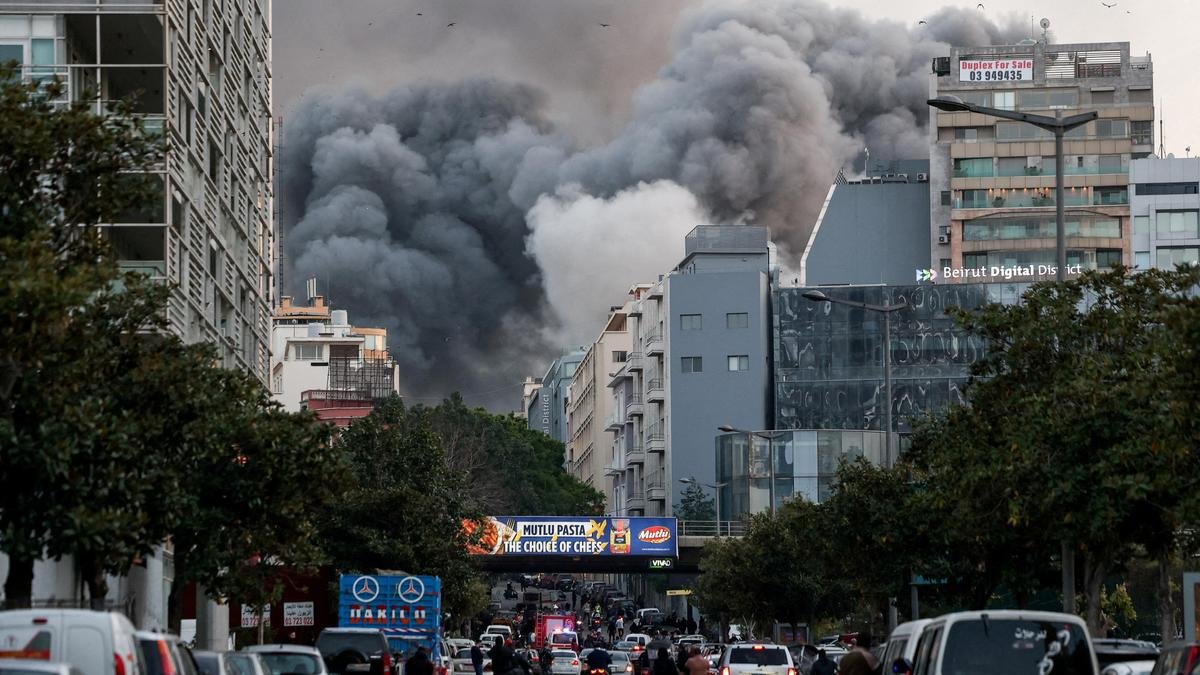
Short Overview
The Iran-Israel war and the wider West Asia conflict have reached a tense but important moment. On May 22, 2026, diplomatic efforts were still active, but no final peace deal had been reached. The United States said there had been some progress in talks with Iran, while major disputes remained over Iran’s uranium stockpile, the Strait of Hormuz, sanctions, and the future security of the region. Reuters reported that Qatar sent a negotiating team to Tehran, while Pakistan continued its role as a key mediator.
Get the latest Iran Israel war update in simple language. Understand the US-Iran peace talks, Donald Trump’s warning, Pakistan and Qatar’s mediation role, the Strait of Hormuz crisis, Iran’s uranium issue, and how the West Asia conflict could affect oil prices, global security, and ordinary people. This easy explainer breaks down the complex situation without confusion, helping readers follow the fast-changing Middle East war news with clarity.

Table of Contents
What is happening in the Iran-Israel war right now?
Why US-Iran peace talks matter
Donald Trump’s warning and diplomatic pressure
Pakistan and Qatar’s role in mediation
Why the Strait of Hormuz is the center of the crisis
Iran’s uranium stockpile issue
What Iran wants from a deal
What the US and Israel want
How the conflict affects oil prices and global markets
Why West Asia is watching carefully
What could happen next?
Conclusion
What is happening in the Iran-Israel war right now?
The latest phase of the Iran-Israel and US-Iran conflict is built around a fragile ceasefire and difficult peace talks. Reuters reported that a shaky ceasefire is currently in place in a war that began with US-Israeli strikes on Iran on February 28, 2026. However, the ceasefire has not produced a full settlement, and the main disagreements remain serious.
The situation is sensitive because the military side and the diplomatic side are moving at the same time. On one side, negotiators are trying to find a way to stop the war permanently. On the other side, leaders are still warning that military action remains possible if talks fail. This is why the world is watching every update closely.
AP reported that US Secretary of State Marco Rubio said there was “slight progress” in talks with Iran, but uncertainty remained over whether a deal would be reached or war would resume. AP also reported that President Donald Trump had held off on a military strike because serious negotiations were underway.
This means the conflict is currently standing between two possible directions. One path could lead to a broader peace deal. The other path could bring fresh attacks, higher oil prices, and more instability across West Asia.
Why US-Iran peace talks matter
The US-Iran peace talks matter because they are not only about two countries. They are connected to the security of Israel, the Gulf states, global shipping, oil supply, nuclear concerns, and the wider West Asia region. If the talks succeed, they may reduce the chance of another round of strikes. If they fail, the conflict could return quickly.
Reuters reported that Pakistan has served as the official mediator since fighting began, while Qatar has now re-entered the diplomatic process by sending a negotiating team to Tehran. The Qatari team reportedly travelled in coordination with the United States to help reach a final deal that could end the war and address unresolved issues with Iran.
This is important because Qatar has often played a back-channel role in sensitive regional negotiations. Pakistan’s role is also significant because it has maintained communication with Iran while also engaging with the United States. In conflicts like this, mediators are needed because direct trust between the main sides is very low.
The talks are not simple. Iran has demands. The United States has demands. Israel has security concerns. Gulf countries have shipping and energy concerns. Every side wants protection, but every side defines protection differently.
Donald Trump’s warning and diplomatic pressure
Donald Trump’s role is central to the current phase of the crisis. Reuters reported that Trump said the United States was ready to carry out further attacks on Tehran if Iran did not agree to a peace deal, but he also suggested Washington could wait a few days to get the “right answers.” He described the situation as being “right on the borderline.”
This kind of statement creates pressure on Iran, but it also creates uncertainty in markets and diplomatic circles. When a US president says military action is still possible, oil traders, regional governments, and global investors respond quickly. Even if talks are moving forward, the threat of renewed conflict can push energy prices higher and make countries prepare for worst-case scenarios.
At the same time, Trump is also facing pressure at home. Reuters reported that the war has affected the global economy, with oil price increases feeding inflation fears. The same report noted that uncertainty around peace talks pushed the US dollar near a six-week high while oil prices climbed.
For ordinary people, this means a faraway conflict can still affect fuel prices, transport costs, inflation, and business confidence. That is why the Iran Israel war latest update is not only important for foreign policy experts. It matters to consumers, investors, exporters, shipping companies, and governments across the world.
Pakistan and Qatar’s role in mediation
Pakistan and Qatar are becoming important names in the peace process. According to AP, Pakistan’s army chief was travelling to Tehran for another round of talks with Iranian leaders, while Pakistan’s interior minister had already met Iranian leaders twice that week. AP also reported that Pakistan has worked to mediate a peace deal since facilitating face-to-face talks between the US and Iran in Islamabad.
Reuters separately reported that Qatar sent a negotiating team to Tehran to help secure a US-Iran deal. Qatar’s involvement is important because it has experience in sensitive negotiations and is also a US ally in the region.
The mediation effort shows that several countries want the conflict to end before it spreads further. Pakistan has an interest in regional stability. Qatar has an interest in Gulf security and energy exports. Gulf states want shipping routes to remain open. The United States wants Iran’s nuclear and military capabilities limited. Iran wants sanctions relief, security guarantees, and control over key strategic interests.
This is why mediation is difficult. A peace deal must satisfy security, economic, military, and political concerns at the same time.
Why the Strait of Hormuz is the center of the crisis
The Strait of Hormuz is one of the biggest reasons this conflict has become a global concern. It is a narrow waterway between Iran and Oman that connects the Persian Gulf to the Gulf of Oman and the Arabian Sea. A large share of the world’s oil and LNG trade moves through this route.
The US Energy Information Administration describes the Strait of Hormuz as one of the world’s most important oil chokepoints. It says the strait handled oil flows equal to around 20% of global petroleum liquids consumption in the first half of 2025, and that only part of those volumes could be moved through alternative routes if the strait were closed.
Reuters reported that traffic through the strait has fallen sharply compared with the period before the war, when there were about 125 to 140 daily passages. The same report said that in one recent 24-hour period, 35 tankers, cargo ships, and other commercial vessels passed through after receiving permission from Iran’s Revolutionary Guards Navy.
This is why the Strait of Hormuz crisis is not a small regional issue. If shipping slows or stops, oil and gas supplies become uncertain. Insurance costs can rise. Freight costs can rise. Importing countries can face higher energy bills. The effect can move from the Gulf to Asia, Europe, Africa, and beyond.
Iran’s uranium stockpile issue
Another major issue in the talks is Iran’s enriched uranium. The United States and Israel say Iran must never obtain a nuclear weapon. Iran says its nuclear program is peaceful. This disagreement has existed for years, but the war has made it more urgent.
Reuters reported that Trump said the United States would eventually recover Iran’s stockpile of highly enriched uranium, which Washington believes is intended for a nuclear weapon, while Tehran says it is for peaceful purposes. Reuters also reported that Iranian sources said Iran’s Supreme Leader had issued a directive that the uranium should not be sent abroad.
The Guardian also reported that Washington’s demand for Tehran to export its stockpile of highly enriched uranium remains a key stumbling block in the talks. It added that Russia had offered to receive the stockpile, but Iran said it would downblend the material inside Iran itself.
This is one of the most difficult parts of the peace process because it touches Iran’s sovereignty, US security demands, Israeli security concerns, and international non-proliferation worries. A compromise on this issue may be necessary for a final deal, but it is also one of the hardest compromises to reach.
What Iran wants from a deal
Iran’s demands appear to include more than a simple ceasefire. Reuters reported that Iran’s descriptions of its offer included demands for control of the Strait of Hormuz, compensation for war damage, lifting of sanctions, release of frozen assets, and withdrawal of US troops.
The Guardian reported that Iran wants to focus first on a permanent end to hostilities and postpone talks on its nuclear program. It also reported that Iran wants a phased lifting of US sanctions, frozen assets to be unfrozen, compensation for war damage, and commitments that force will not be used in the future.
From Iran’s point of view, these demands are about security and economic survival. Sanctions have limited Iran’s economy for years. War damage adds another burden. Control over the Strait of Hormuz gives Iran leverage. But from the US, Israeli, and Gulf perspective, some of these demands create major risks.
This is the central problem. What Iran sees as protection, others may see as a threat. What the US sees as necessary security, Iran may see as pressure or humiliation.
What the US and Israel want
The United States and Israel want Iran’s military and nuclear power reduced. Reuters reported that the US and Israel say their war aims are to curb Iran’s support for regional militias, dismantle Iran’s nuclear program, destroy its missile capabilities, and make it easier for Iranians to challenge their rulers.
AP also reported that the US and Israel have said Iran can never have a nuclear weapon, while Trump wants to remove highly enriched uranium from the country and prevent Iran from developing nuclear weapons.
Israel’s concern is direct security. Iran’s missiles, drones, and regional alliances are seen by Israel as long-term threats. The United States is concerned about nuclear escalation, regional stability, shipping routes, and the safety of its allies.
However, the US and Israel may not always agree on timing or tactics. AP reported that Trump’s decision to give talks a chance caused tension with Israeli Prime Minister Benjamin Netanyahu, showing some public signs of disagreement between the two leaders.
This matters because a peace deal may need US support, Israeli acceptance, Gulf cooperation, and Iranian agreement. If any major actor rejects the deal, the risk of renewed conflict remains.
How the conflict affects oil prices and global markets
The Iran Israel war latest update is closely linked to oil prices. The reason is simple: the region is one of the world’s most important energy corridors. When the Strait of Hormuz is under pressure, energy markets become nervous.
Reuters reported that the war has caused major disruption to the global economy, with higher oil prices raising fears of inflation. It also said oil prices climbed as investors doubted the chances of a quick breakthrough in peace talks.
Another Reuters energy report said oil prices rose as investors remained skeptical about a US-Iran peace breakthrough, while key disagreements continued over Iran’s uranium stockpile and Strait of Hormuz controls.
For countries that import large amounts of oil, this conflict can increase pressure on government budgets, businesses, and consumers. Fuel becomes more expensive. Shipping becomes costlier. Airlines may face higher operating costs. Fertilizer and petrochemical prices can also be affected because the Gulf region is important for energy-related industries.
This is why even people far from West Asia should pay attention. A conflict in the Gulf can influence petrol prices, food prices, transport bills, currency movement, and inflation expectations.
Why West Asia is watching carefully
West Asia is full of connected security relationships. Iran, Israel, Saudi Arabia, the UAE, Qatar, Oman, Iraq, Lebanon, and other regional actors all have different interests. When one conflict grows, it can pull others into the tension.
AP reported that Saudi Arabia and the UAE separately carried out attacks on Iran and Iranian-backed militias during the war, according to officials and a diplomat who spoke anonymously because of the sensitivity of the issue. The UAE described its measures as defensive actions to protect sovereignty, civilians, and vital infrastructure.
This shows how quickly a conflict can widen. Even countries that do not want a long war may feel forced to act if they believe their infrastructure, shipping routes, or citizens are threatened.
The Guardian reported that five Gulf states had written to a global shipping watchdog urging commercial ships not to engage with Iran’s proposed Persian Gulf Strait Authority. These countries warned that Iran’s proposed route and tolling system could create a dangerous precedent.
This is why the Strait of Hormuz issue is not only about Iran and the United States. It is also about Gulf sovereignty, maritime law, international trade, and the balance of power in the region.
What could happen next?
There are three main possibilities. The first possibility is that talks succeed and a phased peace agreement is announced. This could include a permanent ceasefire, limited nuclear arrangements, partial sanctions relief, shipping guarantees, and a framework for the Strait of Hormuz.
The second possibility is that talks continue without a final deal. This may keep the ceasefire alive but maintain uncertainty in oil markets and global diplomacy. Rubio’s statement that there has been progress but “more work” remains suggests this middle path is still possible.
The third possibility is that talks fail and fighting resumes. Reuters reported that Trump has warned that the US is ready to move quickly if it does not receive the “right answers” from Iran.
For readers, the key things to watch are simple. Watch whether Iran accepts any compromise on uranium. Watch whether the Strait of Hormuz reopens more fully. Watch whether Qatar and Pakistan can keep both sides at the table. Watch whether Israel supports or resists the diplomatic process. Watch oil prices, because markets often react faster than governments.
Conclusion
The Iran-Israel war and the wider US-Iran conflict are at a critical stage. There is some diplomatic movement, but the peace process is still fragile. The biggest issues are Iran’s enriched uranium, control of the Strait of Hormuz, sanctions relief, security guarantees, and the future role of US and Israeli power in the region.
The most important point is that this conflict is not only a military story. It is also an energy story, a diplomacy story, a global economy story, and a regional security story. A successful peace deal could calm markets and reduce the risk of wider war. A failed deal could bring renewed strikes, higher oil prices, and deeper instability in West Asia.
For now, the world is waiting to see whether diplomacy can move faster than escalation. The next few days may decide whether the Iran Israel war latest update becomes a story of peace talks moving forward or a warning sign of another dangerous phase in the Middle East conflict.


NEET UG Re-Exam 2026: Why Telegram Was Restricted in India and What It Means for Students

Spotify Outage 2026: Thousands of Users Report Streaming Issues Across the Globe

Stock Market Today: Sensex, Nifty & Top Stocks in Focus Amid Global Market Uncertainty

NEET Re-Exam Admit Card 2026 Released: Direct Download Link, Exam Day Guidelines & Important Updates

Made-in-India C295 Aircraft Maiden Flight Marks a New Chapter in India’s Defence Manufacturing

Higher Ethanol Blended Petrol Gets Excise Duty Exemption: What It Means for India’s Fuel Future

What I Eat In A Day As An Indian Diabetic To Lose Weight

10 Simple Indian Home Habits That Help You Lose Weight With Type 2 Diabetes

Diabetes-Friendly Indian Breakfasts That Melt Belly Fat and Control Blood Sugar Naturally

Mango Weight Gain Myth: Smart Ways to Enjoy Mangoes Without Gaining Weight This Summer
Mango Weight Gain Myth: Smart Ways to Enjoy Mangoes Without Gaining Weight This Summer
Diabetes-Friendly Indian Breakfasts That Melt Belly Fat and Control Blood Sugar Naturally
Higher Ethanol Blended Petrol Gets Excise Duty Exemption: What It Means for India’s Fuel Future
10 Simple Indian Home Habits That Help You Lose Weight With Type 2 Diabetes
What I Eat In A Day As An Indian Diabetic To Lose Weight
Made-in-India C295 Aircraft Maiden Flight Marks a New Chapter in India’s Defence Manufacturing
NEET Re-Exam Admit Card 2026 Released: Direct Download Link, Exam Day Guidelines & Important Updates
Stock Market Today: Sensex, Nifty & Top Stocks in Focus Amid Global Market Uncertainty
Spotify Outage 2026: Thousands of Users Report Streaming Issues Across the Globe