


Latest News
Eastern Regional Agriculture Conference 2026: Bhubaneswar’s Mega Agri Meet Brings New Hope for Farmer Welfare in Eastern India

Short Overview
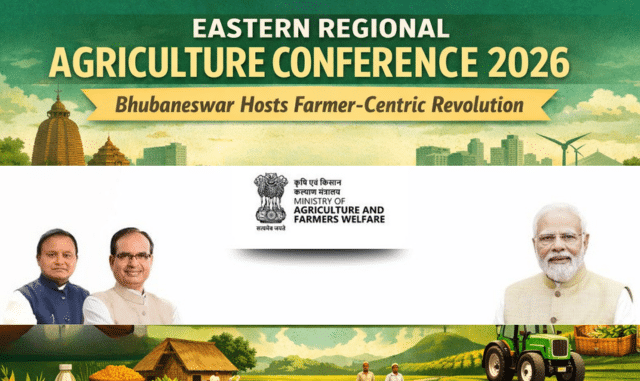
The Eastern Regional Agriculture Conference 2026 in Bhubaneswar is an important step for improving agriculture in eastern India. The event focused on farmer welfare, better coordination between the Centre and states, sustainable farming, natural farming, pulses, oilseeds, farm credit, FPOs, startups and the real challenges faced by farmers. The conference was organised by the Ministry of Agriculture and Farmers Welfare in Bhubaneswar, Odisha, on May 19, 2026, and was chaired by Union Agriculture Minister Shivraj Singh Chouhan. Odisha Chief Minister Mohan Charan Majhi also participated in the event.
Eastern Regional Agriculture Conference 2026 in Bhubaneswar brought together Union Agriculture Minister Shivraj Singh Chouhan, Odisha CM Mohan Charan Majhi, state ministers, experts, FPOs, startups and farmers to discuss farmer welfare, pulses, oilseeds, natural farming, farm credit, Kisan Credit Card, fake fertilisers, balanced nutrient use and sustainable agriculture growth across eastern India.

Table of Contents
- What Is the Eastern Regional Agriculture Conference 2026?
- Why Bhubaneswar Became the Centre of Eastern India’s Agriculture Discussion
- Main Agenda of the Mega Agri Conference
- Role of Farmer Welfare in the Conference
- Why Pulses and Oilseeds Matter for Eastern India
- Natural Farming and Soil Health: A Big Focus Area
- Farmer Registry, Farm Credit and Kisan Credit Card
- FPOs, Startups and Value Chains in Agriculture
- State-Wise Agriculture Models Discussed at the Conference
- Fight Against Fake Pesticides, Fertilisers and Black Marketing
- How the Conference Can Help Farmers in the Long Run
- Conclusion
Agriculture is not just a sector in India. It is the backbone of rural life, food security and millions of family incomes. In eastern India, farming has always had strong potential because the region has fertile land, water resources, traditional knowledge and hardworking farmers. Still, many farmers continue to face problems such as low income, weak market access, poor-quality inputs, rising cultivation cost, climate pressure, lack of timely credit and limited value addition.
This is why the Eastern Regional Agriculture Conference 2026 in Bhubaneswar became an important event for the future of farming in eastern India. The conference brought together Union Agriculture Minister Shivraj Singh Chouhan, Odisha Chief Minister Mohan Charan Majhi, agriculture ministers from different states, senior officials, scientists, farmer representatives, Farmer Producer Organisations, startups, banks and other key stakeholders. The official objective was to promote overall agricultural development, improve farmers’ incomes and strengthen coordination between the Centre and state governments.
The event was not just about speeches. It was about discussing real agricultural issues that affect farmers every season. Topics such as pulses production, edible oilseed self-reliance, natural farming, farm credit, Kisan Credit Card, fake fertilisers, black marketing, FPO value chains and horticulture opportunities were placed at the centre of the discussion.
For eastern India, this type of conference matters because the region has both challenges and opportunities. Odisha, Bihar, Jharkhand, West Bengal and nearby states can play a much bigger role in India’s food and nutrition security if farming systems become more organised, more profitable and more climate-resilient.
What Is the Eastern Regional Agriculture Conference 2026?
The Eastern Regional Agriculture Conference 2026 was a major agriculture-focused meeting organised in Bhubaneswar, Odisha, on May 19, 2026. It was held under the initiative of Union Agriculture Minister Shivraj Singh Chouhan and organised by the Ministry of Agriculture and Farmers Welfare, Government of India. Odisha Chief Minister Mohan Charan Majhi also participated in the conference.
The purpose of this conference was to bring different eastern states onto one platform and discuss how agriculture can become more productive, sustainable and farmer-friendly. Instead of looking at farming only from a national level, this conference focused on region-specific challenges and opportunities.
Eastern India has different farming conditions compared to western, northern or southern India. Some areas are rich in water, some have rain-fed farming, some have strong paddy cultivation, some have scope for pulses, maize, oilseeds, vegetables, fruits, fishery and integrated farming. A common policy approach may not solve every local issue. That is why a regional agriculture conference can help create more practical solutions.
The conference also reviewed key schemes and programmes of the Ministry of Agriculture and Farmers Welfare. This is important because farmers often hear about schemes, but the real challenge is implementation. A scheme becomes useful only when it reaches the farmer at the right time, in the right way and without unnecessary delay.
Why Bhubaneswar Became the Centre of Eastern India’s Agriculture Discussion
Bhubaneswar was a suitable place for this mega agri conference because Odisha is one of the important agricultural states in eastern India. The state has a large rural population, strong paddy cultivation, growing horticulture potential, and increasing focus on farmer welfare.
Odisha also represents many of the opportunities and challenges that are common across eastern India. Farmers in the region need better seeds, better extension support, stronger market linkages, more value addition, protection from fake inputs, affordable credit and practical guidance on sustainable farming.
By hosting the conference in Bhubaneswar, the government created a space where Odisha could showcase its own agricultural extension initiatives while learning from other states. As per the official release, Odisha was expected to present its agricultural extension initiatives, West Bengal its best practices in seed production, Jharkhand its FPO-based value chains and startup ecosystem, and Bihar its successful experiences in maize production and marketing.
This type of knowledge-sharing is very useful. One state may have solved a problem that another state is still facing. If Bihar has a strong maize marketing model, Odisha or Jharkhand can learn from it. If West Bengal has better seed production practices, other states can adopt similar systems. If Jharkhand is building value chains through FPOs and startups, that model can inspire other regions.
Main Agenda of the Mega Agri Conference
The main agenda of the Eastern Regional Agriculture Conference 2026 was to discuss agricultural development and farmer welfare in a practical way. The conference focused on the farmer registry, horticulture opportunities, self-reliance in pulses production, the National Mission on Edible Oils–Oilseeds, PM-AASHA, the National Mission on Natural Farming, farm credit and Kisan Credit Card-related issues.
These topics are directly connected to farmers’ income and farming security. A farmer registry can help create better farmer databases and improve the delivery of benefits. Horticulture can increase income because fruits, vegetables, flowers and other high-value crops often give better returns than traditional crops. Pulses and oilseeds are important because India needs to reduce dependence on imports and improve domestic production.
Farm credit is another major issue. Many farmers need timely loans for seeds, fertilisers, irrigation, labour and other farm expenses. If credit is delayed, farmers may depend on informal lenders at high interest rates. The Kisan Credit Card system is meant to make agricultural credit easier, but many farmers still need smoother access and better awareness.
The conference also discussed serious input-related problems such as fake pesticides, fake fertilisers, black marketing of fertilisers, balanced use of nutrients and alternative fertilisers. These issues directly affect the farmer’s pocket. If a farmer buys poor-quality fertiliser or pesticide, the crop may fail and the investment may be lost. If fertiliser is black-marketed, the farmer may have to pay more than the fair price. If nutrients are used in an unbalanced way, soil health suffers in the long run.
Role of Farmer Welfare in the Conference
Farmer welfare was the heart of the conference. In simple words, farmer welfare means ensuring that farmers are not left alone with rising risks. It means supporting them with good seeds, timely credit, fair prices, better market access, reliable information, crop protection, soil health support and income security.
The conference aimed to enhance farmers’ incomes and strengthen Centre-State coordination. This is important because agriculture is not handled by one authority alone. The Centre creates national schemes, provides funding, policy direction and mission-level support. State governments implement many of these programmes on the ground. Local officials, banks, scientists, FPOs and private players also play a role.
If these groups do not work together, farmers face confusion. If they coordinate properly, farmers get smoother access to benefits. A farmer should not have to run from one office to another to understand a scheme. A farmer should know where to get quality seeds, how to access credit, where to sell produce, how to join an FPO and how to protect soil health.
This conference matters because it tried to bring all these stakeholders together. It created a common platform where policy, science, banking, farmer experience and market needs could meet.
Why Pulses and Oilseeds Matter for Eastern India
Pulses and oilseeds were among the important discussion points at the conference. This is a very important topic because India needs stronger domestic production of pulses and edible oils. Pulses are a key source of protein for millions of Indian families. Oilseeds are important for edible oil production, farmer income and crop diversification.
Eastern India can play a stronger role in pulses and oilseed production. Many farmers in the region already grow paddy, but depending too heavily on one crop can limit income. Crop diversification can help farmers improve soil health, reduce risk and earn from different crops.
The National Mission on Edible Oils–Oilseeds, also called NMEO-OS, is designed to boost oilseed production and strengthen the edible oilseed ecosystem. Odisha’s agriculture department describes NMEO-OS as a centrally sponsored scheme from 2024-25 to 2030-31, supporting major oilseed crops, secondary oilseeds and tree-borne oilseeds. It also focuses on improved seeds, market access, post-harvest infrastructure and digital monitoring.
For farmers, this can become useful if implementation is strong. Better seeds, demonstrations, training, storage support and mini oil extraction units can help farmers move beyond raw crop selling. When farmers get support for processing and value addition, income opportunities become stronger.
Pulses also deserve attention because they can improve soil fertility through nitrogen fixation and give farmers another income option. If the region can increase pulses production with better varieties, assured procurement and market support, it can benefit both farmers and consumers.
Natural Farming and Soil Health: A Big Focus Area
Natural farming was another major topic of the conference. This is not surprising because farmers across India are facing rising input costs. Chemical fertilisers, pesticides and other external inputs can increase the cost of cultivation. At the same time, soil health is becoming a serious concern in many regions.
The National Mission on Natural Farming aims to promote chemical-free, ecosystem-based farming rooted in traditional knowledge and supported by scientific approaches. According to PIB, the mission targets 7.5 lakh hectares through 15,000 clusters, with a total outlay of ₹2,481 crore, and aims to facilitate 1 crore farmers.
Natural farming can help reduce dependency on externally purchased inputs. It can also support soil health, biodiversity, moisture retention and climate resilience when done properly. However, it should not be presented as a magic solution. Farmers need training, local guidance, market support and transition planning.
For small and marginal farmers, the biggest question is simple: Will this method reduce cost and protect income? If natural farming can reduce input cost while maintaining productivity over time, it can become a practical option. But farmers should be supported with demonstrations, expert advice, local bio-input resource centres and proper market channels for naturally grown produce.
Soil health was also connected to the discussion on balanced fertiliser use. Balanced nutrient application means using the right nutrients in the right quantity based on crop and soil needs. Overuse or wrong use of fertilisers may damage soil health and reduce long-term productivity. Farmers need soil testing, awareness and easy access to reliable inputs.
Farmer Registry, Farm Credit and Kisan Credit Card
The farmer registry was one of the key topics discussed at the conference. A farmer registry can help governments identify farmers properly and deliver benefits more accurately. When farmer data is organised, schemes can become more targeted and transparent.
Farm credit and Kisan Credit Card issues were also part of the conference agenda. This is very important because agriculture depends heavily on timing. A farmer needs money before sowing, not after the season is over. If institutional credit is not available at the right time, farmers may be forced to borrow from informal sources.
The Kisan Credit Card system is meant to provide short-term credit support to farmers. But in many places, farmers still face documentation issues, low awareness, delays or limited access. If the conference leads to better coordination between banks, state departments and farmer groups, credit delivery can improve.
Farm credit should also be connected to modern farming needs. Farmers need loans not only for seeds and fertilisers, but also for irrigation, machinery, storage, livestock, small processing units and value addition. If credit becomes flexible and farmer-friendly, it can help rural entrepreneurship grow.
FPOs, Startups and Value Chains in Agriculture
One of the most important modern changes in Indian agriculture is the rise of Farmer Producer Organisations. FPOs help farmers work as a group instead of selling individually. This can improve bargaining power, reduce input cost, create better market access and support value addition.
Jharkhand was expected to present experiences related to FPO-based value chains and the agricultural startup ecosystem at the conference. This is an important area because farmers often lose income due to weak market linkages. They may produce good crops, but if they do not get the right buyer or storage support, profits remain low.
A value chain approach means looking at the full journey of a crop. It starts with seed selection and cultivation, then moves to harvesting, grading, storage, processing, packaging, transport and final sale. If farmers are supported at every stage, their income can improve.
Startups can also help in areas such as digital advisory, weather updates, soil testing, market price discovery, farm mechanisation, drone services, post-harvest management and direct-to-market platforms. However, startups should be farmer-friendly and affordable. Technology should not become complicated for small farmers. It should solve practical problems in a simple way.
State-Wise Agriculture Models Discussed at the Conference
The conference gave eastern states a chance to share their successful models. Odisha was expected to highlight its agricultural extension initiatives. Agricultural extension means taking knowledge from experts, scientists and government departments to farmers at the field level. Good extension support can help farmers choose better seeds, manage pests, improve soil health and adopt new practices.
West Bengal was expected to share best practices in seed production. Seed quality is one of the most important factors in crop success. If farmers use poor-quality seed, yield can suffer from the beginning. Strong seed systems can improve productivity and reduce farmer risk.
Jharkhand was expected to present FPO-driven value chains and its agricultural startup ecosystem. This matters because tribal and smallholder farming regions need market support, aggregation and value addition. FPOs can help farmers sell better and access services as a group.
Bihar was expected to showcase successful strategies in maize production and marketing. Maize is an important crop for food, feed and industrial use. If Bihar’s maize model includes better production practices and stronger marketing linkages, it can be useful for other states too.
This state-wise sharing is one of the strongest parts of the conference. Agriculture improves faster when states learn from each other instead of working in isolation.
Fight Against Fake Pesticides, Fertilisers and Black Marketing
Fake pesticides and fertilisers are among the most damaging problems for farmers. A farmer may spend hard-earned money on inputs, but if the product is fake or poor quality, the crop may not respond. This can lead to financial loss, debt pressure and frustration.
The conference included detailed discussions on controlling fake pesticides and fertilisers, preventing black marketing of fertilisers, promoting balanced fertiliser use and encouraging alternative fertilisers.
This is not a small issue. Input quality decides crop health. If a farmer cannot trust the fertiliser or pesticide market, farming becomes risky. Strong inspection, strict action against fake sellers, digital tracking and farmer awareness can help reduce this problem.
Black marketing of fertilisers is another concern. During peak season, farmers need fertilisers on time. If supply is blocked or sold at higher prices, farmers suffer. Transparent supply chains and proper monitoring can protect farmers from exploitation.
Balanced fertiliser use is equally important. Farmers should not be pushed toward excessive chemical use, but they should also not be left without proper nutrient support. The best approach is soil-based, crop-specific and region-specific nutrient management.
How the Conference Can Help Farmers in the Long Run
The real value of the Eastern Regional Agriculture Conference 2026 will be seen only when discussions turn into action. Farmers need results on the ground. They need timely seeds, quality inputs, affordable credit, fair prices, practical training, market support and protection from fraud.
If the ideas discussed in Bhubaneswar are implemented well, farmers in eastern India can benefit in many ways. Pulses and oilseeds production can increase. Horticulture can become a stronger income source. Natural farming can reduce input dependency where suitable. FPOs can improve bargaining power. Startups can bring useful technology. Farm credit can become easier. Fake fertiliser and pesticide control can protect farmer investment.
The conference also has a larger meaning. It shows that eastern India is being seen as a major agriculture growth region. With proper planning, the region can support food security, nutrition security, rural employment and farmer income growth.
But implementation must remain farmer-centric. Policies should be explained in local languages. Farmers should receive support near their villages. Banks should make credit simple. FPOs should be professionally guided. Quality control should be strict. Extension officers should regularly visit fields. Scientists should listen to farmer feedback. Government schemes should not remain only on paper.
Conclusion
The Eastern Regional Agriculture Conference 2026 in Bhubaneswar was an important platform for discussing the future of farming in eastern India. It brought together political leadership, state governments, scientists, farmer representatives, FPOs, startups, banks and experts to focus on real agricultural challenges.
The conference covered many high-impact topics, including farmer welfare, farmer registry, horticulture, pulses, oilseeds, PM-AASHA, natural farming, farm credit, Kisan Credit Card, fake fertilisers, black marketing, balanced nutrient use, FPO value chains and state-level innovation.
For farmers, the most important question is not how big the conference was. The real question is what changes will reach their fields. If the discussions lead to timely action, better schemes, stronger implementation and real support, this conference can become a turning point for eastern India’s agriculture.
Eastern India has the land, water, farmers and potential. What it needs now is strong coordination, honest implementation and farmer-first planning. The Bhubaneswar conference has created a direction. The next step is to turn that direction into visible results for farmers.


NEET UG Re-Exam 2026: Why Telegram Was Restricted in India and What It Means for Students

Spotify Outage 2026: Thousands of Users Report Streaming Issues Across the Globe

Stock Market Today: Sensex, Nifty & Top Stocks in Focus Amid Global Market Uncertainty

NEET Re-Exam Admit Card 2026 Released: Direct Download Link, Exam Day Guidelines & Important Updates

Made-in-India C295 Aircraft Maiden Flight Marks a New Chapter in India’s Defence Manufacturing

Higher Ethanol Blended Petrol Gets Excise Duty Exemption: What It Means for India’s Fuel Future

What I Eat In A Day As An Indian Diabetic To Lose Weight

10 Simple Indian Home Habits That Help You Lose Weight With Type 2 Diabetes

Diabetes-Friendly Indian Breakfasts That Melt Belly Fat and Control Blood Sugar Naturally

Mango Weight Gain Myth: Smart Ways to Enjoy Mangoes Without Gaining Weight This Summer
Mango Weight Gain Myth: Smart Ways to Enjoy Mangoes Without Gaining Weight This Summer
Diabetes-Friendly Indian Breakfasts That Melt Belly Fat and Control Blood Sugar Naturally

Brain Tumor Warning Signs: When a Headache Is More Than Just a Headache

Blood Pressure Test Tips: Why Avoiding Tea Before Your BP Check Matters
Higher Ethanol Blended Petrol Gets Excise Duty Exemption: What It Means for India’s Fuel Future
10 Simple Indian Home Habits That Help You Lose Weight With Type 2 Diabetes
What I Eat In A Day As An Indian Diabetic To Lose Weight
Spotify Outage 2026: Thousands of Users Report Streaming Issues Across the Globe
NEET UG Re-Exam 2026: Why Telegram Was Restricted in India and What It Means for Students