


Latest News
AGCO Corp Stock Outlook: Why Precision Agriculture Is Becoming the Real Growth Story

Short Overview
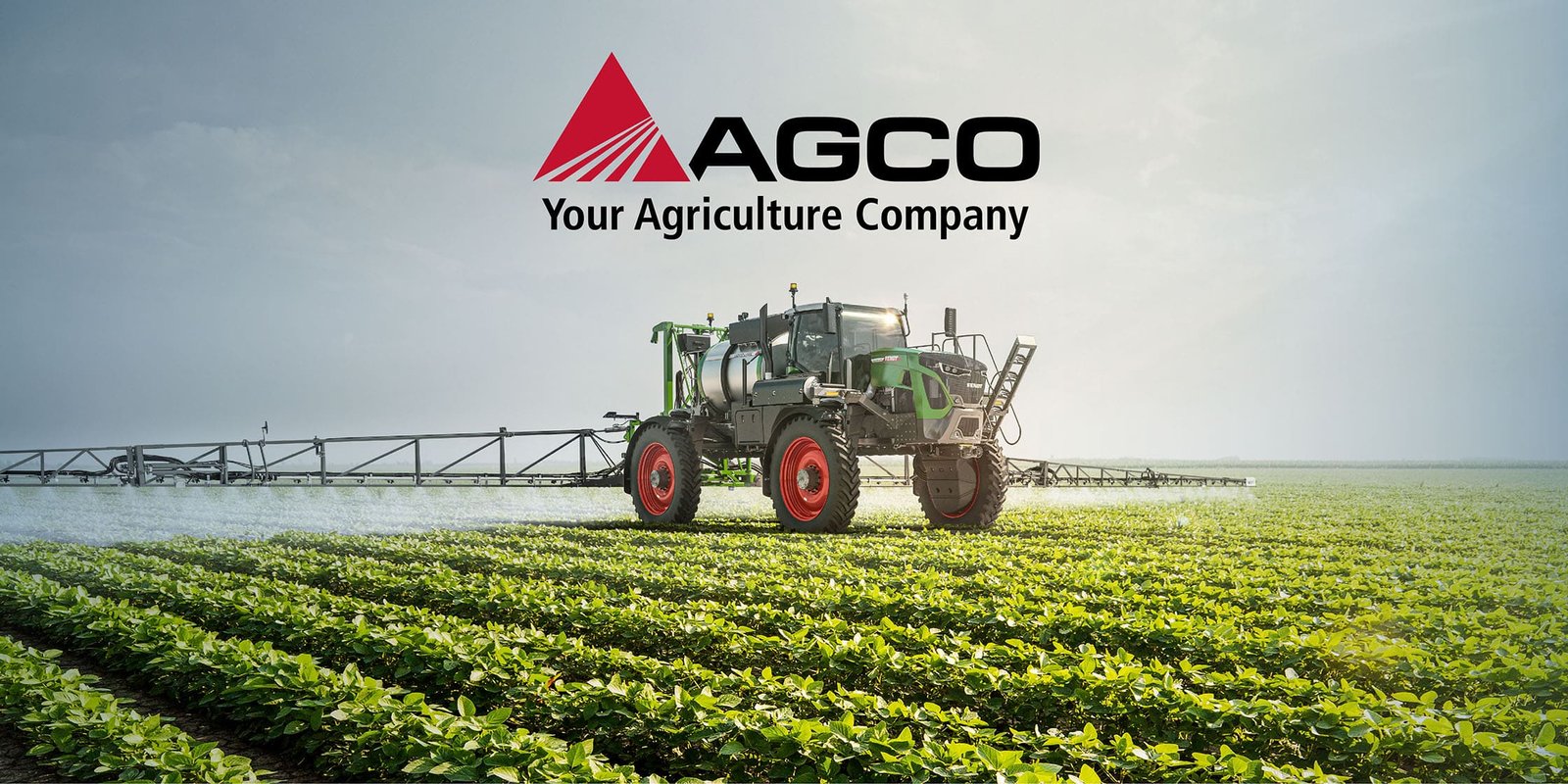
AGCO Corp is no longer just a traditional farm machinery company. The company is now moving deeper into precision agriculture, smart farming systems, high-horsepower tractors, connected equipment, retrofit technology, and farmer-focused digital tools. Its latest quarterly update showed stronger sales, especially in high-horsepower equipment and precision agriculture, while management continued to focus on cost control, margins, and long-term technology-led growth. AGCO reported first-quarter 2026 net sales of $2.3 billion, up 14.3% year over year, with reported earnings per share of $0.76 and adjusted earnings per share of $0.94.
AGCO Corp stock is gaining investor attention as the company shifts more focus toward precision agriculture, smart farming technology, high-horsepower tractors, parts, and farmer-first solutions. This blog explains AGCO’s latest business direction in simple language, covering its recent quarterly performance, major brands such as Fendt, Massey Ferguson, PTx, Valtra, and Precision Planting, and why precision agriculture may become an important long-term growth driver. The article also explains the opportunities and risks around AGCO stock, including farm equipment demand, regional performance, tariffs, commodity cycles, and technology adoption. This is written for readers who want a clear, human, and easy-to-understand view of AGCO’s future.

Table of Contents
- Introduction: Why AGCO Corp Stock Is Getting Attention
- What AGCO Corp Does
- Why Precision Agriculture Matters for AGCO
- Latest AGCO Quarterly Update in Simple Words
- How High-Horsepower Equipment Supports Growth
- AGCO’s PTx and Precision Planting Strategy
- Why Farmers Are Moving Toward Smart Farming
- What Makes AGCO Different from a Normal Machinery Company
- Key Opportunities for AGCO Stock
- Key Risks Investors Should Understand
- Future Outlook for AGCO and Precision Agriculture
- Conclusion
Introduction: Why AGCO Corp Stock Is Getting Attention
AGCO Corp stock is becoming an interesting name for people who follow agriculture, industrial companies, farm equipment, and smart farming technology. For many years, AGCO was mainly seen as a farm machinery company that sold tractors, combines, sprayers, and other agricultural equipment. That is still true, but the company’s story is now changing. AGCO is giving more attention to precision agriculture, digital tools, high-horsepower tractors, smart equipment, and technology that helps farmers work with better accuracy.
AGCO’s focus is shifting toward precision agriculture after its latest quarterly update. It also mentioned high-horsepower equipment, parts demand, and margin discipline as important themes for the company. This is important because investors are not only looking at how many machines AGCO can sell today. They are also looking at whether the company can build a stronger future through technology, recurring parts demand, and smarter solutions for farmers.
Agriculture is changing fast. Farmers are under pressure to grow more food, reduce waste, manage rising input costs, and use land more efficiently. At the same time, labor shortages, climate uncertainty, fuel costs, fertilizer prices, and changing global demand are forcing farms to become more productive. This is where precision agriculture becomes important. It helps farmers use data, sensors, guidance systems, automation, and connected machines to make better decisions in the field.
For AGCO, this shift can be a major long-term growth driver. The company is not only selling machines; it is trying to become a stronger technology partner for farmers. That is why AGCO Corp stock is being watched by investors who want exposure to agricultural machinery, precision farming technology, and the future of smart farming.
What AGCO Corp Does
AGCO is a global company that designs, manufactures, and distributes agricultural machinery and precision technology. The company owns and operates several well-known farm equipment and technology brands, including Fendt, Massey Ferguson, PTx, and Valtra. AGCO describes itself as a provider of high-performance equipment, smart farming solutions, and services for farmers and original equipment manufacturer customers.
In simple words, AGCO helps farmers do their work with better machines and better technology. Its products are used for planting, crop care, harvesting, hay and forage work, and general farm operations. The company serves farmers across different regions, including North America, Europe, Latin America, Asia, Africa, and Australia.
AGCO’s business is connected to the health of the farming economy. When farmers are earning well and crop prices are strong, they are more likely to buy new tractors, sprayers, combines, and other equipment. When farm income is weak, farmers may delay new machine purchases and focus more on repairs, parts, and maintenance. This makes AGCO a cyclical company, but the company’s growing focus on parts, services, and precision agriculture can help create more balanced long-term value.
The company’s major brands also help it reach different types of farmers. Fendt is often seen as a premium, high-performance brand. Massey Ferguson has a strong global presence and serves a wide range of farmers. Valtra is known in several international markets, and PTx is becoming AGCO’s main precision agriculture technology platform. This mix gives AGCO a broad market position.
Why Precision Agriculture Matters for AGCO
Precision agriculture is one of the most important parts of AGCO’s future story. It means using technology to farm more accurately. Instead of treating every part of a field the same way, farmers can use data and smart tools to understand where more seed, fertilizer, water, or crop protection is needed and where less is needed.
The U.S. Government Accountability Office explains that precision agriculture can help farmers increase yields with the same level of inputs, or achieve the same yield with fewer inputs. It also notes that these technologies can reduce the use of fertilizer, herbicide, fuel, and water, while offering environmental benefits by reducing excessive chemical and nutrient use.
This matters because farmers are always trying to protect profit margins. If a farmer can reduce waste, save fuel, apply fertilizer more accurately, and improve yield, the return on technology can become very attractive. This is why precision agriculture is not just a “nice-to-have” trend. For many farmers, it is becoming a practical business tool.
For AGCO, precision agriculture can improve the company’s value in several ways. It can help AGCO sell smarter machines, offer retrofit solutions for existing machines, build stronger relationships with farmers, and create more demand for technology upgrades. It can also help the company move beyond one-time equipment sales and build deeper customer relationships across the full farming cycle.
AGCO’s official precision agriculture page says its PTx team creates farmer-focused technology that helps optimize operations and maximize yields throughout the crop cycle. The company also says it offers retrofit, factory-fit, and OEM equipment solutions, which means its technology can be used on new machines and existing farm equipment.
This is a powerful point. Many farmers cannot replace their entire equipment fleet quickly. If AGCO can help farmers improve existing machines with precision technology, it can reach a larger market.
Latest AGCO Quarterly Update in Simple Words
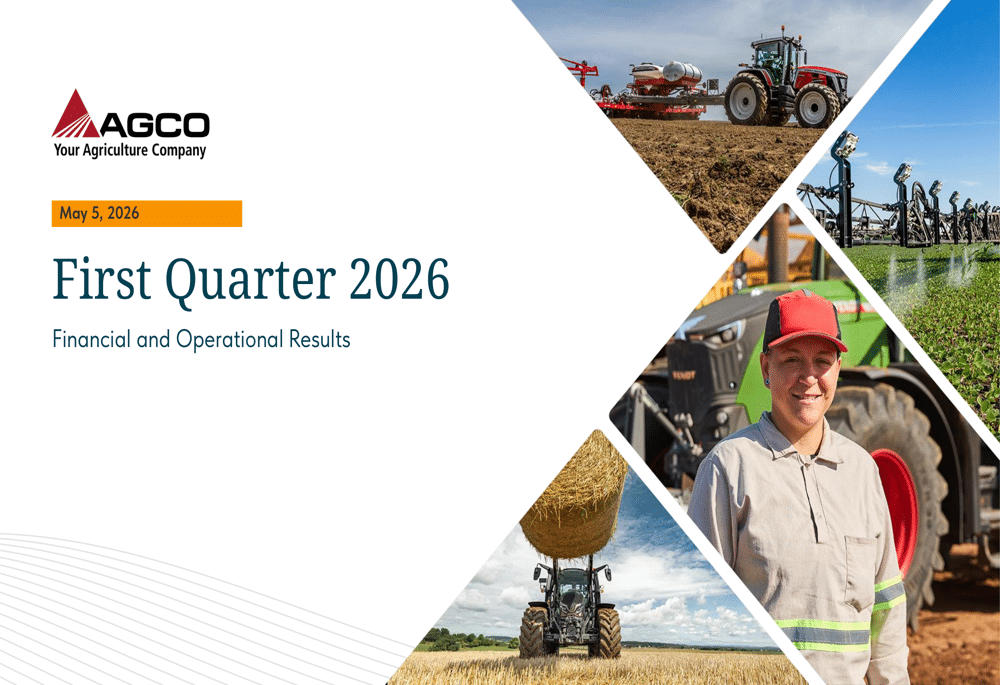
AGCO’s first-quarter 2026 results gave investors a clearer view of where the company stands. The company reported net sales of $2.3 billion for the quarter ended March 31, 2026, which was a 14.3% increase compared with the first quarter of 2025. It also reported earnings per share of $0.76 and adjusted earnings per share of $0.94.
This means AGCO started 2026 with stronger sales than the same period last year. The company also raised its full-year adjusted earnings per share outlook to approximately $6.00, increased its regular quarterly dividend to $0.30 per share, and announced plans to begin $350 million in share repurchases in the second quarter of 2026.
AGCO’s management said the company performed well in a demanding agricultural market. The company highlighted strength in high-horsepower equipment and precision agriculture, while also pointing to disciplined execution and margin control.
For a simple reader, this means AGCO is not operating in an easy market, but it is still finding areas of strength. The company is trying to grow where demand is healthier, manage costs where pressure exists, and continue investing in the parts of the business that can support long-term growth.
The regional performance was mixed. North America sales increased on a constant-currency basis, and high-horsepower tractors, hay tools, and sprayers were among the strongest areas. Europe and the Middle East also improved, helped by higher unit volumes and strong high-horsepower tractor sales. Latin America was weaker because of softer industry demand.
This mixed picture is important for investors. AGCO has global exposure, which can be a strength, but it also means the company can face different challenges in different regions at the same time.
How High-Horsepower Equipment Supports Growth
High-horsepower tractors are an important part of AGCO’s current growth story. These machines are used by larger farms and professional agricultural operations that need power, reliability, and technology. When large farmers invest in high-horsepower equipment, they often look for machines that can work with advanced guidance systems, data tools, and precision farming features.
In AGCO’s first-quarter 2026 update, growth in high-horsepower tractors was an important driver in both North America and Europe/Middle East. The company said North American sales growth was supported by higher unit sales, especially in high-horsepower tractors, hay tools, and sprayers. In Europe/Middle East, growth in high-horsepower tractor sales drove most of the increase.
This is important because high-horsepower equipment can connect naturally with AGCO’s technology strategy. Farmers who buy advanced tractors may also be interested in guidance systems, connectivity, data platforms, variable-rate technology, and other smart farming tools. This creates a stronger business case for AGCO’s precision agriculture portfolio.
High-horsepower equipment also helps AGCO compete in the premium end of the market. When a farmer buys a large, advanced machine, the decision is not only about price. It is also about performance, fuel efficiency, reliability, dealer support, service, parts availability, technology compatibility, and long-term productivity. These are areas where a strong brand and strong dealer network can matter.
For AGCO stock, this means high-horsepower tractors are not just another product category. They are part of a larger strategy that connects machinery, technology, parts, and farmer productivity.
AGCO’s PTx and Precision Planting Strategy
AGCO’s PTx strategy is one of the most important parts of its precision agriculture story. In April 2024, AGCO launched PTx as a precision agriculture brand that combines technologies from Precision Planting and PTx Trimble. The company said PTx would support its technology transformation and help develop and distribute next-generation agricultural technologies for farmers and OEMs.
This matters because PTx is designed to work across different farming situations. AGCO said specialized precision agriculture dealers would help farmers retrofit almost any make or vintage of equipment with the latest technologies. It also said PTx would expand relationships with more than 100 OEM partners that can integrate products directly at the factory.
That retrofit angle is very important. Many farmers already own expensive machines. They may not want to replace them immediately, but they may still want better technology. If AGCO can help farmers upgrade existing machines, it can create a larger market than simply selling new tractors.
Precision Planting is also valuable because planting is one of the most important stages in farming. Better planting accuracy can help improve crop stands, reduce seed waste, and support better yield potential. When a company helps farmers improve the planting stage, it becomes deeply connected to farm performance.
AGCO has also positioned PTx as a mixed-fleet platform. This means the company does not only want to support AGCO machines. It wants to help farmers who use different brands of equipment. That can make the platform more useful because many farms do not operate only one brand.
This is one of AGCO’s strongest long-term opportunities. If PTx becomes trusted by farmers, AGCO can grow its role in the farm technology ecosystem, even when farmers are not buying new AGCO machines.
Why Farmers Are Moving Toward Smart Farming
Farmers are moving toward smart farming because farming has become more complex and more expensive. Seed, fertilizer, fuel, equipment, labor, and land costs can all put pressure on farm profitability. At the same time, weather patterns can be unpredictable, and farmers must make decisions quickly.
Smart farming tools can help reduce guesswork. A farmer can use field data, machine data, satellite information, sensors, and software to make better decisions. Instead of applying the same amount of fertilizer everywhere, precision agriculture can help apply the right amount in the right place. Instead of driving manually with overlap and wasted fuel, guidance systems can help improve accuracy.
The GAO report notes that precision agriculture can improve profits, reduce input use, reduce water use, and offer environmental benefits. It also points out challenges such as high upfront costs, data-sharing concerns, and lack of standards between different technologies.
This balanced view is important. Precision agriculture is not perfect or easy for every farmer. Some farmers may find the technology expensive. Some may worry about who owns their farm data. Others may struggle when different tools and brands do not connect smoothly. This is why AGCO’s mixed-fleet and retrofit strategy could be useful. If the company can make technology simpler and more compatible, it can solve real problems for farmers.
Smart farming is also tied to sustainability. Farmers are not only trying to earn more; they are also trying to reduce waste and manage resources better. If technology can reduce unnecessary fertilizer, fuel, and chemical use, it can support both financial and environmental goals.
What Makes AGCO Different from a Normal Machinery Company
AGCO’s future story is not only about selling tractors. The company is trying to become a more complete farm productivity partner. This includes machinery, parts, service, data, digital tools, smart equipment, and precision agriculture platforms.
A normal machinery company mainly depends on equipment replacement cycles. When farmers buy machines, sales rise. When farmers delay purchases, sales fall. AGCO still faces this cycle, but its strategy can reduce some dependence on new equipment sales over time.
Parts and services are important because machines need maintenance even when farmers delay buying new equipment. Precision agriculture can also support recurring value because farmers may need upgrades, support, software, dealer assistance, and new technology features. This can help AGCO build longer relationships with customers.
AGCO’s brand structure also makes it different. The company has premium and global brands, and it serves different farming needs in different regions. Fendt, Massey Ferguson, Valtra, and PTx all play different roles in the company’s strategy. AGCO’s official materials describe its differentiated brand portfolio as a key part of the value it delivers to farmers and OEM customers.
The company’s precision agriculture approach also matters because it is not limited to new machines. AGCO’s official PTx launch stated that the platform is built for retrofit, factory-fit, and OEM integration. This gives AGCO more ways to reach farmers and more ways to grow beyond traditional machinery sales.
Key Opportunities for AGCO Stock
The biggest opportunity for AGCO Corp stock is the company’s ability to grow as precision agriculture becomes more important. If more farmers adopt smart farming tools, AGCO could benefit through PTx, Precision Planting, retrofit solutions, factory-fit technology, and technology-enabled equipment.
Another opportunity is the demand for high-horsepower equipment. Large farms need powerful machines, and AGCO’s recent performance shows that high-horsepower tractors were an important growth area in key regions. If this demand remains stable, it can support revenue and product mix.
AGCO also has an opportunity through its global footprint. The company operates across multiple regions, so it is not fully dependent on one market. When one region is weak, another region may perform better. In the first quarter of 2026, Europe/Middle East and North America showed stronger results, while Latin America was under pressure. This shows both the benefit and the complexity of global exposure.
The company’s cost discipline is another opportunity. Management has been focused on margins, production alignment, and operational flexibility. In a cyclical industry, cost control matters. If AGCO can protect margins during softer demand periods, it can become more resilient.
Finally, shareholder returns can attract investor attention. AGCO increased its quarterly dividend and announced planned share repurchases after its first-quarter 2026 results. These actions can signal confidence, although investors should still study the company’s cash flow, debt, market conditions, and long-term strategy before making any decision.
Key Risks Investors Should Understand
AGCO stock also has risks. The first risk is agricultural equipment cyclicality. Farmers may delay buying machines when crop prices are weak, interest rates are high, or farm income is under pressure. This can affect AGCO’s sales and profits.
The second risk is regional weakness. AGCO operates globally, and demand can shift from one region to another. In the first quarter of 2026, Latin America sales were weaker because of softer industry demand, while North America and Europe/Middle East performed better. This means investors must watch regional trends closely.
The third risk is cost pressure. AGCO said North American operating income was affected by higher tariff-related input costs in the first quarter of 2026. If input costs, tariffs, freight expenses, or supply chain issues rise, margins can come under pressure.
The fourth risk is precision agriculture adoption. Smart farming has strong potential, but not every farmer will adopt it quickly. The GAO report notes challenges such as high upfront acquisition costs, data-sharing concerns, and lack of uniform standards between different technologies. These issues can slow adoption, especially among smaller farms or farmers with limited capital.
The fifth risk is competition. AGCO competes with other large agricultural equipment and technology companies. To win, it must offer reliable machines, strong dealer support, easy-to-use technology, and clear value for farmers. If competitors move faster in automation, data platforms, or smart equipment, AGCO may face pressure.
Future Outlook for AGCO and Precision Agriculture
AGCO’s future depends on how well it can balance its traditional machinery business with its growing precision agriculture strategy. The company still needs strong tractors, combines, sprayers, parts, service, and dealer support. But the long-term growth story may increasingly depend on technology.
Precision agriculture can help AGCO become more valuable to farmers because it focuses on real farm problems. Farmers want to reduce waste, improve yields, save time, control costs, and make better decisions. If AGCO’s PTx platform can help solve these problems in a simple and reliable way, the company can build a stronger position.
The company’s first-quarter 2026 results suggest that management is focused on growth areas such as high-horsepower equipment and precision agriculture while still watching costs and margins carefully. AGCO expects 2026 net sales to range from $10.5 billion to $10.7 billion and adjusted operating margins to range from 7.5% to 8.0%, based on its latest outlook.
For investors, the key question is whether AGCO can turn its technology strategy into consistent growth. Strong quarterly numbers are helpful, but the bigger story is long term. Investors will likely watch PTx adoption, Precision Planting growth, high-horsepower tractor demand, dealer inventory levels, regional sales, margins, and cash generation.
AGCO Corp stock may appeal to investors who want exposure to agriculture, industrial machinery, and precision farming technology. However, it is still connected to farm cycles, commodity markets, tariffs, regional demand, and farmer spending behavior. That means the stock can have both opportunity and volatility.
Conclusion
AGCO Corp stock is gaining attention because the company’s story is becoming bigger than traditional farm machinery. AGCO still sells tractors, sprayers, combines, parts, and services, but its future growth may increasingly come from precision agriculture, smart farming systems, retrofit technology, and high-horsepower equipment.
The company’s latest quarterly update showed stronger sales and highlighted momentum in high-horsepower equipment and precision agriculture. AGCO’s PTx strategy, Precision Planting technology, and mixed-fleet retrofit approach give the company a practical way to support farmers who want better technology without replacing all their machines at once.
At the same time, investors should stay realistic. AGCO operates in a cyclical industry. Farm income, commodity prices, regional demand, tariffs, input costs, and technology adoption challenges can all affect results. Precision agriculture has strong potential, but adoption may take time.
Overall, AGCO’s long-term growth story looks closely connected to how successfully it can become a technology-driven farm productivity company. If the company can keep improving machines, support farmers with simple technology, and build stronger recurring value through parts, service, and smart farming platforms, AGCO could remain an important name in the future of agriculture.
This article is for educational and informational purposes only and should not be taken as financial or investment advice.


NEET UG Re-Exam 2026: Why Telegram Was Restricted in India and What It Means for Students

Spotify Outage 2026: Thousands of Users Report Streaming Issues Across the Globe

Stock Market Today: Sensex, Nifty & Top Stocks in Focus Amid Global Market Uncertainty

NEET Re-Exam Admit Card 2026 Released: Direct Download Link, Exam Day Guidelines & Important Updates

Made-in-India C295 Aircraft Maiden Flight Marks a New Chapter in India’s Defence Manufacturing

Higher Ethanol Blended Petrol Gets Excise Duty Exemption: What It Means for India’s Fuel Future

What I Eat In A Day As An Indian Diabetic To Lose Weight

10 Simple Indian Home Habits That Help You Lose Weight With Type 2 Diabetes

Diabetes-Friendly Indian Breakfasts That Melt Belly Fat and Control Blood Sugar Naturally

Mango Weight Gain Myth: Smart Ways to Enjoy Mangoes Without Gaining Weight This Summer
Mango Weight Gain Myth: Smart Ways to Enjoy Mangoes Without Gaining Weight This Summer
Diabetes-Friendly Indian Breakfasts That Melt Belly Fat and Control Blood Sugar Naturally

Blood Pressure Test Tips: Why Avoiding Tea Before Your BP Check Matters
Higher Ethanol Blended Petrol Gets Excise Duty Exemption: What It Means for India’s Fuel Future
10 Simple Indian Home Habits That Help You Lose Weight With Type 2 Diabetes
What I Eat In A Day As An Indian Diabetic To Lose Weight
NEET UG Re-Exam 2026: Why Telegram Was Restricted in India and What It Means for Students
Spotify Outage 2026: Thousands of Users Report Streaming Issues Across the Globe
Made-in-India C295 Aircraft Maiden Flight Marks a New Chapter in India’s Defence Manufacturing