


Latest News
India Buying Russian Oil Despite US Sanctions: Why India Is Prioritizing Energy Security in 2026


Short Overview
India has once again made it clear that its energy decisions will be based on national interest and commercial benefits rather than international pressure. Even after the expiration of US sanctions waivers, India continues purchasing Russian crude oil to maintain stable fuel supplies and protect its economy from rising global oil prices. This decision has sparked global discussion about energy security, geopolitics, and the future of oil trade in 2026. In this blog, we will understand why India is still buying Russian oil, how it affects the global economy, and what it means for Indian consumers and businesses.
India continues buying Russian oil despite changing US sanctions waivers, prioritizing energy security, stable fuel supply, and affordable crude prices. Discover how India’s oil strategy impacts global markets, fuel prices, geopolitics, trade relations, and the future of energy imports in 2026. Learn why Indian refiners are relying on Russian crude and what this means for businesses, consumers, and the global economy in simple, human-friendly language.

Table of Contents
- Introduction
- Why India Continues Buying Russian Oil
- Understanding US Sanctions and Waivers
- India’s Energy Security Strategy
- How Russian Oil Benefits India Economically
- Impact on Indian Consumers and Fuel Prices
- Global Reactions to India’s Decision
- India-Russia Energy Partnership in 2026
- The Role of the US in Global Oil Politics
- How the Iran Conflict Changed Oil Markets
- Why Indian Refiners Prefer Russian Crude
- Impact on the Global Economy
- Challenges India May Face
- Future of India’s Oil Imports
- What This Means for Businesses and Investors
- Conclusion
Introduction
India’s decision to continue buying Russian oil despite the expiration of US sanctions waivers has become one of the biggest global energy stories of 2026. The Indian government has clearly stated that the country will keep purchasing crude oil from Russia because energy security is more important than political pressure.
According to recent statements from India’s petroleum ministry, the country has been buying Russian oil before the waiver, during the waiver, and even after the waiver period ended. Officials explained that the decision is based on commercial logic and India’s growing energy needs.
This move reflects a larger reality. India is one of the world’s fastest-growing economies, and it needs affordable oil to keep industries running, transportation moving, and inflation under control.
Why India Continues Buying Russian Oil
India imports more than 85% of its crude oil requirements from other countries. Because of this heavy dependence on imports, the government always looks for the most affordable and stable oil sources.
Russian crude oil became extremely attractive after Western sanctions reduced Europe’s purchases from Moscow. Russia started offering discounted oil prices, and India quickly increased imports to save billions of dollars.
Indian officials recently confirmed that sanctions waivers do not influence the country’s oil-buying strategy. The focus remains on securing enough crude oil at commercially viable prices.
For India, this is not just about diplomacy. It is about protecting economic growth and ensuring that ordinary citizens do not suffer because of rising fuel prices.
Understanding US Sanctions and Waivers
The United States imposed sanctions on Russia after the Ukraine conflict. These sanctions targeted several sectors, including energy exports. However, temporary waivers were introduced to prevent major disruptions in the global oil market.
The US Treasury recently allowed one important waiver for Russian seaborne oil to expire.
Despite this, India clarified that it would continue importing Russian crude. Indian officials emphasized that there is enough crude available and that supply contracts have already been secured.
This situation highlights the growing complexity of global geopolitics where countries balance diplomatic relationships with economic realities.
India’s Energy Security Strategy
Energy security has become one of India’s top national priorities. With a population of over 1.4 billion people and rapidly growing industries, India needs uninterrupted fuel supplies.
The government understands that any major increase in oil prices could affect transportation, food prices, manufacturing costs, and overall inflation.
By purchasing discounted Russian oil, India is protecting itself from sudden market shocks. It is also reducing pressure on domestic consumers who are already dealing with global economic uncertainty.
India’s approach is simple. The country wants diversified energy sources instead of depending too heavily on one region or one political alliance.
How Russian Oil Benefits India Economically
Russian oil has provided huge financial benefits to India over the last few years. Since Russian crude is often sold at discounted prices, Indian refiners can reduce operational costs and improve profit margins.
Lower import costs also help the government manage inflation and avoid sharp fuel price increases for consumers.
Experts believe that discounted Russian crude has saved India billions of dollars in foreign exchange. These savings help strengthen the economy and support infrastructure development.
Indian refiners also benefit because Russian crude can be processed efficiently in many Indian refineries.
Impact on Indian Consumers and Fuel Prices
For ordinary Indians, affordable oil imports directly affect daily life.
If crude oil prices rise sharply, petrol, diesel, transportation, groceries, and electricity costs usually increase as well. This creates inflation across the economy.
By continuing Russian oil imports, India is trying to stabilize domestic fuel prices and reduce pressure on consumers.
This strategy becomes even more important during periods of geopolitical tension when global oil prices are highly unpredictable.
Many analysts believe that without discounted Russian crude, fuel prices in India could have increased significantly in 2026.
Global Reactions to India’s Decision
India’s continued oil trade with Russia has received mixed reactions globally.
Some Western countries believe India should reduce dependence on Russian energy. However, India has consistently defended its position by saying that national interest and energy security come first.
Several developing countries privately support India’s stance because they also face similar energy challenges.
At the same time, Russia sees India as one of its most important energy partners after losing a large portion of the European market.
The situation shows how global power dynamics are shifting in a more multipolar world.
India-Russia Energy Partnership in 2026
The India-Russia energy relationship has become much stronger in recent years.
The partnership goes beyond oil. Both countries are also exploring cooperation in natural gas, petrochemicals, and energy infrastructure.
This growing relationship demonstrates how energy trade often reshapes international diplomacy.
The Role of the US in Global Oil Politics
The United States remains one of the most influential players in global energy politics.
Washington has tried to pressure countries to reduce purchases of Russian oil. However, many nations prioritize domestic economic stability over geopolitical alignment.
Reports also suggested that India had previously asked the US to extend sanctions waivers due to ongoing supply disruptions linked to Middle East tensions.
This reflects how even powerful economies must adapt when global oil supplies become unstable.
How the Iran Conflict Changed Oil Markets
One major reason behind the oil market disruption in 2026 has been growing instability in the Middle East.
Conflicts involving Iran have created concerns about shipping routes, especially around the Strait of Hormuz, one of the world’s most important oil transit points.
Supply disruptions forced many countries to search for alternative crude sources. India responded by increasing Russian oil purchases to maintain stable supplies.
Reuters also reported that Indian refiners bought large quantities of Russian oil after disruptions in Middle Eastern energy supplies.
This crisis showed how vulnerable the global energy market remains to geopolitical tensions.
Why Indian Refiners Prefer Russian Crude
Indian refiners prefer Russian oil for several practical reasons.
First, Russian crude is often cheaper compared to Middle Eastern or African alternatives.
Second, Indian refineries are technologically capable of processing Russian grades efficiently.
Third, long-term supply agreements reduce uncertainty during global market volatility.
Indian refiners are also constantly balancing profitability, government policy, and supply stability.
Because India is one of the largest refining hubs in Asia, maintaining a continuous supply of affordable crude is essential.
Impact on the Global Economy
India’s oil-buying decisions influence global energy markets because the country is one of the world’s largest crude importers.
When India purchases more Russian oil, it changes trade flows, tanker routes, insurance arrangements, and refining margins worldwide.
Global oil prices are also affected by India’s purchasing behavior.
Analysts believe that if India suddenly stopped buying Russian crude, international oil prices could rise sharply due to supply shortages.
This is why many countries are closely watching India’s energy strategy.
Challenges India May Face
Although India benefits economically from Russian oil, there are still challenges.
Financial transactions linked to sanctioned entities can create payment complications.
Shipping insurance and logistics can also become difficult during periods of stricter sanctions.
India must carefully manage diplomatic relations with both Russia and Western nations.
The country also faces long-term pressure to diversify into renewable energy and reduce dependence on imported fossil fuels.
However, for now, crude oil remains critical for India’s economic growth.
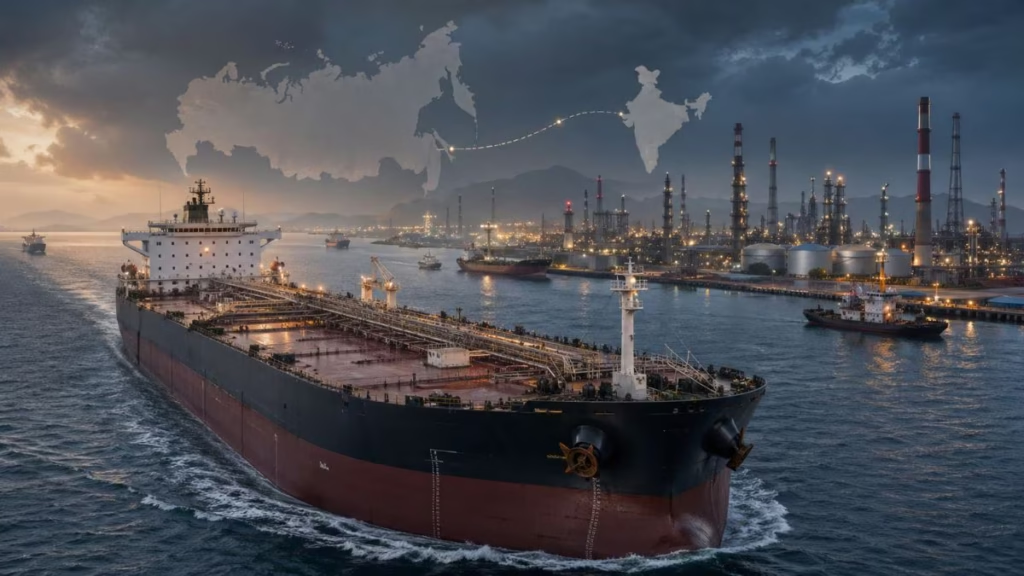
Future of India’s Oil Imports
India is expected to continue diversifying oil imports over the next decade.
While Russian crude currently plays a major role, India is also strengthening ties with producers in the Middle East, Africa, and the United States.
Still, experts believe crude oil will remain essential for transportation, aviation, shipping, and industrial operations for many years.
This means India will continue making pragmatic energy decisions based on affordability and supply stability.
What This Means for Businesses and Investors
Businesses across industries are closely watching oil prices because energy costs affect almost every sector.
Lower crude prices can help manufacturing, transportation, airlines, logistics, and consumer goods companies.
Investors are also monitoring India’s energy strategy because stable fuel supplies support economic growth and market confidence.
The energy sector remains one of the most important drivers of global economic stability.
Companies involved in refining, shipping, storage, and energy infrastructure may continue benefiting from changing trade patterns.
Conclusion
India’s decision to continue buying Russian oil despite changing US sanctions policies highlights one important reality: energy security comes before geopolitical pressure.
For India, affordable and stable oil supplies are essential to support economic growth, control inflation, and protect consumers from rising fuel prices.
The situation also reflects broader changes in global politics where countries increasingly prioritize national interest over external pressure.
As global conflicts continue affecting oil markets, India is likely to maintain a flexible and practical energy strategy focused on long-term stability.
The coming years will determine how global energy trade evolves, but one thing is clear — India will continue making decisions based on economic needs and energy security rather than political narratives alone.


NEET UG Re-Exam 2026: Why Telegram Was Restricted in India and What It Means for Students

Spotify Outage 2026: Thousands of Users Report Streaming Issues Across the Globe

Stock Market Today: Sensex, Nifty & Top Stocks in Focus Amid Global Market Uncertainty

NEET Re-Exam Admit Card 2026 Released: Direct Download Link, Exam Day Guidelines & Important Updates

Made-in-India C295 Aircraft Maiden Flight Marks a New Chapter in India’s Defence Manufacturing

Higher Ethanol Blended Petrol Gets Excise Duty Exemption: What It Means for India’s Fuel Future

What I Eat In A Day As An Indian Diabetic To Lose Weight

10 Simple Indian Home Habits That Help You Lose Weight With Type 2 Diabetes

Diabetes-Friendly Indian Breakfasts That Melt Belly Fat and Control Blood Sugar Naturally

Mango Weight Gain Myth: Smart Ways to Enjoy Mangoes Without Gaining Weight This Summer
Mango Weight Gain Myth: Smart Ways to Enjoy Mangoes Without Gaining Weight This Summer
Diabetes-Friendly Indian Breakfasts That Melt Belly Fat and Control Blood Sugar Naturally

Brain Tumor Warning Signs: When a Headache Is More Than Just a Headache

Blood Pressure Test Tips: Why Avoiding Tea Before Your BP Check Matters
Higher Ethanol Blended Petrol Gets Excise Duty Exemption: What It Means for India’s Fuel Future
10 Simple Indian Home Habits That Help You Lose Weight With Type 2 Diabetes
What I Eat In A Day As An Indian Diabetic To Lose Weight
Spotify Outage 2026: Thousands of Users Report Streaming Issues Across the Globe
NEET UG Re-Exam 2026: Why Telegram Was Restricted in India and What It Means for Students