





Short Overview
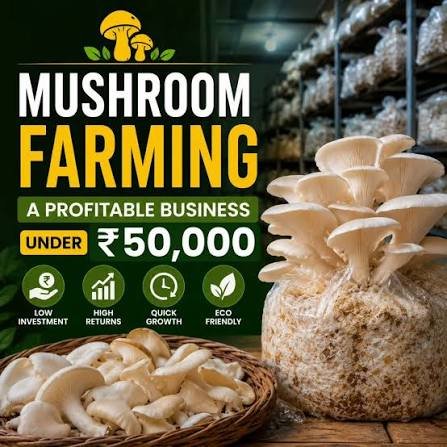
Mushroom farming in India is one of the most profitable small-scale agribusiness opportunities in 2026. With just 300 sq ft space, low investment and fast growing cycles, farmers can generate ₹2–3 lakh annual profit. Suitable for rural farmers, urban entrepreneurs and agri-startups, mushroom cultivation offers high demand, quick returns and strong market potential.
Mushroom farming in India can be a practical small-space agribusiness for beginners who do not own large farmland. A clean room, vertical racks, reliable water, good-quality spawn and confirmed buyers can matter more than acres of land. Instead of chasing fixed profit claims, focus on reducing contamination, choosing a mushroom suited to your climate and building repeat customers.
Mushroom Farming in India: Complete 300 Sq Ft Small Farm Guide for Beginners, Including Setup Cost, Best Mushroom Types, Cultivation Process, Profit Planning, Hygiene, Marketing, Harvesting, Risks, and Practical Tips to Start a Sustainable Mushroom Farming Business Successfully in 2026
1. Why Start Mushroom Farming?
- High Market Demand: Growing consumption in urban markets, hotels and health-conscious consumers.
- Low Investment Business: Requires small indoor space with basic infrastructure.
- Fast Harvest Cycle: Ready in 30–45 days with multiple cycles per year.
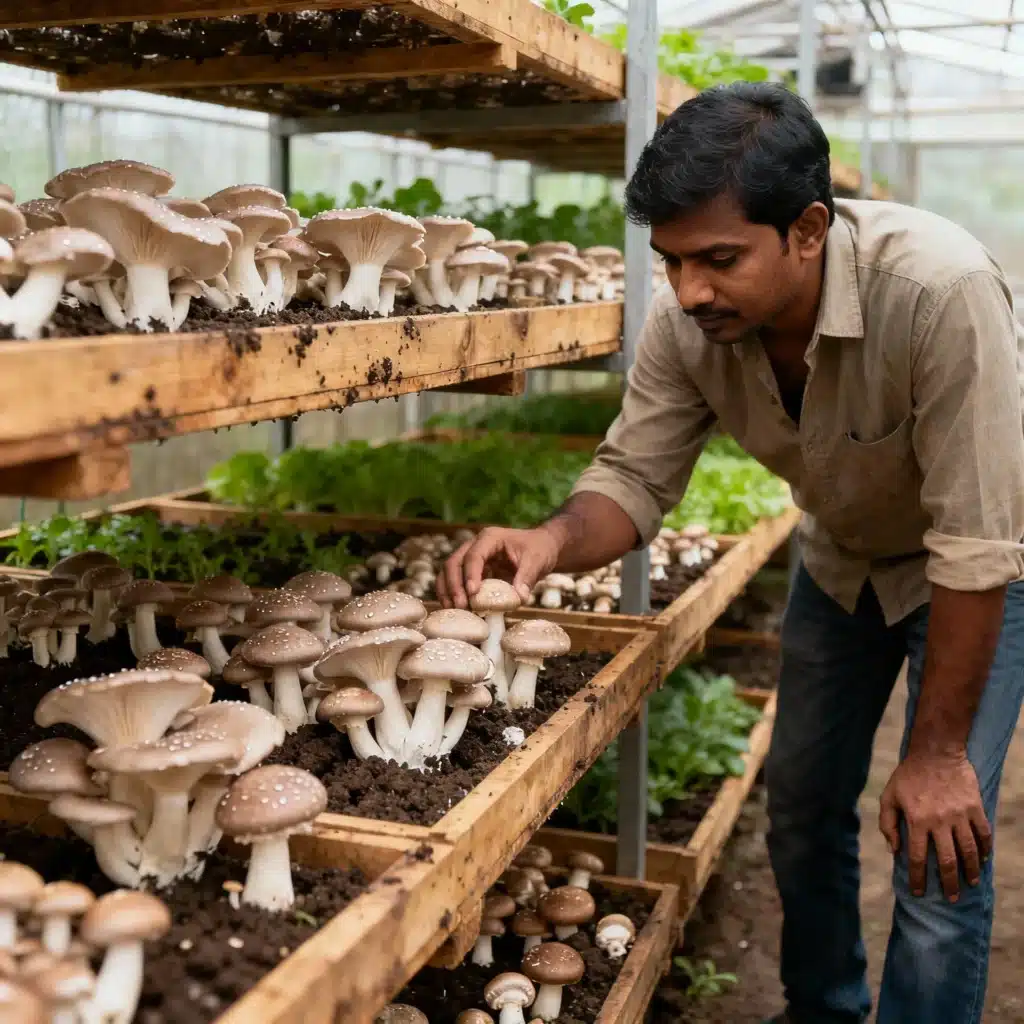
- Low Land Requirement: Can be grown vertically in racks inside a room or shed.
- Uses Agro-Waste: Wheat straw, sawdust and husk reduce raw material cost.
2. Best Mushrooms to Grow in India
- Button Mushroom (Agaricus bisporus): Highest demand in Indian markets.
- Oyster Mushroom (Pleurotus ostreatus): Low cost, ideal for beginners.
- Milky Mushroom (Calocybe indica): Performs well in warm climates.
- Shiitake & Reishi: Premium medicinal mushrooms with export potential.
3. Mushroom Farming Cost for 300 Sq Ft Setup
Estimated investment required to start a 300 sq ft mushroom unit:
- Shed Setup: ₹1,20,000 – ₹1,50,000
- Racks & Equipment: ₹40,000 – ₹50,000
- Spawn & Substrate (Monthly): ₹25,000 – ₹30,000
- Labor & Miscellaneous: ₹15,000
Total Initial Investment: ₹2,00,000 – ₹2,40,000
4. Mushroom Farming Profit Per Year
- Annual Production: 2,400 – 3,000 kg
- Average Selling Price: ₹120 – ₹150 per kg
- Annual Revenue: ₹3,50,000 – ₹5,00,000
- Net Profit: ₹2,00,000 – ₹3,00,000 per year
ROI: 50–100% within the first year with proper management.
5. Where to Sell Mushrooms?
- Local vegetable markets and grocery stores
- Hotels and restaurants (bulk supply)
- Direct-to-consumer via WhatsApp and social media
- Organic and health food stores
- Value-added products like dried mushrooms and powder
6. Risks in Mushroom Farming & Solutions
| Risk | Solution |
|---|---|
| Temperature & Humidity Issues | Install proper ventilation and humidity control systems |
| Contamination | Maintain hygiene and use quality spawn |
| Market Price Fluctuation | Sell dried or processed mushrooms for better margins |
| Short Shelf Life | Use cold storage or quick distribution channels |
7. Tips to Increase Mushroom Yield
- Maintain proper humidity and temperature levels
- Use high-quality spawn from reliable suppliers
- Keep growing room clean and sanitized
- Monitor substrate moisture regularly
- Plan marketing before harvest
Conclusion
Mushroom farming in 300 sq ft is a low-risk, high-profit business opportunity in India. With proper setup, quality inputs and strong market linkage, farmers can earn ₹2–3 lakh annually and scale gradually for higher income.
Mushroom farming in India offers a realistic way to start an agribusiness in limited space, but success depends more on discipline than attractive income claims. A 300 sq ft mushroom farming setup can teach a beginner the complete cycle of substrate preparation, spawn handling, humidity management, contamination control, harvesting, packing and selling without taking on unnecessary scale.
Choose one suitable mushroom variety, use reliable spawn, keep the room clean and confirm buyers before increasing production. Track the real cost and saleable yield of every batch. Once your crop becomes consistent and customers begin asking for more, expansion becomes a business decision based on evidence.
For a beginner, the best first target is simple: produce a clean crop, sell it to a reliable buyer and repeat the process successfully. Build those three things first, and a small mushroom unit can become the foundation of a much stronger mushroom farming business.

