


Short Overview
Agricultural drones are transforming the way Indian farmers handle their fields. Farmers are using drones to save time, reduce manual labour and improve efficiency in farming, from spraying pesticides and fertilisers to monitoring the health of crops. Several Indian companies are developing agricultural drones and offering drone-based farming services. This guide explores the leading agricultural drone companies in India, the technology they use, the benefits of drone farming, and how farmers can choose the right agricultural drone solution.
Introduction to agricultural drones in India
Indian agriculture is entering a new phase where technology is becoming an important part of everyday farming. Farmers are no longer depending only on traditional methods. They are exploring modern tools that can help them manage crops more efficiently and reduce the pressure of rising labour costs.
One of the most promising technologies is the agricultural drone.
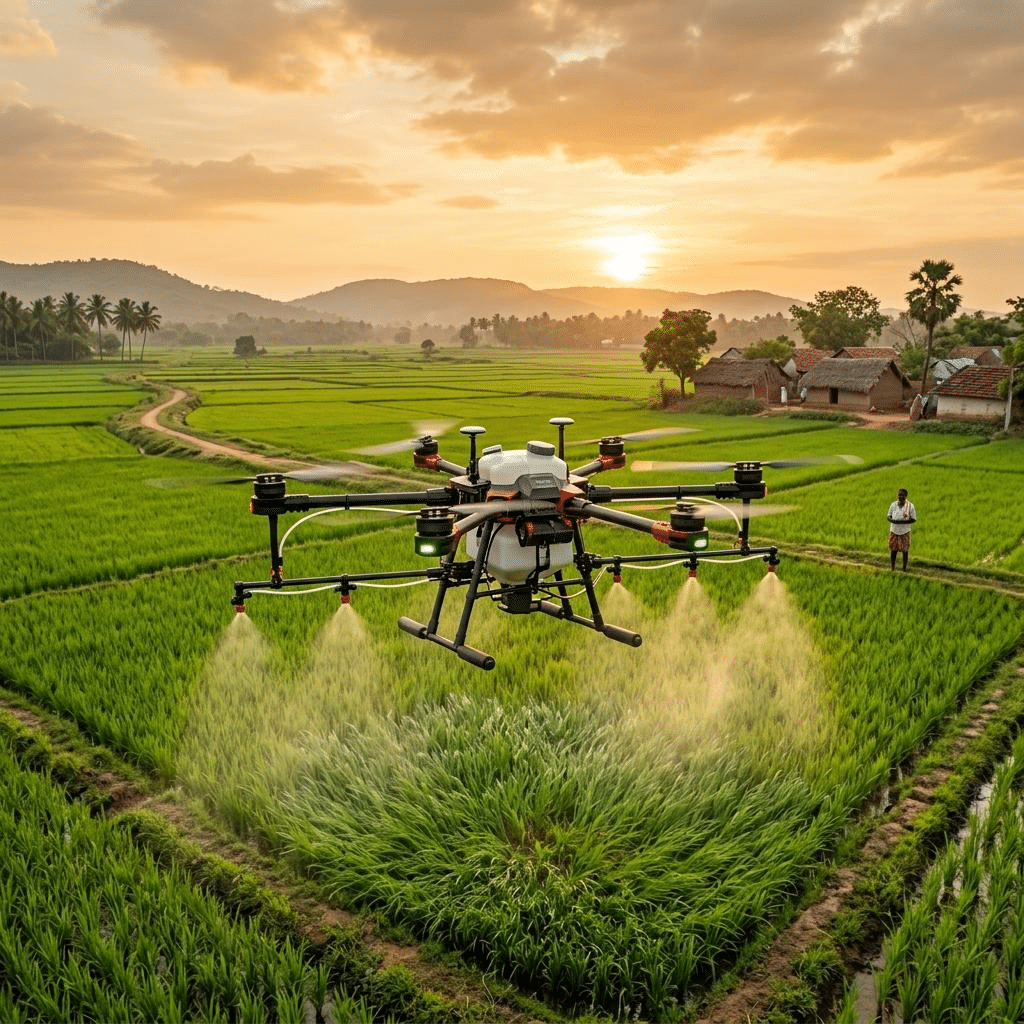
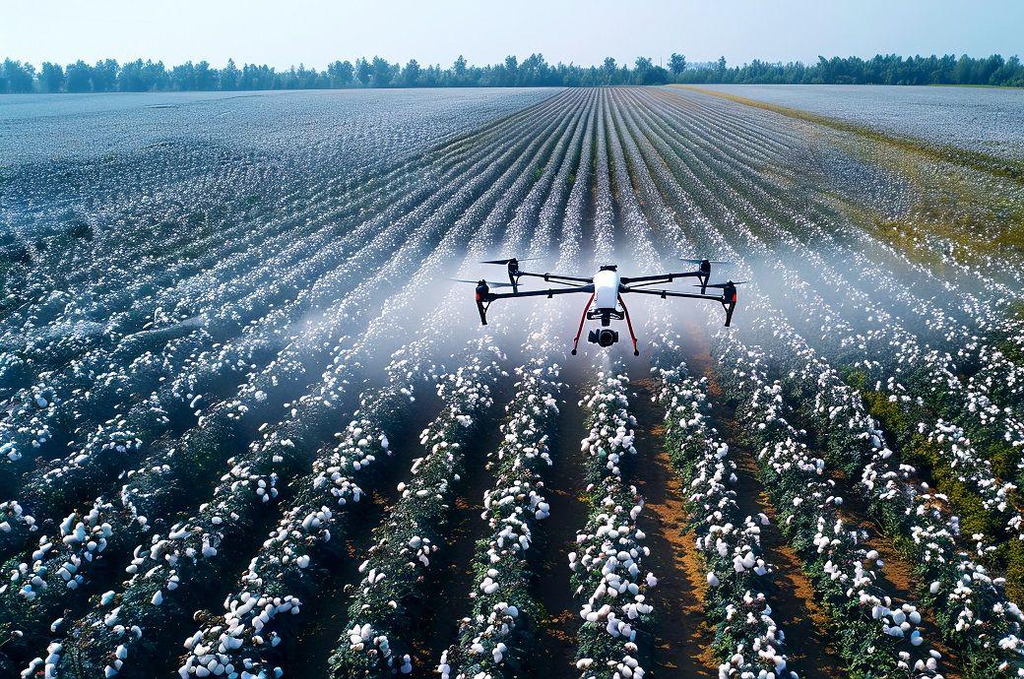
Imagine a farmer who needs to spray pesticides across several acres of farmland. Traditionally, this work may require several workers, long hours, and direct contact with agricultural chemicals. With a spraying drone, the same operation can be completed more quickly, depending on field conditions and the drone’s capacity.
This is one of the reasons why agricultural drone companies in India are attracting attention from farmers, agritech businesses, and agricultural entrepreneurs.
Companies such as Garuda Aerospace, IoTechWorld Avigation, Marut Drones, General Aeronautics, and Dhaksha Unmanned Systems are contributing to the development of drone-based farming solutions.
The industry is also expanding beyond manufacturing. Drone service providers, training organisations, and agricultural technology companies are making drone services more accessible to farmers.
The main question is no longer whether drones can support farming. The bigger question is how farmers can use them effectively, affordably, and safely.
Introduction to agricultural drones in India
An agricultural drone is an unmanned aerial vehicle designed to perform farming-related operations.
These drones are commonly used for pesticide spraying, fertiliser application, crop monitoring, field mapping, and agricultural data collection.
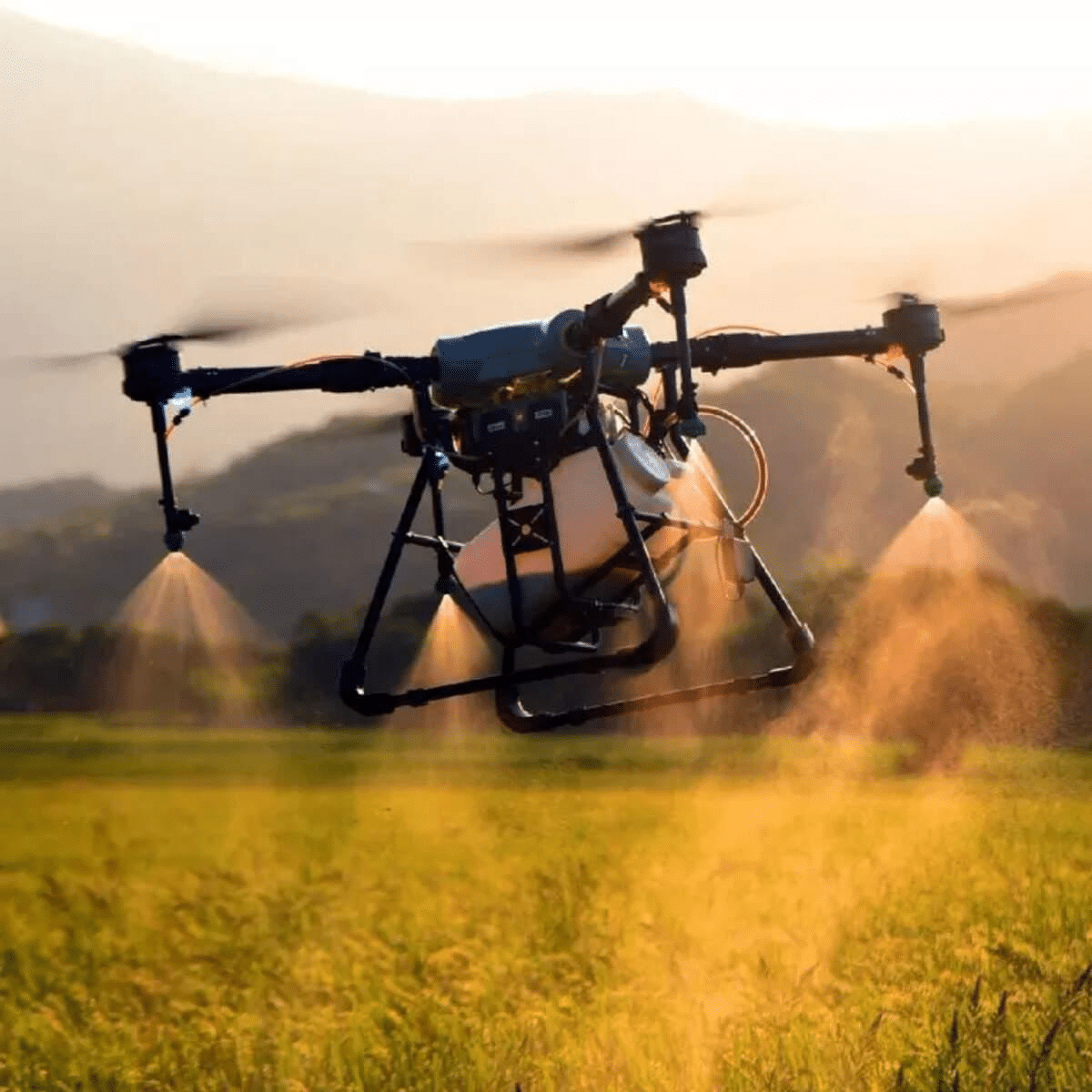
Unlike conventional drones used mainly for photography, agricultural drones are designed to work in farm environments. They may include liquid tanks, spraying nozzles, sensors, cameras, GPS systems, and automated flight controls.
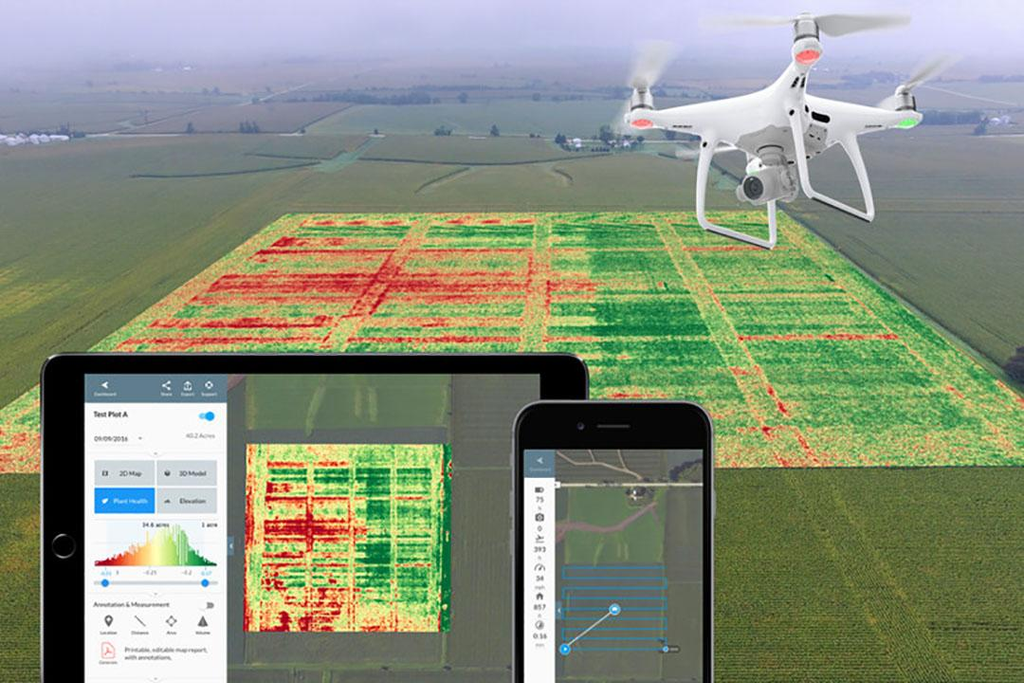
For example, a spraying drone can fly over a paddy field and apply a suitable agricultural solution across the crop. A crop-monitoring drone can capture images that help identify areas where plants may be under stress.
Some advanced systems combine drone imagery with artificial intelligence to analyse crop conditions.
This makes agricultural drones useful not only for spraying but also for precision farming.
According to the Directorate General of Civil Aviation, India maintains an official list of approved unmanned aircraft systems and their models. Farmers should check the applicable certification and operating requirements before purchasing a drone.
Top agricultural drone companies in India
India has several agricultural drone manufacturers and technology providers. The following companies are worth exploring because of their agricultural applications, products, and services.
The list is not a strict ranking by sales or market share. The most suitable company depends on the farmer’s location, crop type, budget, and service requirements.
Garuda Aerospace
Garuda Aerospace is one of the recognised names in India’s agricultural drone industry.
The company develops drones for agricultural spraying, mapping, surveillance, and other commercial applications.
Its agricultural solutions are designed to help farmers reduce manual spraying efforts and improve the efficiency of crop protection activities.
Garuda Aerospace is also associated with the Kisan Drone initiative, which focuses on bringing drone technology into farming.
The company is relevant for farmers and agricultural entrepreneurs interested in purchasing drones or exploring drone-based agricultural services.
Its product range and service availability should be checked directly before making a purchase.
IoTechWorld Avigation
IoTechWorld Avigation is another important company in the agricultural drone sector.
The company is known for its Agribot agricultural drone solutions, which are developed for applications such as pesticide spraying and agricultural operations.
Drone-based spraying can help farmers cover fields more efficiently, especially when labour availability is limited during important crop protection periods.
IoTechWorld is a company worth considering for farmers who want to explore agricultural spraying drones and related support services.
Before purchasing, farmers should compare tank capacity, battery performance, maintenance requirements, and the availability of trained operators in their area.
Marut Drones
Marut Drones is a Hyderabad-based drone technology company with a focus on agricultural applications.
Its agricultural drone solutions are associated with spraying, crop management, and other farming-related operations.
Marut also works in the drone training and service ecosystem. This is important because agricultural drone adoption requires not only equipment but also skilled operators who understand field conditions.
For farmers who are interested in agricultural drone services rather than purchasing a complete drone system, local service availability is an important factor to investigate.
Marut is among the companies contributing to India’s growing agricultural drone ecosystem.
General Aeronautics
General Aeronautics is involved in agricultural technology and drone-based farming solutions.
Its work includes the development of technology for agricultural spraying and precision farming.
Agricultural drones can be useful in crops where conventional spraying is difficult, particularly when field access is limited or the crop canopy makes ground-based operations challenging.
The company is worth exploring for farmers, agricultural institutions, and businesses looking for technology-based crop management solutions.
The right drone should always be selected according to the specific farming operation rather than the company name alone.
Dhaksha Unmanned Systems
Dhaksha Unmanned Systems is another company operating in India’s drone technology industry.
Its agricultural drone range includes spraying-related systems, alongside other unmanned aircraft applications.
Agricultural spraying drones can be particularly useful for farms that require timely crop protection operations.
The company’s agricultural products are worth comparing with other manufacturers based on payload, flight endurance, spray system design, and service support.
Farmers should also verify whether the specific drone model is approved for the intended operation.
BharatRohan
BharatRohan specialises in agricultural intelligence and drone monitoring of crops.
Its technology links to aerial imaging and the use of crop data to inform farming decisions.
It isn’t just a question of spraying pesticides. Farmers can use drone imagery to see potential crop stress, helping them to spot areas that might need attention.
For instance, a farmer might observe one part of a field growing differently than the rest. Monitoring of crops from drones can help to identify more accurately the area affected.
But sometimes aerial photos do not show exactly what caused the damage to the crops. Field inspection and agricultural advice may still be necessary.
Other agriculture drone manufacturers
Paras Aerospace, Asteria Aerospace, Thanos Technologies and other emerging manufacturers are also part of India’s agri-drone market.
Some are targeting spraying drones, others are looking at mapping, data collection or unmanned aircraft systems more generally.
Farmers should refer to the actual product specifications and service availability, rather than assuming all drone companies have the same agricultural capabilities.
How Do Agricultural Drones Work?
Agricultural drones use flight control systems, GPS technology, sensors and specialised equipment to fly.
The operator fills the tank of the spraying drone with an approved agricultural solution and plans the flight based on the size and shape of the field. The drone continues along its flight path, spraying the crop.
Many drones use GPS for navigation, which allows the operator to keep the drone on a consistent flight path. Certain models come with obstacle detection and automated flight capabilities.
The spraying system is made up of nozzles which distribute the liquid over the crop. The operator must choose appropriate application settings based on the crop, chemical label, weather conditions and the recommended application rate.
Drones can carry cameras or special sensors to watch crops. The images that are captured can then be analysed to identify differences in crop growth or possible areas of stress.
The important thing is that drones don’t automatically make every decision on farm. They’re tools that help the farmer do operations more efficiently and collect useful information.
Advantages of agricultural drones for Indian farmers
Time-saving and labour-saving
One of the major benefits of agricultural drones is their ability to save time in spraying operations.
Agricultural labour is usually scarce during the peak farming seasons. Drones can be an alternative option when there is a need to complete the pesticide or fertiliser application in a short period.
How well they do in practice depends on size of fields, battery changes, tank capacity, weather and how many operators are available.
Improved spraying efficiency
Drones can help in spraying agricultural chemicals over a field with a more controlled flight pattern.
Good results, however, depend on correct settings, choice of nozzle, droplet size, wind conditions and crop structure.
You can’t assume a drone will automatically provide perfect coverage in all cases. Use the product according to the instructions and have it operated by trained personnel.
Reduce direct contact with chemicals
Workers can be exposed to agricultural chemicals when pesticides are applied by hand.
They may also decrease the need for workers to walk through fields that have just been treated during application.
That doesn’t remove all chemical hazards. Operators must continue to follow required safety procedures, use appropriate protective equipment, and avoid unsafe exposure to spray drift.
Supporting Precision Agriculture
Drone crop monitoring allows farmers to know the differences in the fields.
This can help to make field inspections more targeted and improve the efficiency of farm management.
Paired with soil testing, crop observations and agricultural advice, drone data can be a useful component of precision agriculture.
Creating business opportunities in rural areas
Agricultural drones are also opening up opportunities for rural entrepreneurs.
After being trained, a drone operator can offer spraying services to the surrounding farmers, agricultural cooperatives or Farmer Producer Organisations.
This service-based model can help farmers to get access to drone technology without buying an expensive machine themselves.
Cost of agricultural drones in India
In India, the cost of an agriculture drone depends on variables such as payload capacity, spraying technology, battery system, sensors, software and the manufacturer.
A smaller drone for basic spraying operations will have a different price than a larger system with advanced navigation and crop-monitoring capabilities.
The purchase price is just one part of the investment.
Farmers should also consider the cost of batteries, chargers, spare parts, repairs, operator training, transport and insurance, where applicable.
A drone that looks like a good deal at first can end up being expensive if you can’t get parts for it or if it’s hard to maintain.
Is it worth to buy an agricultural drone?
The key to making money with an ag drone is how often it gets flown.
It may not always be the most cost-effective option for a smallholder farmer to buy a drone. It is probably more practical to hire a drone service to do a few spraying operations.
If you have a large farm, agricultural co-operative or drone service business and you use the drone regularly then it may be better value to purchase a drone.
A simple way to gauge the investment is to compare the total annual cost of owning a drone against how much you pay for hired spraying services.
Farmers should also consider the option of earning additional income from the drone by providing services to neighbouring farmers.
Subsidies and government support for agriculture drones
The Government of India has launched schemes to promote agricultural mechanisation and drone technology.
The Sub-Mission on Agricultural Mechanisation is providing financial assistance to selected eligible institutions and agriculture organisations.
The Ministry of Agriculture and Farmers Welfare has said that eligible institutions like Krishi Vigyan Kendras and agricultural universities have been provided financial assistance up to 100% of the cost of agricultural drone subject to a maximum of ₹10 lakh per drone as per the cited guidelines.
Provisions have also been made for grants up to 75% of the cost of agricultural drones for demonstrations in the fields of the farmers for Farmer Producer Organisations.
These are the details of the scheme and should not be taken as a universal subsidy for each and every farmer.
Before you buy, farmers should check current eligibility, application procedures and state-level assistance with their local agriculture department or official government portal.
Choosing the best agricultural drone company in India
Choosing the right agricultural drone company is more than simply comparing prices.
The first step is to know the actual farming requirement. A farmer who grows paddy mainly may have different spraying requirements than a farmer who grows cotton or sugarcane or vegetables.
The drone’s payload capacity needs to be appropriate for the intended application. Another important factor is battery performance, which determines how often the operator must stop to recharge or replace batteries.
Farmers should also check the quality of the spraying system. The performance of the drone can be affected by the nozzle design, flow control and spray consistency.
The after-sales service is also very good. A cheaper manufacturer far away may not be as good a choice as a company with good local support.
Before you buy, ask the company about training for operators, spare parts, maintenance support and a clear warranty policy.
It’s also important to check the certification status of the specific drone model from the official DGCA resources.
Agricultural drone technology challenges
While there are benefits to agricultural drones, there are also limitations.
Small farmers may find the initial outlay difficult. Charging and replacing batteries can add to operating costs.
Weather can also play a role in drone operations. Strong winds, rain or other unsuitable conditions for spraying may require the operator to delay the application.
The availability of trained operators in rural areas is another challenge. Farmers need people who know how to fly a drone and know how to spray a crop.
Drones also need to be well maintained. Performance can be affected by a damaged nozzle, battery problem or faulty sensor.
Most importantly, drone spraying must comply with applicable regulations and pesticide label instructions. Farmers shouldn’t assume that any pesticide or fertiliser can be sprayed from any agricultural drone.
Future of Drones in Indian Agriculture
The future of agricultural drones in India is intrinsically linked to precision farming, artificial intelligence and the increasing need for efficient farm operations.
In the years ahead, drone technology might be integrated more into crop monitoring software, satellite imagery, weather data and farm management systems.
Artificial intelligence could help farmers better identify crop stress by analysing aerial images and other field data.
Drones-as-a-Service models might also become more prevalent. Instead of buying a drone, farmers could hire trained operators whenever they need spraying or monitoring services.
The model is especially beneficial to small and medium-sized farms as it provides farmers access to technology without the full cost of ownership.
Government initiatives, private investment and local drone service networks may continue to drive the adoption of agricultural drones.
But the long-term success of drone farming will depend on the affordability and reliability of drone farming services, as well as farmer awareness and demonstrable improvements in agricultural productivity.
Conclusion
Modern Indian agriculture is increasingly depending on the use of agricultural drones. They provide farmers with new ways to control spraying activities, reduce manual labour, monitor crop conditions and improve farm management.
Companies like Garuda Aerospace, IoTechWorld Avigation, Marut Drones, General Aeronautics and Dhaksha Unmanned Systems are working towards growing the agricultural drone ecosystem in India.
But there are other ways to enjoy this technology besides buying a drone. Farmers may also consult drone-hire services, agricultural co-operatives and local service providers.
The right way is to understand the farm’s real needs, compare the available technology, check the related certifications and determine the total cost before investment.
As precision farming develops, agricultural drones can provide a valuable tool to improve farming efficiency and support the next generation of Indian agriculture.