



Short overview
Agriculture is no longer limited to traditional farming. Technology, digital marketing, artificial intelligence, online marketplaces, soil testing, smart irrigation, and sustainable agriculture are creating new business opportunities for young entrepreneurs. Students can explore these opportunities without purchasing farmland or investing heavily in expensive machinery.
This guide explains the best agritech startup ideas with low investment for students in India, how each business works, the skills required, ways to find customers, and practical steps to start small. It also explores startup support and incubation opportunities that may help students turn an agricultural idea into a real business.
The main goal is simple: identify a genuine farming problem, develop an affordable solution, test it with real customers, and expand only when the business model works
What Is Agritech Startup?
An agritech startup is a business that uses technology, innovation or improved business practices to solve problems in agriculture and related industries. The term is a mix of agriculture and technology, but an agritech business doesn’t always necessitate sophisticated software, robots, or costly equipment.
For instance, a student who is creating a service on WhatsApp to help farmers find buyers for their vegetables is building an agriculture-related business. An agritech startup may also include a small business providing soil-testing coordination, farm record management, organic compost production or digital marketing for agricultural businesses.
The important thing is the issue.
Farmers may require reliable information on weather, affordable irrigation options, better access to markets, guidance on crop diseases or ways to reduce post-harvest losses. A business that addresses one of these challenges can create value for farmers and generate revenue.
Students are at an advantage in that there are many agriculture business ideas that can be tested on a small scale. Students can start with a simple service and learn about customer needs, rather than building a full application or buying expensive machinery from the beginning. Improve the solution progressively.
Agriculture is changing rapidly. And for the first time in history a student with a laptop, a smartphone and a good idea can build a business that directly helps farmers. You don’t need a big office or a big budget. You just need the right idea and the humility to start small.
The global agritech market is growing at a pace most industries can only wish for. AgFunder’s report shows global investment in agritech has surpassed $29 billion. Investors are paying attention, because the problem is real and the market is massive. ‘Billions of people rely on food every single day, and the systems that grow that food are old, inefficient and under pressure from climate change.
India is one of the largest agriculture economies in the world, but most farmers still use guesswork instead of data, and that is where your startup can make a real difference.
If you are a student and looking for a startup idea that is meaningful and also makes money, agritech is one of the best spaces to enter right now. This blog will guide you in finding the best ideas for your new agritech startup.
Why is Agritech the Right Space for Students Right Now?
India has more than 140 million farming households. Most still depend on old techniques, guesswork and middlemen. This gap between what farmers need and what they have now is your chance.
The government is really pushing digital agriculture. The PM-KISAN, Digital Agriculture Mission, eNAM etc are already creating the base. Private investors are pumping money into. And farmers themselves are becoming more receptive to technology, particularly after the smartphone revolution hit rural India.
The best thing? The majority of agritech startup ideas do not need you to build expensive hardware or hire a big team. A mobile app, a WhatsApp service, a small YouTube channel, or a data collection tool could be the start of something big.
What makes a good low-investment idea for an agritech startup
Before we go into the ideas, here’s what you should be looking for in a startup idea if you are low on funds:
Addresses a real problem farmers face on a daily basis, not just a hypothetical one
Works with your existing equipment, such as a smartphone, an internet connection or simple coding skills
Can be quickly tested without having to build a full product from day one
has a clear way to make money, whether that be through subscriptions, commissions or advertising
Now, let’s get to the ideas
1. Hyperlocal Farm Advisory App
Farmers in India often get generic crop advice that does not take into account the local soil, weather or crop variety. That changes with a hyperlocal farm advisory app.
You gather a few basic facts about a farmer’s location, crop type, and soil condition, and then use AI or simple rule-based logic to send them daily or weekly advice on irrigation, fertiliser use, and pest management.
The main investment here is your time and basic app development skills. You can build a full app or just start with a WhatsApp bot. Monetization could be through local agri-input dealers who want to reach farmers, or through a small monthly subscription.
One of the best agritech startup ideas for students, this is a combination of technology, local knowledge and a real need.
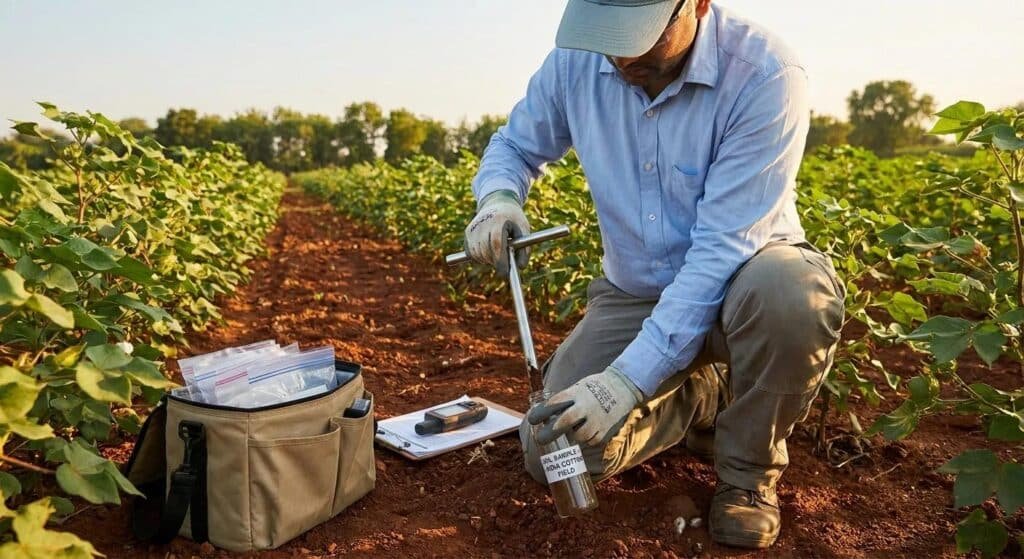
2. Soil Testing as a Service
A lot of farmers don’t have their soil tested because it’s a pain and they don’t understand the results. You are able to build a simple business out of this.
Work with a certified lab or use portable soil testing kits. Visit farms, take samples, send samples to the lab and send simple-to-understand reports back to the farmer’s phone in their local language. Pay a small fee for each test.
No technical degree required. It requires hustle, trust and good communication. You can begin in your own district and build slowly.
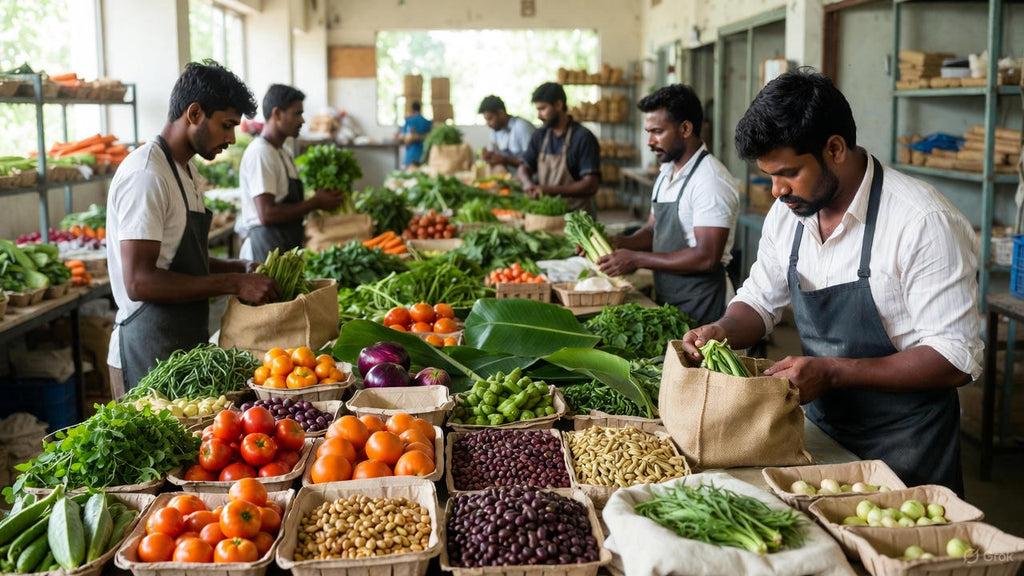
3. Farm-to-Table Direct Selling Platform
Farmers get a tiny fraction of middlemen’s profits. This problem can be solved by an easy online platform connecting local farmers directly to urban consumers or small restaurants.
You don’t have to start off with a high-powered e-commerce platform. You can take orders on Instagram, WhatsApp groups or Google Forms. You either handle the deliveries yourself or partner with a local courier. Invest only in a proper website or app after you have built up trust with both parties.
It is particularly effective for organic produce, exotic vegetables and speciality crops where consumers are willing to pay a premium.
4. Agri Influencer and Educational Content Platform
This is a unique and often missed one. Every day, millions of farmers watch and read content on YouTube and Facebook. If you can make short useful videos in your regional language about farming techniques, government schemes, market prices or new crop varieties, you can build a serious audience.
Once you have followers, you can earn through YouTube ads, brand sponsorships from agri companies or by selling your own digital courses.
Farmers are very interested to learn new methods and technologies when the content is delivered in a way that they can relate to, as we see in National Dairy Mela 2025. There is a huge demand for quality agri content in regional languages which is largely unsatisfied.
This is the most differentiated idea on this list as it is a business that converts knowledge into a business. Costs next to nothing to start and can scale to lakhs of followers if done consistently.
5. Drone Photography and Mapping for Farmers
Drone services for agriculture is booming in India. Farmers are using drones to map their land, to spray pesticides and for crop monitoring.
If you have a drone or can rent one at the beginning you can offer these services to farmers in your area. The government has also promoted the use of drones through the Drone Didi scheme and other such programmes.
Begin with free demonstrations to some farmers. Let the results do the talking. The grapevine is strong in farming communities. Once you get your name out there, you can start charging by the acre and growing.
Here are some services you could provide as a student drone startup:
- Aerial imagery for crop health monitoring
- Large-scale agricultural spraying services
- Land mapping and land measurement reports
6. AgriWaste to Product Business
The challenge with farm waste is enormous. Rice husk, sugarcane bagasse, cotton stalks and banana fibres are discarded or burned every year. But all these have genuine commercial value.
You could start a small unit that converts agri-waste into products such as compost, biochar, eco-friendly packaging or animal feed. The raw material is often either free or very cheap. The first costs are for basic processing equipment and for finding customers.
It also plays into the interests of sustainability-minded investors and CSR grants, so it’s easier to get funding than in some other sectors.
7. Cold Storage and Logistics Solutions for Small Farmers
The Indian Council of Agricultural Research estimates that post-harvest losses in India are almost 16 per cent of total agricultural output. A big part of this is that small farmers do not have access to cheap cold storage.
Or create a shared cold storage service, or a micro-logistics company that connects farmers to existing cold chain networks. Start small, serve 20-30 farmers in your block and grow from there.
This takes a little more capital than the other ideas but you can start by partnering with existing cold storage owners and be an aggregator. No physical asset required to start.
8. AI-Based Crop Disease Detection Tool
This is for students with some coding background. Imagine a simple mobile app that uses visual recognition to identify crop diseases from pictures.
The farmer snaps a photo of a sick leaf on his crop. The app diagnoses the disease and offers a treatment. This kind of model can be trained using publicly available data sets and open source machine learning tools.
You could make the basic version free and charge for premium features such as personalised advice, product recommendations or expert consultations. There are several such tools available globally, but very few are built for Indian crops, Indian languages and Indian farming conditions. That’s your advantage.
9. Custom Agri Input Subscription Box
It’s like a monthly box selected for farmers. You send them just the right seeds, fertilisers, micronutrients or pest control products for the crop they are growing and the season.
The space is getting serious global attention and it’s no surprise that Climate Investors are now pouring $30M every few months into sustainable input and supply chain solutions. Work with local agri-input dealers or distributors.
You do the curation, marketing and subscription management. They do the fulfilment. On each order you get a margin. That’s good news for cash crop farmers, horticulture growers and organic farmers willing to pay for convenience and expertise.
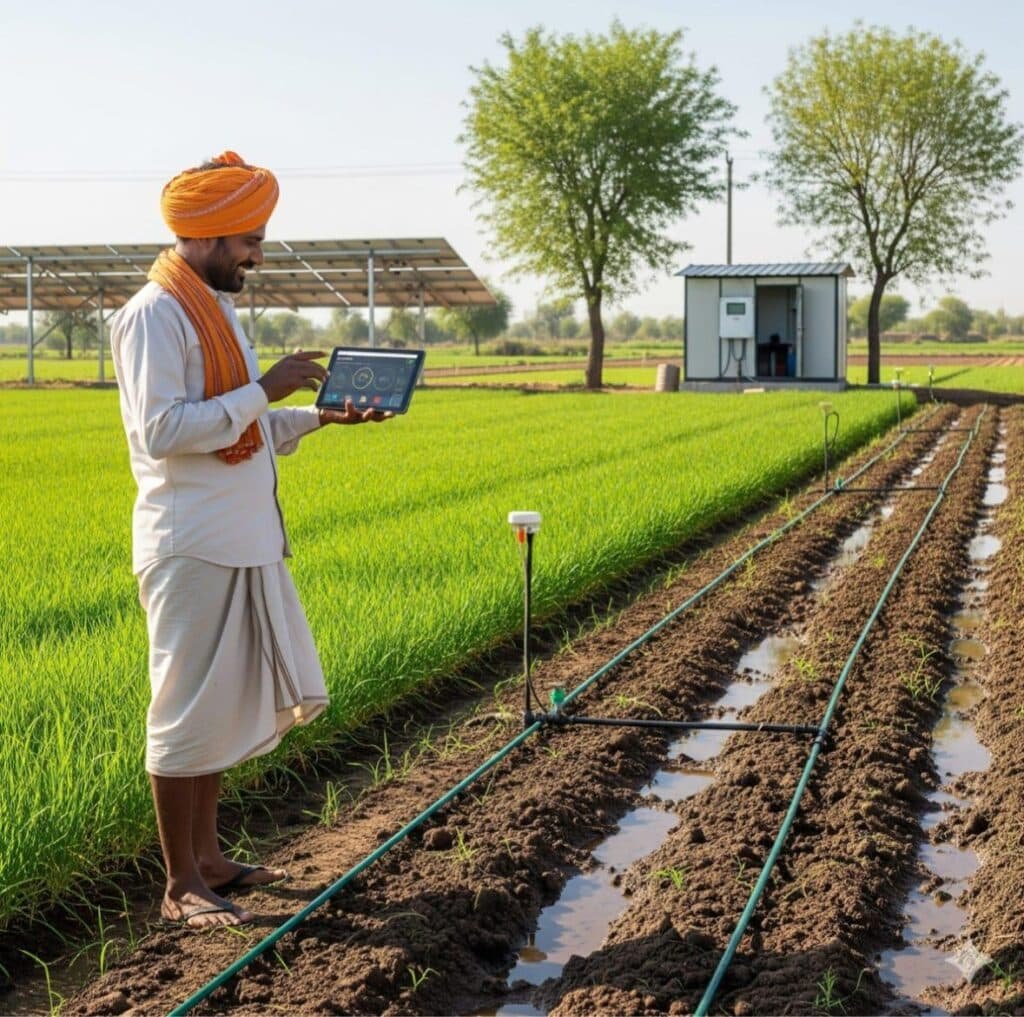
10. Water Management Consulting for Small Farms
One of the biggest challenges facing Indian agriculture is the scarcity of water. Farmers often overwater their crops because they don’t have the ability to measure soil moisture or schedule irrigation.
If you can learn about drip irrigation, rain water harvesting and soil moisture management, you can offer consulting services to farmers in your area. Help them design simple, low-cost systems that save water and increase yields.
Begin by offering free workshops or creating YouTube videos to build credibility. Once they see results, farmers will pay for on-ground consultation.
Common Mistakes Students Make When They Start Out In Agritech
Many students have good ideas but make mistakes early that can be avoided. Here are the main ones to keep an eye on:
Build before you talk to farmers: Always validate your idea by spending time with real farmers before writing a single line of code or spending money
Ignoring local language and culture: Tech that works in English may not work in a rural setting if not adapted for the local context
Trying to scale too fast Focus on making 10 farmers really happy before trying to reach 10,000.
How to begin now
You do not need permission to begin. A simple 3 step plan is this:
Step 1: Choose an idea from the list that relates to your existing skills or interests.
Step 2: Interview at least 10 farmers in your area, over the course of two weekends. Find out about their daily problems in details.
Step 3: Create the smallest possible version of your solution and share it with 5 farmers and see what happens.
That’s all. All the other stuff, funding, scaling, marketing, that comes after you’ve proven that your idea actually helps someone.
If you’re looking to connect with the agritech startup ecosystem, Focus Agritech regularly features new startups, funding news and founder stories that can give you both inspiration and contacts.
Agriculture – The Next Big Bet
Being in agriculture is no longer a slow boring sector. And it’s one of the most exciting areas of innovation in the world today. We need new thinking on climate change, food security, water scarcity and rural income inequality. Students starting now, even with small ideas, are putting themselves in a position to be part of the solution.
Agritech entrepreneurs who understand technology and the ground reality are what India needs. That combination is uncommon. And if you can build it, you will be a star, not only as a startup founder, but as a person who is creating real value for the country.
Conclusion
The best agritech startup ideas for students with low investment are those that solve real problems, without requiring unnecessary spending upfront. Here are some ideas to begin with: digital marketing for agribusinesses, online farmer marketplaces, soil-testing coordination, compost production, smart irrigation, farm record management, and agricultural content creating.
The biggest thing is to get away from the idea phase.” Talk to farmers, understand their needs, do research on existing solutions and pilot your service with a small group of customers. Keep good financial records and improve business using real feedback.
Before investing big money, students should also explore incubation programmes, agricultural institutions and experienced mentors. With the right help an early idea can turn into a workable, market-ready solution.
Technology is not needed in agriculture for its own sake. It needs solutions that are cheap, dependable and useful to the people who grow and distribute food. By addressing these needs, student entrepreneurs are given an opportunity to build a business that can generate income opportunities and contribute to a more efficient and sustainable agricultural ecosystem.
No posts found.