


Short Overview
Starting a farming business does not always require large agricultural land or a huge investment. Even one acre can become a productive and profitable farming opportunity when managed properly. With the right crop selection, organic farming practices, drip irrigation, soil management and direct marketing, small farmers can build a sustainable agricultural business.
This guide explains how to start farming with 1 acre in India, which crops are suitable for small farms, how much investment is required, how to manage production and how to find customers. It is especially useful for beginners, small farmers, young entrepreneurs and people interested in organic farming.
Introduction
Many people dream of being a farmer, but they often think that to be a successful farmer you need 5 or 10 acres of agriculture land. This isn’t always true. A small piece of land can generate regular income with proper planning and modern agricultural techniques.
Farming is changing today. Fresh vegetables, chemical-free food and locally grown agricultural products are increasingly in demand by consumers. It gives small farmers the opportunity to grow quality crops and sell them directly to consumers.
With one acre of land you can start the agricultural business without taking unnecessary financial risks. Beginners can start with a small farm, study the market, learn crop management and then expand their operations rather than investing a lot of money in large land areas.
A one acre organic farm, if planned properly, can have vegetables, leafy greens, pulses and other suitable crops combined. However, profitability depends on soil quality, water availability, production costs, local demand and prices selling. There is no sure income but a disciplined approach to farming can increase chances of success.
Let’s know how to start a profitable farming business with just one acre.
Why Does One Acre Suffice to Start Farming?
One acre is around 4,047 square meters. It might look like a small area, but it can accommodate a variety of vegetables and allow for multiple crop cycles within a year.
The biggest benefit of starting with 1 acre is better management. Farmers can keep tabs on crop growth, detect pest problems, manage irrigation and maintain soil fertility without running a large farming operation.
Intensive farming on a small scale is about getting more value from the land that you have, rather than simply growing more land. Leafy greens can be harvested in 25-40 days, depending on the crop and growing conditions. This allows for planning of several harvests, not waiting several months for one crop.
Another benefit is the lower initial financial risk. Beginners can experiment with different crops, know the likes of customers and improve their farming practices before investing in other lands.
Organic Mandya’s reference guide also highlighted the value of treating one acre as a properly managed agricultural business rather than expanding land without proper experience.
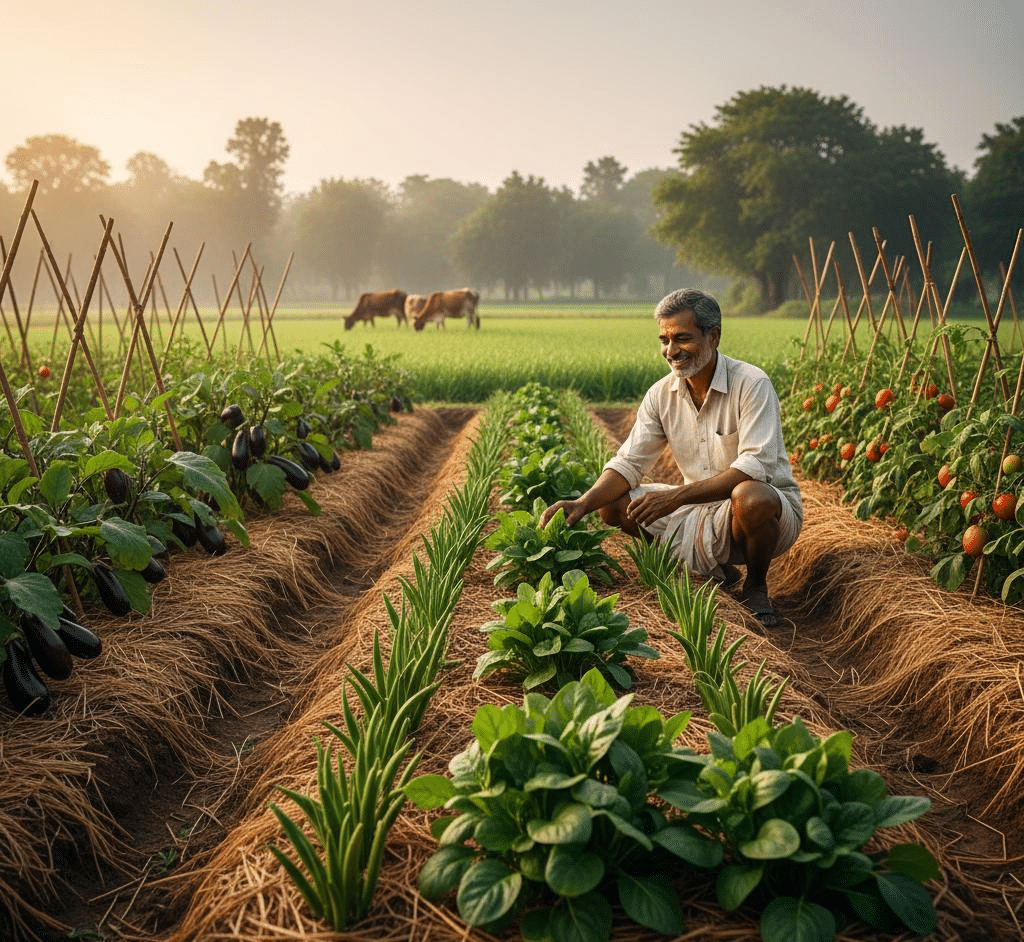
Preparing the Land Before Farming
Farmers should be aware of land conditions before purchasing seeds or planting vegetables. Good preparation is a great foundation for successful cultivation.
Soil tests : First take soil samples from different parts of your farm. Send these samples to a recognized soil testing laboratory or your nearest Krishi Vigyan Kendra. The results give you a picture of the soil pH, organic carbon and nutrient availability. The report tells you which crops to plant and when to apply soil amendments. The Government of India’s Soil Health Card program also provides nutrient information and fertilizer recommendations.
Water Availability Water is one of the most important requirements in vegetable growing. Find out if your farm has a borewell, open well, agricultural connection or any other reliable source of water. When selecting crops, be aware of the seasonal availability of water.
Preparation of the land: Remove un-wanted weeds, stones and other materials. Use proper agricultural equipment to prepare the soil and apply well-decomposed farmyard manure or compost as per the soil requirements.
Farm fencing: Protect your crops from cattle, wild life and other outside damage. A good fence can reduce unnecessary crop loss, particularly in the early stages of growing.
Farm layout: Break up your land into practical sections for vegetable beds, irrigation facilities, compost preparation, storage and movement. Be sure to leave enough room to pick and move the produce.
Best Crop to Cultivate in One Acre in India
One of the most important decisions in one-acre farming is what crops to grow. Instead of growing one crop, beginners can grow a mixture of vegetables and leafy greens depending on their local climate, soil conditions and market demand.
Rows of green spinach on field
Palak and spinach
Spinach is a good starter crop because it grows fairly fast and can be harvested several times with proper management. It is very commonly used in Indian household, restaurants and vegetable markets .
Satva Farm Organic Fenugreek (Methi) – 200 gms
Fenugreek (Methi)
Another useful crop for small farmers is methi. Leaves are commonly used in Indian kitchens and can be grown in relatively short crop cycles depending on the variety and climate.
Close up fresh growing green coriander (cilantro) leaves in vegetable garden. fresh coriander plant (cilantro ) green on growth the vegetable garden
Cilantro
Coriander is a common kitchen ingredient with common demand. Depending on the variety, growing season and local market opportunities, farmers can grow it for fresh leaves or seeds.
How to Increase Tomato Yield – Organic Ways to Boost Your Harvest
Tomato
Tomato farming can provide an extended harvesting season if farmers plant the right varieties and manage irrigation, nutrition and pests with diligence. Consideration should be given to market price fluctuations before cultivation.
Cowpea and Beans
Beans and cowpea can diversify the farm production. If managed properly, leguminous crops can also enrich the soil through biological nitrogen fixation.
First of all, as a beginner, you should focus on four to six suitable crops, not too many varieties. Easier to harvest, irrigate, pest control, market.
How to Implement Modern Farming Practices on an Acre
Modern farming techniques can assist small farmers to enhance the productivity and efficient management of resources.
One useful technique is raised-bed farming. In this system, crops are grown on slightly raised beds with paths between them. Raised beds can improve drainage, make it easier to maintain crops and reduce soil compaction from regular walking.
Drip irrigation is another good investment. It supplies water to the roots of the plants through pipes and emitters. This could enhance water use efficiency and reduce unnecessary water application.
The Government of India is promoting drip and sprinkler irrigation under the Per Drop More Crop mission. Financial assistance may be available to eligible farmers depending on the guidelines of the current scheme and state-level implementation.
Farmers may also use mulch to help retain moisture in the soil, reduce weed growth and promote healthier growing conditions.
Simple electronic devices like weather apps and farm management software can help farmers track rainfall, keep records of cultivation and plan harvest schedules.
Organic Farming Techniques for Beginners
Organic farming is a good option for small farmers who want to grow food and maintain their soil health for a long time.
The first step is to increase the fertility of the soil by adding compost, vermicompost, green manure and well decomposed farmyard manure. These materials help improve the soil structure and add organic substances.
Another traditional natural farming input is Jeevamrutha which is made from cow dung, cow urine, jaggery, pulse flour and water. Those farmers who want to use it should learn the right way of preparation and application methods from the experienced practitioners.
Crop rotation is also important. Growing different families of crops in succession can help break some pest and disease cycles and improve the balance of nutrients in the soil.
Also important is integrated pest management. Regular field inspection, physical removal of pests, appropriate traps and recommended biological control methods can help to manage pest problems.
But farmers should not assume that using natural inputs automatically means certified organic produce. Those wishing to market products under an organic label must meet the relevant certification and labeling requirements.
One-Acre Farming Investment and Setup Costs
One of the biggest questions for beginners is how much money is required to start farming with one acre.
The investment depends on whether the land is already fenced, the availability of irrigation, the condition of the soil and the farming system selected.
The following table provides an illustrative planning budget for a small raised-bed vegetable farm in India.
| Farming requirement | Estimated cost |
| Basic fencing | ₹15,000–25,000 |
| Drip irrigation | ₹18,000–35,000 |
| Land and bed preparation | ₹5,000–10,000 |
| Seeds and planting materials | ₹4,000–8,000 |
| Compost and soil inputs | ₹2,000–5,000 |
| Basic farming tools | ₹3,000–6,000 |
| Compost pit and miscellaneous | ₹2,000–4,000 |
| Estimated total | ₹49,000–93,000 |
These are illustrative planning estimates, not guaranteed market quotations. Costs can vary by location, materials, labour, existing infrastructure and farm size. Land purchase or lease, borewell construction, electricity, transport and major equipment are excluded.
Farmers should maintain additional working capital for labour, packaging, transportation, replacement seeds and unexpected expenses.
Instead of spending the entire budget immediately, beginners should develop the farm in stages. Start with essential infrastructure and expand only after understanding production and market requirements.
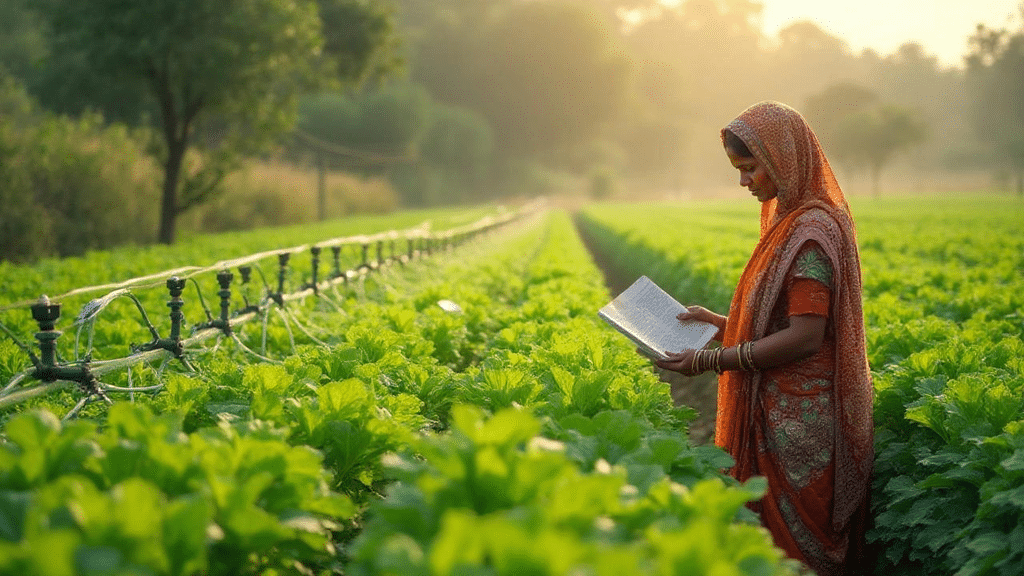
Selling Your Agricultural Products
Growing quality vegetables is just one aspect of farming. It is equally important to get the right customers.
A mistake many beginners make is to start to cultivate before they have identified buyers. At the time of the harvest, they have difficulty selling their products at a fair price.
The better way to do it is to develop a marketing plan before planting.
One possibility is direct selling. Farmers can connect to local households, apartment communities, grocery stores, restaurants and local vegetable shops. Another way of getting fresh produce direct to families is through weekly vegetable boxes.
WhatsApp Business, Instagram and Facebook can help farmers share photos of their products, announce availability of harvests and collect customer orders.
Local organic markets and farmer markets also give farmers the chance to join in. Platforms are great opportunities to interact directly with consumers and understand their needs.
Consistent quality, fair prices and reliable delivery can help create repeat customers. A small farm with established buyers may have more business stability than a large producing farm with no confirmed market.
Expected Income from One-Acre Farming
The income from one-acre farming depends on crop selection, yield, harvesting frequency, selling price and operating expenses.
It is important to understand the difference between gross revenue and net profit. Gross revenue is the total money received from selling agricultural products, while net profit is the amount remaining after deducting all relevant expenses.
Here is an illustrative financial scenario for a diversified vegetable farm:
| Particulars | Illustrative monthly amount |
| Vegetable sales | ₹45,000 |
| Seeds and growing inputs | ₹5,000 |
| Labour expenses | ₹8,000 |
| Packaging and transportation | ₹4,000 |
| Water and electricity | ₹2,000 |
| Other operating expenses | ₹3,000 |
| Estimated operating surplus | ₹23,000 |
This is an example for understanding farm economics, not an income forecast. Actual results can be substantially lower or higher. It excludes land rent, loan interest, depreciation, taxes and the farmer’s own labour unless included separately.
During the first few months, income may be limited because the farmer is still preparing the land and establishing crops. Revenue can improve when harvesting becomes regular and customer relationships develop.
The reference article from Organic Mandya discusses higher potential revenue from intensive organic vegetable farming, but its figures are specific to its operating assumptions and direct-sale model. Beginners should not treat those numbers as guaranteed earnings.
Things Not To Do When Farming One Acre
Starting a small farm is a lot of fun but new farmers need to be careful about making decisions without doing research.
“Without checking local demand, planting crops can result in unsold produce. Farmers need to know what the customer wants and the market price before they choose their crop combinations.
Another common mistake is spending too much money on expensive infrastructure in the first season. A beginner doesn’t need to have massive polyhouses, machinery and high-end storage facilities.
Ignoring soil health can also lead to reduced long-term productivity. Regular soil testing , organic matter management and appropriate crop rotation should be included in the farming routine .
Farmers should also not rely on a single crop. Diversification can help to reduce the financial impact of sudden price changes, crop diseases and unexpected weather conditions.
Finally, the beginner should keep a record of the seed bought, labor, fertilizer applications, harvesting volumes and sales. These records help determine which crops are profitable and help control unnecessary expenses.
Where Do Beginners Get Farming Training?
“Newcomers to agriculture shouldn’t just rely on on-line videos or advice from other farmers.
Krishi Vigyan Kendras (KVKs) impart training, field demonstrations, technical guidance and information on appropriate farming technologies to farmers. The Indian Council of Agricultural Research runs these institutions through the network.
Indian Council of Agricultural Research
Farmers can get in touch with the nearest KVK or district agriculture office for information on vegetable cultivation, organic farming, irrigation management, soil testing and government schemes.
Hands-on farm visits and demonstrations are also useful as they give the beginners a feel of the real challenges of cultivation.
Learn from experienced farmers before making big investments so you save time and money.
Conclusion: Is One Acre Farming a Good Business Idea?
Starting farming with one acre can be a good business opportunity for the beginners who want to enter agriculture with controlled investment and proper planning.
The secret isn’t just growing more crops. It’s knowing your soil, choosing crops that are suitable for your climate, using water wisely, keeping your soil healthy and finding customers who value fresh agricultural products.
Organic vegetable farming, if managed properly, can provide a varied source of income from leafy greens, coriander, tomatoes, beans and other crops in high demand.
Start small, learn from every harvest cycle, and keep precise financial records. Don’t invest unnecessarily in the early stages, but instead work on building a loyal customer base.