



Short overview
Tomato farming in India is a popular agricultural business. The tomatoes are widely used in daily cooking, restaurants, food processing and retail markets . But growing tomatoes successfully is not just a matter of setting out plants and waiting for the fruit to ripen. Farmers should choose suitable varieties, prepare fertile land, manage irrigation, control pests and diseases and understand market demand before investing in the crop.
Karnataka produces over 30 lakh metric tons of tomatoes every year, the most widely grown vegetable crop in India. Organic tomatoes command a 30-50% price premium at ₹25-60/kg compared with ₹15-35/kg for conventional, making a well-managed organic acre a ₹1.5-3 lakh net income in a 90-120 day crop cycle.
Success is three things: Choosing the right variety for your market (hybrid or country/desi for local mandis), pre-empting soil-borne diseases, and protecting the crop from fruit borer – the single biggest yield threat in Karnataka. You can manage very well with organic inputs like Dashparni Ark, neem oil and Trichoderma – but timing and discipline is more important than inputs.
This comprehensive manual covers all you need to know to begin tomato farming including land preparation, seed selection, harvest, marketing and profit estimation. It also discusses organic tomato cultivation, common mistakes in cultivation and practical ways to improve crop quality and farm income. Whether you are a beginner, small farmer or agricultural entrepreneur, this manual will help you know the essential steps for commercial tomato cultivation.
Introduction
Tomato is a major crop in Indian agriculture. They are found in kitchens across the country, from homemade curries and chutneys to sauces, soups and restaurant dishes. This steady demand offers opportunities for farmers who can grow healthy tomatoes, maintain consistent quality and sell their produce at the right time.
But growing tomatoes is not always straightforward. Prices can change quickly, heavy rains can ruin crops and pests or diseases can cut the harvest. Farmers who plan their cultivation well and know their local markets have a better chance of managing these risks.
In India, tomato cultivation can be undertaken on small farms, commercial agricultural land and protected cultivation systems. The right will depend on local climate, water available, investment capacity and what kind of customers the farmer wants to serve.
This guide is a step-by-step guide to tomato cultivation including soil preparation, seed selection, irrigation, organic farming, pest management, harvesting and profitability. It is intended to help novice and experienced farmers make sound decisions before starting their next tomato crop.
20–35 tonnes/acre
Achievable organic yield for indeterminate hybrid varieties under good management; desi varieties yield 12–18 tonnes but command higher local prices
90–120 days
Crop duration from transplanting to final harvest — staggered picking from day 60–65 onwards; plan 3–4 harvests per crop cycle
₹1.5–3 lakh/acre
Net income range for organic tomato at ₹25–40/kg average organic price; total input cost organic: ₹25,000–40,000/acre
6.0–7.0 pH
Optimal soil pH for tomato; below pH 5.5 causes calcium lockout and blossom end rot; lime application 30 days before planting is critical.
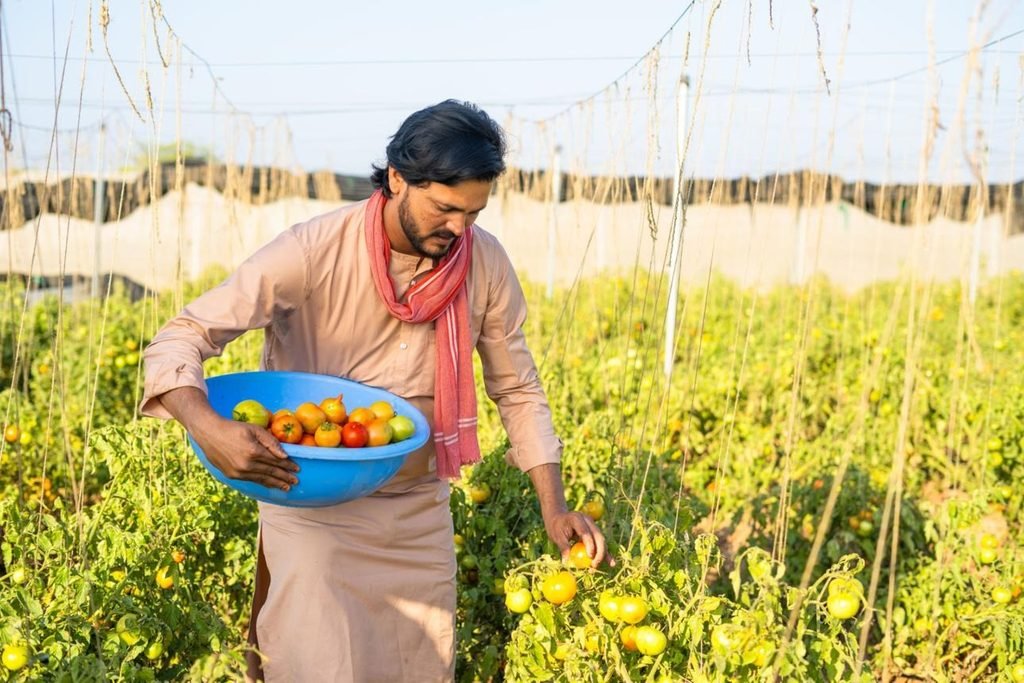
Tomato farming is a very good business in agriculture.
Tomato farming offers a lot of scope because tomatoes are consumed throughout the year. Farmers can sell their produce to vegetable wholesalers, local markets, retailers, hotels, restaurants, food processing companies, and direct customers.
Another advantage is that tomato plants can have multiple harvests over a period of time. Farmers can harvest ripe fruits at different times and not the entire crop in one day. This way they are able to supply fresh produce on a regular basis when crop and weather conditions are favourable.
Small farmers can start with a manageable area and then expand it after they learn how the crop performs in their area. Farmers with access to drip irrigation, good quality seedlings and reliable buyers may also be able to improve production efficiency.
There is another option for growers who want to grow vegetables under approved organic regulations; they can grow tomatoes organically. But organic cultivation demands painstaking soil management, pest watching and compliance with the organic standards.
Never assume that an organic price premium exists without checking the real demand and buyer requirements.
The important thing is that tomato farming is not automatically profitable. Success lies in controlling production costs, getting marketable yields and selling at a price that includes the total cost of growing.
Which Tomato Varieties Work Best for Organic Farming in Karnataka?
Variety selection determines your market channel. Hybrid varieties yield more but require bought seed every season. Desi/open-pollinated varieties produce their own seed, fit local flavour preferences, and often have better disease resistance in traditional farming systems.
| Variety | Type | Yield (tonnes/acre) | Market | Disease Resistance | Notes |
|---|---|---|---|---|---|
| Arka Rakshak | Hybrid (IIHR) | 25–30 | Wholesale + retail | TYLCV, ToMV tolerant | Best for Karnataka; IIHR bred for local conditions |
| Arka Samrat | Hybrid (IIHR) | 20–25 | Wholesale | Moderate | Large fruit; good shelf life; suits distant markets |
| NS 585 / CO-3 | Hybrid | 22–28 | Wholesale | Moderate TMV | Widely available; perform well in drip conditions |
| Desi/Country tomato | Open-pollinated | 10–15 | Local mandi + direct | Higher natural tolerance | Save seed each year; strong flavour premium; ₹40–80/kg at farm gate |
| Cherry tomato (local) | Open-pollinated | 8–12 | Restaurants + urban retail | Good | Niche but ₹80–120/kg; viable for 0.25 acre plot near urban centres |
How Do You Prepare Soil for Organic Tomatoes?
Tomato is a heavy feeder with a deep taproot — soil preparation must address nutrition, drainage, and disease suppression simultaneously. Begin preparation 45 days before transplanting.
Soil preparation steps:
- Deep plough to 30 cm; break clods and expose soil to sun for 15 days (solarisation during summer kills soil-borne pathogens)
- Apply 4–6 tonnes/acre well-composted farmyard manure or vermicompost; spread and incorporate during second ploughing
- Apply Trichoderma viride at 2 kg/acre mixed with 200 kg compost; broadcast and incorporate — this colonises soil and suppresses Fusarium wilt and Pythium damping off
- Apply 1 tonne/acre neem cake — slow-release nitrogen plus strong nematode and fungus suppression
- Test soil pH; if below 6.0, apply agricultural lime at 200–400 kg/acre; if above 7.5, apply sulphur at 50 kg/acre
- Form raised beds (15–20 cm height) for drainage — waterlogging is fatal to tomato within 24–48 hours
Jeevamrutha soil drench (at transplanting): 10 litres Jeevamrutha per 100 litres water, applied to beds 3–5 days before transplanting — activates soil microbiome.
What Are the Water and Irrigation Needs for Organic Tomato?
Tomato has moderate-high water demand but is very sensitive to waterlogging and irregular watering. The most common cause of blossom end rot in Karnataka is irregular soil moisture — not calcium deficiency per se, but calcium uptake failure due to moisture swings.
- Drip irrigation is strongly recommended: 2–3 litres/plant/day during vegetative stage; 4–6 litres/plant/day at fruiting; reduce to 2 litres during final ripening
- Critical irrigation windows: never let soil dry to cracking stage between day 40–90 (flowering and fruit set period)
- Fertigate Jeevamrutha through drip at 10% concentration once every 10 days during fruiting
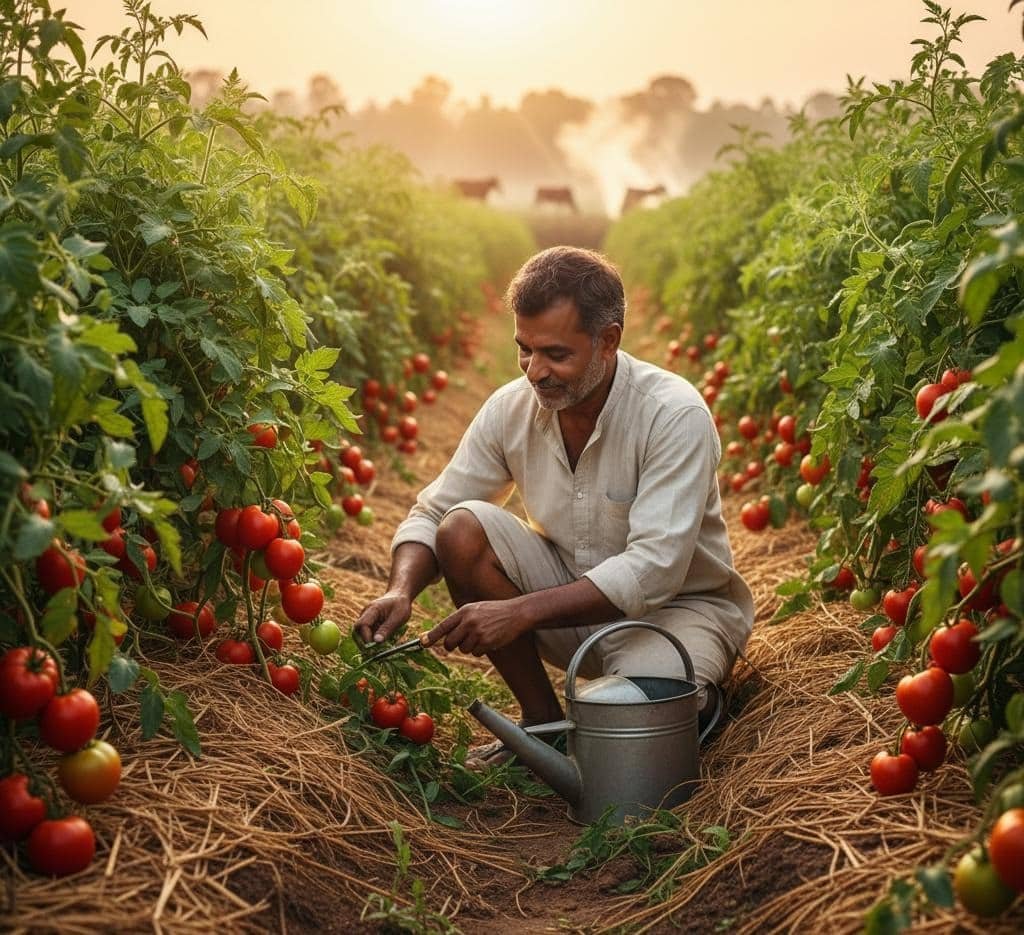
- Avoid wetting foliage — foliar wetness drives early blight (Alternaria solani); use drip or flood irrigation at base only.
How Do You Manage Pests and Diseases Organically?
Key pest and disease threats in Karnataka tomato:
Fruit borer (Helicoverpa armigera) is the primary yield destroyer — one larva per fruit destroys the entire fruit. Early blight, late blight (in cooler districts), and Tomato Yellow Leaf Curl Virus (TYLCV, spread by whiteflies) round out the main threats.
Integrated organic pest management schedule:
| Growth stage | Treatment | Rate | Frequency |
|---|---|---|---|
| Nursery (day 0–25) | Trichoderma seed treatment + Pseudomonas fluorescens | 5g/kg seed | Once at sowing |
| Transplanting | Azospirillum + PSB root dip | 250 ml/acre in 10L water; dip roots 30 min | Once |
| Vegetative (day 15–40) | Dashparni Ark | 3% (3L/100L water) | Every 10 days |
| Flowering (day 40–65) | Neem oil 5% + Dashparni Ark alternate sprays | 5 ml/L (neem) | Every 7 days |
| Fruiting (day 60–90) | Agniastra (if fruit borer sighted) | 3% dilution | Every 5 days; 3 applications |
| All stages | Yellow sticky traps | 8–10 per acre | Permanent; replace monthly |
Fruit borer: Install pheromone traps (Helilure) at 4–6 per acre from day 30 — mass trapping reduces adult population before egg-laying. Spray Bacillus thuringiensis (Bt) at 1.5 kg/acre every 7–10 days from flowering — Bt is fully organic and specifically targets Lepidoptera larvae.
The Tomato Transplant Hardening Step Most Farmers Skip
Nursery seedlings raised under shade nets are soft and succumb to transplant shock and damping off when moved to open fields — especially in Karnataka’s April–May heat. Harden seedlings for 7 days before transplanting: reduce watering to once daily, remove shade netting progressively over 5 days, and expose to morning sun first. On transplant day, drench the nursery bed with Pseudomonas fluorescens at 10g/10L water 24 hours before pulling seedlings — the bacteria colonise roots and protect against Pythium damping off for 4–6 weeks. Transplant only in late afternoon (after 4 PM) to minimise heat stress. Mortality drops from 20–30% to under 5% with these three steps — that’s 5,000–7,500 saved plants per acre.
What Is the Harvest and Post-Harvest Approach for Maximum Income?
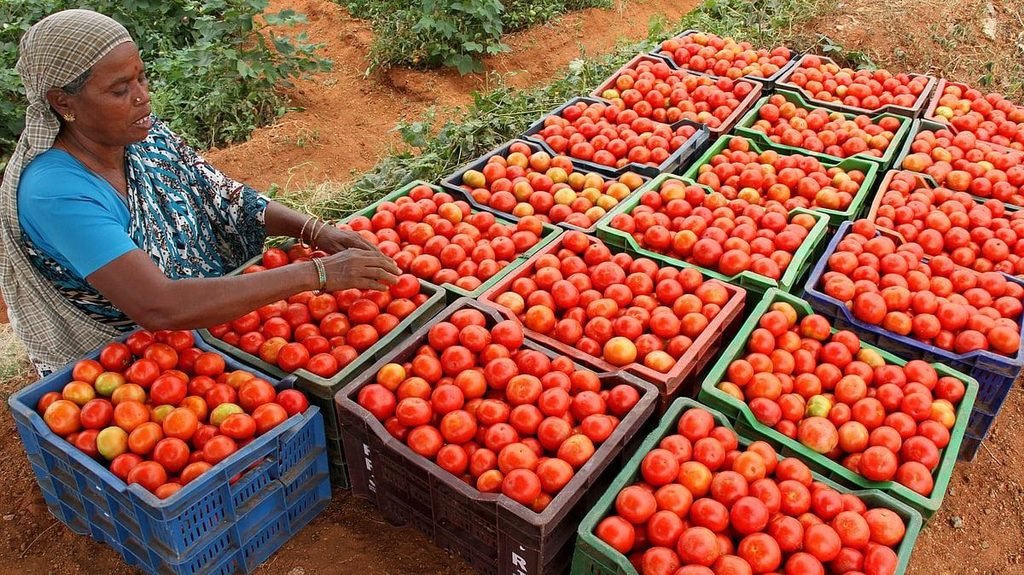
- Begin harvesting when fruits show first colour break (breaker stage for distant markets; full red for local sales)
- Harvest every 3–4 days; irregular harvesting leads to over-ripe fruits that attract fruit borer and reduce next picking quality
- Grade into A (> 80g, uniform, blemish-free), B (50–80g, minor blemish), C (undersized, processor grade)
- Organic-certified tomatoes: approach HOPCOMS (Karnataka), organic food brands (ITC e-Choupal, BigBasket suppliers), or weekly organic markets in Bengaluru/Mysuru
- Farm gate price for certified organic: ₹35–60/kg; wholesale mandi: ₹15–25/kg — the price differential alone justifies organic certification investment
Income calculation (per acre, 90-day crop):
- Yield: 20 tonnes = 20,000 kg
- Average organic price: ₹35/kg
- Gross income: ₹7,00,000
- Input cost (organic): ₹35,000
- Labour (transplanting, spray, harvest): ₹50,000
- Net income: ₹6,15,000 (exceptional season with certification)
- Conservative net (no certification, mandi price ₹20/kg): ₹3,40,000
How Do You Prepare Soil for Organic Tomatoes?
Tomato is a heavy feeder with a deep taproot — soil preparation must address nutrition, drainage, and disease suppression simultaneously. Begin preparation 45 days before transplanting.
Soil preparation steps:
- Deep plough to 30 cm; break clods and expose soil to sun for 15 days (solarisation during summer kills soil-borne pathogens)
- Apply 4–6 tonnes/acre well-composted farmyard manure or vermicompost; spread and incorporate during second ploughing
- Apply Trichoderma viride at 2 kg/acre mixed with 200 kg compost; broadcast and incorporate — this colonises soil and suppresses Fusarium wilt and Pythium damping off
- Apply 1 tonne/acre neem cake — slow-release nitrogen plus strong nematode and fungus suppression
- Test soil pH; if below 6.0, apply agricultural lime at 200–400 kg/acre; if above 7.5, apply sulphur at 50 kg/acre
- Form raised beds (15–20 cm height) for drainage — waterlogging is fatal to tomato within 24–48 hours.
Jeevamrutha soil drench (at transplanting): 10 litres Jeevamrutha per 100 litres water, applied to beds 3–5 days before transplanting — activates soil microbiome.
How Do You Manage Pests and Diseases Organically?
Key pest and disease threats in Karnataka tomato:
Fruit borer (Helicoverpa armigera) is the primary yield destroyer — one larva per fruit destroys the entire fruit. Early blight, late blight (in cooler districts), and Tomato Yellow Leaf Curl Virus (TYLCV, spread by whiteflies) round out the main threats.
Integrated organic pest management schedule:
| Growth stage | Treatment | Rate | Frequency |
|---|---|---|---|
| Nursery (day 0–25) | Trichoderma seed treatment + Pseudomonas fluorescens | 5g/kg seed | Once at sowing |
| Transplanting | Azospirillum + PSB root dip | 250 ml/acre in 10L water; dip roots 30 min | Once |
| Vegetative (day 15–40) | Dashparni Ark | 3% (3L/100L water) | Every 10 days |
| Flowering (day 40–65) | Neem oil 5% + Dashparni Ark alternate sprays | 5 ml/L (neem) | Every 7 days |
| Fruiting (day 60–90) | Agniastra (if fruit borer sighted) | 3% dilution | Every 5 days; 3 applications |
| All stages | Yellow sticky traps | 8–10 per acre | Permanent; replace monthly |
What Is the Harvest and Post-Harvest Approach for Maximum Income?
- Begin harvesting when fruits show first colour break (breaker stage for distant markets; full red for local sales)
- Harvest every 3–4 days; irregular harvesting leads to over-ripe fruits that attract fruit borer and reduce next picking quality
- Grade into A (> 80g, uniform, blemish-free), B (50–80g, minor blemish), C (undersized, processor grade)
- Organic-certified tomatoes: approach HOPCOMS (Karnataka), organic food brands (ITC e-Choupal, BigBasket suppliers), or weekly organic markets in Bengaluru/Mysuru
- Farm gate price for certified organic: ₹35–60/kg; wholesale mandi: ₹15–25/kg — the price differential alone justifies organic certification investment
Income calculation (per acre, 90-day crop):
- Yield: 20 tonnes = 20,000 kg
- Average organic price: ₹35/kg
- Gross income: ₹7,00,000
- Input cost (organic): ₹35,000
- Labour (transplanting, spray, harvest): ₹50,000
- Net income: ₹6,15,000 (exceptional season with certification)
- Conservative net (no certification, mandi price ₹20/kg): ₹3,40,000
Marketing Strategies to Improve Returns
Marketing should be planned before the crop is harvested. Farmers who wait until they start picking may have little time to find buyers, compare prices or organise transport.
One avenue to market is via local vegetable markets and wholesale traders. Farmers can compare commission costs, transport costs, grading requirements and payment terms before choosing a buyer.
Another opportunity could be direct sales to households, restaurants, vegetable shops and local retailers. But direct marketing requires time, a steady supply, the right packaging and customer relations.
Farmer Producer Organisations and cooperatives can help growers to combine produce, arrange transport or negotiate with larger buyers. The benefits depend on how well the organisation is run, and the demand that is in its market.
Organic growers should identify those customers who value verified organic production and understand the requirements for certification or traceability. Premiums should be included in the farm budget only if there is a realistic way to do so.
Farmers also need to track market arrivals and prices from reliable market information sources before deciding where and when to sell. The price paid by a buyer can be compared with the cost of transport, grading, spoilage and other selling costs to provide a clearer picture of the actual return.
Conclusion
In India, tomato farming provides opportunities to both small farmers and commercial growers, but good results depend on planning, consistent crop management and a clear understanding of the market. Good luck with the harvest can come from choosing the right varieties of tomatoes, preparing the soil well, carefully controlling the watering and nutrition, and watching for pests and disease.
Organic production of tomatoes can be another opportunity if the production system fits the farm and there is a real market for the product. But farmers need to look at costs, certification requirements and actual selling prices before banking on a premium.
The most important thing is to view tomato farming as farming and as business activity. Estimate costs, identify risks, compare prospective buyers and maintain records throughout the crop cycle.
Through practical decisions and continuous learning, farmers can improve crop quality, reduce avoidable losses and build a more sustainable tomato farming business.

