




Short Overview
Dragon fruit farming is gaining attention among Indian farmers and agricultural investors because the crop combines premium market positioning with relatively efficient water use and long-term production potential. However, successful cultivation depends on much more than simply planting cuttings. Farmers need suitable soil, strong support poles, reliable drainage, controlled irrigation, correct pruning, healthy planting material and a clear route to market. This guide explains dragon fruit cultivation in India from land preparation to harvesting, including realistic cost and profit considerations, common mistakes and practical ways to build a productive farm.
ICAR describes dragon fruit, or Kamalam, as an emerging high-value crop suited to diverse agro-climatic conditions, with potential for income generation, nutrition and value-added products.Dragon fruit is a climbing cactus that needs warm weather, well-drained soil, strong supports and controlled irrigation. This guide covers site selection, propagation, spacing, fertilisation, irrigation, pruning, pest control, harvesting and container growing.
Why Dragon Fruit Farming Is Growing in India
The commercial attraction of dragon fruit comes from a combination of factors. It is visually distinctive, consumers increasingly recognise it, premium retail markets sell both white- and red-fleshed fruit, and the crop has potential for fresh sales as well as processing.
ICAR’s 2026 Indian Horticulture publication identifies dragon fruit as an emerging high-value crop and points to possibilities beyond fresh fruit, including beverages and dragon fruit powder. That value-addition potential may become increasingly important as domestic production grows.
The crop is also often attractive in areas where growers are searching for alternatives to conventional horticulture. However, describing dragon fruit as a “low-maintenance money-making crop” would be misleading. Establishing the poles and planting system can require considerable upfront capital, and disease, heat stress, poor pollination or weak marketing can reduce returns.
Successful dragon fruit cultivation is therefore less about chasing a fashionable crop and more about combining horticulture with proper business planning.
Climate and Soil Requirements
Dragon fruit grows best in warm, semi-arid to tropical conditions. The recommended temperature is 20°C to 35°C, with annual rainfall of 600 to 1,200 mm and 6 to 8 hours of direct sunlight daily.
Well-drained sandy loam with a pH of 5.5 to 7 is suitable. Avoid waterlogged land because prolonged moisture increases stem rot and fungal infection.
Growers assessing managed farmlands near Bangalore should check drainage, irrigation and road access before planting dragon fruit.
Planting Season and Propagation
The recommended planting period is February to June. However, the dragon fruit season in India varies with local rainfall and temperature. Delay planting when soil is saturated or heavy rain is expected.
Stem cuttings are commonly used. Select healthy cuttings measuring 20 to 30 cm. Reject material with soft tissue, dark patches, insects or physical damage.
Spacing and Support System
Dragon fruit vines need permanent support because mature branches become heavy.
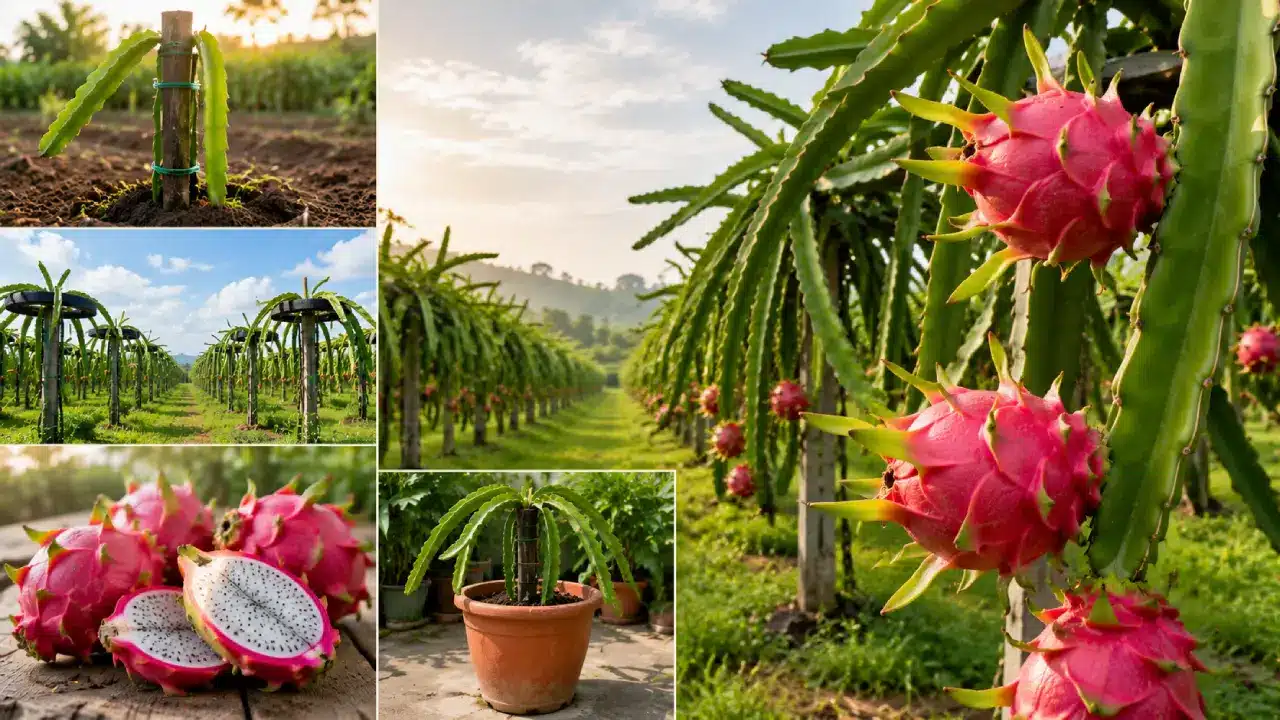
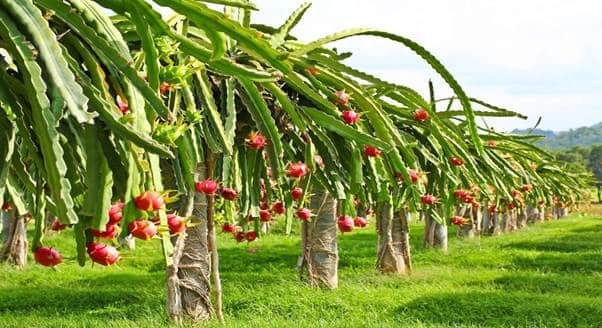
Use concrete or stone pillars measuring 6 to 7 feet. Fix a circular ring or frame at the top so branches can spread and hang down. Keep 3 metres by 3 metres between poles and plant 4 cuttings around each pole.
Irrigation Management
Water should maintain moisture without leaving the root zone wet. During the dry season, irrigate once every 10 to 12 days.
Reduce watering during the monsoon and stop when the soil remains moist. Drip irrigation directs water to the roots, supports fertigation and may save up to 60% of water. Avoid overhead irrigation during humid periods.
Fertilisation Schedule
Fertiliser use should change as the plant develops. At planting, apply 5 to 10 kg of farmyard manure or compost per plant. After 2 months, apply 25 g of NPK 10:10:10 per plant.
Between 6 and 12 months, apply 10 to 15 kg of farmyard manure once every 6 months. Water-soluble NPK 19:19:19 may be applied at 1 to 2 g per litre every 20 days.
After 12 months, apply 100 to 150 g of NPK 12:12:18 per plant in 3 doses: before flowering, during fruit set and during fruit growth. Micronutrients containing zinc, iron, magnesium and boron may be sprayed every 30 to 40 days when needed.
Use soil testing before finalising doses. Excess fertiliser can increase costs and pest pressure.
Dragon Fruit Farming Cost and Profit Per Acre in India
This is one of the highest-intent searches around the crop, but it is also where unrealistic promises are most common.
Actual establishment cost depends on the number and quality of support poles, planting density, price of cuttings, labour, land preparation, drip irrigation, fencing, fertilizer, mulch and local material costs.
Recent economic research from Karnataka reported an establishment cost of about ₹3.54 lakh per acre in the farms studied, with mature orchards recording an average annual net return of roughly ₹4.04 lakh per acre and a reported benefit-cost ratio of 1.98.
However, other Indian field reports have described initial investments closer to ₹6 lakh or more per acre when reinforced support structures and establishment expenses are included.
That variation is exactly why a blog should not promise that “one acre of dragon fruit will definitely earn ₹X lakh.”
Prepare your own project report using current quotations from suppliers in your district. Calculate pillar cost, plants, irrigation, labour, nutrients, maintenance, packaging, transportation and expected selling prices.
The farm should make financial sense at a conservative price, not only at the highest retail price you saw online.
Training and Pruning
Training keeps stems upright and the canopy manageable. Retain 3 to 4 healthy main stems per plant and guide them to the pillar top. Use soft ties. Remove weak, tangled and diseased branches every 3 to 4 months.
Light pruning after harvest encourages new shoots and the next flowering cycle. Clean tools before moving between affected and healthy plants.
Common Pests and Diseases
Regular inspection helps identify dragon fruit plant problems early. Common pests include mealybugs, aphids, fruit flies, ants and scale insects. Mealybugs form white clusters, aphids curl young shoots, fruit fly larvae damage fruit, and scale insects leave yellow patches.
Major diseases include stem rot, anthracnose, bacterial spot and fruit rot. Signs include soft brown or black tissue, dark lesions, water-soaked spots and decay during humid weather.
Basic management includes:
- Use disease-free planting material.
- Maintain drainage and airflow.
- Remove infected stems and fruit.
- Keep the field weed-free.
- Avoid excessive fertiliser use.
- Monitor plants regularly.
- Use approved treatments after identification.
Follow label instructions and agricultural advice.
Flowering, Harvesting and Yield
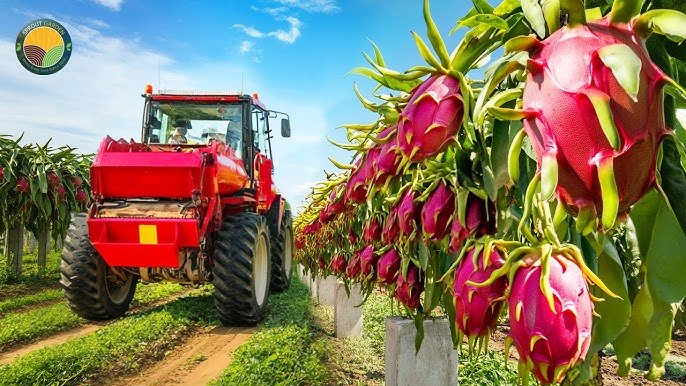
Flowering may begin 8 to 12 months after planting. Fruit usually matures 30 to 35 days after flowering. Harvest when the peel develops the mature bright red or pink colour expected for the variety.
The reference reports 10 to 15 tonnes per acre after 3 years and possible annual profits of ₹4 lakh to ₹6 lakh per acre. These figures are not guaranteed. Actual returns depend on fruit grade, market price, labour, transport and input costs.
For those exploring farmland for sale in Bangalore for dragon fruit cultivation, location-related factors also affect returns. Access to nearby buyers, good roads, storage facilities and reliable labour can make harvesting and transportation more efficient while reducing post-harvest losses.
How to Plant Dragon Fruit in a Pot
Choose a broad pot with drainage holes and a loose, free-draining medium. Place a firm support in the centre. Plant a healthy cutting beside it and tie it loosely. Provide 6 to 8 hours of sunlight, water only when required and prune excess side growth.
Conclusion
Dragon fruit cultivation needs correct spacing, sturdy pillars, measured irrigation and stage-based nutrition. Beginners should check drainage, water supply, planting material and market access before starting. Field conditions should carefully guide final decisions. Regular pruning, sanitation and early pest or disease identification can reduce avoidable losses. Keep farm records and seek local advice.
Dragon fruit farming in India can become a valuable horticultural business when the project is planned around agronomy and marketing together. The crop offers attractive opportunities, but success begins with healthy planting material, suitable soil, excellent drainage, durable support poles, drip irrigation, balanced nutrition and regular pruning.
Beginners should avoid making decisions based only on impressive profit figures. Start by testing your soil, studying local climate, comparing varieties, obtaining genuine establishment quotations and speaking with real buyers. Build conservative financial projections and allow for changes in yield and market price.
Most importantly, learn from your own farm. Keep records of irrigation, fertilizer, pruning, flowering, pollination, disease, harvest volume, fruit grade and selling prices. Those records will eventually become more useful than any generic cultivation schedule found online.
With a strong production system and an equally strong route to market, dragon fruit can become part of a diversified, commercially focused and sustainable horticulture strategy in India.

