




Short Overview
Learning how to extract honey from frames is an important part of successful beekeeping. The right harvesting method helps protect the bee colony, preserve the quality of honey, reduce wastage, and produce clean, market-ready honey. This guide explains the complete honey extraction process in simple language, from selecting mature honey frames to uncapping, extracting, filtering, bottling, and storing honey safely.
Learn how to extract honey from frames safely and efficiently with this simple step-by-step guide. Discover the best honey extraction equipment, frame preparation, uncapping, manual and centrifugal extraction methods, filtering, bottling, storage, hygiene practices, and practical tips for beginners. Understand when honey frames are ready for harvesting and how to protect your bee colony during extraction. This guide is useful for Indian beekeepers, small farmers, commercial honey producers, and anyone planning to start a honey production business. Follow proper harvesting methods to maintain honey quality, reduce contamination, improve storage life, and build a reliable honey farming business.
Introduction
Honey extraction is one of the most rewarding stages of beekeeping. After bees spend weeks collecting nectar and carefully storing it inside the honeycomb, the beekeeper finally gets the opportunity to harvest the finished product.
But harvesting honey is not simply a matter of removing a frame and squeezing out the honey. Good honey extraction requires patience, cleanliness, suitable equipment, and careful handling of the colony.
The main objective should always be to collect mature honey while causing as little disturbance as possible to the bees. Proper hive management, protective equipment, and clean extraction practices are essential for both beekeeper safety and honey quality.
This guide explains how to extract honey from frames step by step, making the process easier for beginners, farmers, and small-scale beekeeping businesses.
What Is Honey Extraction from Frames?
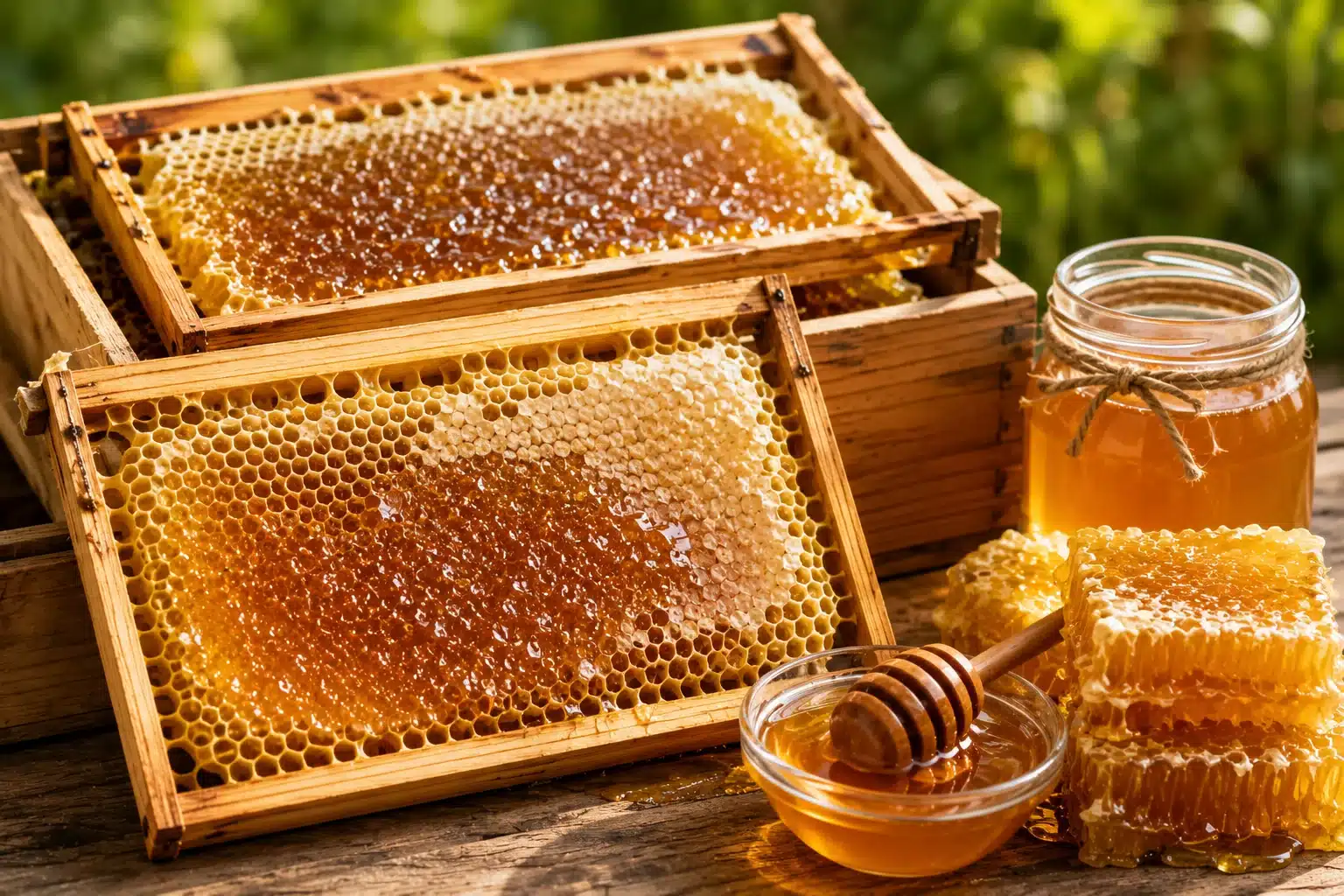
Honey extraction is the process of removing stored honey from the wax comb inside beekeeping frames. In modern beekeeping, honey is commonly removed from the comb using a centrifugal honey extractor, which spins the frames and separates the honey without destroying the comb.
For small-scale operations, manual methods such as crush-and-strain extraction can also be used. The best method depends on the number of colonies, available equipment, budget, and desired production volume.
The basic process is simple: select suitable honey frames, remove bees safely, uncap the sealed honey cells, extract the honey, filter it, and place the finished honey into clean containers.

When Should You Harvest Honey?
Choosing the right time is one of the most important decisions in honey harvesting. A frame should contain sufficiently mature honey rather than recently collected nectar with high moisture content.
Experienced beekeepers usually look for well-filled frames with a substantial portion of the honey cells capped with wax. This indicates that bees have processed and ripened the honey.
Moisture matters because honey can absorb water from the surrounding environment. Excess moisture can increase the risk of fermentation and reduce storage stability.
For commercial honey sold in India, beekeepers should also understand applicable food-safety requirements. FSSAI maintains standards and analytical methods covering honey and other beehive products.
Never remove so much honey that the colony is left without adequate food reserves. The health and survival of the bees should come before maximum short-term harvesting.
Essential Honey Extraction Equipment
Before opening the hive, prepare everything you need. A beekeeper generally needs protective clothing, a veil, gloves, a smoker, and a hive tool for safe hive handling.
For the extraction stage, useful equipment includes an uncapping knife or uncapping tool, a food-grade honey extractor, a clean collection container, a honey strainer or filter, and suitable food-grade storage jars.
The extractor is particularly useful when you want to preserve the comb. Agricultural guidance from ICAR describes the honey extractor as a device that uses centrifugal force to remove honey from frames while keeping the comb largely intact.
Having the equipment ready before harvesting saves time and prevents exposed honey frames from sitting unnecessarily in the open.
Preparing Honey Frames for Extraction
The first step is to inspect the frames carefully. Make sure the frames are appropriate for harvesting and do not show obvious signs of disease, contamination, mold, or pest activity.
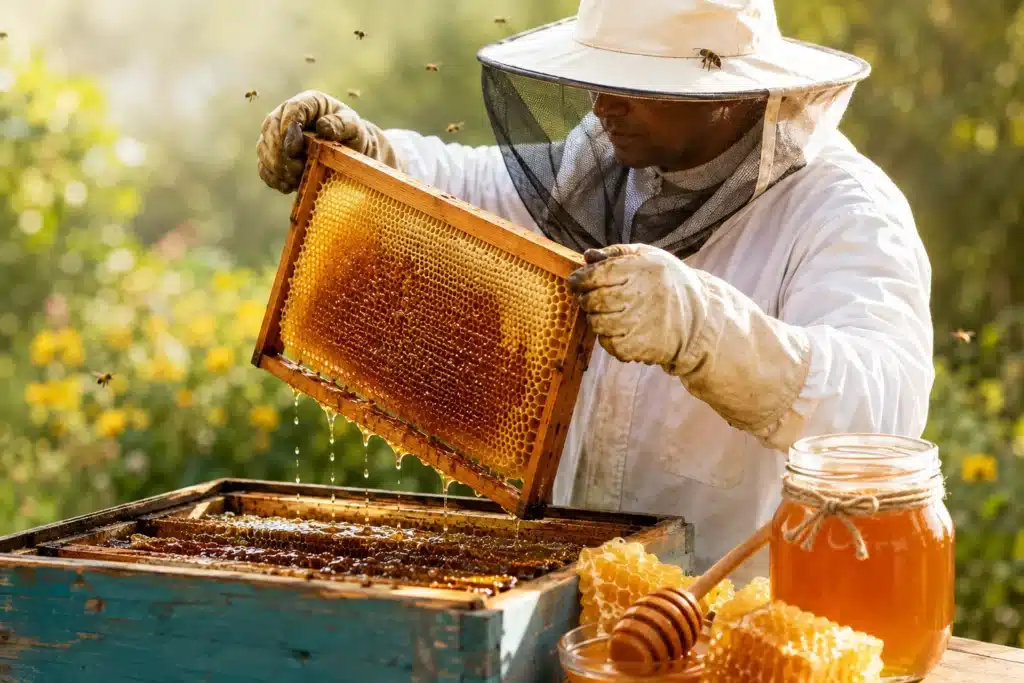
Remove bees from the honey frames using a suitable bee-safe method. Avoid rough handling because crushing bees can make the colony defensive. When working inside a hive, proper use of smoke and careful frame separation can make handling safer and calmer.
Once the frame is away from the colony, keep it protected from dirt, dust, insects, and excessive heat.
The frames should also be handled carefully because damaged comb can break during extraction. Clean, healthy comb is valuable because it can be returned to the hive after centrifugal extraction.
Step-by-Step Honey Extraction Process
Step 1: Choose the Right Honey Frames
Start by selecting frames containing mature, capped honey. Avoid taking frames that mainly contain uncapped nectar or frames that are needed by the colony for immediate food requirements.
The goal is to harvest surplus honey while maintaining a healthy colony.
Step 2: Remove the Bees Carefully
Use your normal hive-management technique to move bees away from the frames. A smoker can help make bees easier to manage when used correctly.
Work calmly and avoid sudden movements. Keeping the extraction process organized reduces stress for both the beekeeper and the bees.
Step 3: Transport the Frames to a Clean Area
Move the harvested frames to a clean, bee-protected extraction area. Ideally, extraction should take place somewhere that limits contamination and prevents large numbers of bees from entering.
Cleanliness becomes especially important once the honeycomb is opened.
Step 4: Uncap the Honeycomb
Honey bees seal mature honey cells with a thin wax layer. This wax capping needs to be removed before the honey can flow out of the comb.
Use an uncapping knife or suitable uncapping tool and gently remove the wax layer. Do not cut deeply into the comb because preserving the structure will make the frame easier to reuse.
ICAR guidance also identifies the uncapping knife as an important part of honey extraction before frames are placed in an extractor.
Step 5: Place the Frames in the Extractor
After uncapping, place the frames correctly inside the honey extractor. Make sure they are balanced and positioned according to the extractor manufacturer’s instructions.
A centrifugal extractor uses spinning force to move honey from the cells toward the outer wall of the machine.
Start slowly and increase the speed gradually. Spinning too aggressively at the beginning can damage the comb, especially when the comb is delicate.
Step 6: Collect the Honey
As honey leaves the extractor, allow it to flow into a clean food-grade container.
Do not leave the container open longer than necessary. Honey can absorb moisture and may also collect dust or other unwanted material from the surrounding environment.
Step 7: Filter the Honey
Filtering helps remove small pieces of wax and other visible debris that may remain after extraction.
Use a clean food-grade strainer or suitable honey filter. Avoid excessive processing when the objective is to retain the natural characteristics of the honey.
Step 8: Bottle the Honey
Once filtered, transfer the honey into clean, dry, food-grade containers. Close the containers properly to reduce exposure to moisture and contamination.
If the honey is being sold commercially, follow applicable food-safety, packaging, labelling, and licensing requirements for your market. FSSAI provides the regulatory framework and product standards relevant to food businesses in India.
Manual Honey Extraction vs Centrifugal Extraction
There are two common approaches for small and medium-scale beekeepers.
Manual crush-and-strain extraction is relatively simple and can require less equipment. The comb is crushed and the honey is allowed to drain through a suitable filter. However, the wax comb is damaged and needs to be rebuilt by the bees.
Centrifugal extraction requires a honey extractor, but it has an important advantage: the comb can generally be returned to the hive after extraction. This saves bees the considerable effort required to rebuild the entire comb.
For a hobby beekeeper with only a few frames, manual extraction may be practical. For someone planning to increase honey production, a centrifugal extractor can become a much more efficient long-term investment.
How to Filter and Bottle Extracted Honey
Cleanliness should never be treated as an optional step. The extractor, containers, strainers, knives, and other equipment that come into contact with honey should be clean and suitable for food handling.
After filtration, let the honey settle if necessary so that small air bubbles or remaining particles can rise before bottling.
Use properly sealed containers and keep them away from direct sunlight, excessive heat, and moisture. Honey is hygroscopic, meaning it can absorb moisture from the environment, so storage conditions matter.
Indian agricultural guidance has also highlighted the importance of clean extraction equipment, clean containers, proper filtering, and controlled processing for maintaining honey quality.
How to Store Honey Properly
Store finished honey in a cool, dry, clean location away from direct sunlight. Avoid unnecessary heating because excessive heat can negatively affect honey quality.
Use tightly closed food-grade containers and keep them away from areas with high humidity.
Natural honey may crystallize during storage. Crystallization does not automatically mean that the honey has spoiled. The texture and speed of crystallization can vary depending on the floral source and composition of the honey.
If honey quality is important for your business, maintain good records of harvest dates, apiary locations, batch information, and storage conditions.
Common Honey Extraction Mistakes to Avoid
One common mistake is harvesting honey before it is sufficiently mature. Another is removing too much honey and leaving the colony short of food.
Poor hygiene is another major problem. Dirty equipment can introduce unwanted contamination into an otherwise high-quality product.
Rough frame handling can damage valuable comb, while excessive extractor speed can break fragile comb.
Unnecessary heating is also best avoided. Research and agricultural guidance have warned that uncontrolled heating during honey processing can affect flavour, aroma, enzymes, colour, and overall quality.
Finally, never treat honey extraction as a race. A calm, organized process usually produces better results than rushing through the harvest.
Tips for Better Honey Production
Good honey production begins long before extraction day. Strong colonies, healthy queens, suitable forage, clean equipment, regular hive inspections, and proper seasonal management all influence the final harvest.
Beekeepers should monitor colonies regularly for pests and diseases and keep hive equipment clean and well maintained. ICAR guidance recommends regular hive inspection and emphasizes the importance of using appropriate extraction equipment and strainers.
It is also useful to maintain separate records for each apiary or colony group. Tracking flowering periods, harvest dates, approximate yields, and colony condition can help identify which management practices produce better results.
Honey Extraction as a Business Opportunity
Honey extraction can become an attractive value-added activity for farmers and rural entrepreneurs. Instead of selling only raw agricultural produce, beekeepers can develop a complete honey business around production, extraction, filtering, packaging, branding, and direct sales.
Small-scale beekeepers can begin with a few colonies and gradually expand as their experience grows. As production increases, investing in better extraction and filtering equipment can reduce labour and improve consistency.
The biggest opportunity is not simply producing more honey. It is producing clean, traceable, quality-focused honey that customers trust.
For Indian farmers, beekeeping can also complement crop farming because honey bees contribute to pollination while producing an additional farm income stream.
Conclusion
Learning how to extract honey from frames is an essential skill for every serious beekeeper. The process becomes much easier when the beekeeper focuses on three things: healthy bees, clean equipment, and careful harvesting.
Start by choosing mature honey frames, remove the bees safely, uncap the honeycomb carefully, extract the honey at a controlled speed, filter it properly, and store it in clean, sealed containers.
For beginners, manual extraction may be enough for a small number of frames. For growing apiaries, a centrifugal honey extractor can make harvesting faster while allowing the valuable comb to be reused.
Most importantly, successful honey production is not just about the amount of honey collected. It is about creating a sustainable system where bees remain healthy, the beekeeper works safely, and customers receive clean, high-quality honey.

