


Latest News
Cockroach Janta Party Website Taken Down: India’s Viral Youth Satire Movement Sparks Free Speech Debate

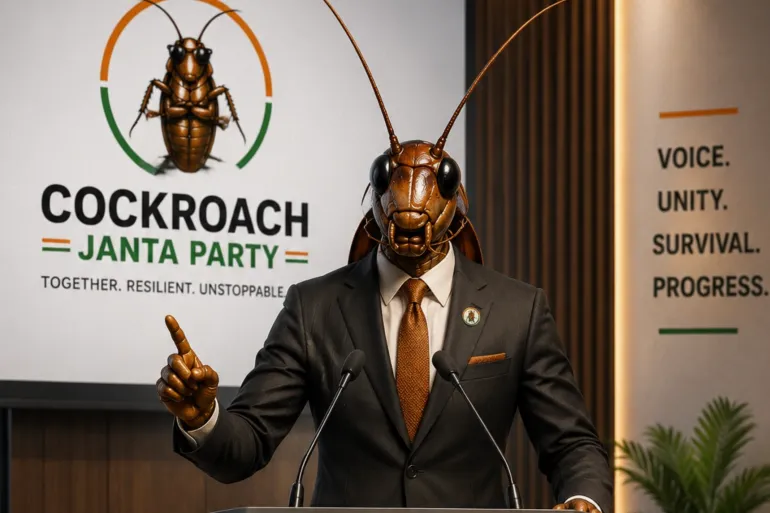
The Cockroach Janta Party became one of India’s most talked-about online satire movements after a controversial court remark triggered anger among young people. Its founder, Abhijeet Dipke, later claimed that the group’s official website was taken down by the Indian government, while also saying related social media accounts were hacked. The story has now become bigger than a viral joke. It has opened a wider conversation about youth frustration, online political satire, digital freedom, and the growing power of social media in Indian politics.
The Cockroach Janta Party website takedown controversy has sparked a fresh debate around youth anger, political satire, digital censorship, online speech, and democratic accountability in India.

What Happened to the Cockroach Janta Party Website?
The Cockroach Janta Party website taken down controversy has quickly become one of the most discussed political internet stories in India. What started as a satirical online movement has now turned into a larger debate about youth frustration, free speech, online censorship, and the role of digital platforms in modern politics.
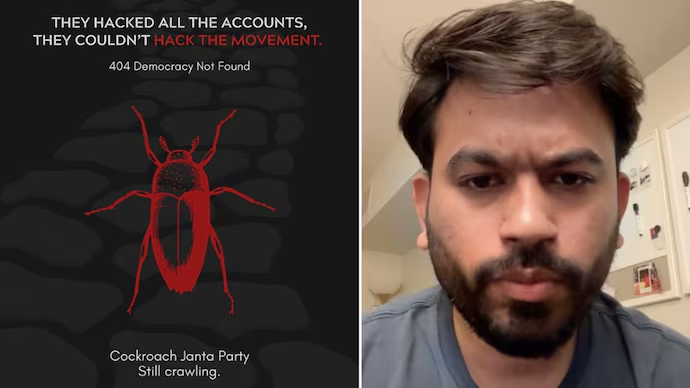
According to Al Jazeera, Abhijeet Dipke, the founder of the Cockroach Janta Party, claimed that the Indian government took down the group’s official website. He also said that his personal Instagram account and the movement’s Instagram account were hacked. The report described the Cockroach Janta Party as an online political satire movement that mocked India’s governing party.
The important point here is that the claim is coming from the founder. At the time of writing, it should be reported carefully as an allegation, not as a proven official fact. Still, the issue has gained attention because the movement had already become viral among young internet users.
What Is the Cockroach Janta Party?
The Cockroach Janta Party, also called CJP, is a satirical online movement created by Abhijeet Dipke. It was formed after a controversial remark by Chief Justice Surya Kant, who reportedly compared some unemployed young people and activists to cockroaches during an open court hearing. He later clarified that his comment was related to people with fraudulent degrees and was not aimed at India’s youth in general.
That clarification did not stop the online reaction. Many young users felt the comment reflected a deeper frustration they already had about unemployment, exams, accountability, and the way young people are spoken about in public life. From that anger, the Cockroach Janta Party turned into a viral joke with a serious message.
The name itself is a play on political language. It uses humor, sarcasm, and internet culture to express public frustration. For many followers, the movement is not only about one comment. It is about feeling ignored, unheard, and underestimated.
Why Did the Movement Go Viral?
The Cockroach Janta Party went viral because it mixed three powerful things: satire, youth emotion, and social media speed. In today’s India, many young people use Instagram, X, memes, reels, and online campaigns to express political opinions. Instead of long speeches, they often use jokes and symbols to make a point.
Al Jazeera reported that the movement’s Instagram following grew rapidly within days. The earlier report said the account crossed 11.1 million followers in three days, while the later report said the CJP page had attracted more than 22 million followers within a week. These numbers show how fast a digital protest can spread when it connects with public emotion.
The movement also gained attention because it spoke in the language of Gen Z. It was funny, sharp, and easy to share. But behind the humor was a serious question: Are young people being heard by those in power?
Why the Website Takedown Claim Matters
The website takedown claim matters because websites and social media accounts are now central to political expression. In the past, protests happened mainly on streets, campuses, and public spaces. Today, many movements begin online. A website can act as a home for petitions, signups, campaign messages, and public statements.
According to the founder, one million people had signed up to join the movement, and hundreds of thousands had signed a petition demanding the resignation of India’s Education Minister Dharmendra Pradhan. Al Jazeera connected this anger to recent student protests over alleged exam paper leaks and the cancellation of a government-run medical entrance test.
If a viral political satire website disappears or becomes inaccessible, people naturally ask questions. Was it removed because of a legal order? Was it hacked? Was it a technical issue? Was there any notice or appeal process? These questions matter because transparency is important in a democracy.
Youth Anger, Satire, and Digital Politics in India
The Cockroach Janta Party controversy shows how political satire can become a serious public conversation. Satire has always been used to question power. Cartoons, jokes, street theatre, parody songs, and memes all do the same basic thing: they make people laugh while asking uncomfortable questions.
For young Indians, satire can feel more honest than formal politics. Many people do not see themselves represented in traditional political debates. They may feel that real issues like unemployment, paper leaks, inflation, and education stress are discussed only during elections and forgotten later.
This is why the Cockroach Janta Party became more than a meme. It gave people a simple symbol through which they could express anger, disappointment, and resistance. The cockroach image was used as an insult, but the movement turned it into a badge of survival.
Digital Freedom and Online Censorship Concerns
The controversy also fits into a wider discussion about internet freedom in India. Freedom House’s 2025 Freedom on the Net report rated India as “Partly Free” for internet freedom and said online censorship had remained a concern during the reporting period. The report also listed website blocks, social media restrictions, and users being arrested as part of the country facts section.
This does not automatically prove what happened to the Cockroach Janta Party website. But it does explain why many people are sensitive to claims of online restrictions. When digital speech is blocked without clear explanation, it can create fear, confusion, and mistrust.
In a healthy democracy, people should be able to criticize leaders, question institutions, and use satire without fear, as long as they are not spreading violence, targeted harassment, or harmful misinformation.
What Happens Next?
The next step depends on facts. If the website was blocked through an official legal order, the public should know the reason. If it was hacked, there should be a cybersecurity investigation. If it was a hosting or domain issue, that should also be clarified.
Recent Indian media reports have said the movement’s online presence has faced restrictions, and one report also said police protection was deployed outside Dipke’s Maharashtra residence after security concerns. These reports show that the story is still developing and should be followed carefully.
For now, the Cockroach Janta Party remains a strong example of how quickly online satire can become political news. Whether it becomes a long-term movement or fades like many internet trends, it has already shown one thing clearly: young people are using digital platforms to speak, organize, and challenge public narratives.
Conclusion
The Cockroach Janta Party website taken down controversy is not only about one website. It is about the changing relationship between youth, satire, politics, and digital freedom in India. A joke that began online became a national discussion because it touched real emotions.
The founder’s claim that the website was taken down by the government should be reported as an allegation unless official proof becomes available. But the bigger issue remains important. When people feel unheard, they often turn to humor. When humor is restricted or questioned, it can become even more powerful.
The Cockroach Janta Party story shows that digital India is not only about apps, payments, and technology growth. It is also about speech, dissent, accountability, and the right to laugh at power.


NEET UG Re-Exam 2026: Why Telegram Was Restricted in India and What It Means for Students

Spotify Outage 2026: Thousands of Users Report Streaming Issues Across the Globe

Stock Market Today: Sensex, Nifty & Top Stocks in Focus Amid Global Market Uncertainty

NEET Re-Exam Admit Card 2026 Released: Direct Download Link, Exam Day Guidelines & Important Updates

Made-in-India C295 Aircraft Maiden Flight Marks a New Chapter in India’s Defence Manufacturing

Higher Ethanol Blended Petrol Gets Excise Duty Exemption: What It Means for India’s Fuel Future

What I Eat In A Day As An Indian Diabetic To Lose Weight

10 Simple Indian Home Habits That Help You Lose Weight With Type 2 Diabetes

Diabetes-Friendly Indian Breakfasts That Melt Belly Fat and Control Blood Sugar Naturally

Mango Weight Gain Myth: Smart Ways to Enjoy Mangoes Without Gaining Weight This Summer
Diabetes-Friendly Indian Breakfasts That Melt Belly Fat and Control Blood Sugar Naturally
Higher Ethanol Blended Petrol Gets Excise Duty Exemption: What It Means for India’s Fuel Future
10 Simple Indian Home Habits That Help You Lose Weight With Type 2 Diabetes
What I Eat In A Day As An Indian Diabetic To Lose Weight
NEET Re-Exam Admit Card 2026 Released: Direct Download Link, Exam Day Guidelines & Important Updates
Stock Market Today: Sensex, Nifty & Top Stocks in Focus Amid Global Market Uncertainty
Spotify Outage 2026: Thousands of Users Report Streaming Issues Across the Globe
NEET UG Re-Exam 2026: Why Telegram Was Restricted in India and What It Means for Students