


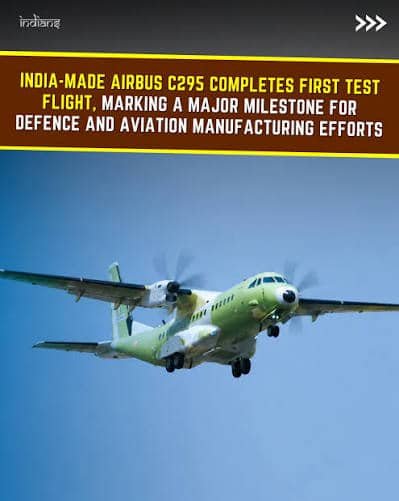


India has crossed another major milestone in its journey toward defence self-reliance. The successful maiden test flight of the first Made-in-India Airbus C295 military transport aircraft from Vadodara, Gujarat, is more than just an aviation achievement. It reflects India’s growing capability to design, manufacture, and deliver advanced defence platforms domestically. Built through the collaboration between Airbus and Tata Advanced Systems, the aircraft symbolizes the success of the Make in India vision and India’s ambition to become a global aerospace manufacturing hub.
India has achieved a historic milestone with the successful maiden test flight of its first Made-in-India C295 military transport aircraft. Manufactured through the Airbus and Tata Advanced Systems partnership in Vadodara, this aircraft represents a major leap for India’s defence manufacturing ecosystem and the Make in India initiative. Discover how the C295 program is transforming aerospace production, creating jobs, strengthening national security, and positioning India as a global defence manufacturing hub. Learn about the aircraft’s capabilities, strategic importance, and what this achievement means for the future of the Indian Air Force and India’s self-reliance goals. Read the complete story behind this landmark moment in Indian aviation and defence history.
India’s defence sector has been undergoing a remarkable transformation over the past decade. The focus has shifted from heavy dependence on foreign imports to building indigenous capabilities that can support the country’s long-term strategic interests.
The successful maiden test flight of India’s first domestically manufactured C295 military transport aircraft is a shining example of this transformation. Conducted from the Final Assembly Line facility in Vadodara, Gujarat, the test flight demonstrated that India is increasingly capable of producing sophisticated military platforms within its own borders.
For defence experts, aviation enthusiasts, and policymakers alike, this event marks the beginning of a new era in Indian aerospace manufacturing.
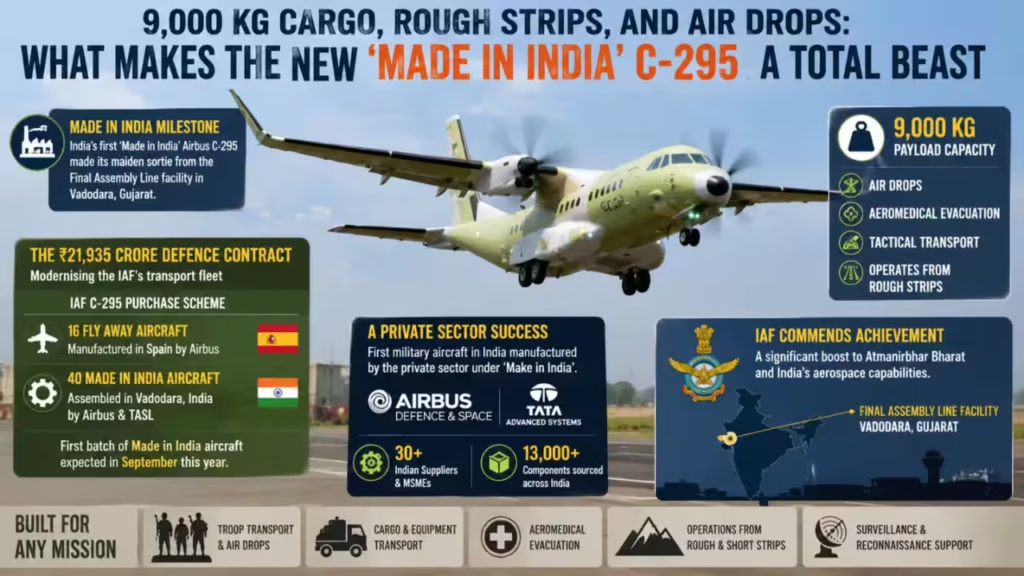
India’s Historic C295 Achievement
The maiden flight of the first Made-in-India C295 aircraft is being viewed as a landmark moment for Indian aviation and defence manufacturing. For the first time, a military transport aircraft is being manufactured in India by a private-sector partnership at such a large scale.
The aircraft successfully completed its initial flight testing phase from the Tata-Airbus Final Assembly Line facility in Vadodara. This achievement validates years of planning, investment, technology transfer, and collaboration between Indian and international aerospace experts.
More importantly, it sends a strong message that India is becoming capable of manufacturing complex military aircraft domestically rather than relying solely on overseas suppliers.
What Makes the C295 Aircraft Special?
The Airbus C295 is one of the world’s most versatile military transport aircraft. It is designed to perform multiple missions across diverse environments and operational conditions.
The aircraft can be used for:
- Tactical troop transport
- Cargo delivery
- Medical evacuation missions
- Disaster relief operations
- Maritime surveillance
- Special operations support
- Humanitarian assistance
Its ability to operate from short and unprepared airstrips makes it particularly valuable for India, where military operations often occur in remote, mountainous, and challenging terrains.
The C295 will gradually replace the aging AVRO transport fleet that has served the Indian Air Force for decades. This modernization will significantly improve operational efficiency and mission readiness.
The Role of Airbus and Tata Advanced Systems
One of the most inspiring aspects of the C295 project is the collaboration between Airbus and Tata Advanced Systems Limited (TASL).
Under the agreement, a total of 56 C295 aircraft are being procured for the Indian Air Force. While initial aircraft were supplied directly from Spain, 40 aircraft are planned to be manufactured and assembled in India at the Vadodara facility.
This partnership has enabled significant technology transfer, skill development, and the creation of advanced aerospace manufacturing capabilities within India.
The Vadodara Final Assembly Line itself represents a major investment in India’s aviation infrastructure and serves as a model for future defence manufacturing projects.
How the C295 Project Supports Make in India
The C295 program perfectly aligns with the Government of India’s Make in India and Atmanirbhar Bharat initiatives.
Rather than importing complete aircraft, India is now participating in the manufacturing process, creating an ecosystem that includes suppliers, engineers, technicians, and specialized aerospace manufacturers.
This approach offers several advantages:
It reduces dependence on foreign suppliers, strengthens national security, builds domestic expertise, and creates long-term economic opportunities.
The successful maiden flight proves that India is capable of moving beyond assembly operations toward becoming a genuine aerospace manufacturing powerhouse.
Benefits for the Indian Air Force
For the Indian Air Force, the arrival of domestically manufactured C295 aircraft brings several operational advantages.
The aircraft offers modern avionics, improved fuel efficiency, greater reliability, and enhanced mission flexibility. These features will help the Air Force respond more effectively to military operations, humanitarian missions, disaster relief efforts, and emergency deployments.
Additionally, local manufacturing can improve maintenance support, spare parts availability, and lifecycle management, ensuring higher operational readiness throughout the aircraft’s service life.
The result is a stronger and more capable air transport fleet that can support India’s growing security requirements.
Economic and Employment Impact
The significance of the C295 program extends far beyond defence.
Large-scale aerospace manufacturing generates thousands of direct and indirect employment opportunities. Engineers, technicians, software specialists, quality inspectors, logistics professionals, and suppliers all benefit from such projects.
The program is expected to create a robust aerospace supply chain involving numerous Indian MSMEs and manufacturing companies. This ecosystem can eventually support future aircraft production programs and export opportunities.
As India’s aerospace capabilities expand, the country can attract additional investments from global aviation and defence companies.
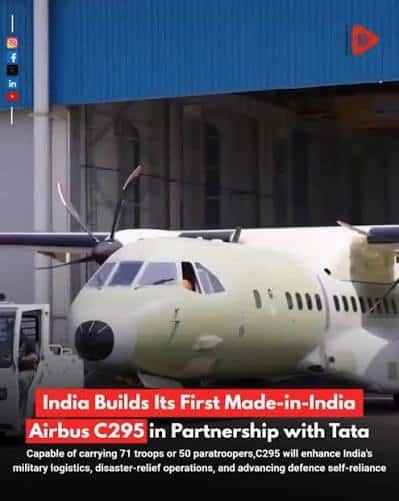
India’s Growing Aerospace Manufacturing Ecosystem
The C295 project represents only one step in India’s broader aerospace journey.
India is increasingly becoming a preferred destination for aerospace manufacturing, engineering services, maintenance operations, and defence technology development.
The success of the C295 program demonstrates that Indian companies can participate in sophisticated aircraft manufacturing projects that meet international standards.
As more defence and aerospace programs follow a similar model, India could emerge as a major player in the global aviation supply chain over the coming decades.
What Happens Next for the C295 Program?
The successful maiden flight marks the beginning of the aircraft’s testing and certification journey.
Following additional testing and validation processes, the first Made-in-India C295 aircraft is expected to be delivered to the Indian Air Force. The long-term plan involves manufacturing and delivering 40 aircraft from the Vadodara facility.
Each successful delivery will further strengthen India’s aerospace manufacturing ecosystem and bring the country closer to achieving its defence self-reliance goals.
Conclusion
The maiden test flight of India’s first Made-in-India C295 military transport aircraft is much more than an aviation milestone. It is a powerful symbol of India’s growing technological capability, industrial strength, and strategic confidence.
Through the collaboration between Airbus and Tata Advanced Systems, India has demonstrated that it can successfully manufacture advanced military aircraft at home. This achievement supports national security, creates high-skilled employment, strengthens the economy, and advances the vision of Make in India.
As the C295 program progresses, it will likely become a blueprint for future defence manufacturing initiatives, helping India establish itself as a global aerospace and defence manufacturing leader.

- Latest News
- AgriTech & Innovation
- Benefits
- Creative Ideas
- live news
- 1 month ago
NEET UG Re-Exam 2026: Why Telegram Was Restricted in India and What It Means for Students

- Latest News
- AgriTech & Innovation
- Benefits
- Creative Ideas
- live news
- 1 month ago