



The National Testing Agency (NTA) and the Government of India took a major step before the NEET UG 2026 re-examination by temporarily restricting Telegram access in India. The move was aimed at preventing paper leak rumors, exam fraud, and the spread of misleading information that could affect millions of medical aspirants. While the decision sparked debate among students, educators, and technology experts, authorities believe it was necessary to protect the integrity of one of India’s most important entrance examinations.
Learn why Telegram was temporarily restricted in India before the NEET UG 2026 re-exam. Understand NTA’s actions, exam security measures, paper leak concerns, student reactions, and the impact on medical aspirants. Discover how authorities are working to ensure a fair, transparent, and secure examination process while preventing misinformation and cheating. Read this detailed guide to stay informed about NEET UG 2026 updates, government decisions, and future exam reforms that could shape medical entrance examinations across India.
Introduction
The National Eligibility cum Entrance Test (NEET UG) is one of the most competitive examinations in India. Every year, millions of students prepare for years with the dream of securing admission to top medical colleges. Because of its importance, maintaining fairness and transparency is critical.
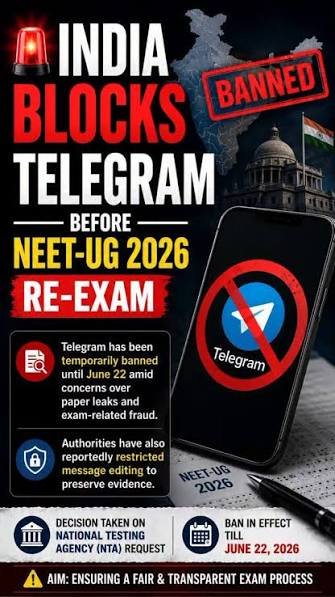
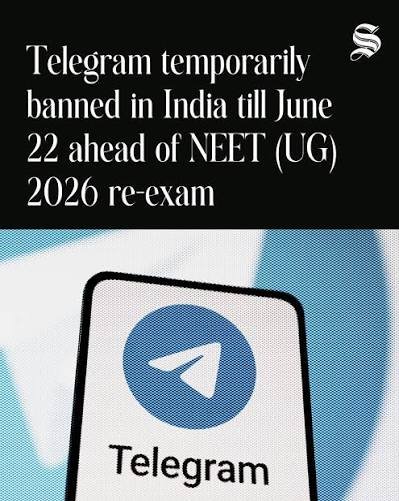
Ahead of the NEET UG 2026 re-examination, the Government of India temporarily restricted Telegram access after recommendations from the National Testing Agency (NTA). Officials stated that the platform had allegedly been used by cheating networks and fraud groups to spread fake papers and misleading claims related to the examination.
Why Was Telegram Restricted Before NEET UG 2026?
According to official statements, the restriction was introduced as a preventive measure. Authorities believed that organized groups were using Telegram channels and groups to circulate fake question papers, create panic among students, and potentially exploit candidates through scams.
The government implemented a temporary restriction under provisions of India’s Information Technology Act. The objective was not only to stop the spread of fraudulent content but also to maintain public confidence in the examination process. The restriction was scheduled to remain in effect until shortly after the re-examination.
The Growing Concern Over Exam Paper Leaks
India has witnessed several controversies involving examination leaks in recent years. Such incidents damage student trust and create uncertainty among candidates who spend months or even years preparing for competitive exams.
For NEET aspirants, even a rumor about a paper leak can cause significant anxiety. Students often struggle to distinguish between authentic information and fabricated claims circulating online. This creates a stressful environment during an already challenging period.
As a result, authorities have increasingly focused on strengthening digital monitoring and cybersecurity measures surrounding major examinations.
How Telegram Became Linked to Exam Fraud
Telegram is widely used for educational discussions, study materials, and exam preparation groups. However, investigators reportedly found instances where fraudulent groups allegedly used the platform to circulate fake question papers and misleading content.
Authorities also raised concerns about features that could potentially be misused to alter or manipulate information after publication. As part of the crackdown, restrictions were also placed on certain message-editing functionalities for a limited period.
While many legitimate students use Telegram for learning purposes, officials argued that temporary restrictions were necessary to curb misuse by organized cheating networks.
NTA’s Stand on Student Protection
The NTA has repeatedly emphasized that its primary responsibility is protecting the interests of students. The agency stated that the measures were designed to ensure a safe, secure, and transparent examination environment.
The organization has also launched initiatives encouraging candidates to report suspicious claims and misinformation related to NEET. These efforts are intended to improve trust and reduce the influence of fraudulent actors targeting students.
For genuine candidates, the message from authorities remains clear: rely only on official announcements and verified sources for examination-related updates.
Impact on NEET Aspirants
The restriction created mixed reactions among students.
Many aspirants supported the decision because they felt stronger security measures would improve fairness. Students who spend years preparing for medical entrance examinations often welcome actions that help reduce cheating and unfair advantages.
At the same time, some candidates expressed concerns because Telegram is also used for study groups, educational discussions, notes sharing, and exam preparation resources. The temporary restriction meant that many students had to switch to alternative communication platforms.
Despite these concerns, the government maintained that the move was temporary and specifically targeted at protecting the examination process.
Public Reactions and Debate
The decision sparked widespread discussion across India.
Supporters argued that extraordinary situations require strong preventive measures. They believe that protecting the credibility of national examinations should be a top priority.
Critics, however, questioned whether restricting one platform could completely eliminate exam fraud. Some technology experts suggested that fraudsters may simply migrate to other communication channels if deeper systemic issues are not addressed.
This debate has highlighted a broader challenge: balancing digital freedom with examination security.
Can Restricting Apps Prevent Paper Leaks?
Restricting access to a platform may reduce the immediate spread of fake content, but many experts believe it should be part of a larger strategy.
Long-term solutions may include stronger cybersecurity systems, encrypted question paper distribution, advanced monitoring technologies, artificial intelligence-based fraud detection, and stricter legal action against organized cheating networks.
Educational authorities are increasingly investing in technology-driven security frameworks to protect the credibility of national examinations.
Future of Exam Security in India
The NEET UG 2026 controversy may become a turning point for examination reforms in India.
Future measures could include enhanced digital surveillance, real-time monitoring systems, stricter identity verification, secure exam logistics, and greater collaboration between technology companies and government agencies.
The ultimate goal is to create a system where deserving students can compete fairly without worrying about leaks, scams, or misinformation.
As competitive examinations continue to evolve, ensuring transparency and trust will remain essential.
Conclusion
The temporary restriction of Telegram before the NEET UG 2026 re-examination reflects the growing importance of digital security in India’s education system. While opinions remain divided, the decision demonstrates how seriously authorities are treating exam integrity and student protection.
For aspirants, the most important lesson is to depend on official information, avoid rumors, and stay focused on preparation. A fair examination system benefits every hardworking student, and continued reforms can help strengthen trust in India’s competitive exams for years to come.

- Latest News
- AgriTech & Innovation
- Benefits
- Creative Ideas
- live news
- 2 months ago
Spotify Outage 2026: Thousands of Users Report Streaming Issues Across the Globe

- Latest News
- AgriTech & Innovation
- Benefits
- Creative Ideas
- live news
- 2 months ago