


Latest News
Higher Ethanol Blended Petrol Gets Excise Duty Exemption: What It Means for India’s Fuel Future

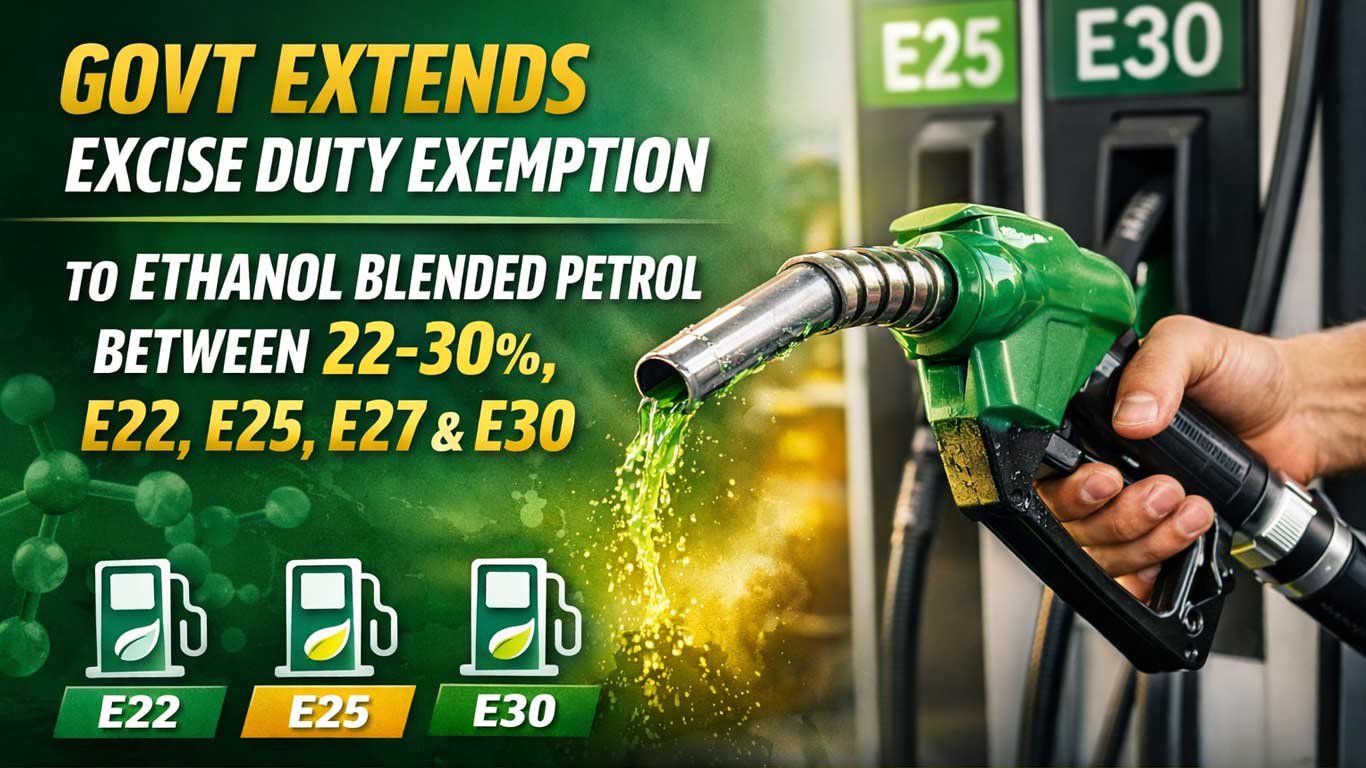
India has taken another significant step toward cleaner and more sustainable energy by exempting higher ethanol blended petrol from central excise duty. The decision is expected to encourage wider adoption of ethanol fuel blends, reduce dependence on imported crude oil, support farmers, and contribute to a greener future. As India moves beyond E20 fuel and explores higher blends such as E22, E25, E27, and E30, this policy could reshape the country’s transportation and energy sectors in the coming years.Discover how India’s excise duty exemption on higher ethanol blended petrol can reduce fuel imports, support farmers, lower emissions, and accelerate the transition toward cleaner and more sustainable transportation fuels.
India’s journey toward cleaner and more sustainable transportation has gained fresh momentum with the government’s decision to exempt higher ethanol blended petrol from central excise duty. This move reflects the country’s long-term vision of reducing dependence on imported crude oil while promoting renewable fuel alternatives.

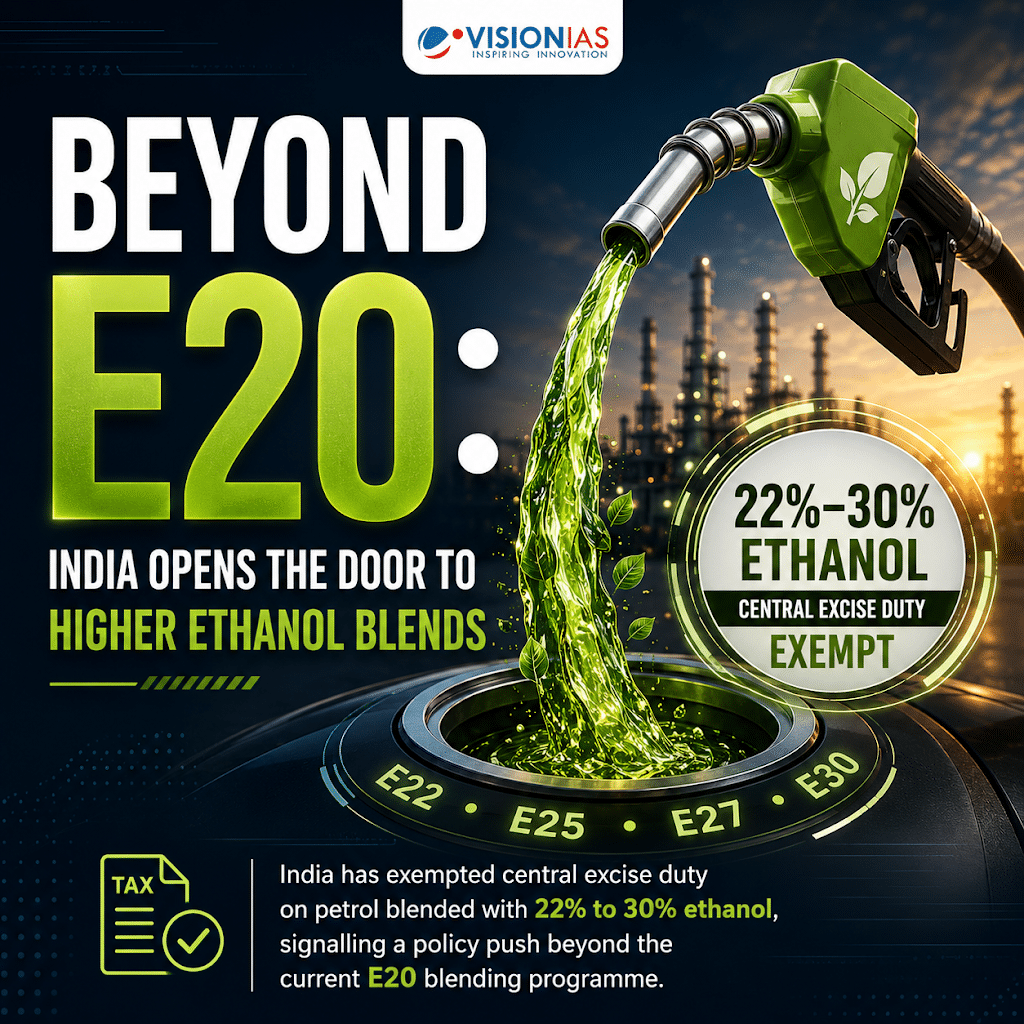
The latest exemption applies to petrol blends containing ethanol levels between 22% and 30%, including E22, E25, E27, and E30 fuels. The announcement comes at a time when India is aggressively pursuing its ethanol blending targets and exploring new ways to strengthen energy security.
For consumers, farmers, fuel companies, and environmental advocates, this policy marks an important milestone that could transform the future of fuel consumption in India.
What Is Higher Ethanol Blended Petrol?
Ethanol blended petrol is a mixture of regular petrol and ethanol, a renewable biofuel produced mainly from sugarcane, maize, and other agricultural feedstocks.
For years, India has promoted E10 and E20 fuel blends, where ethanol makes up 10% and 20% of the fuel mixture respectively. The latest policy focuses on even higher ethanol blends such as E22, E25, E27, and E30, which contain between 22% and 30% ethanol.
These higher blends are designed to reduce fossil fuel consumption while supporting the country’s transition toward cleaner energy sources.
Why Has the Government Exempted Excise Duty?
The excise duty exemption is intended to encourage fuel companies and consumers to adopt higher ethanol blends more quickly.
India remains one of the world’s largest importers of crude oil. Rising global oil prices often create economic pressure and increase fuel costs. By promoting domestically produced ethanol, the government hopes to reduce import dependence and improve energy security.
The exemption also aligns with India’s broader clean energy goals and its commitment to lowering greenhouse gas emissions through alternative fuels.
Key Benefits of Higher Ethanol Fuel Blends
One of the biggest advantages of higher ethanol blended petrol is reduced dependence on imported crude oil. Every litre of ethanol blended into petrol helps lower the demand for foreign oil imports.
Another major benefit is economic savings. Since ethanol is produced domestically, it keeps more money within the Indian economy and supports local industries.
The excise duty exemption also creates a favorable environment for fuel companies to expand ethanol blending infrastructure and invest in future-ready fuel technologies.
For consumers, greater availability of ethanol blends may eventually contribute to more stable fuel pricing over the long term.
Impact on Indian Consumers
Many vehicle owners are curious about how higher ethanol blended petrol will affect their daily driving experience.
Modern vehicles designed for E20 fuel are generally better equipped to handle increased ethanol content. Automobile manufacturers are also investing heavily in flex-fuel technologies that can support higher ethanol blends.
Consumers may notice slight variations in fuel efficiency depending on vehicle compatibility. However, ongoing advancements in engine technology are expected to minimize these differences while maximizing environmental benefits.
As fuel stations gradually introduce higher blends, awareness and education will play a crucial role in helping consumers make informed decisions.
Benefits for Farmers and Rural Economy
Perhaps one of the most significant outcomes of ethanol expansion is its positive impact on Indian agriculture.
Ethanol production creates additional demand for crops such as sugarcane and maize. This increased demand provides farmers with new income opportunities and strengthens rural economies.
The growing ethanol industry also generates employment across supply chains, including farming, transportation, processing, and fuel distribution.
As ethanol production scales up, millions of farmers could benefit from a more stable and diversified agricultural market.
Environmental Advantages of Ethanol Fuel
Environmental sustainability remains one of the strongest arguments for increasing ethanol blending.
Compared to traditional petrol, ethanol can contribute to lower greenhouse gas emissions throughout its lifecycle. Studies have indicated substantial reductions in emissions when ethanol derived from agricultural feedstocks replaces a portion of conventional petrol.
Higher ethanol blends also support India’s broader climate commitments and help move the transportation sector toward cleaner energy solutions.
As cities continue to struggle with pollution challenges, cleaner fuel alternatives become increasingly important.
Challenges Ahead
Despite its promising benefits, the transition toward higher ethanol blending is not without challenges.
Fuel distribution infrastructure will need upgrades to accommodate new fuel blends. Storage facilities, transportation systems, and dispensing equipment may require modifications.
Vehicle compatibility remains another important consideration. While newer vehicles are increasingly ethanol-ready, older models may need evaluation before widespread adoption of higher blends.
Additionally, maintaining a sustainable supply of feedstock for ethanol production will be critical to ensuring long-term success.
Future of Ethanol Blending in India
India’s ethanol story is only beginning.
The government has already achieved major milestones with E20 implementation and is now laying the groundwork for higher ethanol blends. Industry experts believe future developments may include broader adoption of E30 fuels and even higher ethanol concentrations in specialized vehicles.
With supportive policies, technological innovation, and industry collaboration, India is positioning itself as a global leader in biofuel adoption.
The excise duty exemption serves as a strong signal that the country is committed to accelerating this transition.
Conclusion
The excise duty exemption for higher ethanol blended petrol represents more than just a tax benefit. It is a strategic move that supports energy security, strengthens rural economies, encourages sustainable agriculture, and advances India’s clean energy ambitions.
As the nation moves toward greater adoption of E22, E25, E27, and E30 fuel blends, consumers, businesses, and policymakers all stand to benefit from a more resilient and environmentally responsible fuel ecosystem.
The road ahead may involve infrastructure upgrades and technological adaptation, but the long-term advantages make ethanol blending one of the most promising components of India’s sustainable energy future.


NEET UG Re-Exam 2026: Why Telegram Was Restricted in India and What It Means for Students

Spotify Outage 2026: Thousands of Users Report Streaming Issues Across the Globe

Stock Market Today: Sensex, Nifty & Top Stocks in Focus Amid Global Market Uncertainty

NEET Re-Exam Admit Card 2026 Released: Direct Download Link, Exam Day Guidelines & Important Updates

Made-in-India C295 Aircraft Maiden Flight Marks a New Chapter in India’s Defence Manufacturing

Higher Ethanol Blended Petrol Gets Excise Duty Exemption: What It Means for India’s Fuel Future

What I Eat In A Day As An Indian Diabetic To Lose Weight

10 Simple Indian Home Habits That Help You Lose Weight With Type 2 Diabetes

Diabetes-Friendly Indian Breakfasts That Melt Belly Fat and Control Blood Sugar Naturally
