


Short Overview
It has been widely reported that the population of our planet is growing faster than we can feed it. In a rapidly changing climate we will have to feed 10 billion people with less water and less productive land over the next 30 years. To feed the world we’ll need more inventive and reliable ways of producing safe food with fewer resources.
Vertical farming is changing the way businesses, growers, and cities think about food production. Instead of depending only on large areas of farmland, this method grows crops in stacked layers inside controlled environments. With hydroponics, LED grow lights, automation, climate control, and data-based growing systems, vertical farms can produce fresh food closer to the people who consume it. This guide explains how vertical farming works, why businesses are investing in it, its main benefits and challenges, and how it may contribute to a more reliable and efficient food system.
What is vertical farming ?
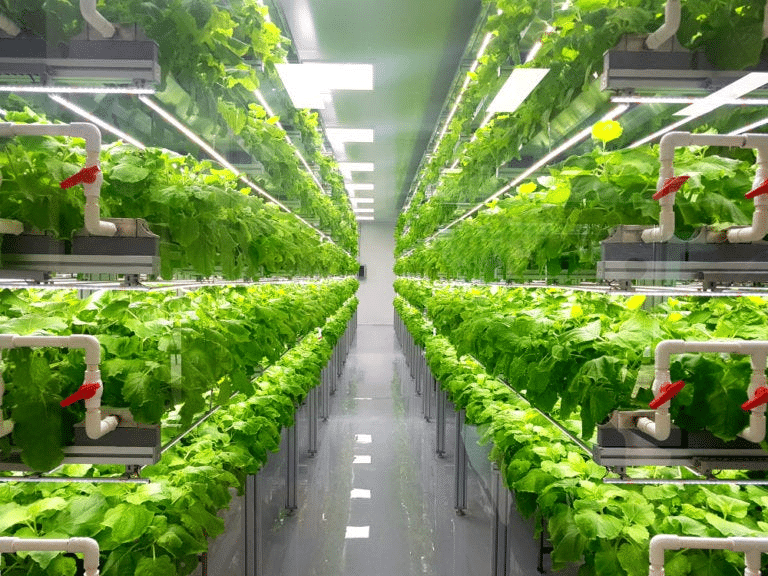
Vertical farming is the practice of growing crops stacked on top of each other, rather than in traditional rows. Growing up instead of out saves space, more crops can be produced per square foot of ground. Vertical farms are usually indoors, such as in a warehouse, where you can control things in the environment that help plants grow.
The Babylonians devised the best known example of a sophisticated early agricultural system. Their hanging gardens, built nearly 2,500 years ago, are believed to be the first prototype of a vertical farm. Although they didn’t understand the scientific basis for it, ancient people knew that hydroponic plants could be grown without soil.
How Does Vertical Farming Work?
Yes, vertical farming could be the solution to many of the issues that agriculture faces today, providing us with more food on less land while still being sustainable. But how does vertical farming actually work? There are many models, from patio gardens built from old pallets to warehouses and greenhouses feeding entire communities. This is how vertical farming greenhouses work.
Vertical farming techniques do not use soil. A healthy plant can be grown without the use of hazardous chemicals. Usually farmers use expanded clay, hemp, coconut fibres and mineral wool. Indoor vertical garden systems use specialised, hygienic air vents that protect crops from outside elements and dangers. Sustainable methods can also cut water consumption by as much as 95%.
Increasing numbers of companies are adopting vertical farms to implement renewable tech. It reduces not only the solution’s carbon footprint, but also its energy efficiency and enables a quicker return on investment.
SenzAgro is a global real-time agricultural ecosystem intelligence platform that automates the entire process to deliver precise watering, temperature, lighting and nutrients to produce the perfect environment. Vertical gardens, live walls and roof-top gardens need precise environmental conditions to grow plants and produce more. SenzAgro successfully works with vertically grown plants and increases productivity using a low-cost automated system.
Benefits and drawbacks of vertical farming technology
Benefits
Reliability of Crop Production
Reliability is one of the main benefits of vertical farming. This means that if you choose vertical farming your crop output will be constant throughout the year. This is further aided by the fact that vertical farming is generally not weather dependent, so you can plant crops without fear of bad weather.
Best land use
Traditional farming needs large areas of completely fertile soil. In contrast, vertical farming doesn’t have such requirements. You can grow more in a small piece of land.
Benefits to the environment
The main environmental benefits of vertical farming are:
Water conservation: Vertical farming’s main advantage is that it utilises hydroponic growing methods that require only 10% of the water that traditional farming does. This kind of farming also needs less nutrients and fertilisers than traditional farming methods. This is done by growing plants in artificial lights in soil-less and pesticide-less environments. It recycles the water that evaporates from the plants.
Lower carbon emissions: Growing more fruit and vegetables means we don’t have to import them from other countries .Crop producers can adjust nutrient management practices to reduce emissions from nitrogen fertilisers and manure applied to farmers fields
Methane generated from the composting plant remains can be used for energy generation.
No chemicals or pesticides are used.
The moisture level is now properly controlled and crop damage and many fungal diseases are no longer a problem. And finally, you get a better product that’s safer and healthier for you to eat. Vertical farms are eco-friendly.
Higher Profits
The processes have become more scientific. So it is easier for farmers to increase their revenues. Good cultivation methods give a larger crop, which means more goods to sell and more money. In addition, since vertically grown plants are organic and healthier than horizontally grown plants, the producers may be able to justify higher unit costs.
Disadvantages
High startup costs
The development of a commercial plant is a complex process, so the initial investment is high. Therefore, you have to be careful when you make decisions about the development of your farm. Once you choose a concept, it can be difficult to change your mind after the facility is built, which could create an unforeseen financial burden.
High power usage
Indoor vertical garden systems require artificial lighting to be provided on a 24-hour basis. So even with LED lighting, the electricity cost will be very high.
Problems With Pollination
The closed system of a vertical farm guaranties that no insects exist and at best, no pests enter. So that causes pollination. Which is a big problem. Nature has a great variety of insects that make pollen-laden flights from flower to flower. But such insects don’t exist in vertical farms and so manual pollination is needed to ensure a successful harvest.
Very few crops are profitable to grow.
Unfortunately there are only a few plants that can be successfully grown in a vertical farm currently. This is because it is expensive to grow a plant. Potatoes just aren’t worth it, even at the low cost. As a result, it is currently best to select plants with high economic potential.
How much food can a vertical farm produce compared to traditional farming?
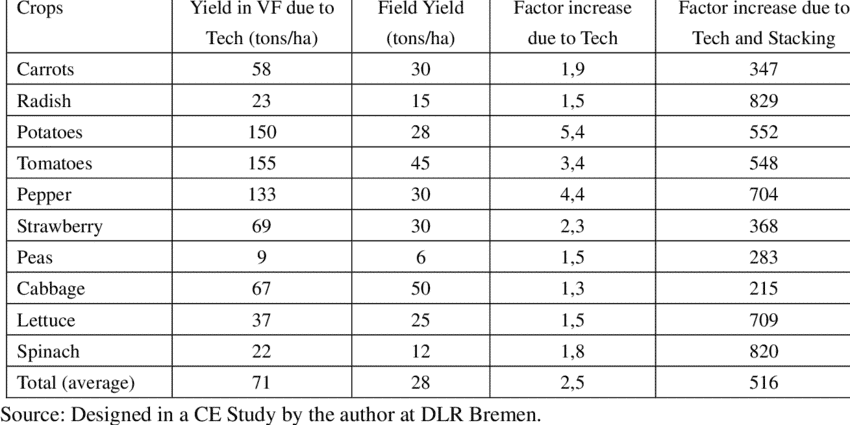
According to the above statistics, research conducted by the Journal of ResearchGate concluded that vertical farms produce an average of 71 times the amount of harvest as traditional field farms. (I obtained this figure from the table above.)
Vertical farming uses much less water and land than traditional farming, emits less CO2, and produces higher crop yields overall and per square foot.
Leading country for vertical farming
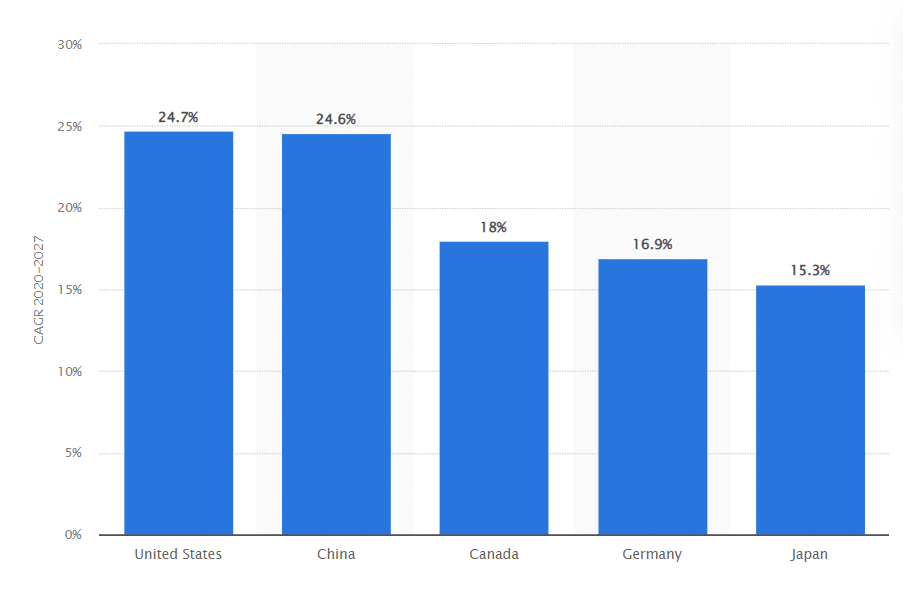
Currently the USA is the most vertical farmed country .
Vertical hydroponic farms are now a common sight across the Philippines. Vertical farming has become popular in the Philippines, as products once imported can now be grown in built-up urban areas with state-of-the-art technology adapted for the country’s harsh climate and providing Filipinos large yields of fresh organic produce.
Vertical Farming in 3 Types
1.Hydroponics
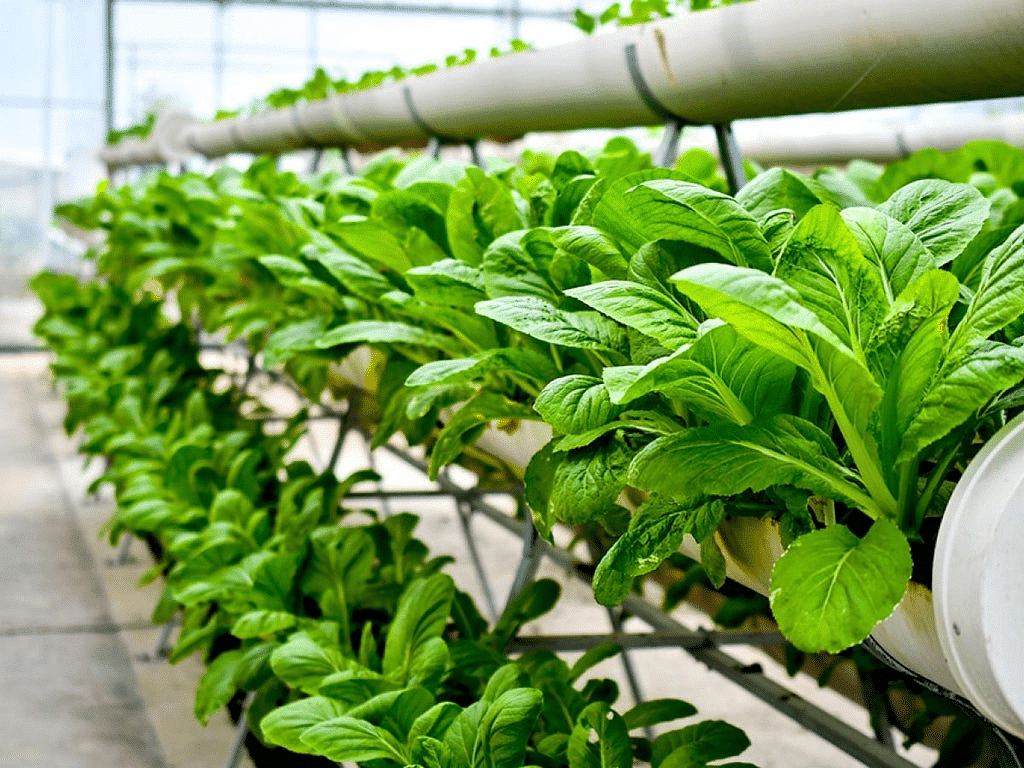
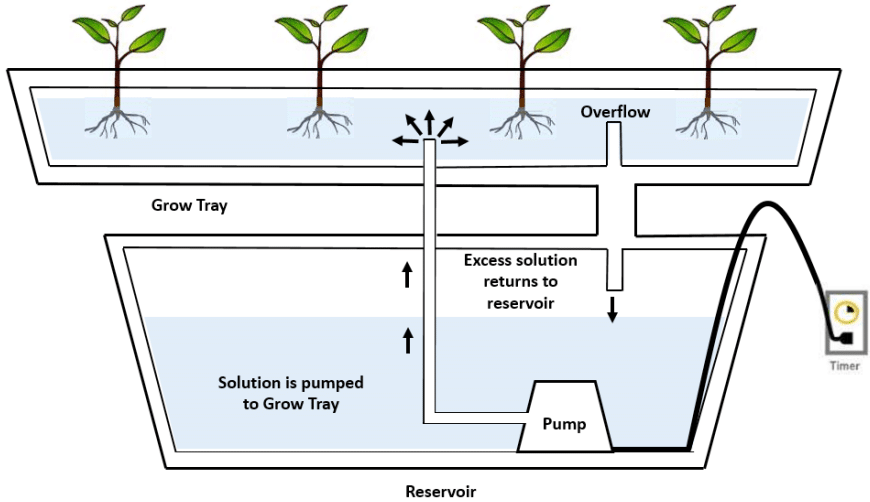
Hydroponics is the most commonly used growing method in vertical farms. Plants are grown in nutrient solutions rather than dirt in this technique.
Plant roots will grow as the nutrient solution of a grow tray must be deep enough to submerge the roots. A reservoir underneath the grow tray, a water pump, and a timer flood the grow tray with nutrient solution several times a day. The timer is adjusted according to such factors as plant size, water and food needs, development cycles, and ambient Temperature.
2.Aeroponic
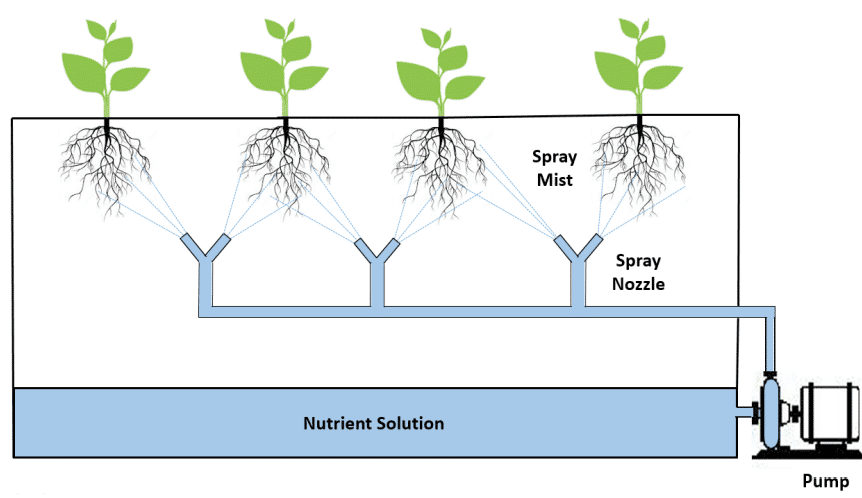
They are grown aeroponically, that is, without soil and with only a very small amount of water or mist. In this system, the plant roots are suspended in the air. As a result, the root zones are continuously misted with a nutritious solution using a tiny sprayer to ensure that the roots receive enough oxygen. Plants grow faster in this system than in other types of hydroponic systems making it the most effective vertical farming system.
Furthermore, it consumes 90% less water than the most efficient hydroponic systems. Furthermore, crop yields increase by 45 to 75% while fertilizer use decreases by 60%.
3. Aquaponics
It is a blend of hydroponics and aquaculture, or growing fish in ponds or tanks, in one environment. Fish in aquariums produce waste rich in nutrients that can be used as a fertiliser supplement to help grow plants in grow trays. At the same time, the plants serve as a natural filter for the water in which the fish live. The water in the fish tank is constantly pumped into the grow tray and is full of ammonia.
Conclusion: Is Vertical Farming Part of the Future of Agriculture?
Vertical farming technologies are still in their infancy. Companies have yet to successfully scale up crop production and make it economically feasible to meet rising food demand. Vertical farming offers a different way to think about where and how fresh food can be produced.
By combining controlled environment agriculture, hydroponics, LED lighting, automation, sensors, and vertical growing space, indoor farms can produce certain crops closer to consumers while giving growers greater control over production conditions.Its potential is significant, but success requires realistic planning.
Energy consumption, vertical farming costs, crop selection, customer demand, technology reliability, skilled labor, and operating efficiency must all be considered before launching a commercial project.
For growers and businesses, the most valuable question is therefore not simply whether vertical farming is the future.The better question is where vertical farming provides a clear advantage.
When the right crop, market, technology, location, and business model come together, commercial vertical farming can become an important part of a more diverse, technology-driven food system.
As cities grow and agricultural businesses look for more efficient production methods, indoor farming systems are likely to remain an important area of innovation, investment, and experimentation.The opportunity is not just to grow upward. It is to build smarter food production systems around real customer needs.