


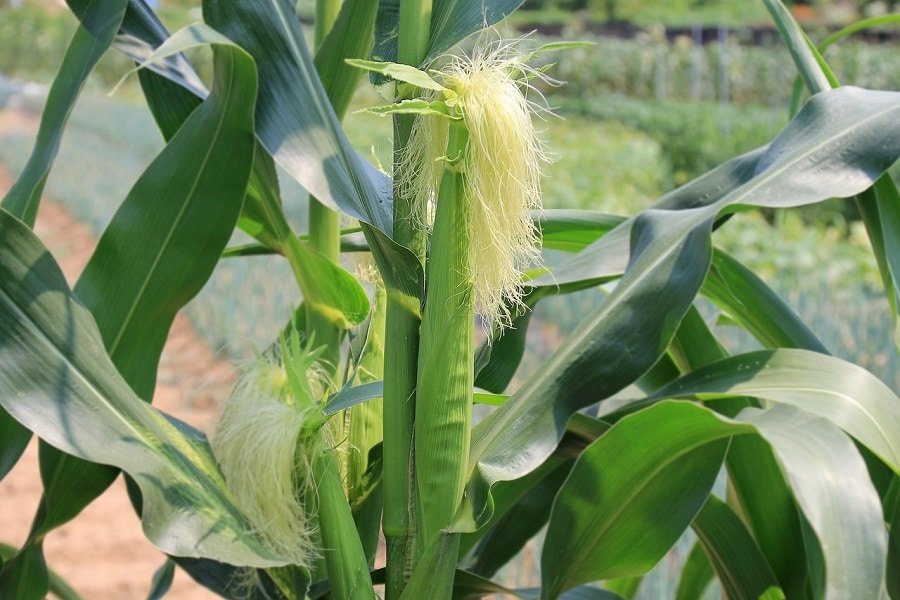


Short Overview
Maize farming in India is becoming an attractive option for farmers because maize has demand from food, poultry feed, livestock feed, starch and industrial sectors. With the right variety, sowing time, plant spacing, fertilizer management, irrigation and pest control, farmers can improve productivity and farm income. This guide explains maize cultivation in India from land preparation to harvesting in simple, practical language.
Maize farming in India with this complete guide covering the best maize varieties, sowing time, seed rate, plant spacing, soil preparation, fertilizer schedule, irrigation, weed management, pest control, harvesting, expected yield and profitable farming practices. Discover how farmers can improve maize production, reduce unnecessary input costs and achieve better returns through proper crop management and timely field operations. This practical guide is written in simple language for Indian farmers, beginners, agricultural entrepreneurs and anyone planning to start commercial maize cultivation.
Introduction to Maize Farming in India
Maize, commonly known as corn, is one of the most versatile crops grown by Indian farmers. It is used not only as food but also as poultry feed, cattle feed, starch, processed food and industrial raw material. This wide range of applications gives maize an important place in Indian agriculture.
For farmers, maize can also be attractive because it has a relatively short crop duration and can fit into different cropping systems. Depending on the region, irrigation facilities and local climate, farmers can grow maize during kharif, rabi or spring seasons.
However, simply planting maize does not guarantee a good harvest. The crop needs proper planning from the beginning. Seed quality, sowing time, plant population, soil fertility, irrigation and pest management can all influence the final yield.
ICAR also highlights maize as an important crop for food, nutrition, feed, industrial use and emerging bioenergy applications.
Why Maize Farming Is a Good Business Opportunity
The biggest advantage of maize farming is its diverse market demand. Maize is purchased for human consumption, poultry feed, livestock feed and several industrial applications. This creates multiple market channels for farmers.
Maize can also be useful in crop rotation. Farmers who want to diversify from crops requiring higher water availability may consider maize where local conditions are suitable. ICAR has specifically discussed maize as an alternative crop to rice in some regions because of water-saving and profitability considerations.
Another advantage is mechanization. Many maize operations, including sowing and harvesting, can be mechanized depending on farm size and local availability. This can help reduce labour requirements and improve operational efficiency.
Still, profitability should never be judged only by the market price. Seed, fertilizer, irrigation, labour, machinery, pest management, transportation and post-harvest expenses must be considered before calculating the actual maize farming profit per acre.
Maize Cultivation in India: Seed Rate, Spacing and Fertilizers
Corn, also known as maize, has quietly become one of the most important crops for Indian farmers. Maize has multiple income streams from food, poultry feed, starch and biofuel industries. “Maize is flexible, short duration and has stable demand and in the last decade I have seen many farmers switch from traditional crops to maize,” he said.
But good maize yield is not a matter of chance. Right seed rate, proper plant spacing and balanced fertilizer schedule are major factors of success. This guide explains maize cultivation in India in a simple, practical, and farmer-friendly way.
Why India is going Maize-crazy
Corn does well in a variety of climates and soils. It fits well in crop rotation systems and performs well under both rainfed and irrigated conditions. Farmers prefer maize as it requires less water than paddy and also provides returns early.
States such as Madhya Pradesh, Karnataka, Bihar, Uttar Pradesh, Telangana and Maharashtra have been recording a steady rise in maize acreage. Maize yields have gone up substantially due to improved hybrids and better farming practices.
Best Season to Grow Corn in India
Maize can be cultivated almost year-round, depending on the region and water availability.
Kharif season : June-July (Rainfed, largest area)
Rabi season: October-November (irrigation area)
Spring: January to February (select regions)
Sowing time is important. Late sowing often leads to poor pollination and poor grain filling.
Soil Conditions for Growing Corn
pH of soil 5.5-7.5
Avoid water logged fields
Good soil aeration is important for root development.
Farmers who regularly apply compost or farmyard manure often get better root growth and healthier plants.
Preparation of land for maize cultivation
Good land preparation is a good foundation for maize roots. The field should be free of weeds and crop residues.
1 deep plowing + 2-3 harrowings
Proper leveling of the field ensures uniform irrigation.
Use well decomposed farm-yard manure (8-10 tons / hectare)
Proper preparation of land leads to uniform germination and reduces early stress in crops.
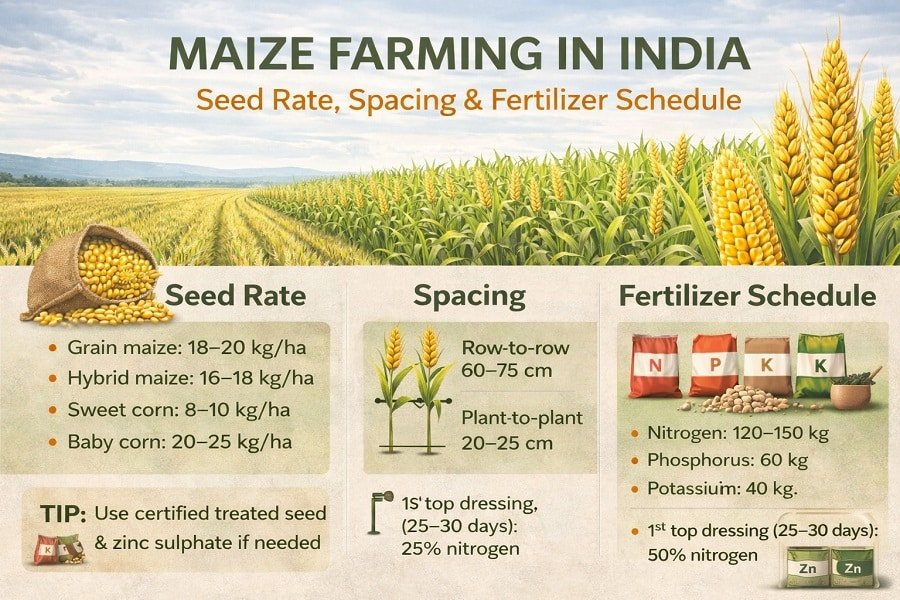
Maize Seed Rate in India
The right choice of seed rate ensures the optimal plant population which directly impacts the yield. More plants mean more competition between them, fewer plants mean less overall production.
Seeding rate (kg/ha)
Grain maize: 18-20 kg per hectare
Hybrid maize. 16-18 kg/ha
Sweet corn: 8-10 kg per hectare
Baby corn 20-25 kg/ha
Use certified seeds from reliable sources. Seed treatment can help reduce early pest and disease problems.
Best Spacing for Maize Plants
The spacing is right, each plant gets enough sun, nutrients and moisture. Many farmers ignore the spacing and this results in overcrowding and lower yield.
Suggested spacing
Row to row:60-75 cm
Plant to plant: 20-25 cm
For baby corn closer spacing is preferable whereas for grain maize wider spacing is better.
Line sowing with seed drills ensures uniform spacing and facilitates intercultural operations.
Fertilizer Guide for Corn
Maize is a hungry crop for nutrients. To get high yield, it is important to apply the right amount of fertilizer at the right stage.
Suggested NPK Requirement (per hectare)
Nitrogen (N): 120–150 kg
Phosphorus (P) 60 kg
Potassium (K): 40 kilos
Basal Applications of Fertilizers
At sowing time:
Phosphorus full dose
Potassium 100%
25 per cent Nitrogen
Top Dressing Program
First feeding (25-30 days) Nitrogen 25 %
Second top dressing (45-50 days) 50% nitrogen
Nitrogen should be added when the soil has sufficient moisture to prevent losses.
Micronutrients for Higher Maize Yield
Zinc deficiency affects maize growth in many Indian soils. Zinc application improves cob formation and grain filling.
Zinc sulfate: 25 kg per hectare (once in a 2-3 years)
Foliar spray deficiency symptoms if
Organic farmers often use compost, vermicompost, and biofertilizers to keep the soil healthy.
Management of irrigation in maize growing
Maize is sensitive to water stress at critical growth stages.
Stages of Critical Irrigation
Knee-high to a stage
Tasseling phase
Silking stage Silking stage
Stage of grain filling
Watering is equally important, though, since too much water can cause root diseases.
Weed control in maize field
Weeds compete with the plant for nutrients and moisture, especially during early growth.
First thinning: 20-25 days after sowing
Second weeding: 40-45 days after sowing.
For small farms mechanical weeding and mulching are effective. Weed control in a timely manner increases fertilizer efficiency.
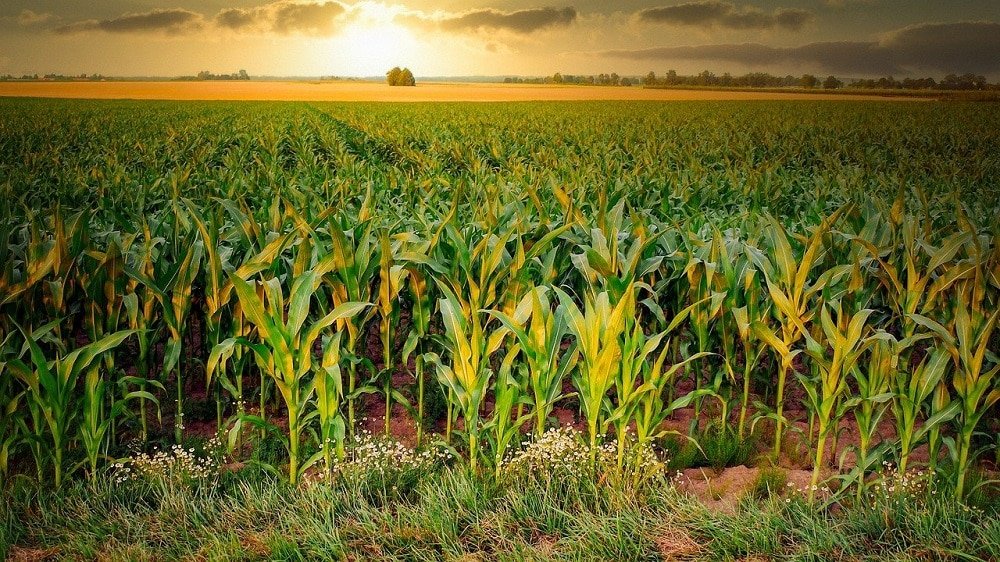
Common Pests and Diseases of Maize
Major losses are prevented by early detection and fast action.
Fall army worm
Stem borer (di)
Leaf rot
Down mildew
Good seed, crop rotation, and field sanitation naturally reduce the pest pressure.
Harvesting Time for Maize
When the crop is ready to harvest the cobs of maize turn yellow and the grains become hard.
Grain 20-25% moisture content
Delaying harvesting can lead to lodging and pest damage
If dried properly before storage , it will not be infected by fungus .
Expected Yield of Maize in India
Yield depends on variety, management and weather.
Traditional varieties 25-30 quintals per hectare
Hybrids: 50-70 qtls/ha;
Farmers with the correct seed rate, spacing and fertilizer schedule consistently achieve higher yields.
Conclusion: How to Maximize Your Corn Crop
If basic practices are followed correctly, maize farming can be very profitable. Seed rate, spacing and fertilizer management are not complicated but require discipline and timing.
Maize can fit well into rotation with crops you are already growing such as wheat or vegetables and increases the stability of your farm income. Use good seed, respect plant spacing and feed the crop properly to grow maize well. Maize will reward you.
Maize farming in India has strong potential when it is approached as a planned agricultural business rather than simply another field crop.
The key is to make the right decisions before sowing. Select a suitable hybrid, prepare the land properly, maintain the recommended plant population, manage fertilizer according to soil needs, protect the crop during critical growth stages and harvest at the right maturity.
The growing use of maize in food, feed, industrial products and emerging bioenergy applications creates opportunities for farmers and agricultural entrepreneurs. ICAR describes maize as increasingly important across food, feed, industrial and bioenergy sectors.
For the best results, farmers should combine local agricultural recommendations with good field management and careful cost calculation. Higher yield is valuable, but higher net profit comes from combining productivity with efficient input management and better marketing.

