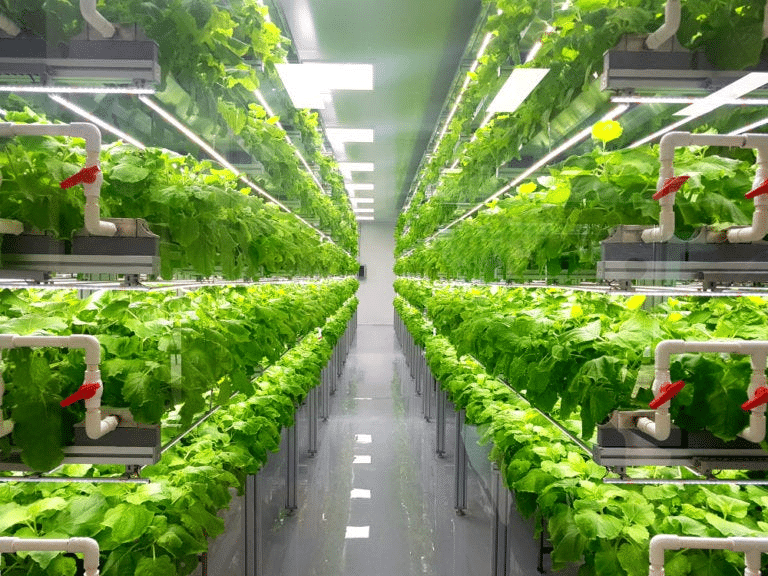

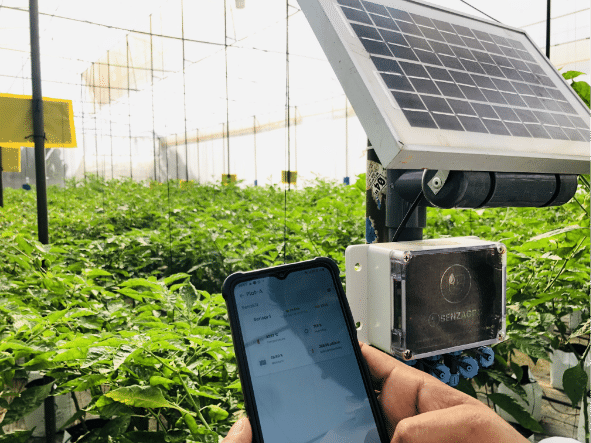


Farmers working in the farmlands depend only on rain and bore wells for irrigation.Even when there is a water pump on the farm, farmers have to turn it on and off manually. The project is meant to develop an automatic irrigation system to turn on and off the pump motor depending upon the moisture level of the soil. The agricultural industry is very dependent on proper irrigation technique. This method has the advantage of requiring less human intervention, and at the same time, it ensures proper irrigation.
The Food and Agricultural Organization also estimates that more than 60 percent of the world’s population make a living from agriculture. What does this all mean if there is no rain and no reliable irrigation? It means a crop failure and suffering to the people.”
The good news is that solar powered irrigation systems offer a way out of this and improve food security, community well-being and poverty reduction.
Introduction to Solar Powered Irrigation Systems
A solar powered irrigation system is an agricultural technology that uses solar panels to generate electricity for operating water pumps. Instead of depending completely on grid electricity or diesel fuel, farmers can use renewable solar power to move water from sources such as wells, ponds, rivers, or storage tanks to farmland.
Solar irrigation systems are designed to support different farming requirements, including small farms, large agricultural fields, greenhouses, and remote farming areas where electricity access is limited.
The main purpose of this technology is to provide a dependable irrigation solution while reducing energy expenses and protecting natural resources. Since sunlight is freely available, solar-powered farming systems can provide long-term value for farmers.
What are Solar irrigation systems?
It makes perfect sense to irrigate using solar energy. First, irrigation is often used in rural communities with limited access to reliable electrical or fossil fuel supplies. Second, in the absence of rain water, solar radiation is an abundant resource, especially in areas where irrigation is crucial for food security and global trade.
Lastly, solar-powered irrigation systems (SPIS) self-regulate passively, pumping more water on clear hot days when plants need it most and vice versa. It is essential to keep in mind that a solar-powered irrigation system is not just a system with solar pumps. Design of panels, pumps and irrigation systems takes into account water availability and local agricultural water needs.
There are two main types of solar water pumps: Submersible solar water pumping system Surface solar water pumping system
The main objective is to design a time and cost based irrigation system by using microcontroller. The irrigation scheduler measures variables like temperature, humidity and soil moisture.
to develop a smart irrigation system to save a large amount of water used for crop irrigation and easy control of water application for light and often irrigation as well as improved water application efficiency
Using commercial fertiliser and chemicals.
Increase capacity so that there is enough irrigation for the demand
The conduct of basic and applied research in water management will contribute to the solution of the widespread problem of soil erosion from surface irrigation systems.
Why are solar panels used in irrigation?
Solar panels are an excellent choice for reducing environmental impact, balancing energy costs, and reaping additional benefits such as supporting local businesses and fostering energy independence.
Farmers are increasingly using solar power as a reliable, clean-energy alternative for managing agricultural water, especially in areas where solar radiation is high. Solar irrigation technology has made available a free resource which assists local farmers to plan better, and improve their stock levels for marketing in a dependable and highly efficient way. a cleaner, more reliable way that cuts down on the costs of farming significantly.
How does it work?
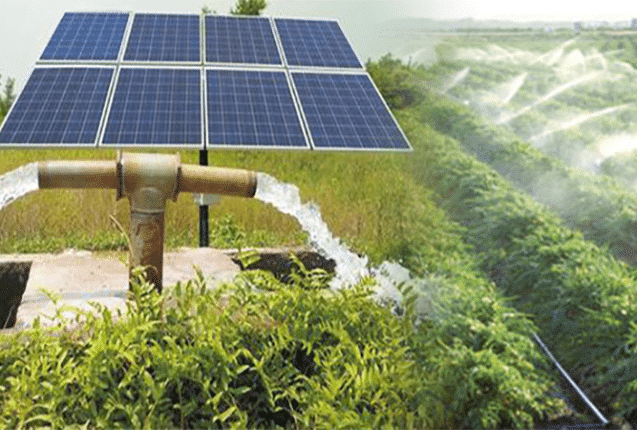
In solar powered water pumps, sunlight is converted into electricity to run the water pump. It absorbs sunlight with solar panels and makes direct current (DC) to run the motor that pumps water away from the source. If the pump motor requires AC ( alternating current ) instead of DC , an inverter is used .
Diesel pumps are little more efficient than AC driven pumps because they are more flexible. However, one of the main limitations of this system is the dependence on the availability of fuel, as well as its greater environmental impact.
Diesel powered pumps are cheaper than solar powered pumps, but they have extremely high operational costs that are highly correlated with diesel prices. Solar-powered systems are the opposite. The system is relatively expensive but the energy source is free and there are no ongoing operational costs after the amortisation period (only the maintenance costs must be taken into account).
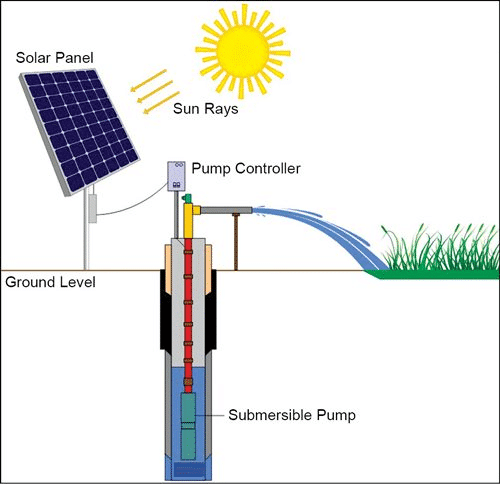
It is a model of the working of solar powered irrigation system in agriculture.
Pumps for a solar pond are built into the water and draw power from the sun, so they cannot operate at nite. Some models work at nite, but they generally have batteries or energy storage. Because of the energy it saves, such a device will be able to work at nite.
Solar pumps often have a reduced amount of work at nite, even if batteries or other types of energy storage are available. In some cases, the battery may not have enough storage capacity to run the pump all nite.
Why Farmers Are Choosing Solar Irrigation Technology
Farmers are increasingly interested in solar powered irrigation because energy costs have become a major part of agricultural expenses. Diesel pumps require regular fuel purchases, while electric pumps depend on electricity availability and pricing.
Solar irrigation provides farmers with greater independence by allowing them to generate their own energy. Once installed, the system requires less ongoing maintenance compared with traditional fuel-based pumping systems.
Another important reason for adoption is accessibility. Many rural farming locations have limited electricity infrastructure. Solar-powered irrigation systems can operate in these areas because they depend mainly on sunlight rather than traditional power networks.
This technology also supports sustainable agriculture by reducing greenhouse gas emissions and encouraging cleaner farming practices.
Types of agriculture irrigation system 4
Technological advancement has resulted in the creation of various irrigation techniques to cater to the specific requirements of crops and soil.
1.Surface Irrigation
Fields and orchards are the most frequent places where surface irrigation is used. This method uses gravity to supply water from the irrigation source to the crop through canals, pipes, etc. This method is the least efficient and has higher water losses than other irrigation methods.
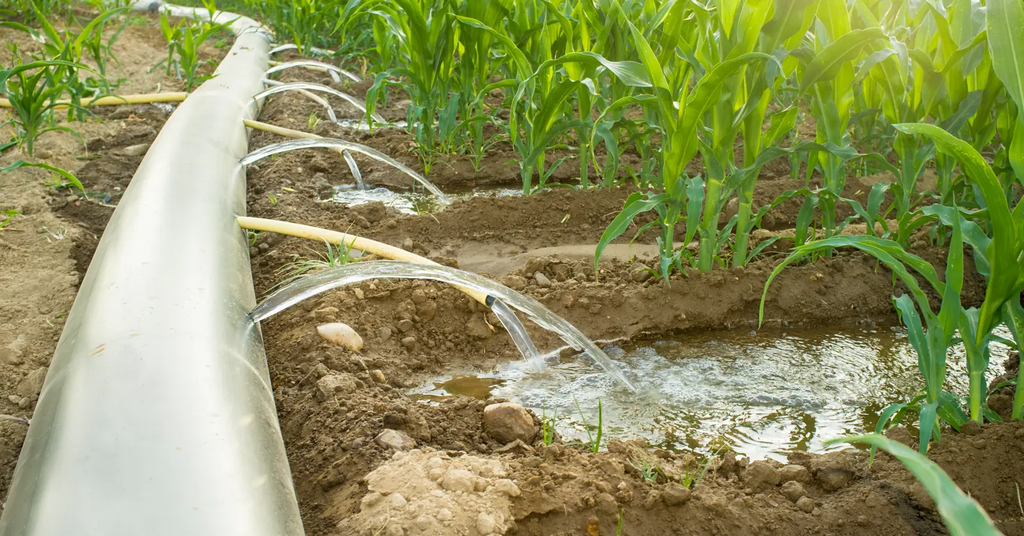
Surface irrigation is
Furrow irrigation
The field is irrigated with water through furrow space of 0.1 and 0.3m.
It does not need technical knowledge to operate as compared to drip and sprinkler methods.
Furthermore, the furrow method does not require as much financial investment. It’s hard to control the flow of water. It is suitable for row-planted crops such as millet and corn.
Irrigation of basins
That means making a basin in proportion to the size of the tree. Usually it is used on orchards. After construction, the basins are linked by irrigation canals. The previous basin is irrigated to move water from one basin to another. This irrigation method could help in the spread of pests and diseases from one tree to another through irrigation water.
Border irrigation
It is a traditional irrigation method. The method involves dividing the field into blocks and building boundaries with soil. This technique is water flowing between rectangular sections separated by dikes and with open drainage at one end of a sloping field. This method is better than the basin method for slopes fields.
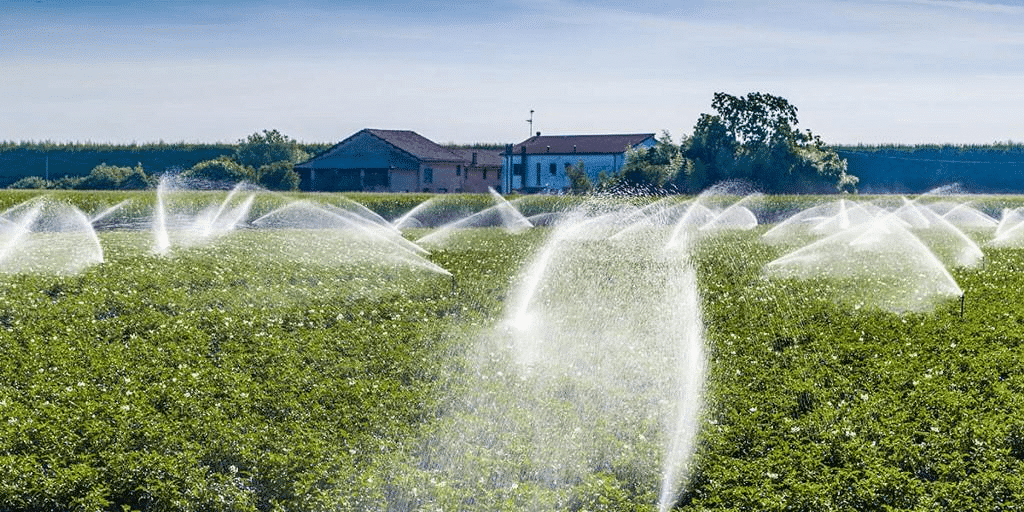
2.Irrigation by sprinklers.
It is a type of irrigation in which water is sprayed or sprinkled through the air in the form of raindrop like drops. Spraying and sprinkling equipment may be fixed permanently (solid set), moved mechanically after application of a given volume of water (portable set) or mounted on moving booms and pipelines.
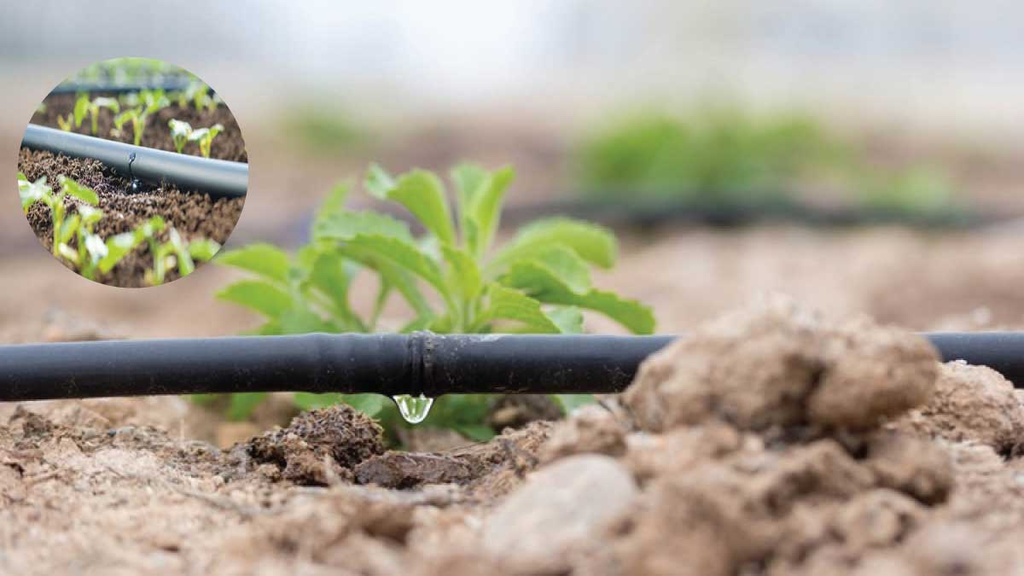
3.Drip/trickle irrigation
Systems are micro irrigation techniques that deliver water to the soil surface in the form of drops or small streams via emitters. Because of the low discharge rate of the emitters, this irrigation method is suitable for all soil types.
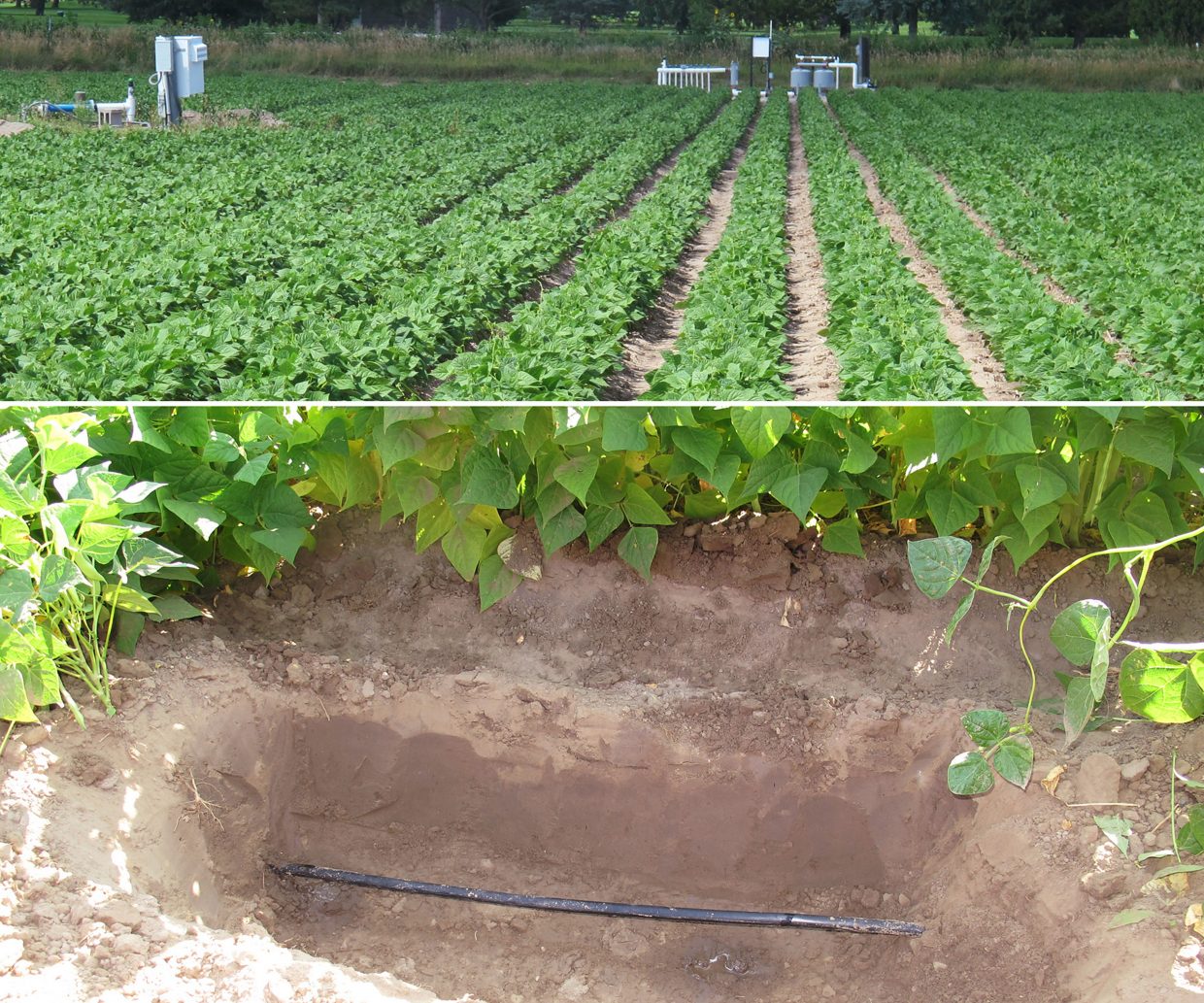
4.Subsurface Irrigation
Systems are microirrigation techniques that deliver water to the soil surface in the form of drops or small streams via emitters. Because of the low discharge rate of the emitters, this irrigation method is suitable for all soil types.
Benefits of solar-powered irrigation system
1.Higher yield by 1.20%
- Solar irrigation can greatly increase profit, particularly for farmers in remote areas where fuel or energy is seldom available.
- An automatic watering system reduces the labour needed to supply water and reduces the operational costs by 20%.
4.Drip irrigation provides water to the roots of a crop and can reduce weed and disease pressure and increase the effectiveness of chemical treatment.
- Drip irrigation improves water use efficiency significantly, thus using 40% less water
- Solar powered irrigation pumps are an affordable, energy efficient option.
Future of Solar-Powered Farming Technology
The future of agricultural irrigation is moving toward smarter and more connected systems. New technologies such as artificial intelligence, remote monitoring, and IoT-based sensors are improving solar irrigation efficiency.
Smart solar irrigation systems can analyze soil conditions, weather information, and crop requirements to provide accurate watering decisions. These improvements help farmers save resources while increasing crop performance.
As renewable energy adoption grows, solar powered irrigation systems are expected to become more accessible and affordable for farming communities around the world.
The combination of solar energy, automation, and precision agriculture will create more efficient farming systems for future generations.
Conclusion: Building a Smarter Farming Future
The global solar water pump market is expected to expand at a CAGR of 10.2% from $2.86 billion in 2021 to $5.64 billion in 2028.
The solar water pump market has seen significant growth in recent years. The use of solar water pumping has increased due to a number of national and local laws that encourage the generation of energy from renewable sources to reduce the use of fossil fuels and the emission of pollutants. The market has been fortunate with the rapid pace of technological advancement that has made solar water pumps affordable.
Solar powered irrigation systems represent an important step toward sustainable and cost-effective agriculture. By using renewable solar energy, farmers can reduce electricity and fuel expenses while improving water management.
These systems provide reliable irrigation support, especially in areas where traditional energy sources are expensive or unavailable. With benefits such as lower operating costs, environmental protection, and improved farming efficiency, solar irrigation technology is becoming a practical choice for modern agriculture.
As technology continues to develop, solar-powered farming solutions will help create a more sustainable agricultural future where farmers can produce more while using fewer natural resources.