


Short Overview
Pear cultivation in India can be a good long-term option for farmers who select the right variety and manage the orchard carefully. Traditional high-chill pears suit cooler hill regions, while low-chill varieties have made pear farming possible in parts of the northern plains. Success depends on healthy planting material, suitable soil, balanced irrigation, timely pruning, pollination, pest management and careful harvesting. This guide explains the complete process in simple language so new growers can understand how to establish a healthy pear orchard and improve fruit quality, yield and market value.
Pear cultivation is slowly getting the attention of fruit growers in India, especially in the hilly and temperate zones. Pears are appreciated for their sweet taste, good shelf life and growing market demand in urban areas. Pear cultivation can be a profitable fruit business for the Indian farmers by choosing the right varieties and managing the orchards properly.
This is an in-depth introduction to pear cultivation in India. It covers climate, soil, suitable varieties, planting method, fertiliser schedule, irrigation, pest management and harvesting practices.
Introduction to Pear Farming
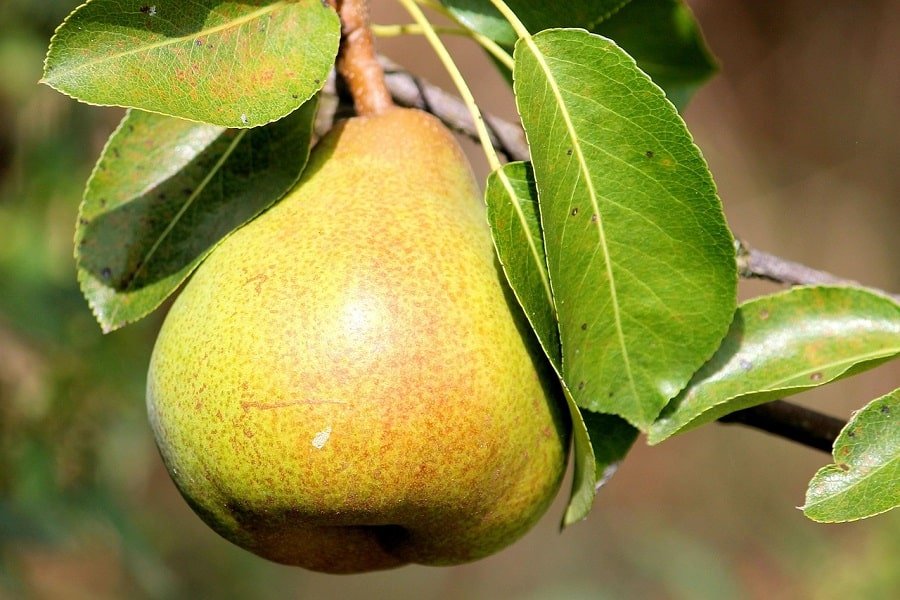
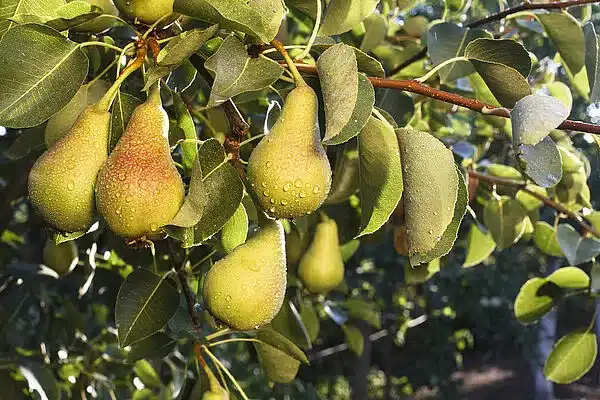
Pear (Pyrus communis and Pyrus pyrifolia) is a member of the Rosaceae family. It is a hardy fruit tree that grows well in cool climates with adequate chilling hours. Pears are primarily cultivated in the northern hill states of India, but low-chill varieties are now broadening the cultivation of pears to new areas.
Pear fruits are well-liked by health-conscious consumers because they are a good source of fibre, antioxidants, and natural sugars.
Climate Requirements for Pear Growing
Pear trees grow well in a cool temperate climate. Most traditional varieties of pear require winter chilling to flower and fruit properly.
Ideal temperature: 10 °C – 25 °C
Chilling requirement: 800-1200 hours below 45°F (var. dependent)
Low-chill varieties need 300–400 hours
Frost during blooming can reduce yields
Pears grow best in regions with mild summers and cold winters.
Soil Needs
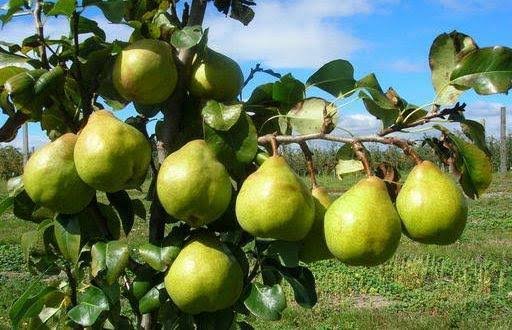
Pear trees thrive in deep fertile well drained soils.
Soil type: Sandy loam to clay loam
Soil pH 6.0-7.5
Good drainage is important to avoid root diseases
Pear orchards should not be established on waterlogged and very alkaline soils.
Why Pear Farming Can Be a Good Opportunity
Commercial pear farming can serve more than one type of buyer. Firm fruits are useful for transportation and wholesale markets, whereas softer and juicier pears can appeal to fresh-fruit consumers and premium retail markets. Pears can also be processed into products such as nectar, jam and candy when processing facilities are available. PAU has promoted post-harvest handling and value addition of pear fruit as a way to improve utilization and market opportunities.
One of the strongest examples for northern plains is Patharnakh. Punjab Agricultural University describes the variety as vigorous, crisp and juicy, with good keeping quality and the ability to withstand transportation.
However, pear farming profit in India should never be calculated only from expected yield. Orchard age, saleable fruit grade, labour, water, packaging, transportation, storage and prevailing market price all affect the final return. A large harvest is valuable only when the farmer can deliver good-quality fruit to the right buyer.
Pear Growing Major Regions of India
Cultivation of pear in India is mostly restricted to:
Jammu & Kashmi
Uttarakhand & Himachal Pradesh
Arunachal Pradesh (AR)
Low-chill varieties of Punjab and Haryana
Popular Varieties of Pear Grown in India
The key to successful pear farming is choosing the right variety.
Patharnakh
Popular low chill variety grown widely in Punjab, Haryana and Uttar Pradesh. It is known for its hard texture and high yields.
Beauty of Punjab
A new variety suitable for subtropical regions with low chilling requirement
Bartlett (William Pear)
It is a popular variety in the hilly region and the fruits are juicy and have good market demand.
Bagguugosha:
It is popular in Northeast India, particularly in Assam and the neighbouring states.
Kieffer,
A disease tolerant hardy variety suitable for warm regions.
propagation process
Pear plants are propagated usually by budding or grafting.
T budding
Grafting, whip, and tongue
The use of certified nursery plants results in better survival and uniform orchards.
Planting Time and Spacing
For planting pear saplings the best time is the dormant period.
Planting season: December to Febuary
Spacing: 5 m x 5 m (for common varieties)
High density planting: 3 m x 3 m (with proper training).
Excavate holes of 1 m x 1 m x 1 m and fill with top soil mixed with compost.
Nutrient and Fertiliser Management
Balanced nutrition has a great influence on the quality and yield of fruit.
FYM : 20-30 kg per tree/year
Nitrogen: Apply in divided doses during spring and summer
Phosphorus & Potassium: Winter Application
Results of a soil test may indicate a need for such micronutrients as zinc and boron.
Management of Irrigation
Pear trees require regular watering, particularly during the fruit development period.
Young plants: regular light waterings
Fruit trees: Water every 10-15 days
Don’t let water stress occur during flowering and fruit set
Drip irrigation provides better fruit size and water efficiency.
Training and trimming
Proper training results in better penetration of sunlight and control of disease.
The central leader system is commonly used
Pruning is done during the winter dormancy
Pruning Dead, Diseased and Crowded Branches
Pest and disease control
The major pests and diseases in pear production are
Pear psylla
Aphid
Fire blight
Leaf spot;
Losses can be reduced through orchard sanitation and integrated pest management practices.
Pear Yield, Profit and Marketing
Pear Fruit Harvest
Pear fruits are picked at proper maturity but are firm.
Harvest: July–September, depending on the variety.
Fruits should be Carefully Hand-picked
Late harvest reduces shelf life
Crop Yield of Pear
Yield will vary with variety climate and orchard management.
40-60 kg per tree
15-25 tonnes per hectare
Post-Harvest Handling
Pears are good under controlled conditions.
Storage temperature : 0-1°C
Shelf life: 2-4 months.
Market price enhanced by grading
Pear Farming Economic Importance
As demand for fresh fruits increases, pear cultivation provides good income opportunities. Low chill varieties are opening up new markets in the plains and semi-temperate areas.
Conclusion
India has great potential for the cultivation of pear if suitable varieties are selected and proper management of orchard is followed. Pear is a profitable and sustainable fruit crop which farmers in suitable climatic zones can adopt.
Pear cultivation in India has strong potential when farmers match the variety to their climate and approach orchard management as a long-term business rather than a short seasonal crop.
The foundation is straightforward. Start with reliable planting material, understand the chilling requirement, test the soil, ensure proper drainage, plan irrigation, use suitable spacing and develop a healthy canopy. As trees begin producing, give equal attention to pollination, pest monitoring, fruit quality, harvesting, grading and marketing.
A successful pear orchard is rarely created by one special fertilizer or one high-yield variety. It is built through many small, correct decisions made throughout the year.
Farmers considering commercial pear farming should therefore visit established orchards in their own region, speak with horticulture specialists, understand what local buyers want and prepare conservative financial estimates before planting. With careful orchard management and a clear market plan, pear can become a valuable and durable part of a diversified fruit-farming business.