


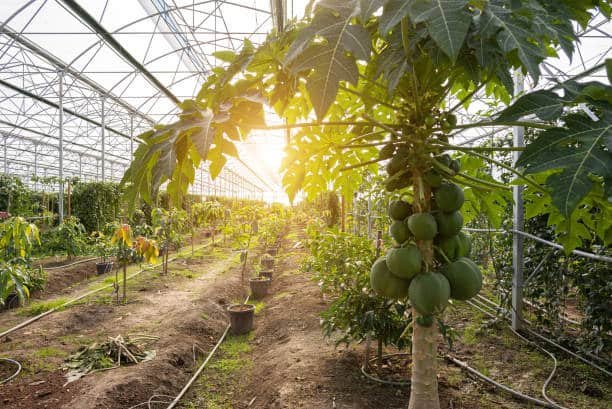


Papaya Farming – Profitable Fruit Crop with Quick Returns and Higher Yield Papaya is one of the fruit crops that is in demand all year round. It is a fast-growing plant and starts bearing fruits in a short period. Therefore, farmers consider it a profitable crop, which can give returns in a short span of time. Papaya fruits are rich in Vitamin A, Vitamin C, fibre and many vital nutrients. This increases the market value and the demand of papaya fruits among the consumers.
Many farmers are taking up papaya cultivation along with traditional crops because of its continuous harvesting and long duration production today. With good crop management and balanced nutrition, farmers get higher productivity and better quality fruits.
Climate and Soil Suitability for Papaya Production
Papaya is grown well in warm and humid climatic conditions. Successful growing of papaya is believed to be best done in areas where there is low frost and mild winters. Very low temperatures can have an adverse effect on the growth of the plant and fruit set.
Well drained loamy soil is considered best for better growth. Avoid water stagnation, as excess moisture can lead to root rot and fungal diseases. Papaya farming is best suited to a soil pH level of about 6.5 to 7.
Getting Ready the Field
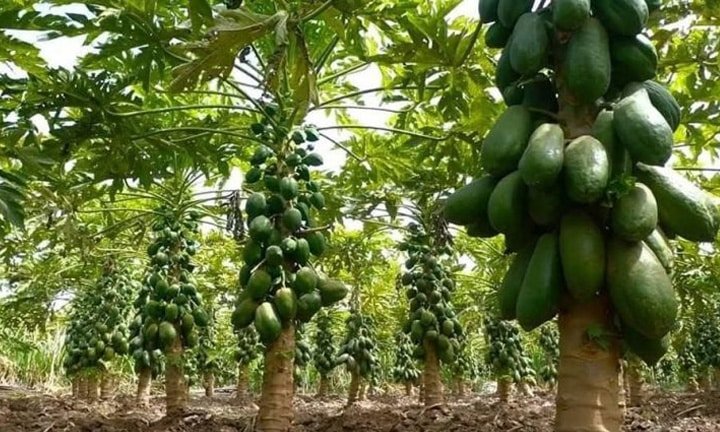
Proper land preparation is essential for successful papaya cultivation. First the field should be ploughed deep so that the soil becomes loose and friable for better development of roots.
Level the field and prepare pits at proper spacings. Well decomposed farmyard manure is applied and 4 kg of Mycopep (Mycorrhiza GR) is used which helps in the strengthening of early root development and improvement of plant establishment. Also many farmers like to use biological products for healthier root growth in the initial stages.
How to Grow and Transplant a Nursery the Right Way
Healthy seedlings are essential for good papaya production. Seedlings are generally grown in polybag nurseries to prevent the roots at the time of transplantation.
Seed treatment before sowing is important as it helps protect young seedlings from early stage diseases. When the seedlings are strong enough they are transplanted into the main field.
Plants should be spaced to allow good light and air circulation. Good spacing also cuts disease incidence and improves the quality of the fruit.
Balanced Nutrition Increases yield
Papaya is a continuous fruit bearing crop, hence balanced nutrition is required throughout the crop cycle. “Organic manure at the beginning helps in strengthening of root system and balanced NPK fertilisers support the vegetative growth and fruit development.
Deficiency of micronutrients can affect plant vigour and fruit development as well as leaf colour. Regular monitoring of crops helps to detect nutrient deficiencies at an early stage.
Avoid Neglect in Irrigation Management.
Papaya needs regular moisture for proper growth but over-watering can also damage the crop. Proper irrigation in summer improves fruit size and fruit quality.
During the rainy season, avoid water stagnation as it increases the chances of root rot and fungal diseases. Farmers who use drip irrigation are also finding that they can use water more efficiently and that their crops perform better.
Importance of Weed Control
Weeds compete aggressively with the papaya plants for nutrients and moisture during the early growth stage, which can reduce plant growth and yield.
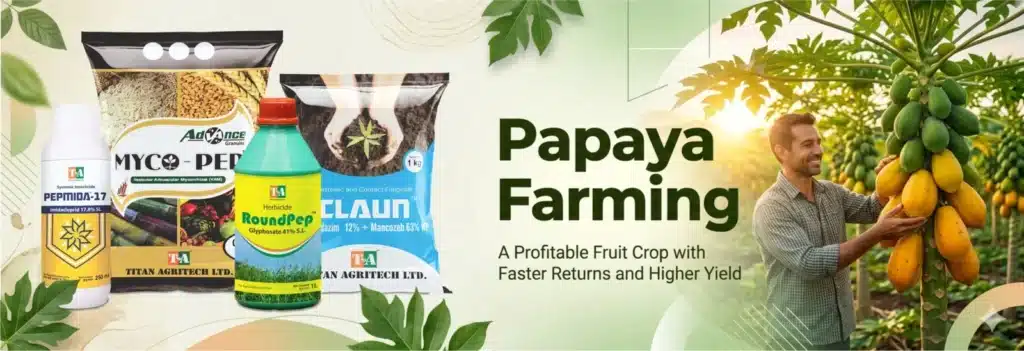
Timely intercultural operations and manual weeding help in maintaining the field clean and support healthy crop growth. Some farmers also use Round Pep (Glyphosate 41% SL) for weed management. Care should however be taken to avoid damage to the main crop.
Major Diseases and Their Management
| Disease | Symptoms | Management |
| Stem Rot | Water soaked lesions appear on the stem and plants gradually weaken | Spray CLAUN (Carbendazim 12% + Mancozeb 63% WP) @ 600–800 gm/acre |
| White Spot Disease | White spots appear on leaves, causing drying and leaf damage | Spray TOSEM 70 (Thiophanate Methyl 70% WP) @ 300 gm/acre |
| Root Rot | Plants suddenly wilt and roots start decaying | Spray TAL M-45 (Mancozeb 75% WP) @ 600–800 gm/acre |
Major Insect Pests and Their Control
| Pest | Damage Symptoms | Control |
| Aphids | Suck plant sap and weaken leaves and plant growth | Spray PEPMIDA-17 (Imidacloprid 17.8% SL) @ 40–50 ml/acre |
| Mealybug | Reduces plant vigor and affects crop growth | Spray Biovert (Verticillium lecanii 1.15% WP) @ 1 kg/acre |
Harvest and Yield
The fruit can be harvested when the colour changes from dark green to light yellow. Papaya plants continue to bear fruits for a long time after the onset of fruiting and provide an opportunity to the farmers to earn a regular income through multiple harvests.
With proper disease management, timely irrigation and balanced nutrition, farmers can expect higher yield and improved fruit quality.
Conclusion
Papaya cultivation is one of the profitable fruit farming options which gives faster returns in less time. It has been a dependable income generating crop to many farmers as a year round market demand and continuous harvesting crop.
Use of improved varieties, balanced nutrient management, timely irrigation and effective pest and disease management practices may improve the productivity and profitability of papaya cultivation.

