


Latest News
Top 10 Sustainable Agriculture Practices to Boost Crop Yields This Year


Looking to boost crop yields? Explore 10 sustainable agriculture practices that improve soil health, conserve resources, and increase productivity in 2025.
Table of Contents:
- Introduction: Why Sustainable Agriculture Matters
- Practice 1: Crop Rotation
- Practice 2: Cover Cropping
- Practice 3: Reduced Tillage
- Practice 4: Organic Farming
- Practice 5: Integrated Pest Management
- Practice 6: Agroforestry
- Practice 7: Water Conservation Techniques
- Practice 8: Precision Agriculture
- Practice 9: Composting and Soil Enrichment
- Practice 10: Green Manuring
- Conclusion
1. Introduction: Why Sustainable Agriculture Matters
Sustainable agriculture is the key to achieving long-term productivity while minimizing harm to the environment. It focuses on practices that improve soil health, conserve water, and reduce dependency on harmful chemicals. As climate change and growing populations put more pressure on agricultural systems, sustainable farming techniques are more important than ever.

By adopting sustainable practices, farmers not only enhance crop yields but also contribute to environmental preservation, making agriculture more resilient in the face of changing conditions.

2. Practice 1: Crop Rotation
Crop rotation involves changing the type of crops grown in a particular field each year. This method helps prevent soil depletion, reduce pest buildup, and maintain nutrient balance. For instance, rotating nitrogen-fixing crops like legumes with other crops can improve soil fertility naturally.
3. Practice 2: Cover Cropping
Cover cropping involves planting certain crops (e.g., clover or vetch) during the off-season to protect the soil from erosion. These crops also fix nitrogen in the soil and can be turned under to improve soil organic matter, enriching the soil for future crops.
4. Practice 3: Reduced Tillage
Reduced tillage is the practice of minimizing soil disturbance during planting. By avoiding excessive tilling, farmers help preserve soil structure, reduce erosion, and promote healthier microbial activity. This practice can increase crop yields while lowering fuel and labor costs.
5. Practice 4: Organic Farming
Organic farming avoids synthetic pesticides and fertilizers, relying instead on natural methods like crop rotation, composting, and biological pest control. By focusing on natural inputs, organic farming helps improve soil fertility and supports biodiversity.
6. Practice 5: Integrated Pest Management (IPM)
Integrated Pest Management is a holistic approach that combines biological, cultural, and mechanical control methods to manage pests. By using a combination of beneficial insects, crop variety selection, and other eco-friendly techniques, IPM helps reduce the reliance on chemical pesticides and minimizes environmental impact.
7. Practice 6: Agroforestry
Agroforestry is the practice of integrating trees and shrubs into agricultural landscapes. These plants help improve soil health, conserve water, and provide habitats for beneficial wildlife. Additionally, agroforestry can reduce the impact of climate extremes, such as droughts and floods.
8. Practice 7: Water Conservation Techniques
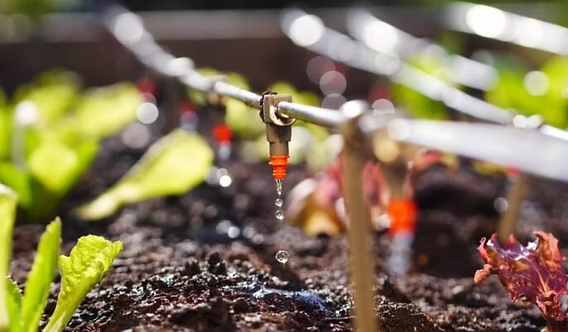
Efficient water management is critical for sustainable agriculture. Techniques like drip irrigation, rainwater harvesting, and the use of drought-resistant crops can significantly reduce water waste while ensuring crops get the right amount of moisture.

9. Practice 8: Precision Agriculture
Precision agriculture uses technology like GPS, sensors, and drones to optimize farming practices. By collecting data about soil health, crop conditions, and weather patterns, farmers can make informed decisions about irrigation, fertilization, and pest control, reducing costs and environmental impact.
10. Practice 9: Composting and Soil Enrichment
Composting organic waste such as plant residues and manure creates nutrient-rich compost that improves soil structure and fertility. Adding compost helps retain moisture, promotes beneficial microbes, and enhances overall crop yields.
11. Practice 10: Green Manuring
Green manuring involves planting fast-growing crops (like legumes) that are later plowed into the soil. These crops add essential nutrients, particularly nitrogen, to the soil, improving its fertility and enhancing the productivity of subsequent crops.
12. Conclusion
Sustainable agriculture practices are essential for boosting crop yields while ensuring the long-term health of the planet. By adopting these top 10 practices, farmers can enhance soil health, improve water use, and reduce environmental impact. The future of agriculture lies in these eco-friendly, efficient techniques that benefit both the environment and the economy. Start implementing these practices today to ensure a more sustainable and productive year ahead.


Assembly Elections 2026 Live Updates: High-Stakes Battle Across Kerala, Assam & Puducherry

Farm Automation Tools That Increase Profitability for Vegetable Growers

Iran Israel War Latest News 2026: What’s Happening in West Asia and Why It Matters Globally
Smart Irrigation Systems Suitable for Water-Scarce Regions in India

Why India-Bound Iran Crude Oil Shipment Was Diverted to China: Full Story, Impact & What It Means for India

Best Software Platforms for Farm Management and Crop Monitoring in 2026

How to Implement IoT Solutions in Agriculture for Better Yields

New Income Tax Rules 2026: Complete Guide for Salaried Taxpayers in India

Best Smart Farming Tools for Small Farms in India

LPG Tankers from Strait of Hormuz Reach India: What It Means for Energy Security and Fuel Supply

The Effects of Global War on Farming in India: Why Prices Are Going Up and What Farmers Can Do

Potato Farming Crisis in Uttar Pradesh: Causes, Challenges, and Solutions for Farmers

Fibre Optic Sensors in Agriculture: The Future of Smart Farming and Soil Monitoring

FAO World Programme of Census of Agriculture 2030: A Global Data Revolution for the Future of Farming

The Truth About AI Stock Trading: An AI-Powered Trading Agent Turns ₹11 Lakh Into ₹40 Lakh Overnight

India’s 2026 strategy for importing fertiliser: how India is making global supply chains stronger

Bharat-VISTAAR: India’s New AI Digital Platform Changing Farming for Millions of Farmers

Iran Israel US War 2026: What the Conflict in West Asia Means for Oil, World Stability, and Daily Life

Organic Fertilizer Market Size and Forecast for 2026–2034: Trends in Growth, Future Demand, and Information on Sustainable Agriculture
