


Benefits
Smart Irrigation Systems Suitable for Water-Scarce Regions in India

Short Overview
Water scarcity is becoming a serious challenge across many parts of India. Farmers are struggling to maintain crop productivity while conserving water. Smart irrigation systems offer a practical and efficient solution by using technology to optimize water usage. This blog explains how these systems work, why they are ideal for Indian conditions, and how farmers can benefit from adopting them.
Discover the best smart irrigation systems suitable for water-scarce regions in India. Learn how drip irrigation, sprinkler systems, and IoT-based smart farming solutions help save water, reduce costs, and improve crop yield. This detailed guide explains modern irrigation techniques, government subsidies, and practical benefits for Indian farmers facing drought conditions. Whether you are a small farmer or an agriculture enthusiast, explore how advanced irrigation methods can transform farming practices and ensure sustainable agriculture. Improve productivity while conserving water with smart irrigation solutions designed specifically for India’s climate challenges and future farming needs.

Table of Contents
- Introduction
- Understanding Water Scarcity in India
- What Are Smart Irrigation Systems?
- Why Smart Irrigation is Essential in India
- Types of Smart Irrigation Systems
- Drip Irrigation: A Game Changer
- Sprinkler Irrigation Systems
- IoT-Based Smart Irrigation
- Soil Moisture Sensor Systems
- Benefits of Smart Irrigation Systems
- Government Support and Subsidies
- Challenges in Adoption
- Best Crops for Smart Irrigation
- Cost vs Long-Term Savings
- Future of Smart Irrigation in India
- Conclusion
Introduction
India has always been an agriculture-driven country, but today, farmers face a growing challenge—water scarcity. Regions like Rajasthan, Maharashtra, Karnataka, and parts of Tamil Nadu frequently experience drought conditions, making traditional irrigation methods less effective.
The good news is that technology is changing the way farming works. Smart irrigation systems are helping farmers use water more efficiently while improving crop yield. These systems are not just modern tools; they are becoming essential for sustainable farming in India.
Understanding Water Scarcity in India
Water scarcity in India is not just about lack of rainfall. It is also about poor water management, excessive groundwater usage, and outdated irrigation practices.
Many farmers still rely on flood irrigation, which wastes a significant amount of water. In water-scarce regions, this method is no longer sustainable. With increasing population and climate change, the demand for water continues to rise, making efficient irrigation more important than ever.
What Are Smart Irrigation Systems?
Smart irrigation systems use advanced technology to deliver the right amount of water at the right time. These systems rely on sensors, weather data, and automation to ensure that crops receive optimal hydration without wasting water.
Instead of manually watering fields, farmers can use smart systems to monitor soil moisture, temperature, and weather conditions. This allows for precise irrigation, which improves both efficiency and productivity.
Why Smart Irrigation is Essential in India
In a country where agriculture depends heavily on unpredictable monsoons, smart irrigation provides stability. It helps farmers reduce water usage, lower costs, and increase crop yield.
In water-scarce regions, every drop of water matters. Smart irrigation ensures that no water is wasted, making it a crucial solution for sustainable farming in India.
Types of Smart Irrigation Systems
Smart irrigation is not a one-size-fits-all solution. Different systems are suitable for different types of crops and soil conditions.
Drip Irrigation: A Game Changer
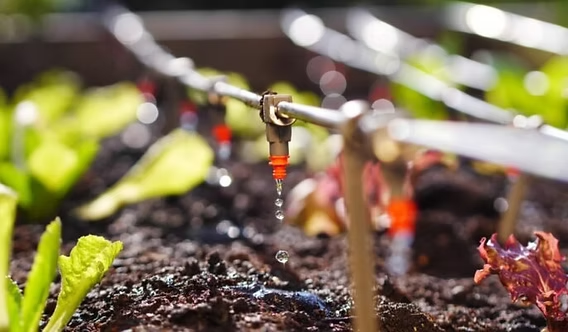
Drip irrigation is one of the most effective methods for water conservation. It delivers water directly to the roots of plants through a network of pipes and emitters.
This method reduces water wastage, prevents weed growth, and improves crop health. It is especially useful for crops like vegetables, fruits, and sugarcane.
Sprinkler Irrigation Systems
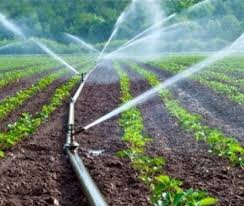
Sprinkler systems mimic natural rainfall by spraying water over crops. They are suitable for larger fields and crops like wheat and pulses.
While not as water-efficient as drip irrigation, sprinkler systems are still far better than traditional flood irrigation methods.
IoT-Based Smart Irrigation
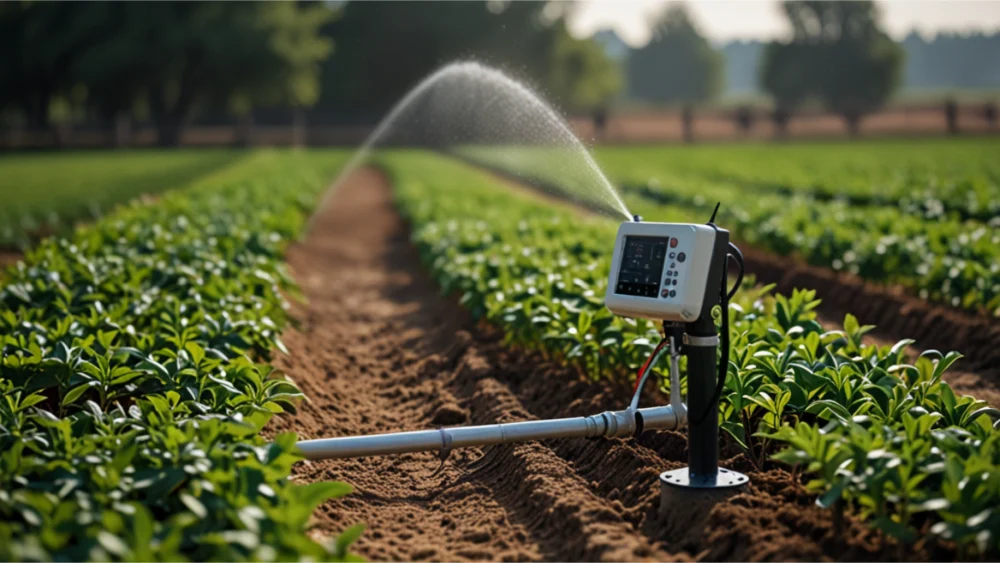
IoT (Internet of Things) has taken irrigation to the next level. Farmers can now control irrigation systems using mobile apps.
These systems collect real-time data from sensors and automatically adjust water flow based on crop needs. This reduces manual effort and ensures maximum efficiency.
Soil Moisture Sensor Systems
Soil moisture sensors measure the water content in the soil and trigger irrigation only when needed.
This prevents overwatering and ensures that crops receive just the right amount of moisture, improving both yield and water conservation.
Benefits of Smart Irrigation Systems
Smart irrigation systems offer multiple advantages for farmers in water-scarce regions.
They significantly reduce water usage, which is crucial in drought-prone areas. By delivering water directly to plant roots, these systems minimize evaporation and runoff.
Farmers also save on labor costs because automation reduces the need for manual intervention. Over time, this leads to higher profits and better resource management.
Another important benefit is improved crop yield. When plants receive the right amount of water at the right time, they grow healthier and produce better results.
Government Support and Subsidies
The Indian government is actively promoting smart irrigation through various schemes. Programs like Pradhan Mantri Krishi Sinchai Yojana (PMKSY) provide financial support to farmers for adopting modern irrigation techniques.
Many states offer subsidies on drip and sprinkler systems, making it easier for small and marginal farmers to invest in these technologies.
Challenges in Adoption
Despite the benefits, the adoption of smart irrigation systems is still limited in some regions.
The initial cost of installation can be a barrier for small farmers. Lack of awareness and technical knowledge also prevents widespread adoption.
However, with increasing government support and awareness campaigns, these challenges are gradually being addressed.
Best Crops for Smart Irrigation
Crops such as tomatoes, onions, grapes, and pomegranates show significant improvement in yield when grown using drip irrigation systems.
Cost vs Long-Term Savings
While the initial investment may seem high, smart irrigation systems offer long-term savings.
Farmers spend less on water, electricity, and labor. Over time, the increase in crop yield and quality outweighs the initial cost, making it a profitable investment.
Future of Smart Irrigation in India
The future of agriculture in India lies in technology. With advancements in AI, IoT, and data analytics, smart irrigation systems will become even more efficient and accessible.
Startups and agri-tech companies are developing affordable solutions tailored for Indian farmers. This will further accelerate the adoption of smart irrigation across the country.
Conclusion
Water scarcity is a serious issue, but it also presents an opportunity to adopt better farming practices. Smart irrigation systems are not just a solution—they are the future of agriculture in India.
By using these systems, farmers can conserve water, reduce costs, and increase productivity. With the right support and awareness, smart irrigation can transform farming in water-scarce regions and ensure a sustainable future for generations to come.

Smart Irrigation Systems Suitable for Water-Scarce Regions in India

Why India-Bound Iran Crude Oil Shipment Was Diverted to China: Full Story, Impact & What It Means for India

Best Software Platforms for Farm Management and Crop Monitoring in 2026

How to Implement IoT Solutions in Agriculture for Better Yields

New Income Tax Rules 2026: Complete Guide for Salaried Taxpayers in India

Best Smart Farming Tools for Small Farms in India

LPG Tankers from Strait of Hormuz Reach India: What It Means for Energy Security and Fuel Supply

Stock Market Crash 2026: Why Markets Fell Over 2% Amid Rising Crude Prices

AI for Agriculture Innovation Initiative: Transforming Farming with Smart Technology

Digital Agriculture Mission India 2025: Complete Guide to Smart Farming Trends and Future Growth

India is running low on LPG in 2026, so hotels are switching to firewood as the government focuses on cooking gas for homes.

The Effects of Global War on Farming in India: Why Prices Are Going Up and What Farmers Can Do

Karnataka Budget 2026–27: Key Announcements, Infrastructure Plans, Welfare Schemes and Economic Impact

Potato Farming Crisis in Uttar Pradesh: Causes, Challenges, and Solutions for Farmers

Fibre Optic Sensors in Agriculture: The Future of Smart Farming and Soil Monitoring

FAO World Programme of Census of Agriculture 2030: A Global Data Revolution for the Future of Farming

The Truth About AI Stock Trading: An AI-Powered Trading Agent Turns ₹11 Lakh Into ₹40 Lakh Overnight

India’s 2026 strategy for importing fertiliser: how India is making global supply chains stronger

Bharat-VISTAAR: India’s New AI Digital Platform Changing Farming for Millions of Farmers
