


Innovative News
Is Precision Farming Worth the Cost for a 5-Acre Farmer?


Short Overview
Precision farming sounds like something made only for big farms with heavy machinery and large budgets. But today, even a small 5-acre farmer is hearing about GPS tools, smart sensors, and data-driven farming. The real question is not what precision farming is, but whether it truly makes financial sense for a small landholder. This blog breaks it down in a clear, honest, and practical way—without technical jargon or exaggerated promises.
Table of Contents
- Introduction: Why Small Farmers Are Asking This Question
- What Precision Farming Really Means for a 5-Acre Farm
- Common Precision Farming Tools Used by Small Farmers
- Understanding the True Cost of Precision Farming
- Benefits That Matter Most to a 5-Acre Farmer
- Where Precision Farming May Not Be Worth It
- Crop Types That Gain the Most from Precision Farming
- Real-World Cost vs Return Example for a 5-Acre Farm
- Low-Cost Precision Farming Options for Small Farmers
- How to Decide If Precision Farming Is Right for You
- Future of Precision Farming for Small-Scale Agriculture
- Conclusion: Is Precision Farming Worth the Cost?
Introduction: Why Small Farmers Are Asking This Question
Farming on 5 acres is not a hobby—it is a serious livelihood. Every seed, every drop of water, and every hour of labor counts. Rising fertilizer prices, unpredictable weather, and labor shortages have made farming harder than ever. That is why many small farmers are wondering if precision farming is worth the cost for a 5-acre farmer, or if it is just another expensive trend meant for large operations.

Precision farming promises better yields, less waste, and smarter decisions. But promises alone do not pay bills. What matters is whether the investment brings real, measurable value to a small farm.

What Precision Farming Really Means for a 5-Acre Farm
Precision farming is not about owning expensive machines. At its core, it is about using information to farm smarter, not harder. For a 5-acre farmer, precision farming usually means understanding soil health, crop needs, and water usage at a more detailed level.
Instead of treating the entire field the same way, precision farming helps identify which parts of the land need more attention and which parts need less. This targeted approach can save money while improving productivity, even on small plots.
Common Precision Farming Tools Used by Small Farmers
Precision farming tools have become more accessible and flexible. Many tools today are designed for small-scale use rather than industrial farming.
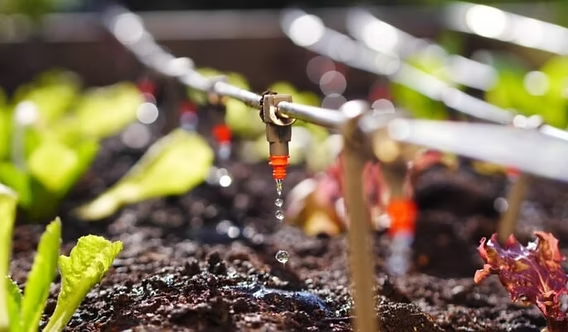
Soil testing kits help farmers apply fertilizer only where needed. Mobile apps provide weather forecasts and crop advice based on local data. Drip irrigation systems deliver water directly to plant roots, reducing waste. Even simple GPS-based mapping tools can help farmers track planting patterns and yields.
These tools are not futuristic—they are practical and already used by many successful small farmers.
Understanding the True Cost of Precision Farming
The biggest concern for small farmers is cost. Precision farming does not have a fixed price. It depends on how far you go.
Basic precision tools like soil testing, moisture sensors, or mobile apps can cost a few hundred dollars per year. Advanced systems with drones, GPS equipment, or automated machinery can cost thousands.
For a 5-acre farmer, the key is not adopting everything, but choosing tools that directly solve real problems. When chosen wisely, precision farming costs can stay manageable and proportional to farm size.
Benefits That Matter Most to a 5-Acre Farmer
Precision farming can improve profits in quiet but powerful ways. It reduces unnecessary spending on fertilizer, water, and pesticides. It helps crops grow healthier, which improves quality and market value. It also saves time, allowing farmers to focus on planning and marketing rather than constant guesswork.
Most importantly, precision farming reduces risk. When resources are limited, avoiding mistakes is just as valuable as increasing yield.
Where Precision Farming May Not Be Worth It
Precision farming is not a magic solution. For farmers growing low-value crops with minimal input costs, the return may be slow. If the land already has uniform soil and reliable rainfall, advanced precision tools may offer limited benefits.
Also, technology requires learning. Farmers who are uncomfortable with smartphones or digital tools may find precision farming frustrating rather than helpful.
Understanding these limitations is essential before investing.
Crop Types That Gain the Most from Precision Farming
High-value crops benefit the most from precision farming. Vegetables, fruits, herbs, and specialty crops respond well to precise water and nutrient management. These crops also reward quality improvements with better prices.
For grain crops grown on a small scale, benefits exist but may take longer to justify the cost.
Real-World Cost vs Return Example for a 5-Acre Farm
Consider a 5-acre vegetable farm. The farmer spends money on soil testing, drip irrigation, and a basic farm management app. The total cost may be around $600–$1,000 per year.
In return, fertilizer use drops by 20%, water use drops by 30%, and crop yield improves by 10–15%. Over one season, savings and additional income can exceed the initial cost, making precision farming financially sensible.

Low-Cost Precision Farming Options for Small Farmers
Precision farming does not need to start big. Farmers can begin with soil testing, mobile advisory apps, and simple irrigation upgrades. These steps require minimal investment but deliver immediate insights.
Starting small allows farmers to learn, adapt, and expand only when benefits are proven.
How to Decide If Precision Farming Is Right for You
The decision should be based on three questions: Are input costs high? Is yield inconsistent? Are decisions currently based on guesswork? If the answer is yes, precision farming can help.
If current methods are already efficient and profitable, advanced tools may not be necessary.
Future of Precision Farming for Small-Scale Agriculture
Technology is moving toward affordability and simplicity. Tools are becoming more farmer-friendly, and governments are offering subsidies and training programs.
Precision farming is no longer reserved for large farms. It is evolving into a practical option for small farmers who want stability and long-term sustainability.
Conclusion: Is Precision Farming Worth the Cost?
So, is precision farming worth the cost for a 5-acre farmer? The honest answer is: yes, when done wisely. Precision farming is not about expensive machines—it is about better decisions. When small farmers choose affordable tools that solve real problems, precision farming becomes an investment, not an expense.
For a 5-acre farmer focused on efficiency, quality, and long-term sustainability, precision farming can be a smart and rewarding step forward.


Assembly Elections 2026 Live Updates: High-Stakes Battle Across Kerala, Assam & Puducherry

Farm Automation Tools That Increase Profitability for Vegetable Growers

Iran Israel War Latest News 2026: What’s Happening in West Asia and Why It Matters Globally
Smart Irrigation Systems Suitable for Water-Scarce Regions in India

Why India-Bound Iran Crude Oil Shipment Was Diverted to China: Full Story, Impact & What It Means for India

Best Software Platforms for Farm Management and Crop Monitoring in 2026

How to Implement IoT Solutions in Agriculture for Better Yields

New Income Tax Rules 2026: Complete Guide for Salaried Taxpayers in India

Best Smart Farming Tools for Small Farms in India

LPG Tankers from Strait of Hormuz Reach India: What It Means for Energy Security and Fuel Supply

The Effects of Global War on Farming in India: Why Prices Are Going Up and What Farmers Can Do

Potato Farming Crisis in Uttar Pradesh: Causes, Challenges, and Solutions for Farmers

Fibre Optic Sensors in Agriculture: The Future of Smart Farming and Soil Monitoring

FAO World Programme of Census of Agriculture 2030: A Global Data Revolution for the Future of Farming

The Truth About AI Stock Trading: An AI-Powered Trading Agent Turns ₹11 Lakh Into ₹40 Lakh Overnight

India’s 2026 strategy for importing fertiliser: how India is making global supply chains stronger

Bharat-VISTAAR: India’s New AI Digital Platform Changing Farming for Millions of Farmers

Iran Israel US War 2026: What the Conflict in West Asia Means for Oil, World Stability, and Daily Life

Organic Fertilizer Market Size and Forecast for 2026–2034: Trends in Growth, Future Demand, and Information on Sustainable Agriculture
