


Government Schemes
How Modi Government’s National Mission on Sustainable Agriculture Is Future-Proofing Indian Farming

Short Overview
India’s farms are facing climate stress like never before, and the Modi government’s National Mission on Sustainable Agriculture is shaping a long-term, climate-resilient future for farmers by combining technology, soil health, water efficiency, and income security into one integrated national strategy.
Discover how the Modi government’s National Mission on Sustainable Agriculture is transforming Indian farming for the future. This in-depth guide explains how climate-resilient agriculture, efficient water management through Per Drop More Crop, soil health improvement, integrated farming systems, organic and natural farming, crop insurance, and scientific research are helping farmers adapt to climate change. Learn how sustainable agriculture policies are increasing productivity, conserving natural resources, stabilizing farmer incomes, and strengthening India’s food security. A must-read for understanding how long-term agricultural reforms are future-proofing Indian farming and protecting farmer livelihoods.

Table of Contents
- Introduction: Why Indian Agriculture Needs a Future-Proof Strategy
- Climate Change and the New Reality of Indian Farming
- Visionary Leadership Behind Sustainable Agriculture Reforms
- What Is the National Mission on Sustainable Agriculture (NMSA)?
- Per Drop More Crop: Solving India’s Water Crisis at the Farm Level
- Rainfed Area Development and Integrated Farming Systems
- Restoring Soil Health for Long-Term Productivity
- Organic and Natural Farming as Sustainable Alternatives
- Crop Insurance and Risk Management in a Climate-Volatile Era
- Role of Agricultural Science and Climate-Resilient Research
- How NMSA Integrates Technology, Ecology, and Farmer Welfare
- Why NMSA Is a Turning Point in Indian Agricultural Policy
- Conclusion: Securing the Future of Indian Farmers
Introduction: Why Indian Agriculture Needs a Future-Proof Strategy
Indian agriculture is no longer just about producing enough food; it is about surviving and thriving in the face of climate uncertainty. Farmers across the country are dealing with unpredictable rainfall, frequent droughts, floods, soil degradation, and shrinking water resources. These challenges are not distant threats but daily realities that directly affect farm income and food security. Recognizing this shift, the government under Narendra Modi has moved away from short-term relief measures and focused on building long-term resilience. The National Mission on Sustainable Agriculture stands at the center of this transformation, offering a roadmap that balances productivity, sustainability, and farmer prosperity.
Climate Change and the New Reality of Indian Farming
Climate change has fundamentally altered the way Indian farming operates. Erratic monsoons disrupt sowing cycles, heatwaves reduce crop yields, and extreme weather events destroy standing crops overnight. Groundwater levels are falling at an alarming rate, while excessive use of chemical fertilizers has weakened soil health. These overlapping crises demand a comprehensive solution rather than isolated schemes. Sustainable agriculture, therefore, is no longer a choice but a necessity, and this understanding forms the backbone of India’s modern agricultural reforms.
Visionary Leadership Behind Sustainable Agriculture Reforms
Under Prime Minister Modi’s leadership, agricultural policymaking has embraced a future-ready mindset. Instead of reacting to crises after they occur, policies now aim to anticipate risks and reduce vulnerabilities before they escalate. This shift is clearly reflected in the design of the National Mission on Sustainable Agriculture, which integrates climate adaptation, resource efficiency, and income stability into a single framework. The goal is not just to protect farmers today but to secure farming livelihoods for generations to come.
What Is the National Mission on Sustainable Agriculture (NMSA)?
The National Mission on Sustainable Agriculture is a flagship initiative under India’s National Action Plan on Climate Change. Its core objective is to make Indian agriculture resilient to climate change while ensuring food security and better incomes for farmers. NMSA focuses on efficient water use, soil health management, diversified farming systems, climate-resilient crop varieties, and risk mitigation. Unlike fragmented policies of the past, NMSA works as an integrated strategy where environmental sustainability and economic growth move together.
Per Drop More Crop: Solving India’s Water Crisis at the Farm Level
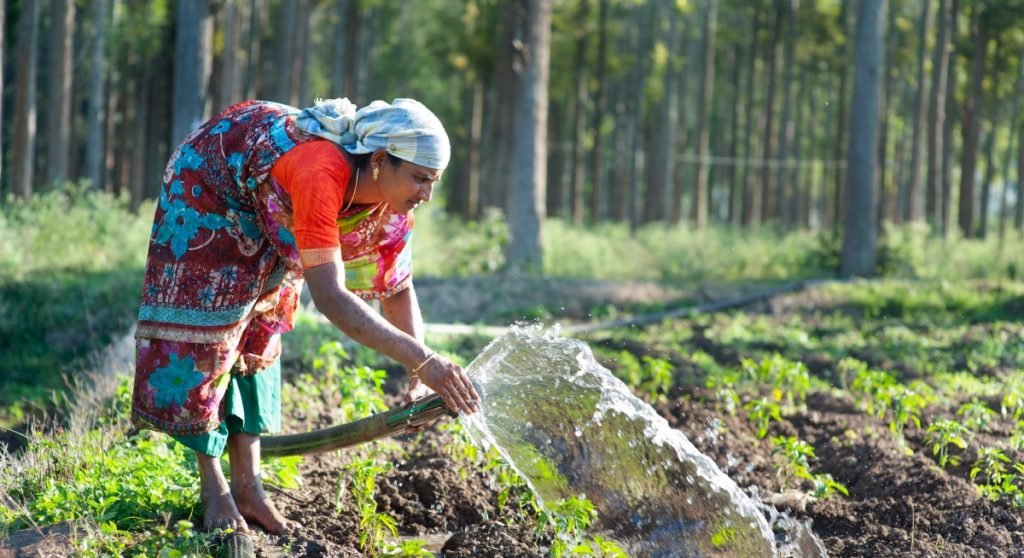
Water scarcity is one of the most pressing challenges facing Indian agriculture today. The Per Drop More Crop initiative under NMSA directly addresses this issue by promoting micro-irrigation technologies such as drip and sprinkler systems. These technologies deliver water precisely to plant roots, minimizing wastage and improving efficiency. Studies have shown that micro-irrigation can improve water use efficiency by up to 70 percent while increasing crop productivity and farm income. The government has steadily increased financial support for this initiative, ensuring that small and marginal farmers receive substantial subsidies, making advanced irrigation accessible and affordable.
Rainfed Area Development and Integrated Farming Systems
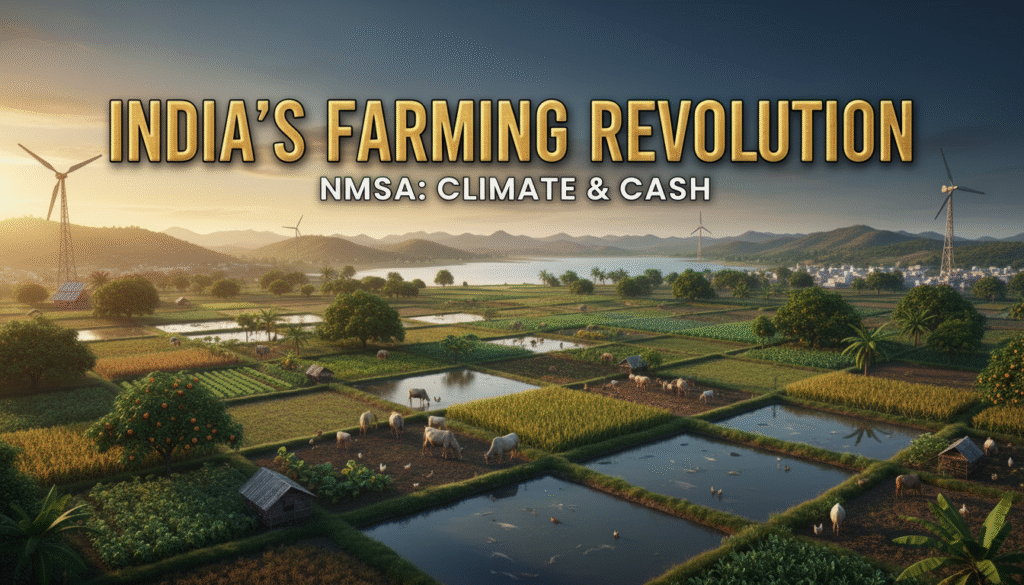
A large portion of India’s farmland depends entirely on rainfall, making it highly vulnerable to climate variability. The Rainfed Area Development component of NMSA promotes Integrated Farming Systems that combine crops with livestock, fisheries, horticulture, and other allied activities. This diversification reduces farmers’ dependence on a single crop and creates multiple income streams. When one component fails due to weather stress, others help stabilize income, making farming more resilient and financially sustainable, especially in drought-prone and rainfed regions.
Restoring Soil Health for Long-Term Productivity
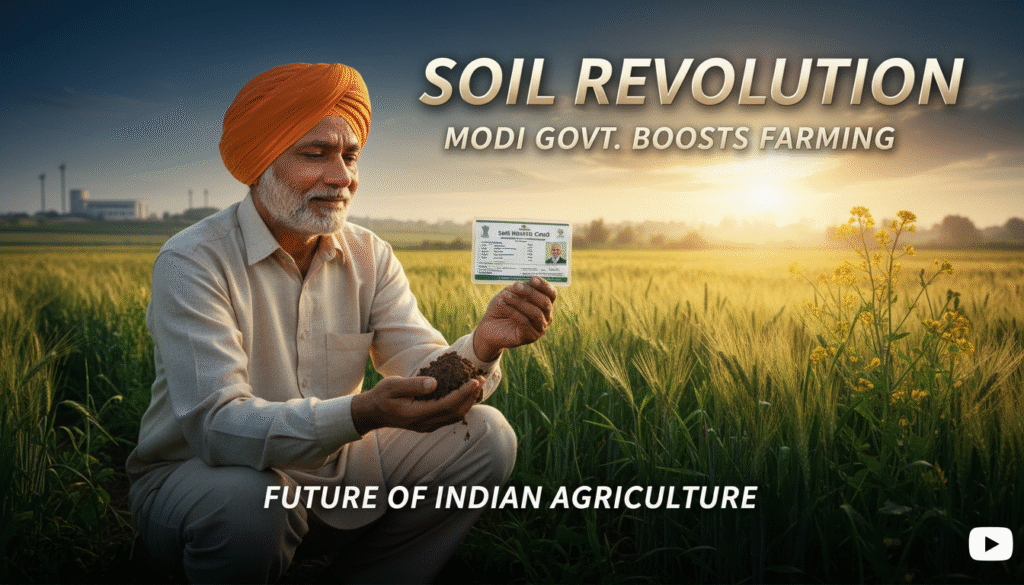
Healthy soil is the foundation of sustainable agriculture, yet years of imbalanced fertilizer use have weakened soil fertility across many regions. Through the Soil Health and Fertility Scheme, the government promotes Integrated Nutrient Management that balances chemical fertilizers with organic manure and bio-fertilizers. Massive outreach programs, including farmer trainings, demonstrations, and Soil Health Card awareness campaigns, have helped farmers understand their soil’s specific needs. This science-based approach improves yields, reduces input costs, and ensures long-term soil sustainability.
Organic and Natural Farming as Sustainable Alternatives
Sustainable agriculture also includes alternative farming models that reduce chemical dependency. Organic farming is being promoted through initiatives like Paramparagat Krishi Vikas Yojana and region-specific programs in the North Eastern states. At the same time, natural farming has been institutionalized through the National Mission on Natural Farming. These approaches not only protect soil and water resources but also open new market opportunities for farmers by meeting the growing demand for chemical-free produce. Complementary schemes such as horticulture development, agroforestry, and bamboo cultivation further enhance ecological balance and climate resilience.
Crop Insurance and Risk Management in a Climate-Volatile Era
Even with the best preventive measures, farming will always carry risk. To protect farmers from financial shocks caused by natural calamities, the government has strengthened crop insurance coverage through schemes like Pradhan Mantri Fasal Bima Yojana and the Restructured Weather Based Crop Insurance Scheme. These programs ensure timely compensation for crop losses, helping farmers recover and reinvest without falling into debt. Effective risk mitigation builds confidence and encourages farmers to adopt innovative and sustainable practices.
Role of Agricultural Science and Climate-Resilient Research
Scientific research plays a crucial role in future-proofing Indian agriculture. Since 2011, the Indian Council of Agricultural Research has implemented the National Innovations in Climate Resilient Agriculture project. This initiative has conducted climate vulnerability assessments across hundreds of districts, identifying regions most at risk. Based on these findings, climate-resilient crop varieties have been developed and released, many of which are tolerant to drought, floods, pests, and diseases. These innovations significantly strengthen India’s ability to adapt to changing climatic conditions.
How NMSA Integrates Technology, Ecology, and Farmer Welfare
What makes the National Mission on Sustainable Agriculture truly transformative is its integrated approach. It does not treat technology, ecology, and farmer welfare as separate goals but weaves them into a single strategy. Efficient irrigation conserves water while boosting yields, soil health management reduces costs while improving productivity, diversified farming stabilizes income, and insurance schemes provide security. Together, these elements create a resilient agricultural ecosystem capable of withstanding future challenges.
Why NMSA Is a Turning Point in Indian Agricultural Policy
For decades, agricultural policy in India often responded to crises after they occurred. NMSA represents a clear break from that pattern. It anticipates challenges, invests in preventive solutions, and builds long-term resilience. By aligning sustainability with economic growth, the mission proves that environmental responsibility is not a barrier to development but a driver of it. This shift marks a turning point in how India views and manages its agricultural future.
Conclusion: Securing the Future of Indian Farmers
The National Mission on Sustainable Agriculture is more than a government scheme; it is a vision for the future of Indian farming. By addressing water scarcity, soil degradation, climate risk, and income instability in a holistic manner, the Modi government has laid the foundation for a resilient and self-reliant agricultural sector. As climate challenges intensify, this forward-looking approach ensures that Indian farmers are not merely surviving but thriving. Sustainability, as demonstrated through NMSA, is not a constraint on growth but its strongest enabler, safeguarding both today’s harvests and tomorrow’s livelihoods.


DJI Agriculture Drone: Market-Leading AgTech for Smarter Farming in 2026

Digital Agriculture for Farmland Biodiversity: Bridging Knowledge Gaps for Sustainable Farming

How to Start Mushroom Farming at Home?

What Is the Investment Required for Mushroom Farming?

Subsidies or Traps: Are Government Schemes Keeping Farmers Poor?

Microalgae in Modern Agriculture: The Quiet Technology Re-Engineering Sustainable Farming

Union Budget 2026 Agriculture Industry Demands: Tax Relief, Biofuel Push and Strong Infrastructure Support

Contract Farming: Smart Business Move or Loss of Farmer Freedom?

Agriculture India Updates 2026: How Digital Farming Is Transforming Indian Agriculture

Are You Wasting Money on the Wrong Tractor Size for Your Land?

Why Are Small Farmers Still Ignoring Drip Irrigation Despite Water Crisis?

Is Climate-Smart Farming Just a Buzzword with No Real ROI?

Why Are So Many Polyhouse Projects Failing in India?

Is Organic Certification in India Worth the Time and Money?

Is Precision Farming Worth the Cost for a 5-Acre Farmer?

Can One Profitable Cash Crop Replace Five Low-Margin Crops?

Should Small Farmers Stop Growing Water-Hungry Crops Completely?

Canal Water in Punjab Agriculture: How Reaching the Last Field Is Transforming Farming, Saving Groundwater, and Building a Sustainable Future
Union Budget 2026 Agriculture Industry Demands: Tax Relief, Biofuel Push and Strong Infrastructure Support
