


Innovative News
Microalgae in Modern Agriculture: The Quiet Technology Re-Engineering Sustainable Farming

Short Overview
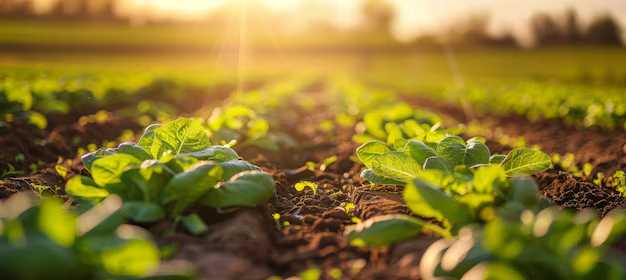
Microalgae are quietly changing how modern agriculture works, not by replacing existing systems, but by improving how soil, water, and nutrients behave together. As farming faces pressure from climate stress, rising input costs, and stricter regulations, microalgae offer a biological solution that improves stability, efficiency, and long-term soil health without adding complexity or dependency.
Discover how microalgae in modern agriculture are quietly transforming sustainable farming by improving soil health, nutrient efficiency, water retention, and crop yield stability. This in-depth guide explains how microalgae work with existing farming systems, reduce chemical dependency, enhance microbial activity, and support long-term agricultural resilience without disrupting current practices.

Table of Contents
- Introduction: Why Microalgae Matter in Agriculture Today
- Understanding Microalgae and Their Agricultural Role
- From Input-Heavy Farming to System-Responsive Agriculture
- How Microalgae Improve Soil Function Naturally
- Nutrient Cycling: Nitrogen, Phosphorus, and Efficiency
- Microbial Consortia: Why Biology Works Better Together
- Yield Performance vs Yield Stability
- Water Retention and Climate Stress Resistance
- Crop-Specific Results Across Farming Systems
- Commercial Adoption and Real-World Constraints
- Regulatory Pressure and the Timing of Microalgae
- Microalgae as Biological Infrastructure, Not a Product
- Long-Term Benefits for Farmers and Food Systems
- Challenges and Limitations to Address
- The Future of Microalgae in Sustainable Agriculture
- Conclusion: The Power of Quiet Agricultural Innovation
Introduction: Why Microalgae Matter in Agriculture Today
Agriculture is often associated with loud innovation, new machinery, advanced chemicals, and digital platforms promising rapid gains. Yet the most important changes happening today are far quieter. Microalgae, microscopic organisms once limited to laboratories, are now reshaping agriculture by correcting how farming systems function rather than forcing them to change.
As soil degradation, water scarcity, and fertilizer inefficiency become measurable constraints instead of distant concerns, farmers are searching for solutions that improve performance without increasing risk. Microalgae fit this need precisely. They work within existing systems, strengthening biological processes that farming has relied on all along but gradually weakened through over-input dependency.
Understanding Microalgae and Their Agricultural Role
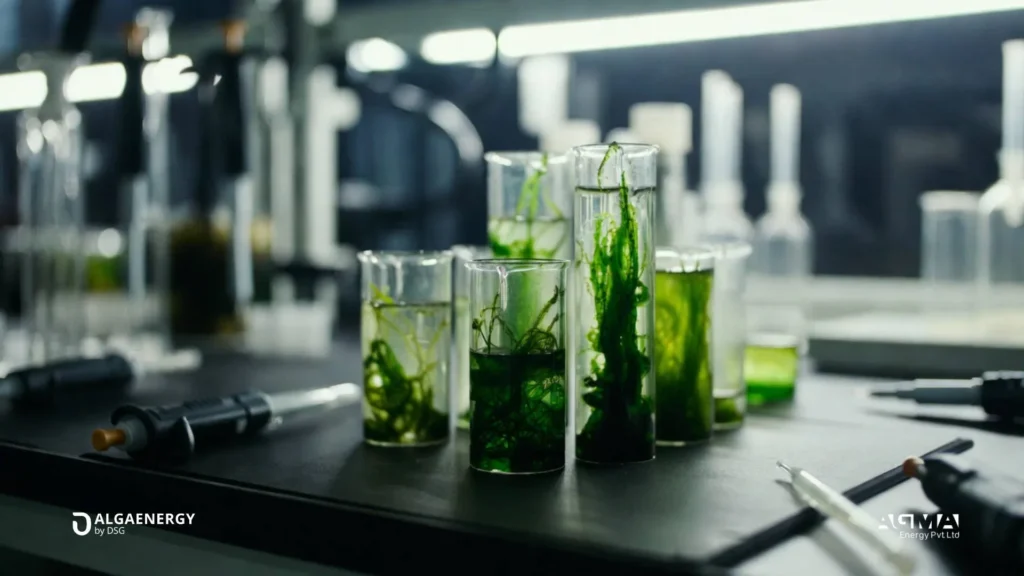
Microalgae are photosynthetic microorganisms that live in water, soil, and extreme environments. In agriculture, their value does not come from replacing fertilizers or pesticides, but from improving the biological processes that govern nutrient availability, soil structure, and plant resilience.
Unlike synthetic inputs that act immediately and disappear quickly, microalgae interact with soil microbes, plant roots, and organic matter over time. This interaction changes how nutrients move, how water is retained, and how crops respond to stress.
From Input-Heavy Farming to System-Responsive Agriculture
For decades, agricultural success has been measured by how much input could be applied to increase output. More fertilizer, more irrigation, more intervention. Microalgae research challenges this logic by shifting focus from quantity to behavior.
Instead of pushing yields higher at all costs, microalgae improve how farming systems respond to stress. Soils become more stable. Nutrients remain available longer. Crops experience fewer extreme fluctuations. The outcome is not dramatic yield spikes, but reliable performance across seasons.
How Microalgae Improve Soil Function Naturally
Soil is not an inert surface. It is a living system. One of the most important contributions of microalgae is their ability to improve soil structure from within.
Microalgae release natural binding compounds that help soil particles form stable aggregates. These aggregates improve porosity, aeration, and water movement. As soil structure improves, roots grow deeper and microbial life becomes more active. Over time, soil becomes more resilient to erosion, compaction, and drought stress.
Nutrient Cycling: Nitrogen, Phosphorus, and Efficiency
Nutrient loss is one of agriculture’s most persistent problems. Large portions of applied nitrogen and phosphorus never reach crops, instead leaching into groundwater or escaping into the atmosphere.
Microalgae support nutrient efficiency in several ways. Certain strains fix atmospheric nitrogen into forms plants can use. Others release organic acids that solubilize phosphorus locked in soil minerals. Together, these processes keep nutrients available longer and reduce dependency on repeated chemical applications.
Microbial Consortia: Why Biology Works Better Together
Recent research shows that microalgae perform best when applied as part of microbial consortia rather than isolated strains. When multiple microorganisms interact, their combined effects amplify soil function, nutrient cycling, and plant response.
Field studies demonstrate that pairing microbial consortia with reduced fertilizer rates can achieve yields nearly identical to full chemical programs. The difference lies in soil health improvement, which continues beyond a single growing season.
Yield Performance vs Yield Stability
Microalgae do increase yields in many crops, but their most important contribution is stability. Stable yields matter more than peak yields in a world shaped by climate variability and market uncertainty.
Cereal crops often show modest gains, while legumes, vegetables, and fruits respond more strongly. Improvements in crop quality, nutrient density, and root development are consistently observed. Over time, yield parity with reduced inputs becomes a reliable outcome.
Water Retention and Climate Stress Resistance
Water availability is becoming one of agriculture’s defining constraints. Microalgae improve soil water retention by enhancing aggregation and organic matter interaction. Better soil structure allows water to infiltrate evenly and remain accessible to roots for longer periods.
This translates into improved drought tolerance, reduced irrigation demand, and lower runoff losses. In regions facing water restrictions, these benefits are often as valuable as yield itself.
Crop-Specific Results Across Farming Systems
Microalgae applications show varied responses across crops and environments. Rice systems benefit from improved nutrient cycling and root oxygenation. Legumes experience enhanced nitrogen availability. Vegetables and fruits often display improved uniformity, color, and nutrient content.
The key pattern is consistency rather than intensity. Microalgae reduce variability between seasons, making outcomes more predictable for farmers.
Commercial Adoption and Real-World Constraints
Despite growing interest, microalgae adoption is not without challenges. Production costs remain higher than conventional fertilizers in some regions. Long-term field data beyond multiple seasons is still developing. Crop-specific formulations require further refinement.
However, successful commercial models embed microalgae into existing farm infrastructure, such as on-farm cultivation or integrated biorefinery systems. These approaches reduce costs and increase practicality.
Regulatory Pressure and the Timing of Microalgae
The rise of microalgae in agriculture is not accidental. Regulations around fertilizer runoff, emissions, and water use are tightening globally. Farmers are being asked to produce more with fewer inputs under greater scrutiny.
Microalgae offer compliance without compromise. They reduce losses, improve efficiency, and support environmental goals without forcing radical system changes.
Microalgae as Biological Infrastructure, Not a Product
The most effective microalgae systems are not treated as products to apply and forget. They function best as biological infrastructure, supporting soil processes continuously.
This mindset shift explains why microalgae succeed quietly. They integrate rather than disrupt, improve rather than replace, and strengthen systems over time.
Long-Term Benefits for Farmers and Food Systems
Over multiple seasons, farms using microalgae experience improved soil organic carbon, better nutrient retention, reduced input volatility, and greater resilience to stress. These benefits compound, creating systems that are easier to manage and less dependent on constant correction.
Challenges and Limitations to Address
Microalgae are not a universal solution. Performance depends on soil type, climate, crop selection, and management practices. Education, extension support, and localized research remain essential for effective deployment.
The Future of Microalgae in Sustainable Agriculture
As biological understanding improves and production scales increase, microalgae are likely to become a standard component of sustainable farming systems. Their role will expand quietly, driven by necessity rather than hype.
Conclusion: The Power of Quiet Agricultural Innovation
Microalgae do not promise revolution. They offer something more valuable: correction. By improving how soil, water, and nutrients interact, they reduce waste, stabilize yields, and support long-term agricultural health.
Their success lies in what they remove, volatility, inefficiency, and dependency. In a future shaped by constraints, microalgae represent the kind of innovation that lasts precisely because it does not demand attention.


OUAT Farmers Fair 2026: Helping Women Farmers Start Their Own Businesses and Moving Smart Agriculture Forward in India

India’s 2026 strategy for importing fertiliser: how India is making global supply chains stronger

The Effects of Global War on Farming in India: Why Prices Are Going Up and What Farmers Can Do

Digital Transformation in Agriculture: How Smart Technology is Changing the Way We Farm Today

The Truth About AI Stock Trading: An AI-Powered Trading Agent Turns ₹11 Lakh Into ₹40 Lakh Overnight

Organic Fertilizer Market Size and Forecast for 2026–2034: Trends in Growth, Future Demand, and Information on Sustainable Agriculture

Bharat-VISTAAR: India’s New AI Digital Platform Changing Farming for Millions of Farmers

Liberating Agriculture in Bharat: A Long-Term Future for Farmers Through Farming with Trees

FAO World Programme of Census of Agriculture 2030: A Global Data Revolution for the Future of Farming

India is running low on LPG in 2026, so hotels are switching to firewood as the government focuses on cooking gas for homes.

What Is the Best Climate for Saffron Cultivation?

Karnataka Budget 2026–27: Key Announcements, Infrastructure Plans, Welfare Schemes and Economic Impact
India is running low on LPG in 2026, so hotels are switching to firewood as the government focuses on cooking gas for homes.

Farming: ಹಳ್ಳಿಗಳಿಗೆ ಹಿಂದಿರುಗಿ ಕೃಷಿಯತ್ತ ಒಲವು ತೋರುತ್ತಿರುವ ವೃತ್ತಿಪರರು – ನಿಜವಾದ ಕಾರಣಗಳು ಮತ್ತು ಭವಿಷ್ಯದ ಜೀವನಶೈಲಿ

ಕೇಂದ್ರ ಬಜೆಟ್ 2026 ಕೃಷಿಕರಿಗೆ ಏನು ಕೊಡುಗೆ? ಭಾರತ್ ವಿಸ್ತಾರ್ AI ಪರಿಕರದಿಂದ ರೈತರಿಗೇನು ಲಾಭ?

Aadhar Model Smart Card To Farmers: ರೈತರಿಗೆ ಆಧಾರ್ ಮಾದರಿ ಸ್ಮಾರ್ಟ್ ಕಾರ್ಡ್ ಯೋಜನೆ – ಸಂಪೂರ್ಣ ಮಾಹಿತಿ, ಅನುಕೂಲತೆಗಳು ಮತ್ತು ನೋಂದಣಿ ವಿವರಗಳು

Sugar Shares Rally on Hopes of Higher Ethanol Blend Amid West Asia Crisis
FAO World Programme of Census of Agriculture 2030: A Global Data Revolution for the Future of Farming

ಮ್ಯೂಚುವಲ್ ಫಂಡ್ SIP ಮೂಲಕ 15 ವರ್ಷಗಳಲ್ಲಿ ₹10 ಕೋಟಿ ರೂಪಾಯಿ ಗಳಿಸುವುದು ಹೇಗೆ?
