


Creative Ideas
Agriculture India Updates 2026: How Digital Farming Is Transforming Indian Agriculture

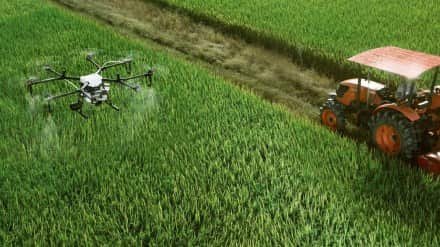
Short Overview
Indian agriculture is entering a historic transformation. By 2026, digital farming tools, satellite monitoring, AI-based advisory systems, and sustainability-driven policies are expected to reach nearly 70% of farmers. These changes are improving productivity, reducing costs, strengthening climate resilience, and opening new domestic and global market opportunities.
Agriculture India Updates 2026 highlight how digital farming, satellite technology, AI advisory systems, blockchain traceability, and sustainable practices are transforming Indian agriculture. With nearly 70% of Indian farmers expected to adopt digital tools by 2026, farming is becoming smarter, more resilient, and more profitable. This in-depth guide explores policy reforms, precision agriculture, climate-smart practices, infrastructure upgrades, organic farming growth, and how advanced platforms like Farmonaut empower farmers, agribusinesses, and policymakers. Learn how technology, sustainability, and market transparency are reshaping India’s agricultural future and unlocking higher productivity, income stability, and global competitiveness.

Table of Contents
- Introduction
- Agriculture in India: Overview 2025–2026
- Technological Integration & Digital Farming in India
- Precision Agriculture: Satellite, AI, IoT, and Smart Tools
- Blockchain, Digital Platforms & Market Transparency
- Sustainability, Climate Change & Resilient Farming
- Policy Reforms & Farmer Empowerment in 2025–2026
- Agricultural Infrastructure & Supply Chain Improvements
- Organic Farming, Domestic Demand & Export Growth
- How Farmonaut’s Satellite & AI Solutions Support Indian Agriculture
- Key Trends Comparison: Agriculture India Updates
- FAQs: Agriculture India Updates 2026
- Conclusion & Future Outlook
Introduction
Agriculture India Updates 2026 mark a turning point for the country’s farming ecosystem. Agriculture remains the backbone of India’s economy, supporting nearly half of the population and ensuring food security for over 1.4 billion people. As India moves closer to 2026, farming is no longer limited to traditional methods. Digital farming, satellite technology, artificial intelligence, and data-driven decision-making are becoming essential tools for farmers across the country.
These changes are not just about technology adoption; they represent a shift toward efficiency, sustainability, transparency, and farmer empowerment. From improved crop yields and reduced input costs to better market access and climate resilience, Indian agriculture is being reshaped from the ground up.
Agriculture in India: Overview 2025–2026
Indian agriculture contributes nearly 18% to the national GDP and remains one of the largest employment generators in the country. India is the world’s leading producer of pulses and among the top producers of rice, wheat, fruits, vegetables, and milk.
However, the sector continues to face challenges such as climate variability, declining soil health, water scarcity, fragmented landholdings, and post-harvest losses. To overcome these issues, the government and private sector are investing heavily in technology-driven solutions, policy reforms, and modern infrastructure.
By 2026, agriculture in India is expected to become more data-centric, resilient, and market-oriented, enabling farmers to make informed decisions and improve long-term profitability.

Technological Integration & Digital Farming in India
Digital farming is one of the most important agriculture India updates for 2026. Nearly 70% of Indian farmers are expected to use mobile apps, satellite-based platforms, or AI advisory tools to manage crops, irrigation, pests, and finances.
Satellite imagery allows farmers to monitor crop health, detect water stress, and identify early signs of disease without physically inspecting every field. AI-powered advisory systems provide personalized recommendations based on crop type, location, weather patterns, and soil conditions.
Digital tools also help farmers reduce input costs by optimizing fertilizer use, irrigation schedules, and pest control, while improving overall productivity and yield stability.
Precision Agriculture: Satellite, AI, IoT, and Smart Tools
Precision agriculture bridges the gap between traditional farming knowledge and modern technology. Satellite data such as NDVI and EVI help monitor vegetation health and soil moisture at scale. IoT sensors measure temperature, humidity, and soil conditions in real time, allowing precise irrigation and fertigation decisions.
Artificial intelligence analyzes large volumes of agricultural data to predict pest outbreaks, recommend sowing windows, and estimate yields before harvest. Drones are increasingly used for crop monitoring, targeted spraying, and field mapping, reducing labor costs and environmental impact.
These technologies together help farmers apply the right input, at the right time, in the right quantity, leading to healthier crops and sustainable farming practices.
Blockchain, Digital Platforms & Market Transparency
Blockchain technology is improving transparency and trust across agricultural supply chains. By recording data related to origin, quality, certification, and handling, blockchain ensures traceability from farm to consumer. This is especially important for organic produce and exports, where authenticity and compliance are critical.
Digital marketplaces such as eNAM provide farmers with real-time price information and access to wider markets, reducing dependency on local intermediaries. Direct Benefit Transfers and digital payment systems ensure subsidies, insurance claims, and financial assistance reach farmers faster and more securely.
Sustainability, Climate Change & Resilient Farming
Climate change is one of the biggest challenges facing Indian agriculture. Rising temperatures, erratic rainfall, and frequent extreme weather events threaten crop productivity and farmer incomes.
Sustainable farming practices such as crop diversification, conservation agriculture, micro-irrigation, organic inputs, and agroforestry are gaining traction across India. Government programs and private initiatives are promoting efficient water use, soil health restoration, and reduced chemical dependency.
Digital tools now allow farmers to monitor carbon emissions and environmental impact, aligning agriculture with India’s climate commitments while improving long-term farm resilience.
Policy Reforms & Farmer Empowerment in 2025–2026
Recent policy reforms aim to give farmers greater market freedom, financial security, and technological access. Model APMC reforms allow farmers to sell produce beyond traditional mandis, encouraging competition and better price discovery.
Direct Benefit Transfer schemes reduce leakage and ensure timely financial support for small and marginal farmers. Crop insurance programs increasingly use satellite verification to speed up claim settlements and reduce fraud.
Digital governance platforms provide farmers with instant access to advisories, weather alerts, subsidy information, and training resources through smartphones.
Agricultural Infrastructure & Supply Chain Improvements
Post-harvest losses remain a major issue in Indian agriculture. Investments in cold storage, warehousing, food processing units, and rural connectivity are helping reduce waste and improve price realization.
Agri-logistics parks and improved transportation networks enable faster farm-to-market movement. E-commerce platforms allow farmers to sell directly to consumers and institutional buyers, improving income stability and reducing dependency on middlemen.
Organic Farming, Domestic Demand & Export Growth
Organic farming is expanding rapidly due to rising consumer awareness and export demand. States like Sikkim and Uttarakhand have achieved near-complete organic certification, while others are scaling up organic transitions.
India’s organic exports, including millets, spices, and herbal products, are growing steadily, supported by traceability systems and certification frameworks. Domestic demand for chemical-free food is also increasing, creating new income opportunities for farmers.
How Farmonaut’s Satellite & AI Solutions Support Indian Agriculture
Farmonaut plays a key role in making advanced agricultural technology accessible and affordable. Its platform offers real-time satellite crop monitoring, AI-powered advisory through JEEVN AI, blockchain-based traceability, resource and fleet management, and environmental impact tracking.
These tools help farmers, agribusinesses, and government agencies improve productivity, reduce costs, ensure compliance, and achieve sustainability goals across small, medium, and large-scale farming operations.
Key Trends Comparison: Agriculture India Updates
Digital farming platforms are reaching most Indian farmers, precision agriculture tools are expanding rapidly among medium and large farms, blockchain traceability is gaining traction in exports, and climate-smart practices are becoming essential in high-risk regions. Infrastructure modernization and digital subsidy delivery are strengthening the overall agricultural ecosystem.
FAQs: Agriculture India Updates 2026
The latest agriculture updates in India focus on digital adoption, sustainability, satellite monitoring, AI advisory systems, and improved market access. Technologies such as satellite imagery, IoT sensors, AI, blockchain, and drones are transforming farming practices. Government reforms support farmers through direct benefit transfers, crop insurance, and market reforms. Satellite and AI tools help farmers monitor crops, reduce costs, and improve yields, while traceability platforms support exports and compliance.
Conclusion & Future Outlook
Indian agriculture is moving toward a smarter, more sustainable, and inclusive future. By 2026, digital tools will empower farmers with real-time information, sustainable practices will strengthen climate resilience, and policy reforms will ensure better income security.
The integration of technology, infrastructure development, and farmer-centric governance is laying the foundation for a globally competitive agricultural sector. Embracing digital farming solutions and data-driven decision-making will be essential for India to meet future food demands while protecting its natural resources.


OUAT Farmers Fair 2026: Helping Women Farmers Start Their Own Businesses and Moving Smart Agriculture Forward in India

India’s 2026 strategy for importing fertiliser: how India is making global supply chains stronger

The Effects of Global War on Farming in India: Why Prices Are Going Up and What Farmers Can Do

Digital Transformation in Agriculture: How Smart Technology is Changing the Way We Farm Today

The Truth About AI Stock Trading: An AI-Powered Trading Agent Turns ₹11 Lakh Into ₹40 Lakh Overnight

Organic Fertilizer Market Size and Forecast for 2026–2034: Trends in Growth, Future Demand, and Information on Sustainable Agriculture

Bharat-VISTAAR: India’s New AI Digital Platform Changing Farming for Millions of Farmers

Liberating Agriculture in Bharat: A Long-Term Future for Farmers Through Farming with Trees

FAO World Programme of Census of Agriculture 2030: A Global Data Revolution for the Future of Farming

India is running low on LPG in 2026, so hotels are switching to firewood as the government focuses on cooking gas for homes.

What Is the Best Climate for Saffron Cultivation?

Karnataka Budget 2026–27: Key Announcements, Infrastructure Plans, Welfare Schemes and Economic Impact
India is running low on LPG in 2026, so hotels are switching to firewood as the government focuses on cooking gas for homes.

Farming: ಹಳ್ಳಿಗಳಿಗೆ ಹಿಂದಿರುಗಿ ಕೃಷಿಯತ್ತ ಒಲವು ತೋರುತ್ತಿರುವ ವೃತ್ತಿಪರರು – ನಿಜವಾದ ಕಾರಣಗಳು ಮತ್ತು ಭವಿಷ್ಯದ ಜೀವನಶೈಲಿ

ಕೇಂದ್ರ ಬಜೆಟ್ 2026 ಕೃಷಿಕರಿಗೆ ಏನು ಕೊಡುಗೆ? ಭಾರತ್ ವಿಸ್ತಾರ್ AI ಪರಿಕರದಿಂದ ರೈತರಿಗೇನು ಲಾಭ?

Aadhar Model Smart Card To Farmers: ರೈತರಿಗೆ ಆಧಾರ್ ಮಾದರಿ ಸ್ಮಾರ್ಟ್ ಕಾರ್ಡ್ ಯೋಜನೆ – ಸಂಪೂರ್ಣ ಮಾಹಿತಿ, ಅನುಕೂಲತೆಗಳು ಮತ್ತು ನೋಂದಣಿ ವಿವರಗಳು

Sugar Shares Rally on Hopes of Higher Ethanol Blend Amid West Asia Crisis
FAO World Programme of Census of Agriculture 2030: A Global Data Revolution for the Future of Farming

ಮ್ಯೂಚುವಲ್ ಫಂಡ್ SIP ಮೂಲಕ 15 ವರ್ಷಗಳಲ್ಲಿ ₹10 ಕೋಟಿ ರೂಪಾಯಿ ಗಳಿಸುವುದು ಹೇಗೆ?
