


Innovative News
Digital Agriculture for Farmland Biodiversity: Bridging Knowledge Gaps for Sustainable Farming

Short Overview
Digital agriculture for biodiversity monitoring is emerging as a powerful bridge between food production and nature conservation, using the same technologies farmers already rely on to generate valuable ecological insights. By unlocking biodiversity data hidden within everyday farming operations, this approach offers a smarter, faster, and more inclusive way to protect farmland ecosystems while supporting sustainable agriculture.
Digital agriculture for biodiversity monitoring is transforming how we understand and protect farmland ecosystems. By using smart farming technologies like drones, sensors, AI, and soil DNA analysis, farmers and conservationists can track species, soil health, and ecosystem changes in real time. This approach helps close critical biodiversity knowledge gaps while improving farm productivity and sustainability. Learn how precision agriculture data supports biodiversity indicators, aligns with global conservation policies, benefits farmers directly, and enables a shift toward nature-positive farming systems without adding extra monitoring burdens.

Table of Contents
1. Digital Agriculture for Biodiversity Monitoring: Closing Farmland Knowledge Gaps
2. Why Farmland Biodiversity Monitoring Still Falls Short
3. What Digital Agriculture Really Is and Why It Matters
4. Pest, Disease, and Weed Management as Biodiversity Data Sources
5. Soil Monitoring and Environmental DNA Reveal Hidden Life
6. Crop and Livestock Phenotyping Beyond Productivity
7. Aligning Digital Agriculture with Global Biodiversity Indicators
8. Digital Agriculture as a Driver of Sustainable Transitions
9. Addressing Equity, Data Ownership, and Bias
10. Conclusion
Digital Agriculture for Biodiversity Monitoring: Closing Farmland Knowledge Gaps
Farmland covers nearly half of the world’s habitable land, making it one of the most important spaces for both food production and biodiversity conservation. Yet, despite its importance, biodiversity in agricultural landscapes remains poorly monitored, unevenly measured, and often misunderstood. Traditional biodiversity surveys are expensive, time-limited, and usually disconnected from real farming practices, which creates major gaps in our understanding of how species respond to agricultural management over time.
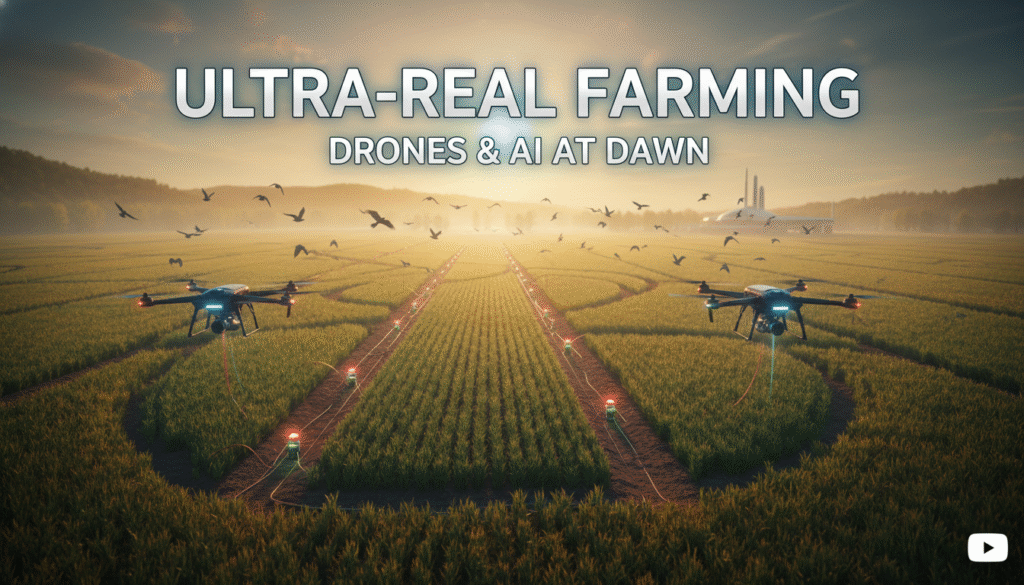
At the same time, agriculture itself is undergoing a rapid digital transformation. Farmers increasingly rely on drones, sensors, automated machinery, artificial intelligence, and genetic tools to manage crops, soils, pests, and livestock. This shift, known as digital agriculture, is primarily designed to improve yields, reduce costs, and increase efficiency. What is often overlooked is that these same tools quietly collect vast amounts of biodiversity-relevant data every single day.
Digital agriculture for biodiversity monitoring brings these two worlds together. It recognizes that smart farming systems already observe plants, animals, microbes, and ecosystem processes at a level of detail that biodiversity science has long struggled to achieve. By reusing and aligning agricultural data streams with ecological frameworks, we can close critical biodiversity knowledge gaps without placing extra burdens on farmers.
Why Farmland Biodiversity Monitoring Still Falls Short
Biodiversity monitoring in agricultural landscapes has traditionally relied on short-term field surveys, national statistics, or isolated research projects. These approaches often fail to capture real-time changes, seasonal dynamics, and local management effects. Many biodiversity datasets lack spatial precision, taxonomic breadth, or consistency over time, making it difficult to assess trends or identify causes of biodiversity loss.
Access restrictions to private farmland further complicate monitoring efforts. Researchers frequently depend on aggregated agricultural statistics instead of direct measurements, which introduces biases and hides important ecological variation. As a result, biodiversity responses to farming practices are often inferred rather than observed, leading to uncertainty in conservation planning and policy decisions.
What Digital Agriculture Really Is and Why It Matters
Digital agriculture refers to the use of digital technologies and data to manage and optimize farming systems. This includes drones capturing high-resolution images of fields, sensors measuring soil nutrients and moisture, camera traps monitoring animals, acoustic devices recording sounds, and genetic tools analyzing environmental DNA from soil and water samples.
These technologies enable continuous, fine-scale observation of agricultural landscapes. They track crop growth, detect pests and diseases, monitor soil health, and measure plant and animal traits throughout the year. Importantly, they operate at the same spatial and temporal scales where biodiversity responds to farming activities.
Because biodiversity science increasingly uses the same tools, digital agriculture creates a natural overlap. The data collected for crop management often contain direct or indirect information about species presence, abundance, traits, and ecosystem functions.
Pest, Disease, and Weed Management as Biodiversity Data Sources
Pests, weeds, and diseases are among the most closely monitored elements in digital agriculture. Farmers use drones, cameras, acoustic sensors, and AI models to detect insects, rodents, birds, and invasive plants that threaten crops. These systems generate detailed records of where and when species occur, how abundant they are, and how they change over time.
From a biodiversity perspective, these data are incredibly valuable. Many pests are part of broader ecological communities, interacting with predators, pollinators, and competitors. Monitoring their dynamics can reveal patterns of species interactions, seasonal movements, and population trends within croplands.
Weeds, often seen purely as competitors, represent a large portion of farmland plant diversity. Digital weed detection systems capture information about species identity, distribution, and functional traits, which can inform conservation strategies aimed at maintaining beneficial plant communities.
Soil Monitoring and Environmental DNA Reveal Hidden Life
Soil is one of the most biodiverse habitats on Earth, yet it remains one of the least understood. Digital agriculture increasingly relies on soil sampling and analysis to guide fertilization, irrigation, and crop rotation. Advances in environmental DNA technology allow farmers to detect microbial communities, pathogens, and beneficial organisms directly from soil samples.
These genetic data provide unprecedented insights into soil biodiversity, revealing organisms that are invisible to traditional surveys. By combining soil DNA data with drone or satellite imagery, it becomes possible to map soil biodiversity across entire landscapes, rather than isolated sampling points.
For biodiversity monitoring, this means better coverage of microorganisms, fungi, and invertebrates that play essential roles in nutrient cycling, soil structure, and ecosystem resilience.
Crop and Livestock Phenotyping Beyond Productivity
Phenotyping in digital agriculture involves measuring physical, physiological, and biochemical traits of crops and animals. Drones and sensors track plant height, leaf structure, nutrient content, and growth patterns. Similar techniques monitor livestock health, body mass, and behavior.
These trait-based measurements align closely with modern biodiversity science, which increasingly focuses on functional traits rather than species lists alone. Trait data help scientists understand how organisms respond to environmental stress, climate variability, and management practices.
By extending phenotyping beyond domesticated species, digital agriculture can also capture traits of wild plants and animals living within or near fields, providing deeper insights into ecosystem health.
Aligning Digital Agriculture with Global Biodiversity Indicators
One of the most powerful aspects of digital agriculture for biodiversity monitoring is its alignment with the Essential Biodiversity Variables framework. These variables form the backbone of international biodiversity reporting and policy evaluation.
Digital agriculture data can support indicators related to species abundance, traits, phenology, ecosystem structure, and productivity. Regular farm-level monitoring enables time series that reveal trends, seasonal shifts, and responses to management interventions.
This alignment allows agricultural data to directly inform national and global biodiversity targets, including those under the Global Biodiversity Framework, without creating parallel monitoring systems.
Digital Agriculture as a Driver of Sustainable Transitions
When biodiversity monitoring becomes part of everyday farming operations, agriculture can shift from reactive to proactive management. Instead of responding to biodiversity loss after it occurs, farmers can adjust practices in real time based on ecological feedback.
Continuous data streams allow fields and farms to function as living laboratories, where biodiversity and productivity are monitored together. This integration supports evidence-based decisions that balance food production with ecosystem health.
Importantly, farmers benefit directly from improved soil quality, natural pest control, pollination services, and system resilience, making biodiversity conservation a practical and rewarding part of farming.
Addressing Equity, Data Ownership, and Bias
Despite its promise, digital agriculture is not without challenges. Access to technology remains uneven, particularly for smallholder and family farms. Without inclusive policies and support, digitalization risks widening socioeconomic gaps and reinforcing existing data biases.
Data ownership and privacy are also critical concerns. Farm-level data must be shared responsibly, with clear agreements that protect farmers’ rights while enabling biodiversity monitoring. Initiatives promoting fair, interoperable, and reusable data standards are essential for building trust and transparency.
Finally, digital agriculture data must be interpreted with ecological expertise to address biases related to species size, seasonality, and management focus. Collaboration between farmers, ecologists, and policymakers is key to maximizing its value.
Conclusion
Digital agriculture for biodiversity monitoring offers a rare opportunity to transform how we understand and manage farmland ecosystems. By reusing data already collected through smart farming technologies, we can close long-standing biodiversity knowledge gaps, reduce monitoring costs, and support policy-relevant conservation efforts.
This integration does not add extra burdens on farmers. Instead, it delivers direct benefits through better decision-making, increased resilience, and long-term sustainability. With thoughtful governance, inclusive digitalization, and ecological collaboration, digital agriculture can become a cornerstone of nature-positive farming and a vital tool for safeguarding biodiversity in the landscapes that feed the world.


OUAT Farmers Fair 2026: Helping Women Farmers Start Their Own Businesses and Moving Smart Agriculture Forward in India

India’s 2026 strategy for importing fertiliser: how India is making global supply chains stronger

The Effects of Global War on Farming in India: Why Prices Are Going Up and What Farmers Can Do

Digital Transformation in Agriculture: How Smart Technology is Changing the Way We Farm Today

The Truth About AI Stock Trading: An AI-Powered Trading Agent Turns ₹11 Lakh Into ₹40 Lakh Overnight

Organic Fertilizer Market Size and Forecast for 2026–2034: Trends in Growth, Future Demand, and Information on Sustainable Agriculture

Bharat-VISTAAR: India’s New AI Digital Platform Changing Farming for Millions of Farmers

Liberating Agriculture in Bharat: A Long-Term Future for Farmers Through Farming with Trees

FAO World Programme of Census of Agriculture 2030: A Global Data Revolution for the Future of Farming

India is running low on LPG in 2026, so hotels are switching to firewood as the government focuses on cooking gas for homes.

What Is the Best Climate for Saffron Cultivation?
India is running low on LPG in 2026, so hotels are switching to firewood as the government focuses on cooking gas for homes.

Karnataka Budget 2026–27: Key Announcements, Infrastructure Plans, Welfare Schemes and Economic Impact

Farming: ಹಳ್ಳಿಗಳಿಗೆ ಹಿಂದಿರುಗಿ ಕೃಷಿಯತ್ತ ಒಲವು ತೋರುತ್ತಿರುವ ವೃತ್ತಿಪರರು – ನಿಜವಾದ ಕಾರಣಗಳು ಮತ್ತು ಭವಿಷ್ಯದ ಜೀವನಶೈಲಿ

ಕೇಂದ್ರ ಬಜೆಟ್ 2026 ಕೃಷಿಕರಿಗೆ ಏನು ಕೊಡುಗೆ? ಭಾರತ್ ವಿಸ್ತಾರ್ AI ಪರಿಕರದಿಂದ ರೈತರಿಗೇನು ಲಾಭ?

Aadhar Model Smart Card To Farmers: ರೈತರಿಗೆ ಆಧಾರ್ ಮಾದರಿ ಸ್ಮಾರ್ಟ್ ಕಾರ್ಡ್ ಯೋಜನೆ – ಸಂಪೂರ್ಣ ಮಾಹಿತಿ, ಅನುಕೂಲತೆಗಳು ಮತ್ತು ನೋಂದಣಿ ವಿವರಗಳು

Sugar Shares Rally on Hopes of Higher Ethanol Blend Amid West Asia Crisis
FAO World Programme of Census of Agriculture 2030: A Global Data Revolution for the Future of Farming

ಮ್ಯೂಚುವಲ್ ಫಂಡ್ SIP ಮೂಲಕ 15 ವರ್ಷಗಳಲ್ಲಿ ₹10 ಕೋಟಿ ರೂಪಾಯಿ ಗಳಿಸುವುದು ಹೇಗೆ?
