


Latest News
Biopesticides at Scale in India: How the FARM Project Is Transforming Sustainable Agriculture

Short Overview
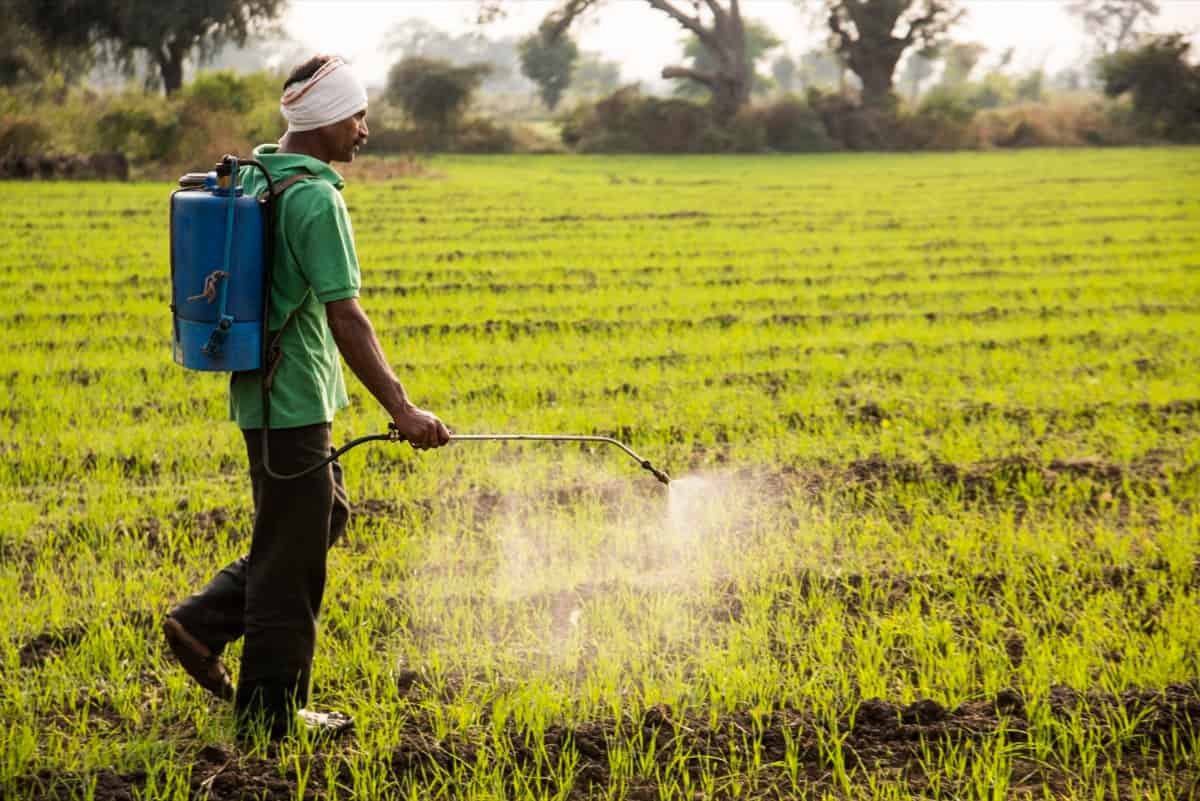
Biopesticides at scale in India are no longer a future concept but a real transformation happening on farms today. Through the FARM Project, thousands of Indian farmers are learning how to replace harmful chemical pesticides with safer, eco-friendly biopesticides that protect crops, human health, and the environment while improving long-term farm income.
Discover how biopesticides at scale in India are transforming sustainable agriculture through the FARM Project. Learn how farmer training, integrated pest management, access to finance, and locally adapted biopesticide solutions are reducing chemical pesticide use, improving soil health, protecting ecosystems, and strengthening farmer livelihoods across multiple Indian states.

Table of Contents
- Introduction to Biopesticides at Scale in India
- Why India Needs a Shift Away from Chemical Pesticides
- Understanding the FARM Project and Its Vision
- The Role of Farmer Training in Scaling Biopesticides
- India’s Growing Biopesticide Market and Production Capacity
- Key Barriers Slowing Biopesticide Adoption
- How FARM Training Addresses Knowledge and Behaviour Gaps
- Crop-Specific and Climate-Smart Training Models
- Integrating Integrated Pest Management with Biopesticides
- Access to Finance and Risk Reduction for Smallholder Farmers
- Empowering Farmers Through Peer Learning and Trust
- Measurable Impact of the FARM Project Across India
- Community-Level Success Stories from the Field
- Ongoing Challenges and Market Realities
- The Future of Biopesticides and Sustainable Agriculture in India
- Conclusion: Scaling Safer Farming for a Healthier Future
1. Introduction to Biopesticides at Scale in India
Biopesticides at scale in India represent one of the most promising pathways toward sustainable agriculture in a country where farming supports millions of livelihoods and feeds a growing population. As concerns rise around pesticide residues, water contamination, and farmer health, biopesticides offer a safer and more environmentally responsible alternative. The challenge has never been about availability alone but about awareness, trust, training, and access, especially for smallholder farmers who operate under tight economic margins.
2. Why India Needs a Shift Away from Chemical Pesticides
For decades, Indian agriculture has relied heavily on synthetic chemical pesticides to protect crops and boost yields. While these chemicals have helped increase food production, they have also caused serious unintended consequences. Farmers and rural communities remain exposed to toxic substances, water bodies face contamination, biodiversity continues to decline, and food safety concerns persist due to pesticide residues. India still uses several pesticides that are banned in many other countries, making the transition to safer alternatives both urgent and necessary.

3. Understanding the FARM Project and Its Vision
The Financing Agrochemical Reduction and Management initiative, commonly known as the FARM Project, was created to address these systemic challenges by placing farmers at the center of change. Led by United Nations Environment Programme and funded by Global Environment Facility, the project is implemented by United Nations Industrial Development Organization in partnership with HIL India Limited. The project aims to reduce harmful chemicals, phase out persistent organic pollutants, and strengthen India’s capacity to adopt biopesticides at scale.
4. The Role of Farmer Training in Scaling Biopesticides
Training lies at the heart of the FARM Project’s strategy. Many farmers understand the idea of sustainable farming but struggle with the practical realities of switching from chemical pesticides to biopesticides. FARM training bridges this gap by offering clear, hands-on guidance that explains not only why biopesticides matter but how to use them effectively. This practical focus makes adoption feel achievable rather than risky.
5. India’s Growing Biopesticide Market and Production Capacity
India’s biopesticide production capacity has expanded rapidly in recent years, with nearly 970 registrations covering 18 biopesticide products compared to just 293 conventional pesticide registrations. The biopesticide market in India is expected to grow at a compound annual growth rate of 11.7 percent between 2022 and 2028. Despite this progress, most biopesticides are still used in public health applications such as mosquito control rather than in crop production, highlighting a major opportunity for agricultural adoption.
6. Key Barriers Slowing Biopesticide Adoption
Several challenges continue to limit widespread adoption of biopesticides in agriculture. Low awareness of product effectiveness, concerns about cost, regulatory complexity, and strong influence from the conventional pesticide industry all play a role. Farmers also worry about yield loss during transition periods, especially when they depend on their harvest for survival. Without reliable guidance and financial protection, change can feel too risky.
7. How FARM Training Addresses Knowledge and Behaviour Gaps
The FARM Project responds to these barriers by focusing on education that is practical, local, and crop-specific. Farmers are trained on safe handling, correct dosage, proper application timing, storage methods, and environmentally sound disposal practices. Instead of generic advice, the training explains how biopesticides behave differently from chemical products and why patience and precision matter for long-term results.
8. Crop-Specific and Climate-Smart Training Models
One of the strongest features of the FARM Project is its localized approach. Training materials are adapted to local crops, climate conditions, and farming systems across 12 agro-climatic zones in India. The project team carefully studied pest biology, cropping patterns, and storage conditions to ensure recommendations were realistic. Experts from Indian Council of Agricultural Research and Krishi Vigyan Kendras helped ensure technical accuracy and relevance, while multilingual materials made learning accessible.
9. Integrating Integrated Pest Management with Biopesticides
FARM training promotes integrated pest management as a foundation for sustainable farming. Farmers learn how soil health, crop diversity, biological controls, and careful monitoring work together to reduce pest pressure. Biopesticides such as neem-based products, Trichoderma, and Bacillus thuringiensis israelensis are introduced as practical tools within this broader system rather than as standalone replacements.
10. Access to Finance and Risk Reduction for Smallholder Farmers
Nearly 80 percent of Indian farmers cultivate one to two acres of land, making financial risk a major concern during any transition. FARM training links farmers to financing schemes, incentives, and insurance programs that protect income while adopting new practices. Government initiatives such as Paramparagat Krishi Vikas Yojana provide financial assistance over three years, helping farmers access organic and export markets while reducing dependence on hazardous chemicals.
11. Empowering Farmers Through Peer Learning and Trust
The programme recognizes farmers as skilled professionals with valuable experience. Peer-to-peer learning plays a critical role, with early adopters sharing real results alongside scientists and community leaders. Seeing familiar faces succeed with biopesticides builds trust, reduces fear, and encourages wider adoption through social proof rather than pressure.
12. Measurable Impact of the FARM Project Across India
Between July 2024 and July 2025, more than 20,000 farmers received direct training, while an estimated 1.7 million farmers benefited indirectly. Through a training-of-trainers model, each participant is expected to reach dozens more farmers in nearby villages. This approach builds on an earlier phase that trained over 70,000 farmers and reduced pesticide residues in food crops nationwide.
13. Community-Level Success Stories from the Field
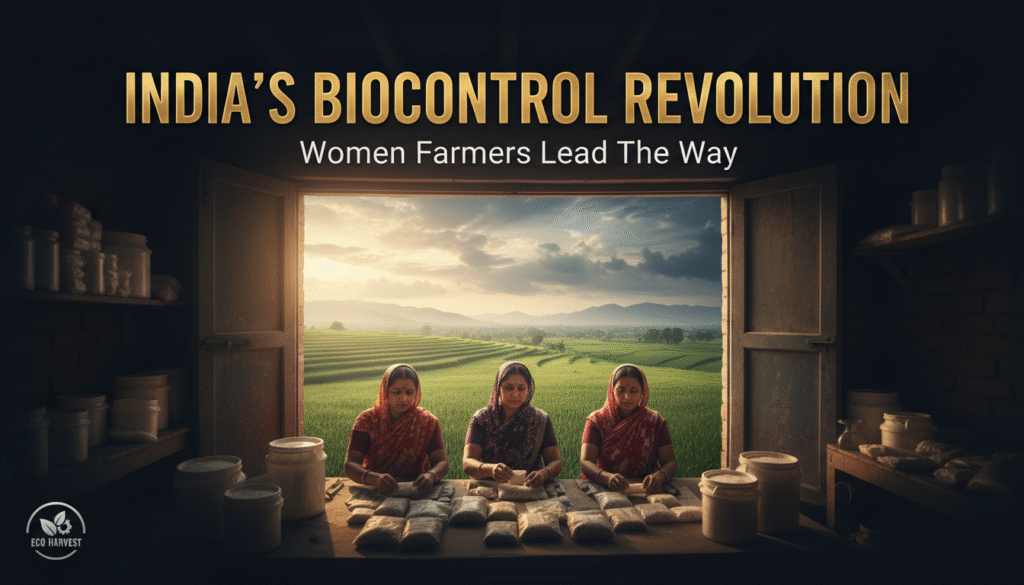
At the village level, the impact of the FARM Project is already visible. In Ukrem village in Meghalaya, women farmers established a small biocontrol production unit after combining training insights with government financial support. The unit now supplies nearby villages and generates up to USD 600 in additional monthly income, demonstrating how sustainable agriculture can also strengthen rural livelihoods.
14. Ongoing Challenges and Market Realities
Despite encouraging progress, challenges remain. Long-standing dependence on chemical pesticides creates resistance to change, while biopesticides must deliver consistent and timely results to compete with fast-acting synthetic products. Limited availability in retail markets also restricts access, as dealers are often the first source of advice for farmers. Engaging distributors and retailers will be essential for scaling adoption.
15. The Future of Biopesticides and Sustainable Agriculture in India
Looking ahead, the FARM Project plans to expand field demonstrations, deepen farmer confidence, and strengthen the commercial viability of biopesticide products. Continued research, improved formulations, and stronger market integration are expected to support the project’s goal of empowering up to one million farmers by 2026, creating a safer and more resilient agricultural system.
16. Conclusion: Scaling Safer Farming for a Healthier Future
Biopesticides at scale in India are not just an environmental solution but a pathway to healthier farmers, safer food, and stronger rural economies. The FARM Project shows that when training, finance, trust, and science come together, sustainable agriculture becomes practical and profitable. By placing farmers at the center of change, India is taking meaningful steps toward a future where productivity and sustainability grow hand in hand.


India’s 2026 strategy for importing fertiliser: how India is making global supply chains stronger

The Effects of Global War on Farming in India: Why Prices Are Going Up and What Farmers Can Do

Digital Transformation in Agriculture: How Smart Technology is Changing the Way We Farm Today

The Truth About AI Stock Trading: An AI-Powered Trading Agent Turns ₹11 Lakh Into ₹40 Lakh Overnight

Organic Fertilizer Market Size and Forecast for 2026–2034: Trends in Growth, Future Demand, and Information on Sustainable Agriculture

Bharat-VISTAAR: India’s New AI Digital Platform Changing Farming for Millions of Farmers

Liberating Agriculture in Bharat: A Long-Term Future for Farmers Through Farming with Trees

FAO World Programme of Census of Agriculture 2030: A Global Data Revolution for the Future of Farming

India is running low on LPG in 2026, so hotels are switching to firewood as the government focuses on cooking gas for homes.

The economy of Karnataka is doing better than the national average. The state’s growth rate is 12% for the second year in a row.

What Is the Best Climate for Saffron Cultivation?
India is running low on LPG in 2026, so hotels are switching to firewood as the government focuses on cooking gas for homes.

Karnataka Budget 2026–27: Key Announcements, Infrastructure Plans, Welfare Schemes and Economic Impact

Farming: ಹಳ್ಳಿಗಳಿಗೆ ಹಿಂದಿರುಗಿ ಕೃಷಿಯತ್ತ ಒಲವು ತೋರುತ್ತಿರುವ ವೃತ್ತಿಪರರು – ನಿಜವಾದ ಕಾರಣಗಳು ಮತ್ತು ಭವಿಷ್ಯದ ಜೀವನಶೈಲಿ

ಕೇಂದ್ರ ಬಜೆಟ್ 2026 ಕೃಷಿಕರಿಗೆ ಏನು ಕೊಡುಗೆ? ಭಾರತ್ ವಿಸ್ತಾರ್ AI ಪರಿಕರದಿಂದ ರೈತರಿಗೇನು ಲಾಭ?

Aadhar Model Smart Card To Farmers: ರೈತರಿಗೆ ಆಧಾರ್ ಮಾದರಿ ಸ್ಮಾರ್ಟ್ ಕಾರ್ಡ್ ಯೋಜನೆ – ಸಂಪೂರ್ಣ ಮಾಹಿತಿ, ಅನುಕೂಲತೆಗಳು ಮತ್ತು ನೋಂದಣಿ ವಿವರಗಳು

ಭಾರತ್-ವಿಸ್ತಾರ್ ಎಐ ಸಾಧನ: ರೈತರ ಕೃಷಿ ಸಮಸ್ಯೆಗೆ ಬೆರಳ ತುದಿಯಲ್ಲಿ ಎಐ ಪರಿಹಾರ | ಸಂಪೂರ್ಣ ಮಾಹಿತಿ

Sugar Shares Rally on Hopes of Higher Ethanol Blend Amid West Asia Crisis
FAO World Programme of Census of Agriculture 2030: A Global Data Revolution for the Future of Farming
