


Benefits
Are You Wasting Money on the Wrong Tractor Size for Your Land?

Short Overview
Buying a tractor feels like a smart investment, but many landowners unknowingly lose money by choosing the wrong tractor size for their land. When a tractor is too large, it consumes more fuel, costs more to maintain, and becomes difficult to manage. When it is too small, it struggles to perform basic tasks and wears out faster. This guide explains how tractor size affects cost, efficiency, and productivity so you can confidently choose the right tractor and stop wasting money.
Choosing the wrong tractor size for your land can lead to higher fuel costs, poor performance, and expensive maintenance. This detailed tractor size guide explains how land size, horsepower, terrain, and farming tasks affect your decision. Learn how to choose the right tractor size, avoid common tractor buying mistakes, improve fuel efficiency, and get the best value for your money. Ideal for farmers, landowners, and first-time tractor buyers who want simple, practical advice that helps them make a smarter long-term investment.

Table of Contents
Why Tractor Size Matters More Than You Think
The Hidden Cost of Buying the Wrong Tractor
Understanding Tractor Sizes and Horsepower
How Land Size Determines the Right Tractor
Matching Tractor Size to Your Farm Tasks
Terrain and Soil Conditions That Affect Tractor Choice
Small, Medium, and Large Tractors Compared
Common Tractor Size Mistakes Farmers Make
How to Choose the Right Tractor Size Step by Step
Fuel Efficiency, Maintenance, and Long-Term Costs
Renting vs Buying a Tractor
Final Buying Checklist
Conclusion
Why Tractor Size Matters More Than You Think
Many people believe that buying a bigger tractor automatically means better performance, but tractor size must match the land and the work being done. A tractor that is too large often leads to unnecessary fuel use, higher repair costs, and difficulty working in tight areas. At the same time, a tractor that is too small may struggle to complete tasks efficiently and can wear out much faster. Choosing the right tractor size allows every dollar spent to produce real value and long-term reliability.
The Hidden Cost of Buying the Wrong Tractor
The real cost of the wrong tractor size is not always visible at first. Oversized tractors tend to consume more fuel than necessary and cost significantly more to maintain. They also compact soil, which can reduce crop health over time. On the other hand, undersized tractors are often pushed beyond their limits, which leads to frequent breakdowns and reduced lifespan. In both situations, money is slowly wasted season after season without most owners realizing it.
Understanding Tractor Sizes and Horsepower
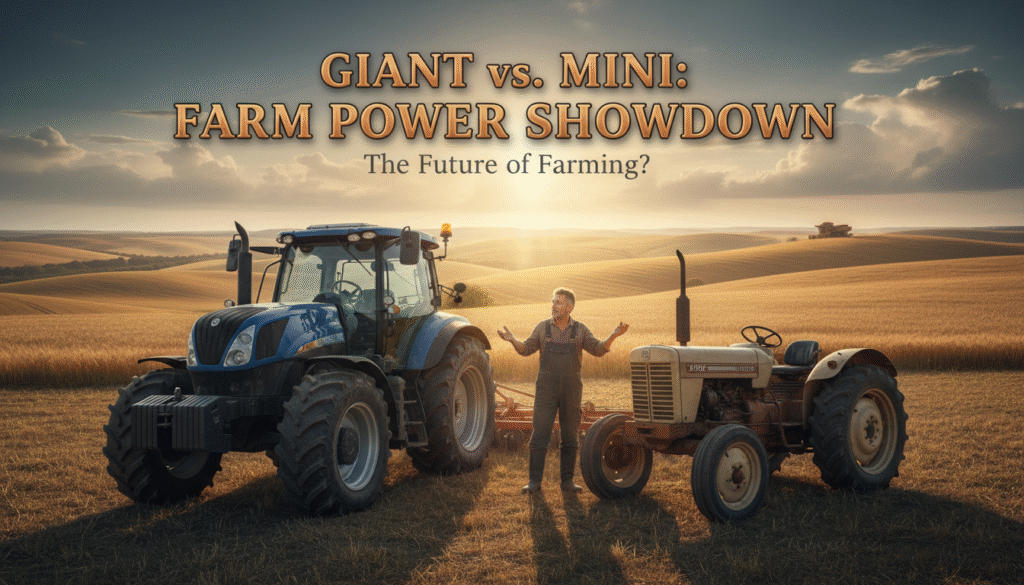
Tractor size is commonly measured by horsepower, but horsepower alone does not define how effective a tractor will be. Smaller tractors usually range from fifteen to twenty-five horsepower and are best suited for light work. Compact tractors generally fall between twenty-five and forty horsepower and are popular for small farms and mixed-use properties. Utility tractors range from forty to one hundred horsepower and are designed for heavier agricultural tasks. Large agricultural tractors exceed one hundred horsepower and are intended for large-scale farming operations. Choosing the correct range depends on how much work the tractor will handle regularly.
How Land Size Determines the Right Tractor
Land size plays a major role in tractor selection. Smaller properties usually perform best with compact or sub-compact tractors that are easy to maneuver and fuel efficient. Medium-sized land requires more power to complete tasks efficiently without overworking the machine. Large properties demand higher horsepower, but even then, buying more power than necessary rarely improves productivity. Matching tractor size closely to land area helps control costs while maintaining performance.
Matching Tractor Size to Your Farm Tasks
The type of work performed on your land is just as important as land size. Light tasks such as mowing, landscaping, or light hauling do not require high horsepower. Medium tasks like tilling, plowing small fields, and loader work require more balanced power. Heavy tasks such as deep plowing and pulling large implements demand higher horsepower and stronger build quality. Selecting a tractor based on the tasks you perform most often ensures efficiency and reduces wear and tear.
Terrain and Soil Conditions That Affect Tractor Choice
Terrain and soil type greatly influence tractor performance. Flat land places less demand on a tractor, while hilly areas require more stability and power. Wet or loose soil may require additional traction and proper weight distribution. Tight or uneven spaces often favor smaller tractors that can maneuver easily. Ignoring these factors often leads to poor performance, higher fuel use, and safety concerns.
Small, Medium, and Large Tractors Compared
Small tractors are affordable, fuel efficient, and easy to operate, but they have limited power for heavy work. Medium tractors offer a balance between performance and cost, making them suitable for most landowners. Large tractors provide maximum power and speed but come with high fuel consumption and maintenance expenses. Many buyers overestimate their needs and end up paying for power they rarely use.
Common Tractor Size Mistakes Farmers Make
One of the most common mistakes is buying a tractor based on brand reputation rather than actual needs. Many buyers also plan for future expansion that never happens and end up overspending. Ignoring fuel costs, maintenance expenses, and implement compatibility often leads to long-term regret. Understanding these mistakes helps buyers avoid unnecessary financial strain.
How to Choose the Right Tractor Size Step by Step
Choosing the right tractor begins with accurately measuring your land and clearly defining your regular tasks. Terrain, soil conditions, and implement requirements should all be considered before making a purchase. Setting a realistic budget and testing the tractor before buying helps ensure comfort and performance. This method removes guesswork and leads to a smarter investment.
Fuel Efficiency, Maintenance, and Long-Term Costs
A properly sized tractor consumes less fuel, experiences fewer mechanical issues, and lasts longer. Oversized tractors often burn fuel unnecessarily, while undersized tractors are forced to work harder than intended. Over time, the right tractor size delivers better resale value and lower ownership costs.
Renting vs Buying a Tractor
For landowners who occasionally need more power, renting a larger tractor can be more cost-effective than buying one. Many successful farmers own a smaller tractor for daily work and rent larger equipment only when needed. This strategy reduces ownership expenses while maintaining flexibility.
Final Buying Checklist
Before purchasing a tractor, it is important to confirm that the horsepower matches your land size, the tractor supports the required implements, maintenance is manageable, and long-term costs are affordable. When all these factors align, the purchase is likely to be a smart one.
Conclusion
Many landowners unknowingly waste money on the wrong tractor size for their land, but this mistake is completely avoidable. Choosing the right tractor size improves efficiency, reduces fuel and maintenance costs, and protects your soil. The best tractor is not the biggest or the most expensive one. It is the tractor that fits your land, your tasks, and your budget perfectly.


OUAT Farmers Fair 2026: Helping Women Farmers Start Their Own Businesses and Moving Smart Agriculture Forward in India

India’s 2026 strategy for importing fertiliser: how India is making global supply chains stronger

The Effects of Global War on Farming in India: Why Prices Are Going Up and What Farmers Can Do

Digital Transformation in Agriculture: How Smart Technology is Changing the Way We Farm Today

The Truth About AI Stock Trading: An AI-Powered Trading Agent Turns ₹11 Lakh Into ₹40 Lakh Overnight

Organic Fertilizer Market Size and Forecast for 2026–2034: Trends in Growth, Future Demand, and Information on Sustainable Agriculture

Bharat-VISTAAR: India’s New AI Digital Platform Changing Farming for Millions of Farmers

Liberating Agriculture in Bharat: A Long-Term Future for Farmers Through Farming with Trees

FAO World Programme of Census of Agriculture 2030: A Global Data Revolution for the Future of Farming

India is running low on LPG in 2026, so hotels are switching to firewood as the government focuses on cooking gas for homes.

What Is the Best Climate for Saffron Cultivation?

Karnataka Budget 2026–27: Key Announcements, Infrastructure Plans, Welfare Schemes and Economic Impact
India is running low on LPG in 2026, so hotels are switching to firewood as the government focuses on cooking gas for homes.

Farming: ಹಳ್ಳಿಗಳಿಗೆ ಹಿಂದಿರುಗಿ ಕೃಷಿಯತ್ತ ಒಲವು ತೋರುತ್ತಿರುವ ವೃತ್ತಿಪರರು – ನಿಜವಾದ ಕಾರಣಗಳು ಮತ್ತು ಭವಿಷ್ಯದ ಜೀವನಶೈಲಿ

ಕೇಂದ್ರ ಬಜೆಟ್ 2026 ಕೃಷಿಕರಿಗೆ ಏನು ಕೊಡುಗೆ? ಭಾರತ್ ವಿಸ್ತಾರ್ AI ಪರಿಕರದಿಂದ ರೈತರಿಗೇನು ಲಾಭ?

Aadhar Model Smart Card To Farmers: ರೈತರಿಗೆ ಆಧಾರ್ ಮಾದರಿ ಸ್ಮಾರ್ಟ್ ಕಾರ್ಡ್ ಯೋಜನೆ – ಸಂಪೂರ್ಣ ಮಾಹಿತಿ, ಅನುಕೂಲತೆಗಳು ಮತ್ತು ನೋಂದಣಿ ವಿವರಗಳು

Sugar Shares Rally on Hopes of Higher Ethanol Blend Amid West Asia Crisis
FAO World Programme of Census of Agriculture 2030: A Global Data Revolution for the Future of Farming

ಮ್ಯೂಚುವಲ್ ಫಂಡ್ SIP ಮೂಲಕ 15 ವರ್ಷಗಳಲ್ಲಿ ₹10 ಕೋಟಿ ರೂಪಾಯಿ ಗಳಿಸುವುದು ಹೇಗೆ?
