





Short Overview
A small farm can become a serious business when every part of the acre has a purpose. The goal is not simply to grow more crops. It is to grow what the market wants, harvest at different times, control production costs, add value where practical, and sell through channels that protect your margin. This guide explains how a 1 acre farming business plan can combine high-value crops, integrated farming, organic methods, water efficiency, and direct sales to create stronger income.
Discover a practical 1 acre farming business plan designed for Indian farmers who want to increase income through high-value crops, integrated farming, organic methods, efficient irrigation, value addition, and direct marketing. This guide explains how to choose profitable crops, reduce input costs, create multiple income streams, improve soil health, use water wisely, and sell produce at better margins. It also shares a realistic one-acre farm model, marketing ideas, risk-management tips, and sustainable agriculture practices. Use this roadmap to build a profitable small farm step by step while adapting every decision to your local climate, soil, water, skills, and market demand.
Introduction
One acre can feel too small when farming depends on one seasonal crop, wholesale prices, uncertain rainfall, and rising inputs. A profitable model should instead be planned like a compact business. Ask how the acre can create several income streams through the year through vegetables, herbs, specialty crops, nursery plants, mushrooms, composting, or direct sales.
Earning ₹1 lakh per month from one acre should be treated as an ambitious target, not a guarantee. Income depends on climate, water, skills, labor, crop choice, pests, infrastructure, costs, and market demand. The strongest route usually combines production with value addition and better selling.
Can One Acre Really Produce High Income?
Yes, when it is intensively and intelligently managed. ICAR examples show that integrated farming can combine crops with horticulture, livestock, fishery, mushrooms, or beekeeping to diversify income. Land size alone does not decide profit; a one-acre farm near a strong market may outperform a larger low-margin farm because market access can matter as much as yield.
Start With the Market, Not the Crop
Many farmers decide what to grow first and search for a buyer later. A stronger 1 acre farming business plan does the reverse. First find out who will buy, what they need regularly, what quality they expect, and what price range is realistic.
Visit vegetable shops, organic stores, restaurants, apartment communities, weekly markets, nurseries, hotels, caterers, and local processors. In some places, coriander, mint, spinach, basil, cucumber, chilli, leafy greens, mushrooms, or pesticide-conscious vegetables may sell well. In other areas, turmeric, flowers, medicinal plants, seedlings, or regional specialty crops may be better.
There is no single list of the best high income crops per acre in India. The best crop is usually one that suits your soil and climate and already has a dependable buyer.
Divide the Acre Into Income Zones
One acre becomes easier to manage when it is divided by purpose. Roughly forty to fifty percent can be used for fast-moving vegetables with frequent harvests. Another section can hold herbs, spices, flowers, or a locally profitable specialty crop. A smaller area can support perennial plants, trellised crops, nursery work, composting, packing, or farm infrastructure. Mushrooms and seedling production can often be handled in compact structures.
The exact layout must match water availability and demand. The key idea is to avoid putting the entire acre into one crop and one harvest window. Stagger planting dates so something is ready to sell regularly. This improves cash flow and reduces the damage from a price crash, pest attack, or weather problem.
Choose High-Value Crops Carefully
High-value crops can improve revenue per square foot, but they also need better management. Leafy greens and herbs have short crop cycles but are highly perishable. Tomato, cucumber, capsicum, and chilli can perform well in the right market but need careful pest and nutrient management. Turmeric, lemongrass, nursery plants, and vegetable seedlings can work where local demand supports them.
Mushrooms can add income without using much open field area, but success depends on hygiene, temperature control, training, and reliable buyers.
Before investing, calculate planting material, irrigation, labor, crop protection, packaging, transport, spoilage, commission, and expected selling price. High revenue does not automatically mean high profit.
Strategy 1: Choose High-Value Crops Suited to Local Conditions
Crop selection is the foundation of successful farming. Choosing crops that match local climate, soil type, and market demand increases profitability.
High-Income Crops for One Acre
| Crop | Monthly Income Potential | Key Advantage |
| Organic Turmeric | ₹80,000–₹1,20,000 | Premium demand |
| Lemongrass | ₹60,000–₹1,00,000 | Essential oil market |
| Mixed Vegetables | ₹70,000–₹1,20,000 | Frequent harvests |
| Medicinal Plants | ₹1,00,000+ | Growing Ayurvedic demand |
| Mushrooms | ₹90,000+ | Requires less space |
Diversification reduces risk and creates multiple income streams.
Strategy 2: Adopt Sustainable Farming Practices
Reducing input costs is equally important to increasing production.
Organic Mandya promotes natural farming techniques that improve soil health while minimising expenses.
Essential Organic Inputs
Jeevamrutha
A microbial solution that enhances soil fertility and promotes healthy crop growth.
Neemastra and Brahmastra
Traditional pest-control formulations are prepared using neem and cow-based ingredients.
Biochar
Improves soil structure and increases moisture retention.
Drip Irrigation
Reduces water consumption and improves irrigation efficiency.
Healthy soil creates healthy crops and long-term profitability.
Strategy 3: Add Value to Your Produce
Value addition significantly increases farmer income.
Instead of selling raw produce, farmers can convert it into premium products.
Examples of Value Addition
| Raw Produce | Value-Added Product | Profit Increase |
| Jackfruit | Chips, flour, syrup | 2x–3x higher |
| Sugarcane | Organic jaggery | 40–60% increase |
| Vegetables | Pickles and sauces | Additional income |
| Lemongrass | Essential oil | Export opportunities |
Selling processed products reduces dependence on wholesale markets and improves profit margins.
Strategy 4: Focus on Soil and Water Management
Efficient resource management determines long-term success.
Effective Techniques
Mulching
Retains soil moisture and suppresses weeds.
Rainwater Harvesting
Ensures water availability throughout the year.
Crop Rotation
Maintains soil nutrients and prevents pest buildup.
Composting
Converts farm waste into valuable organic manure.
These practices lower production costs while improving sustainability.
Create Multiple Income Streams With Integrated Farming
An integrated farming system connects farm activities so resources are reused. Crop residue can become compost. Animal manure can support soil fertility. A farm pond can store water and, where suitable, support fish. Bees can improve pollination while producing honey. Poultry or small livestock may add another income stream when feed, labor, local rules, and market conditions are suitable.
ICAR describes integrated farming as a whole-farm approach that can combine crops, horticulture, livestock, fishery, mushrooms, and beekeeping while improving resource recycling. For a one-acre farm, keep the model simple. Start with two or three enterprises you can manage well. The aim is efficiency and risk reduction, not complexity.

Reduce Costs With Sustainable Farming
Profit improves when unnecessary input costs fall. Compost, vermicompost, mulching, green manures, crop rotation, residue recycling, bio-inputs, and soil-test-based nutrition can support soil health and reduce waste.
Organic and natural farming methods may also help create a differentiated market position where customers value responsibly grown produce. However, avoid unsupported “organic” or “chemical-free” claims unless your production and certification practices justify them.
Use technical guidance from agricultural universities, KVKs, horticulture departments, and the National Centre for Organic and Natural Farming rather than depending only on social media advice. The Centre publishes official training material covering organic and natural farming practices.
Make Water Productivity a Priority
A profitable small farm cannot afford careless water use. Drip irrigation, mulching, rainwater harvesting, irrigation scheduling, and selecting crops suited to local water conditions can improve resilience.
Protected cultivation, shade nets, low tunnels, or rain protection may be useful for some high-value crops if the economics are sound. Government horticulture programmes may support eligible infrastructure, so check current national and state guidelines before investing. Current MIDH guidelines include support provisions for several horticultural and protected-cultivation activities.
The goal is not to buy expensive technology. The goal is to use the right amount of water and infrastructure to produce consistent quality at a profitable cost.
Add Value Instead of Selling Everything Raw
Raw produce often competes mainly on price. Cleaned, graded, packed, processed, branded, or conveniently bundled produce can compete on value.
Turmeric can be processed and packed when regulations are followed. Herbs can be sold as premium fresh bundles or dried products. Vegetables can be offered as weekly farm boxes. Seedlings can be sold in ready-to-transplant trays. Even simple grading and clean packaging can help a farmer serve buyers who pay more for consistency and convenience.
Value addition only works when food safety, licensing, labeling, shelf life, packaging costs, and customer demand are understood. A product is profitable when people buy it repeatedly.
Sell Directly Where Possible
Direct marketing can protect margins because the farmer keeps more of the final selling price. WhatsApp groups, apartment communities, subscription boxes, retailers, restaurants, farmers’ markets, social media, and farm-gate sales can all work. Use a simple farm name, clean packaging, clear ordering, harvest-day updates, and reliable delivery. Consistency builds trust and repeat sales.
A Practical One-Acre Income Model
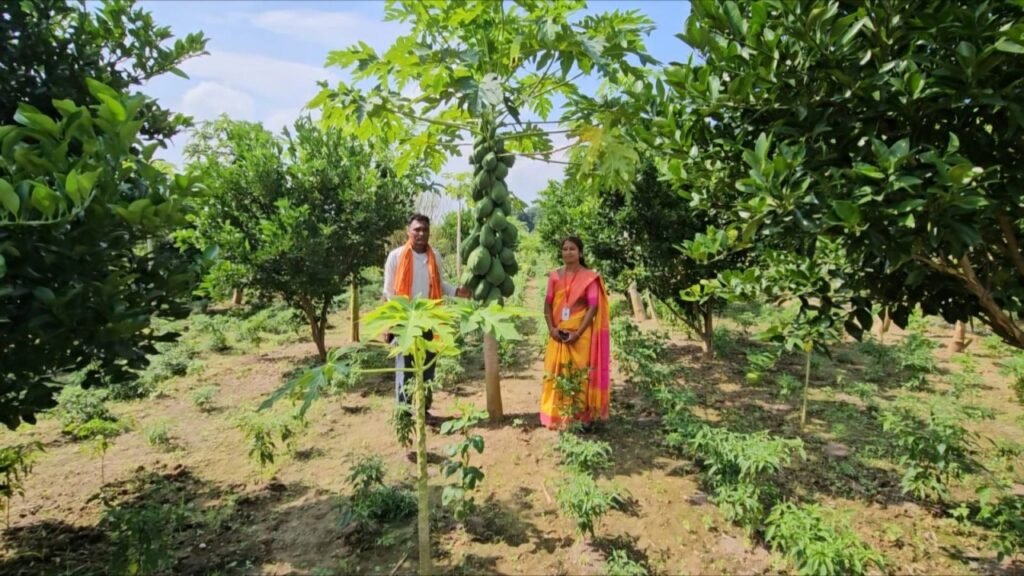
Imagine a farmer near a town with reliable irrigation and direct access to consumers. About half the acre is used for staggered vegetables and leafy greens. A smaller section produces herbs and a specialty crop. The remaining space supports a nursery, composting, packing, and a small mushroom unit. The farm also sells weekly vegetable boxes.
Instead of expecting one crop to produce ₹1 lakh profit, the farmer builds several income channels. Vegetables bring frequent cash flow. Seedlings create seasonal sales. Mushrooms create a separate recurring stream. Herbs or specialty produce improve average selling prices. Direct subscriptions protect margins. Surplus may be converted into approved value-added products.
In a strong market, this type of combination can move a farm toward a high monthly revenue target. But calculate net profit after labor, inputs, packaging, transport, crop losses, and equipment costs. Sales are not the same as profit.
Build the Farm in Stages
Trying to reach ₹1 lakh immediately can lead to unnecessary debt. Begin with two or three crops and real buyers. Record yield, cost per kilogram, selling price, rejection, transport, and actual profit. Keep the best performers and replace weak ones.
After production becomes stable, add one more income stream such as seedlings, mushrooms, herbs, farm boxes, or value addition. This creates a business based on evidence from your own farm rather than someone else’s success story.
Common Mistakes to Avoid
Do not copy another farm plan without checking local conditions, grow high-value crops without buyers, confuse revenue with profit, or make heavy investments before testing demand. Diversification is useful, but a simple system managed well is better than a complicated system that creates waste and inconsistent quality.
Conclusion
A profitable one-acre farm is possible when the land is managed as a business ecosystem rather than a single seasonal field. The strongest 1 acre farming business plan combines market research, high-value crops, staggered planting, integrated farming, soil and water care, cost control, value addition, and direct selling.
Treat ₹1 lakh per month as a target that may be possible in the right market with intensive management and multiple income streams, not as guaranteed income. Start with local demand, choose crops that fit your soil and water, track every rupee spent and earned, and build one profitable activity before adding the next. With disciplined planning, one acre can become far more productive and commercially valuable than its size suggests.

