


Latest News
India Missing Out on Big Agriculture Export Opportunity: Path to $100 Billion by 2030

Short Overview
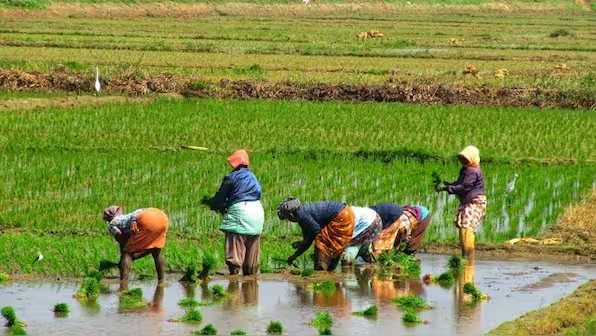
India is one of the world’s largest agricultural producers, yet its global export presence remains surprisingly small. The latest Economic Survey highlights how policy uncertainty, infrastructure gaps, and missed market opportunities are holding India back from reaching its true agriculture export potential. With the right reforms, India could realistically touch $100 billion in agriculture and food exports by 2030, but the window to act is narrowing.
India is one of the world’s largest agricultural producers, yet its share in global exports remains low. The Economic Survey highlights how policy uncertainty, export bans, infrastructure gaps, and weak processing capacity are holding India back. With stable export policies, better logistics, increased food processing, and stronger global integration, India can realistically achieve $100 billion in agriculture, marine, food, and beverage exports by 2030. This blog explains the challenges, opportunities, and strategic reforms needed to unlock India’s true agriculture export potential while supporting farmers, boosting rural incomes, and strengthening the economy.

Table of Contents
- Introduction: India’s Agriculture Export Paradox
- India’s Position in Global Agricultural Trade
- What the Economic Survey 2025–26 Reveals
- Why India Is Missing Major Agriculture Export Opportunities
- Infrastructure and Processing Gaps Holding Exports Back
- Impact of Export Bans and Policy Uncertainty
- Stagnation Since FY 2023: A Growing Concern
- Global Competition and Changing Trade Dynamics
- Why Agricultural Exports Matter for India’s Economy
- Role of Policy Alignment and Stability
- Importance of Foreign Direct Investment in Exports
- Manufacturing, Logistics, and Cost Competitiveness
- How India Can Reach $100 Billion in Agriculture Exports
- The Road Ahead for Indian Farmers and Exporters
- Conclusion: Turning Potential into Performance
Introduction: India’s Agriculture Export Paradox
India has always been known as an agricultural powerhouse. From rice and wheat to spices, fruits, marine products, and processed foods, the country produces a wide range of high-quality agricultural goods. Despite this strength, India’s share in global agricultural trade remains limited. This contradiction lies at the heart of India’s agriculture export challenge.
According to the Economic Survey, India is the world’s second-largest agricultural producer, yet its global export share stands at just around 2.2 percent. This gap signals a missed opportunity at a time when global food demand is rising and supply chains are being reshaped.
India’s Position in Global Agricultural Trade
Global agricultural exports have continued to grow steadily, increasing from approximately $2.3 trillion in 2022 to $2.4 trillion in 2024. While many countries have expanded their presence in international food markets, India’s agricultural exports have largely plateaued since FY 2023.
Even though India’s agricultural exports grew from $34.5 billion in FY 2020 to $51.1 billion in FY 2025, agriculture’s share in overall merchandise exports has remained almost unchanged. This stagnation highlights structural issues rather than a lack of production capacity.

What the Economic Survey 2025–26 Reveals
The Economic Survey 2025–26, prepared under the guidance of the Chief Economic Adviser and presented in Parliament by Finance Minister Nirmala Sitharaman, paints a clear picture of India’s unrealised export potential.
The survey estimates that India could reach $100 billion in combined exports of agriculture, marine products, food, and beverages within the next four years. However, it warns that frequent policy shifts and export restrictions could permanently damage India’s credibility in global markets.
Why India Is Missing Major Agriculture Export Opportunities
India’s agriculture export underperformance is not due to poor product quality or lack of demand. Instead, it stems from policy unpredictability, inadequate processing facilities, weak logistics infrastructure, and regulatory complexity.
Global buyers value reliability and consistency. When export bans or minimum export price restrictions are imposed without warning, buyers often turn to alternative suppliers. Once lost, these export markets are extremely difficult to recover.
Infrastructure and Processing Gaps Holding Exports Back
One of the biggest bottlenecks in India’s agriculture exports is limited processing capacity. A large share of agricultural produce is exported in raw or semi-processed form, reducing value realisation and competitiveness.
Cold storage shortages, inefficient warehousing, poor port connectivity, and high logistics costs further erode margins. Without modern infrastructure and integrated supply chains, Indian exporters struggle to meet global standards on quality, packaging, and delivery timelines.
Impact of Export Bans and Policy Uncertainty
The Economic Survey strongly cautions against ad hoc export bans. While these measures may temporarily control domestic prices, they come with long-term costs. International buyers perceive India as an unreliable supplier, which affects trust and brand value.
Policy uncertainty also discourages investment in agriculture processing and export-oriented infrastructure. Businesses hesitate to scale operations when market access can be restricted overnight.
Stagnation Since FY 2023: A Growing Concern
Despite healthy growth earlier in the decade, India’s agricultural exports have shown signs of stagnation since FY 2023. This is particularly worrying because global demand continues to expand.
If India fails to capture a larger share of this growth, competing exporters will consolidate their positions. Over time, this could lock India out of premium markets where consistency and reliability matter most.
Global Competition and Changing Trade Dynamics
Global trade today is more sensitive to policy signals and geopolitical alignments than ever before. Emerging economies face intense competition for capital, investment, and export markets.
The Economic Survey notes that the era of easy globalisation has ended. Countries must now actively compete by offering stable policies, efficient logistics, and strong institutional frameworks. For India, this makes export competitiveness not just desirable but essential.
Why Agricultural Exports Matter for India’s Economy
As India’s economy grows, its import demand will naturally increase. To finance these imports sustainably, export earnings must rise in parallel. Agricultural exports offer one of the fastest and most inclusive ways to achieve this goal.
They support farmer incomes, create rural employment, and help stabilise the balance of payments. Unlike many sectors, agriculture has deep linkages with livelihoods, making export growth socially as well as economically valuable.
Role of Policy Alignment and Stability
Policy alignment across ministries and between the centre and states is critical for export success. Clear, predictable rules encourage long-term investments in storage, processing, and logistics.
Stable export policies also strengthen India’s reputation as a dependable supplier of high-quality agricultural products. Over time, this reputation can translate into premium pricing and deeper market access.
Importance of Foreign Direct Investment in Exports
Foreign direct investment plays a vital role in improving productivity, technology adoption, and market integration. The Economic Survey highlights that consistent FDI inflows are essential for maintaining external sector stability.
To attract global investors, India must continue improving its investment climate, reducing regulatory burdens, and integrating more deeply into global value chains related to food processing and agribusiness.
Manufacturing, Logistics, and Cost Competitiveness
Export competitiveness is closely linked to cost efficiency. High logistics costs, inverted duty structures, and regulatory expenses raise the price of Indian exports.
The survey calls for coordinated efforts to improve logistics infrastructure, reduce transportation costs, and streamline regulations. These measures would benefit not only agriculture but also manufacturing exports, strengthening India’s overall external resilience.
How India Can Reach $100 Billion in Agriculture Exports
Reaching the $100 billion export target is achievable with focused reforms. Expanding food processing capacity, ensuring policy stability, investing in cold chains, and promoting value-added exports are key steps.
India must also diversify export destinations and products, moving beyond traditional markets and commodities. Strategic branding of Indian agricultural products can further enhance global visibility and demand.
The Road Ahead for Indian Farmers and Exporters
For farmers, higher exports mean better price realisation and reduced dependence on domestic market fluctuations. For exporters, stable policies and improved infrastructure create opportunities to scale and innovate.
Collaboration between government, industry, and farmers will be essential to unlock this potential and ensure that growth is inclusive and sustainable.
Conclusion: Turning Potential into Performance
India stands at a critical crossroads in its agriculture export journey. The country has the production capacity, product quality, and global demand needed to become a major agricultural exporter. What it needs now is policy consistency, infrastructure investment, and a long-term export-oriented vision.
If these challenges are addressed with urgency and coordination, India can not only achieve the $100 billion agriculture export target by 2030 but also secure a stronger, more resilient position in the global economy.


India Missing Out on Big Agriculture Export Opportunity: Path to $100 Billion by 2030

ಮ್ಯೂಚುವಲ್ ಫಂಡ್ SIP ಮೂಲಕ 15 ವರ್ಷಗಳಲ್ಲಿ ₹10 ಕೋಟಿ ರೂಪಾಯಿ ಗಳಿಸುವುದು ಹೇಗೆ?

Aadhar Model Smart Card To Farmers: ರೈತರಿಗೆ ಆಧಾರ್ ಮಾದರಿ ಸ್ಮಾರ್ಟ್ ಕಾರ್ಡ್ ಯೋಜನೆ – ಸಂಪೂರ್ಣ ಮಾಹಿತಿ, ಅನುಕೂಲತೆಗಳು ಮತ್ತು ನೋಂದಣಿ ವಿವರಗಳು

ಕೇಂದ್ರ ಬಜೆಟ್ 2026 ಕೃಷಿಕರಿಗೆ ಏನು ಕೊಡುಗೆ? ಭಾರತ್ ವಿಸ್ತಾರ್ AI ಪರಿಕರದಿಂದ ರೈತರಿಗೇನು ಲಾಭ?

Farming: ಹಳ್ಳಿಗಳಿಗೆ ಹಿಂದಿರುಗಿ ಕೃಷಿಯತ್ತ ಒಲವು ತೋರುತ್ತಿರುವ ವೃತ್ತಿಪರರು – ನಿಜವಾದ ಕಾರಣಗಳು ಮತ್ತು ಭವಿಷ್ಯದ ಜೀವನಶೈಲಿ

What Is the Best Climate for Saffron Cultivation?

ಕಾವೇರಿ 2.0 ಆಸ್ತಿ ನೋಂದಣಿ: 10 ನಿಮಿಷದಲ್ಲಿ ಸಂಪೂರ್ಣ ಕಾಗದರಹಿತ ಆಸ್ತಿ ನೋಂದಣಿ – ಅರ್ಜಿ ಸಲ್ಲಿಕೆ, ಲಾಭಗಳು & ಸಂಪೂರ್ಣ ಮಾರ್ಗದರ್ಶಿ

ಭಾರತ್-ವಿಸ್ತಾರ್ ಎಐ ಸಾಧನ: ರೈತರ ಕೃಷಿ ಸಮಸ್ಯೆಗೆ ಬೆರಳ ತುದಿಯಲ್ಲಿ ಎಐ ಪರಿಹಾರ | ಸಂಪೂರ್ಣ ಮಾಹಿತಿ

Bengaluru in Trouble: ಐಟಿ ಬಿದ್ದರೆ ಬೆಂಗಳೂರು ಬೀಳುತ್ತೆ – ಸಂಕಷ್ಟದಲ್ಲಿ ನಮ್ಮ ಬೆಂಗಳೂರು

ರೈತರಿಗೆ ಸಿದ್ದರಾಮಯ್ಯ ಭರ್ಜರಿ ಗುಡ್ ನ್ಯೂಸ್: ಕೃಷಿಭಾಗ್ಯ ಯೋಜನೆಗೆ ಮರು ಚಾಲನೆ – ಸಂಪೂರ್ಣ ಮಾಹಿತಿ

What Is the Investment Required for Mushroom Farming?

Union Budget 2026 Agriculture Industry Demands: Tax Relief, Biofuel Push and Strong Infrastructure Support

What Are the Best Mushrooms to Grow for Profit?

Union Budget 2026–27 Agriculture Initiatives: Transforming Indian Farming for Global Markets

ಭಾರತದಲ್ಲಿ ಮಣ್ಣಿನ ಆರೋಗ್ಯ: ಸುಸ್ಥಿರ ಕೃಷಿ ಮತ್ತು ಆಹಾರ ಭದ್ರತೆಗೆ ಅಡಿಪಾಯ

Budget 2026 Agriculture Policy: Push for High-Value Crops but Farmers Still Struggle

2025ರ ವಾಣಿಜ್ಯ ಧಾನ್ಯ ಕೃಷಿಯ ಹೊಸ ಆವಿಷ್ಕಾರಗಳು: ಸ್ಮಾರ್ಟ್ ನೀರಾವರಿ, ಗೊಬ್ಬರ ಮತ್ತು ಪ್ರೆಸಿಷನ್ ಸ್ಪ್ರೇಯರ್ಗಳು

Microalgae in Modern Agriculture: The Quiet Technology Re-Engineering Sustainable Farming
ಕೇಸರಿ (Saffron) ಬೆಳೆಯಲು ಅತ್ಯುತ್ತಮ ಹವಾಮಾನ ಯಾವುದು?
