


Latest News
FAO World Programme of Census of Agriculture 2030: A Global Data Revolution for the Future of Farming

Short Overview
Smart farming policies and food security planning depend on having accurate agricultural data. The United Nations has officially adopted new rules for the World Programme of Census of Agriculture 2030 (WCA 2030) that were made by the Food and Agriculture Organization (FAO). This project will help countries all over the world gather detailed agricultural data from 2026 to 2035. The program’s goal is to create more accurate, comparable, and useful agricultural data than ever before by combining cutting-edge technologies like artificial intelligence, geospatial mapping, and digital data systems. The project is a big step toward better understanding farming systems around the world and making better decisions for long-term agricultural growth.
The FAO’s new rules for the World Programme of Census of Agriculture 2030 have been officially adopted by the United Nations. This is a global effort to make it easier to collect agricultural data from 2026 to 2035. These guidelines use cutting-edge technologies like geospatial mapping, artificial intelligence, and online data systems to gather accurate and comparable farming information from all over the world. The program will help governments learn about the structure of their agricultural sectors, such as the size of farms, how they use land, their livestock, their irrigation, and their workers. With accurate agricultural data, policymakers can make better plans for food security, help farmers more effectively, and keep track of their progress toward sustainable development goals. This blog post talks about how the WCA 2030 initiative works, why agricultural census data is important, and how new technology is changing global agricultural statistics.

Table of Contents
An Overview of the World Programme of Census of Agriculture 2030
Why data on agriculture is important for food security around the world
The UN and FAO’s Part in Agricultural Statistics
Important Parts of the WCA 2030 Guidelines
How technology will change data from the agricultural census
What data do agricultural censuses gather? Why do countries hold agricultural censuses every ten years?
How agricultural data affects policy and research
Adding modern farming trends to agricultural statistics
How WCA 2030 Helps Achieve the Goals of Sustainable Development
Future Prospects for Data-Driven Agriculture Conclusion
An introduction to the World Programme of Census of Agriculture 2030
The agricultural sector is very important for feeding people, helping rural economies, and keeping the environment healthy. But to make good agricultural policies, you need to know a lot about farms, land use, production systems, and farming methods. Governments and international organizations have a hard time making smart choices when they don’t have accurate data.
The Food and Agriculture Organization (FAO) came up with the World Programme of Census of Agriculture 2030 (WCA 2030) to deal with this problem. The United Nations Statistical Commission officially approved the guidelines for this program during its 57th session, making them an international standard for collecting agricultural data.
The program will help countries do agricultural censuses from 2026 to 2035. These censuses give a full picture of the agricultural sector, which helps policymakers figure out how to make farming systems better and how to boost food production, sustainability, and rural development.
Why Global Food Security Needs Agricultural Data
Climate change, new technologies, changes in the market, and population growth are all things that affect agriculture all the time. Governments need to keep changing their farming policies to make sure that food systems stay strong and productive.
This process depends on agricultural census data because it gives a detailed picture of how farming is done in a country. It shows how many farms there are, what kinds of crops are grown, how much land is used for farming, and how much money is spent on farming tools and irrigation systems.
Policymakers can use this information to find areas where agricultural productivity is low, create programs to help farmers, and use resources more effectively. It also helps governments keep track of how well they are doing in reaching their national food security goals and international development goals.
Researchers, investors, and development groups all need reliable agricultural statistics for the same reasons. They give you the proof you need to look at agricultural trends, find new opportunities, and encourage environmentally friendly farming.
The UN and FAO’s Role in Agricultural Statistics
For almost a hundred years, the FAO has been the leader in gathering agricultural data from around the world. The group runs international statistical programs that help countries gather agricultural data that can be compared.
The agricultural census program started in 1928 when the International Institute of Agriculture published the first global guidelines. This organization later became part of the FAO. The agricultural census program has been held every ten years since then. This lets countries see how their farming sectors have changed over time.
Using FAO guidelines, 124 countries did agricultural censuses during the most recent round of censuses. The FAO helped many of these countries improve their data collection systems by giving them technical help and training.
The WCA 2030 guidelines are another important step forward in the development of agricultural statistics. It shows how important it is to have good data to deal with problems like climate change, food insecurity, and poverty in rural areas.
Important Parts of the WCA 2030 Guidelines
The WCA 2030 guidelines make agricultural data more useful and easier to find by adding a number of new features. The program gives countries a set of rules to follow when they do their agricultural censuses.
One of the most important parts of the guidelines is the list of 27 important data items that all participating countries should gather. These things give basic information about farms, such as how the land is used, what animals are kept, how the irrigation systems work, what agricultural machinery is used, and how many people work on the farm.
Countries can make sure that their agricultural statistics are consistent and can be compared to those of other countries by collecting this core set of data. This helps researchers and policymakers better understand global agricultural trends.
The guidelines also give countries the freedom to add more data items that are specific to their own agricultural conditions. This method makes sure that the census stays relevant to national priorities while still being able to be compared across countries.
How technology will change data from the agricultural census
The focus on modern technology is one of the most exciting parts of the WCA 2030 initiative. Traditional agricultural censuses often used paper surveys and manual data entry, which could take a long time and be full of mistakes.
The new rules tell countries to use digital tools like online surveys, mobile data collection systems, and satellite-based geospatial mapping. These tools can make collecting agricultural data much more accurate and efficient.
People also expect artificial intelligence to play a bigger role in looking at the large datasets that agricultural censuses create. Researchers can find patterns and trends that might not be obvious by using advanced analytics.
Georeferencing technology will let you connect agricultural data to specific places on the map. This will help you learn more about how land is used, how climate affects it, and how productivity varies by region.
What Data Agricultural Censuses Gather
Agricultural censuses give us a clear picture of how farming works in a country. They gather data on a wide range of subjects that help policymakers understand how agriculture works at both the national and local levels.
These censuses usually get information about the number and size of farms, who owns and rents agricultural land, and what kinds of crops are grown. They also gather data on how much livestock is produced, how irrigation is done, and how farm machinery is used.
Another important thing about agricultural census data is that it can collect information about the social and economic lives of farm families. This includes information about who works on the farm, what gender roles are in farming, and how easy it is to get farming supplies.
This kind of information is necessary for making policies that help rural development that includes everyone and give farmers the tools they need to use more productive and sustainable methods.
Why Countries Do Agricultural Censuses Every Ten Years
Every ten years, agricultural censuses are done because they give us information about the structure of the agricultural sector that doesn’t change very quickly. This includes things like how many farms there are, how land is used, and what kinds of agricultural production systems are used.
After gathering this structural data, governments can use it to do more frequent agricultural surveys that keep track of things that change quickly, like farm income, production costs, and crop prices.
Countries can create complete agricultural information systems that help policymakers make decisions based on facts by combining census data with ongoing surveys.
Adding modern farming trends to agricultural statistics
Agricultural census programs have grown over time to include more aspects of farming systems. Modern farming isn’t just about growing crops and raising animals anymore.
Aquaculture, agroforestry, and making energy from renewable sources are some of the things that many farms do now. These changes have made farming systems more complicated and linked them to each other.
The WCA 2030 guidelines take these changes into account and tell countries to include information about new agricultural activities. The guidelines also stress how important it is to gather information about women’s roles in farming, since women are very important to food production and rural economies.
How WCA 2030 helps the goals of sustainable development
To see how far we’ve come toward the United Nations Sustainable Development Goals (SDGs), we need accurate agricultural data. Agriculture is closely related to many of these goals, such as ending hunger, reducing poverty, and using land in a way that lasts.
The WCA 2030 initiative helps countries keep track of their progress toward these goals and find places where more action is needed by giving them accurate and comparable agricultural statistics.
Data from agricultural censuses also helps governments figure out how to adapt to climate change by showing them how farming is changing in response to environmental changes.
Future Possibilities for Agriculture Based on Data
As more and more agricultural data becomes available, new chances for innovation and working together across the global food system arise. Researchers can use census data to make better models of how productive farms are, and businesses can use it to find places in rural areas where they can invest.
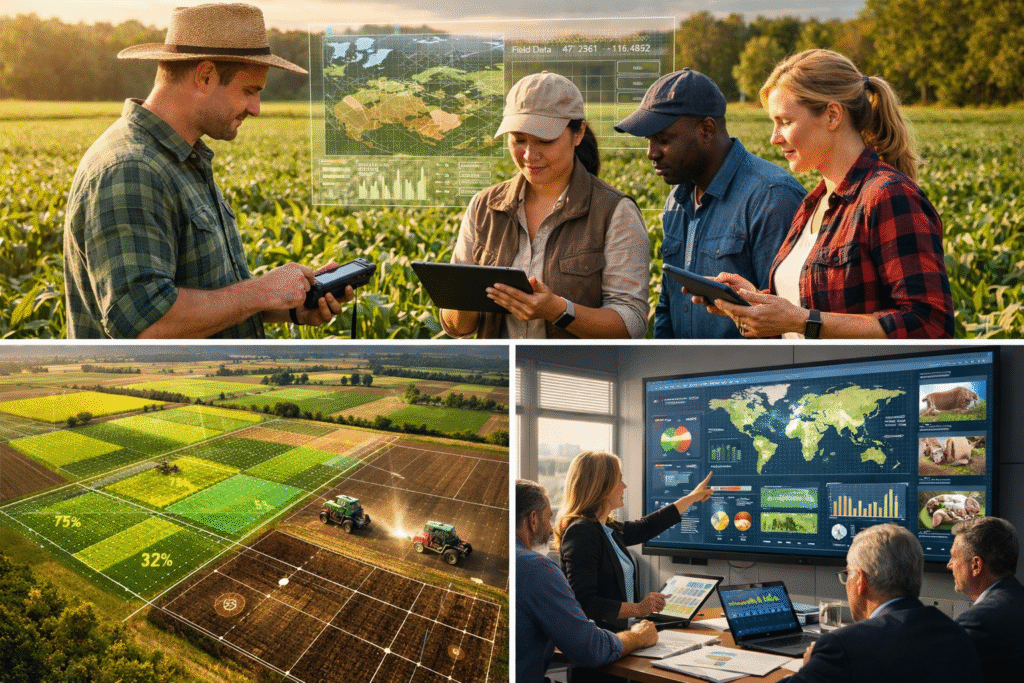
Users will be able to look at agricultural statistics more easily with the help of interactive data platforms and visualization tools like maps, graphs, and dashboards. Farmers, policymakers, and investors can use these tools to make better choices.
As technology keeps changing, agricultural data will become even more important for planning the future of food production and sustainable development.
Conclusion
The FAO’s World Programme of Census of Agriculture 2030 is a big step forward for global agricultural data systems. The goal of the initiative is to create accurate, timely, and comparable agricultural statistics for countries all over the world by combining international cooperation with modern technology.
These numbers will be very important for making decisions about farming, helping farmers, and making sure that everyone has enough food. The WCA 2030 guidelines will help countries build stronger and more resilient agricultural information systems as they get ready to do agricultural censuses from 2026 to 2035.
In the end, better data about farming leads to better choices. And making better choices is important for making sure that everyone in the world has enough food in the future.


FAO World Programme of Census of Agriculture 2030: A Global Data Revolution for the Future of Farming

India is running low on LPG in 2026, so hotels are switching to firewood as the government focuses on cooking gas for homes.

The economy of Karnataka is doing better than the national average. The state’s growth rate is 12% for the second year in a row.

Karnataka Budget 2026–27: Key Announcements, Infrastructure Plans, Welfare Schemes and Economic Impact

Israel–Iran War LIVE: Russia Reportedly Providing Iran With Info to Strike U.S. Military as Regional Conflict Intensifies

Sugar Shares Rally on Hopes of Higher Ethanol Blend Amid West Asia Crisis

AI Farming Tools and the Global Food System: Are Tech Giants Controlling What We Eat?

New GDP Series Makes Meeting Fiscal Targets and $4 Trillion Economy Goal More Difficult

BMRCL Deploys Eighth Trainset on Namma Metro Yellow Line: What It Means for Bengaluru Commuters

Indian Airlines Halt West Asia Flights After Israel-US Attack on Iran Triggers Major Airspace Shutdown

ಭಾರತದಲ್ಲಿ ಮಣ್ಣಿನ ಆರೋಗ್ಯ: ಸುಸ್ಥಿರ ಕೃಷಿ ಮತ್ತು ಆಹಾರ ಭದ್ರತೆಗೆ ಅಡಿಪಾಯ

ಯೂನಿಯನ್ ಬಜೆಟ್ 2026 ಕೃಷಿ ಅನುದಾನ: ಭಾರತದ ಅಭಿವೃದ್ಧಿಯ ಬೆನ್ನೆಲುಬಾಗಿ ಕೃಷಿ

ಆರಂಭಿಕರು ಒಯ್ಸ್ಟರ್ ಮಶ್ರೂಮ್ ಕೃಷಿಯನ್ನು ಹೇಗೆ ಆರಂಭಿಸಬಹುದು?

ಹ್ಯೂಮಸ್ ಕಾಂಪೋಸ್ಟ್ & ಮ್ಯಾನ್ಯುರ್

What Is the Best Climate for Saffron Cultivation?

Farming: ಹಳ್ಳಿಗಳಿಗೆ ಹಿಂದಿರುಗಿ ಕೃಷಿಯತ್ತ ಒಲವು ತೋರುತ್ತಿರುವ ವೃತ್ತಿಪರರು – ನಿಜವಾದ ಕಾರಣಗಳು ಮತ್ತು ಭವಿಷ್ಯದ ಜೀವನಶೈಲಿ

Bengaluru in Trouble: ಐಟಿ ಬಿದ್ದರೆ ಬೆಂಗಳೂರು ಬೀಳುತ್ತೆ – ಸಂಕಷ್ಟದಲ್ಲಿ ನಮ್ಮ ಬೆಂಗಳೂರು

ರೈತರಿಗೆ ಸಿದ್ದರಾಮಯ್ಯ ಭರ್ಜರಿ ಗುಡ್ ನ್ಯೂಸ್: ಕೃಷಿಭಾಗ್ಯ ಯೋಜನೆಗೆ ಮರು ಚಾಲನೆ – ಸಂಪೂರ್ಣ ಮಾಹಿತಿ

AI ವೇಗಕ್ಕೆ ಹೊಂದಿಕೊಳ್ಳದ ಉದ್ಯೋಗಿಗಳಿಗೆ Google ಶಾಕ್: ಸ್ವಯಂಪ್ರೇರಿತ ನಿವೃತ್ತಿ ಪ್ಯಾಕೇಜ್ ಘೋಷಣೆ