


Innovative News
Climate Smart Agriculture in Europe: Why Supporting Farmers Is the Key to a Resilient Food Future

Short Overview
Climate smart agriculture in Europe is no longer an idea for the future; it is a necessity for today as farmers face extreme weather, declining soil health, and financial uncertainty. Supporting farmers with the right tools, partnerships, and policies is essential to protect food systems, rural livelihoods, and long-term climate resilience.
Climate smart agriculture in Europe is becoming essential as farmers face soil degradation, climate extremes, and financial pressure. This in-depth guide explores how regenerative farming, farmer support, collaboration, and smart policies can scale sustainable agriculture. Learn how healthy soil improves yields, reduces climate risk, strengthens food supply chains, and why backing Europe’s farmers is the key to long-term resilience, profitability, and climate-positive agriculture. Real farmer examples, practical insights, and policy perspectives reveal how climate smart farming can succeed when risk is shared and outcomes are rewarded.

Table of Contents
- Introduction: Why Climate Smart Agriculture Matters Now
- The Growing Pressure on Europe’s Farmers
- Healthy Soil as the Foundation of Resilient Agriculture
- How Farmers Are Already Leading the Transition
- Regenerative Farming Practices That Deliver Real Results
- Real-World Farmer Stories from Across Europe
- Why Risk Remains the Biggest Barrier to Adoption
- The Role of Measurement, Data, and Trust
- Why Collaboration Unlocks Scale and Impact
- Policy, Business, and the Path Forward
- The Opportunity to Build a Resilient Agricultural Future
- Conclusion: Backing Farmers to Secure Europe’s Food Systems
1. Introduction: Why Climate Smart Agriculture Matters Now
Climate smart agriculture in Europe has moved from being a sustainability discussion to a business, food security, and climate necessity. Across the continent, farmers are dealing with more frequent droughts, intense rainfall, soil degradation, and declining biodiversity, all while trying to stay profitable in a system with tight margins and rising costs. These challenges are not isolated environmental issues; they directly affect food availability, supply chain reliability, and the long-term health of both people and the planet.
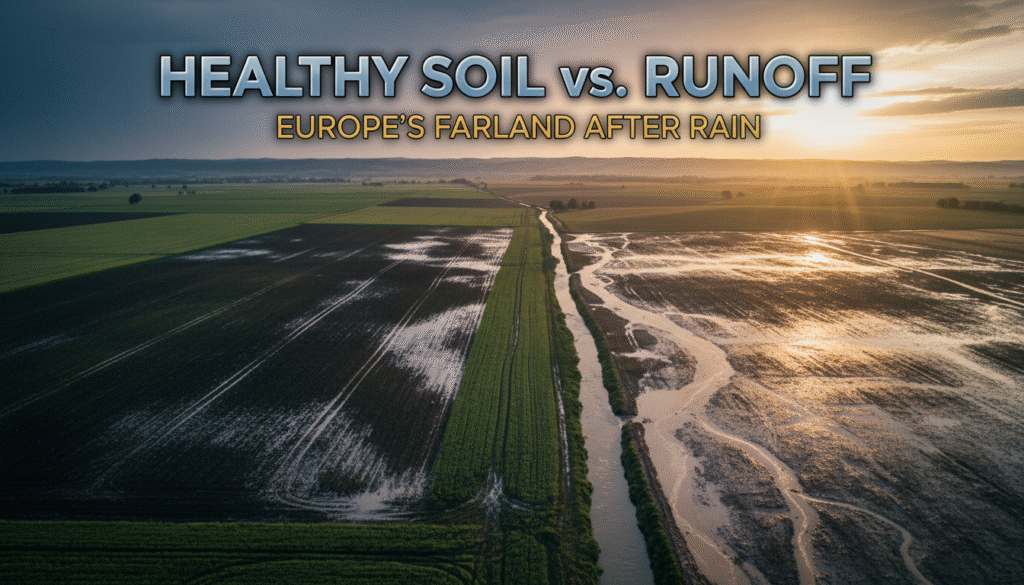
Healthy soil is the foundation of farming, yet it is often taken for granted until it begins to fail. When soil loses its structure and organic matter, crops struggle, water either runs off or stagnates, and farms become increasingly vulnerable to climate shocks. Climate smart agriculture focuses on practical solutions that help farmers rebuild resilience while continuing to produce food in a changing climate.
2. The Growing Pressure on Europe’s Farmers
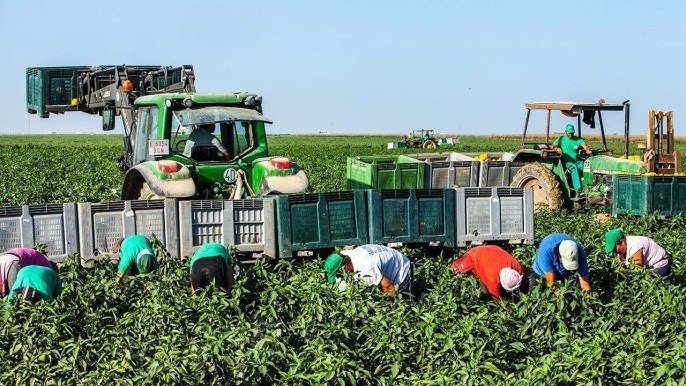
European agriculture is already experiencing the impacts of climate change in real time. Droughts reduce yields, floods damage crops, and unpredictable weather makes planning increasingly difficult. These climate-related losses cost the agricultural sector billions each year, and in many cases, farmers are forced to absorb the financial impact themselves.
At the same time, farmers face rising input costs, volatile markets, and policies that do not always reflect local realities. When margins are already thin, taking on additional risk to change farming practices can feel impossible. This pressure does not stop at the farm gate; it affects food manufacturers, retailers, and consumers who depend on stable and reliable agricultural supply chains.
3. Healthy Soil as the Foundation of Resilient Agriculture
Soil health sits at the center of climate smart agriculture. Healthy soil stores more carbon, absorbs water more effectively, supports biodiversity, and provides crops with the nutrients they need to grow. When soil is degraded, farms become more vulnerable to both drought and flooding, creating a cycle of declining productivity and rising risk.
Improving soil health is not about abstract environmental goals; it is about practical outcomes. Farmers with healthy soils often experience more stable yields, lower input costs over time, and greater flexibility in difficult weather conditions. These benefits support long-term profitability while also contributing to climate mitigation and adaptation.
4. How Farmers Are Already Leading the Transition
Across Europe, many farmers are not waiting for perfect conditions or policy certainty to act. From northern to southern regions, farmers are experimenting with climate smart practices that fit their land, climate, and business needs. These farmers understand their fields better than anyone and are applying practical solutions based on experience rather than theory.
Businesses that work closely with farmers are seeing firsthand how these practices strengthen resilience. By partnering directly with farmers, companies can help reduce risk, provide technical support, and ensure that sustainability goals align with on-farm realities. Climate smart agriculture works best when farmers are treated as partners rather than participants in top-down programs.
5. Regenerative Farming Practices That Deliver Real Results
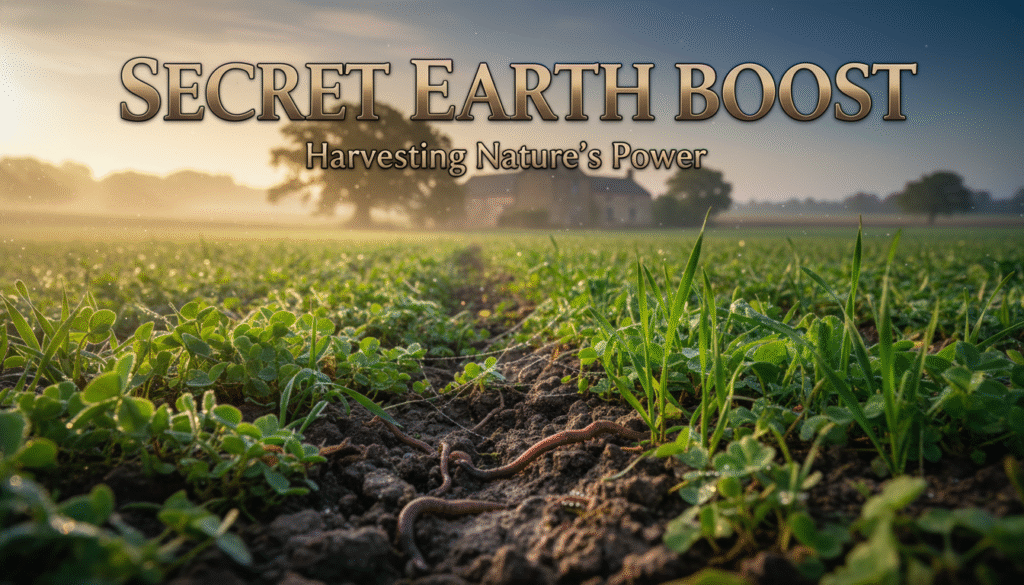
Regenerative farming practices are a core part of climate smart agriculture in Europe. Practices such as cover cropping, diversified crop rotations, reduced tillage, and improved nutrient management help rebuild soil structure and organic matter. Over time, these approaches increase water infiltration, reduce erosion, and support healthier ecosystems.
The benefits are cumulative rather than instant, which is why long-term support is essential. As soil health improves, farms become more resilient to climate extremes, and yields become more stable even in challenging seasons. These outcomes demonstrate that regenerative agriculture is not only environmentally beneficial but also economically viable when implemented with the right support.
6. Real-World Farmer Stories from Across Europe
Farmers across Europe are already seeing tangible results from climate smart agriculture. In south-east England, a farmer working heavy clay soils introduced regenerative practices to address waterlogging and poor soil structure. Over time, water infiltration improved, the soil became easier to work, and crops showed stronger performance even during dry spells. This increased flexibility reduced labour pressure and helped restore profitability during difficult years.
In northern Poland, another farmer focused on improving soil water retention. Her fields were better able to withstand prolonged dry periods while also absorbing intense rainfall. During a season marked by unexpected flooding, her crops remained productive when many surrounding fields struggled. These experiences highlight how climate smart practices can protect both livelihoods and food production when conditions become unpredictable.
7. Why Risk Remains the Biggest Barrier to Adoption
Despite clear benefits, risk remains the largest obstacle preventing wider adoption of climate smart agriculture. Transitioning to new practices often requires upfront investment in equipment, training, and changes to long-established systems. These costs are rarely insured, and the financial exposure falls largely on farmers.
While the benefits of regenerative agriculture build over time, the risk is immediate. Expecting farmers to carry this burden alone is neither realistic nor sustainable. Without shared risk, many farmers who are willing and capable of change are forced to delay action, even when they understand the long-term value.
8. The Role of Measurement, Data, and Trust
Measurement is essential for scaling climate smart agriculture, but it must be practical and credible. Farmers need confidence that improvements in soil carbon, biodiversity, and water quality are being measured accurately and consistently. When measurement systems are overly complex or disconnected from on-farm realities, they undermine trust and participation.
Clear, harmonised measurement approaches help ensure that progress is recognised and rewarded. They also build confidence across supply chains, allowing businesses and policymakers to invest in solutions that deliver verified outcomes. Trust grows when data reflects real improvements on the ground rather than theoretical models.
9. Why Collaboration Unlocks Scale and Impact
Climate smart agriculture scales most effectively through collaboration. When farmers, businesses, technical experts, and policymakers work together, incentives align and barriers fall away. Public-private partnerships can combine financial support, technical guidance, and market access to reduce risk and accelerate adoption.
Collaborative models allow farmers to choose practices that suit their land while still contributing to shared sustainability goals. These partnerships demonstrate that climate action does not need to come at the expense of productivity or profitability when systems are designed around farmer needs.
10. Policy, Business, and the Path Forward
Progress across Europe remains uneven. In some regions, farmers benefit from clear policies, long-term funding, and trusted advisory services. In others, fragmented incentives and inconsistent rules create uncertainty that slows decision-making.
If climate smart agriculture is to scale, policy must make action easier rather than harder. This means longer-term support, consistent incentives, and advisory services that farmers can rely on. Businesses also play a critical role by committing to long-term partnerships that share risk and reward outcomes rather than short-term compliance.
11. The Opportunity to Build a Resilient Agricultural Future
The opportunity facing Europe is straightforward. Proven climate smart approaches already exist, and farmers are demonstrating what works on the ground. By removing barriers, sharing risk, and scaling successful models, more farmers can strengthen resilience while protecting food systems and supply chains.
Climate smart agriculture is essential to Europe’s net-zero ambitions, but its success depends on practical implementation. Supporting farmers is not just an environmental priority; it is an economic and social necessity.
12. Conclusion: Backing Farmers to Secure Europe’s Food Systems
Climate smart agriculture in Europe will only succeed if farmers are supported, trusted, and rewarded for the outcomes they deliver. Healthy soil, resilient farms, and stable food systems are deeply connected, and none can thrive in isolation. When farmers are empowered with the right tools, partnerships, and policies, they become leaders of climate resilience rather than victims of climate risk. Backing Europe’s farmers today is the most effective way to protect food security, rural livelihoods, and the planet for generations to come.


Budget 2026 Agriculture Policy: Push for High-Value Crops but Farmers Still Struggle

Climate Smart Agriculture in Europe: Why Supporting Farmers Is the Key to a Resilient Food Future
How to Start Kesari (Saffron) Farming in India?

DJI Agriculture Drone: Market-Leading AgTech for Smarter Farming in 2026

Digital Agriculture for Farmland Biodiversity: Bridging Knowledge Gaps for Sustainable Farming

How to Start Mushroom Farming at Home?

What Is the Investment Required for Mushroom Farming?

Subsidies or Traps: Are Government Schemes Keeping Farmers Poor?

Microalgae in Modern Agriculture: The Quiet Technology Re-Engineering Sustainable Farming

Union Budget 2026 Agriculture Industry Demands: Tax Relief, Biofuel Push and Strong Infrastructure Support

Why Are Small Farmers Still Ignoring Drip Irrigation Despite Water Crisis?

Is Climate-Smart Farming Just a Buzzword with No Real ROI?

Why Are So Many Polyhouse Projects Failing in India?

Can One Profitable Cash Crop Replace Five Low-Margin Crops?

Is Organic Certification in India Worth the Time and Money?

Should Small Farmers Stop Growing Water-Hungry Crops Completely?

Canal Water in Punjab Agriculture: How Reaching the Last Field Is Transforming Farming, Saving Groundwater, and Building a Sustainable Future
Union Budget 2026 Agriculture Industry Demands: Tax Relief, Biofuel Push and Strong Infrastructure Support

Union Budget 2026 Fertiliser Reforms: Strengthening India’s Fertiliser Backbone for Sustainable Agriculture
