


Creative Ideas
Canal Water in Punjab Agriculture: How Reaching the Last Field Is Transforming Farming, Saving Groundwater, and Building a Sustainable Future

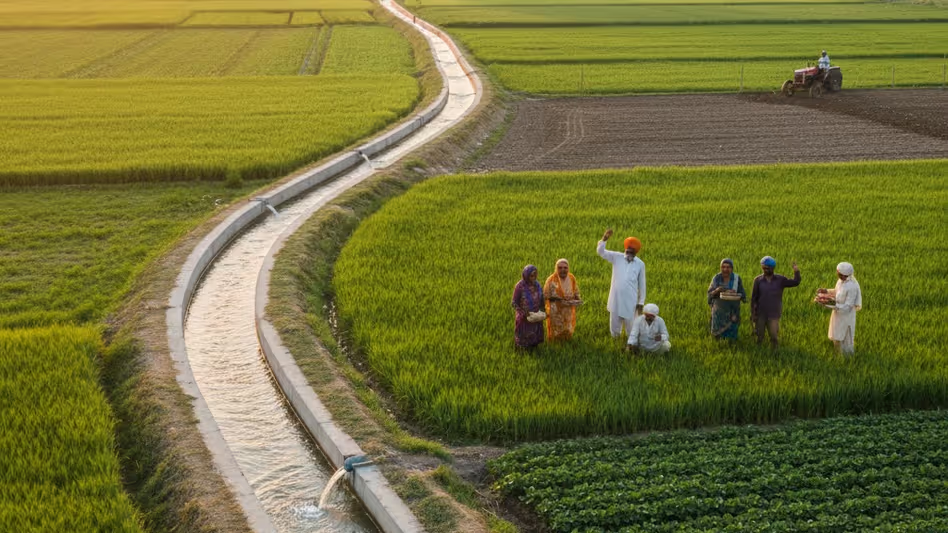
Short Overview
Canal water in Punjab agriculture has finally reached the farthest fields, bringing relief to thousands of farmers who depended for decades on costly and depleting groundwater. This transformation is improving irrigation access, reducing electricity use, lowering farming costs, and supporting sustainable agriculture across the state.
Canal water in Punjab agriculture is transforming farming by reaching tail-end fields for the first time and reducing overdependence on groundwater. This detailed blog explains how canal restoration, improved irrigation management, and fair water distribution are helping farmers lower costs, improve crop yields, and protect the environment. Written in simple and human-friendly language, the article explores the impact of canal water on farmers’ lives, groundwater conservation, electricity savings, and sustainable agriculture. It also highlights government efforts, farmer experiences, environmental benefits, and the long-term future of Punjab’s agriculture. This guide is ideal for readers seeking a clear understanding of how canal irrigation is reshaping Punjab’s farming landscape.
Table of Contents
Introduction: The Importance of Water in Punjab’s Agriculture
Punjab’s Historical Dependence on Groundwater
Problems Caused by Overuse of Groundwater
Why Canal Water Became Necessary for Punjab
Canal Water Reaching Tail-End Farmers
Restoration of Canals, Distributaries, and Minor Channels
How Canal Irrigation Is Changing Water Distribution
Reduction in Groundwater Dependence
Impact of Canal Water on Farmers’ Income and Costs
Effect on Crop Yield and Farming Stability
Electricity Savings and Reduced Power Dependency
Environmental Benefits of Canal Water Irrigation
Groundwater Recharge and Long-Term Water Security
Role of Government Policies and Leadership
Farmers’ Experiences and Real-Life Impact
Canal Water and Sustainable Agriculture in Punjab
Challenges in Canal Water Management
Future Scope of Canal Irrigation in Punjab
Conclusion: Reaching the Last Field, Securing Punjab’s Agricultural Future

Introduction: Why Water Is the Lifeline of Punjab’s Agriculture
Punjab has long been known as the food bowl of India, supplying wheat and rice that feed millions across the country. Behind this success lies one crucial factor that has always shaped farming in the state, and that factor is water. Crops cannot grow without reliable irrigation, and for decades, water availability determined which farmers could prosper and which struggled to survive.
Over time, as canal systems weakened and failed to reach the last fields, many farmers were forced to depend almost entirely on groundwater. Tube wells became the backbone of irrigation, but this dependence came at a heavy cost. Groundwater levels dropped sharply, electricity bills rose, and farming became more expensive and uncertain. Today, the revival of canal water in Punjab agriculture is changing this reality and offering new hope to farmers across the state.
Punjab’s Long Dependence on Groundwater and the Problems It Created
For years, farmers located at the tail end of canal systems rarely received canal water. These farmers had no option but to install tube wells and pump water from deep underground. What began as a solution slowly turned into a serious problem.
Groundwater extraction increased year after year, leading to rapidly falling water tables. In many areas, farmers had to dig deeper wells and use more powerful pumps, which meant higher electricity consumption and greater expenses. Power cuts made irrigation unreliable, and the cost of farming continued to rise. This uneven access to water also created inequality, as farmers closer to canal heads benefited more than those at the tail end.
The overuse of groundwater not only affected farmers’ finances but also threatened the long-term sustainability of agriculture in Punjab. Recognising this crisis, the state government began focusing on restoring canal irrigation as a more balanced and sustainable solution.
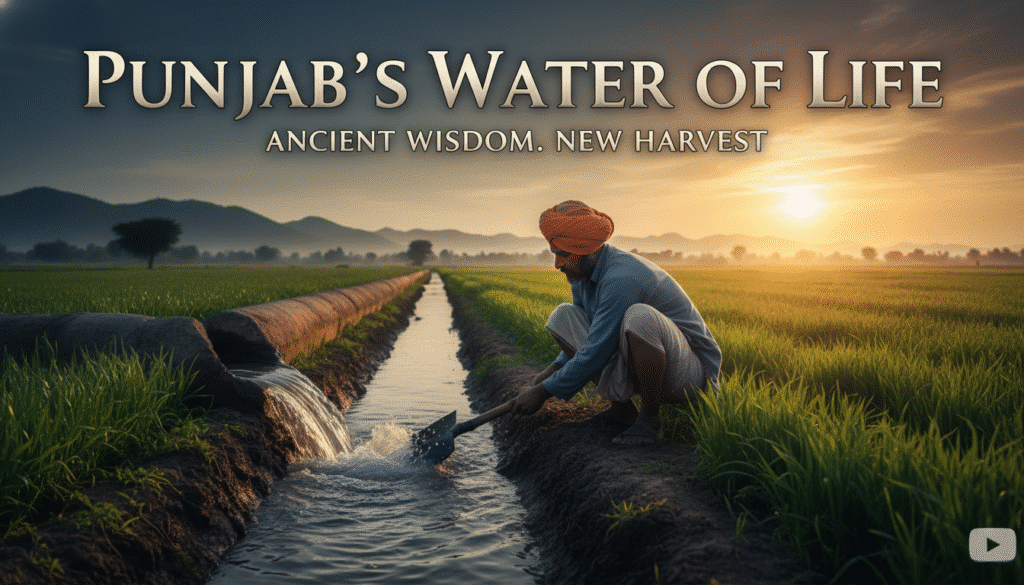
Canal Water Reaches Tail-End Farmers for the First Time
One of the most significant achievements in recent years is that canal water has finally reached tail-end fields in many parts of Punjab. These are the fields that historically remained dry or received water only occasionally due to poor canal maintenance and leakages.
Through systematic repair, cleaning, and management of canals, water is now flowing to farmers who had never experienced canal irrigation before. For these farmers, the change has been life-altering. Fields that once depended solely on tube wells are now irrigated directly by canals, reducing both costs and stress.
Many farmers describe this moment as historic, as it has brought fairness into the irrigation system. Access to canal water is no longer limited to a few but is being extended to every farmer in the canal line.
How Much Irrigation Now Comes from Canals
With extensive restoration work across the state, a growing share of Punjab’s irrigation now comes from canal water instead of groundwater. This shift has reduced pressure on underground water resources, which were nearing dangerous depletion levels in several districts.
Increased canal irrigation means that farmers rely less on electricity-driven tube wells. This directly lowers power consumption, reduces government electricity subsidies, and helps farmers save money. It also creates a more balanced irrigation system where surface water and groundwater are used responsibly.
This change marks a major step toward sustainable water management in Punjab’s agriculture.
Restoration of Canals, Distributaries, and Minor Channels
The success of canal water reaching the last field did not happen overnight. It required large-scale restoration of major canals, distributaries, and minor channels that had been neglected for decades. Over time, these channels became clogged with silt, damaged by erosion, or blocked by encroachments, preventing smooth water flow.
The government undertook extensive cleaning, desilting, and repair work across thousands of kilometres of irrigation channels. By restoring the full network, water can now travel efficiently from main canals to the smallest field channels. This comprehensive approach ensured that no part of the irrigation system was left incomplete.
The revival of these water routes has rebuilt trust among farmers, who now see canals as a reliable source of irrigation once again.
Impact of Canal Water on Farmers’ Lives
The arrival of canal water has brought visible relief to farmers across Punjab. Farming has become less stressful, more predictable, and more affordable. Farmers no longer worry as much about power cuts or dry tube wells during critical crop stages.
With steady canal water supply, crops receive timely irrigation, which leads to healthier plant growth and improved yields. Farmers also save money on electricity bills and maintenance of pumping equipment. This financial relief allows them to invest more confidently in seeds, farm care, and household needs.
For many farming families, canal water has restored dignity and stability to their livelihoods.
Reduction in Electricity Use and Farming Costs
One of the most immediate benefits of canal irrigation is the reduction in electricity use. Tube wells require constant power, and in areas with deep water tables, pumping becomes extremely energy-intensive. Canal water, by contrast, flows naturally through gravity-based systems.
As farmers shift from tube wells to canal irrigation, their electricity consumption drops significantly. This not only reduces individual farming costs but also eases pressure on the state’s power infrastructure. Lower electricity use means fewer outages and a more efficient energy system overall.
These savings contribute directly to making farming more economically sustainable.
Environmental Benefits of Shifting to Canal Water
The environmental impact of canal water revival is equally important. Reduced groundwater extraction allows water tables to stabilise and recharge naturally over time. This is critical for the long-term survival of agriculture in Punjab, especially in the face of climate change and erratic rainfall.
Surface water irrigation through canals also supports healthier soil conditions by preventing excessive salinity and depletion associated with over-pumping. As groundwater stress reduces, ecosystems that depend on underground water sources also benefit.
By shifting toward canal water, Punjab is taking a vital step toward climate-resilient agriculture.
Government Vision and Leadership Behind Canal Revival
The revival of canal irrigation reflects strong political will and administrative effort. Bhagwant Singh Mann has described canal restoration as a historic reform aimed at delivering justice to farmers who were previously excluded from irrigation benefits.
The government’s focus has been on ensuring that water reaches every farmer, not just those at the beginning of canal lines. This approach recognises water as a shared resource that must be distributed fairly. The emphasis on equity has helped rebuild confidence among farming communities and strengthened trust in public institutions.
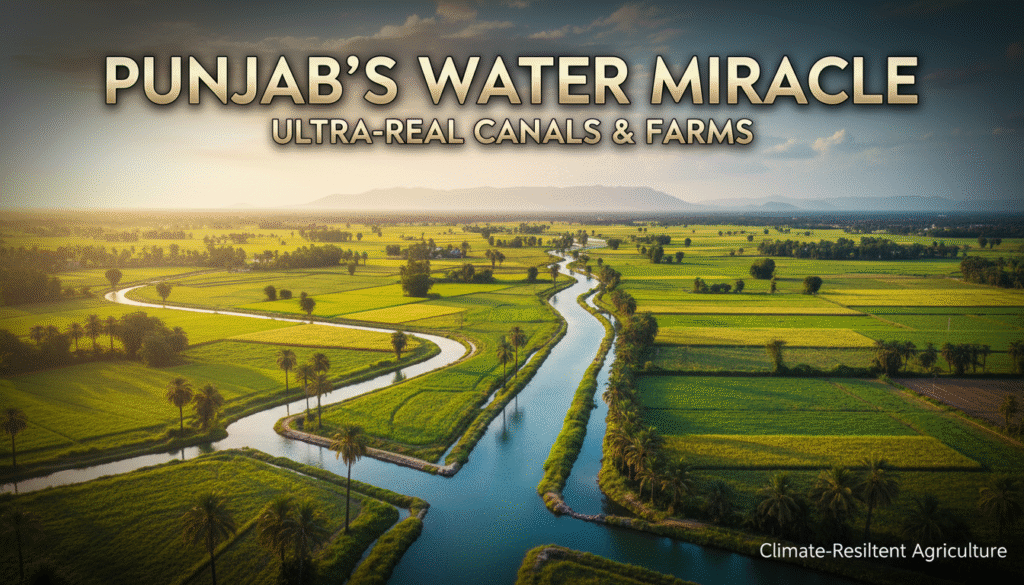
Canal Water and the Future of Sustainable Agriculture in Punjab
By restoring canals and ensuring fair distribution of water, Punjab is laying the foundation for a more sustainable agricultural future. Balanced water use reduces environmental damage, lowers costs, and improves productivity without exhausting natural resources.
As canal irrigation expands, farmers can diversify crops, adopt better farming practices, and reduce dependence on water-intensive methods. This transition supports long-term food security while protecting the state’s ecological balance.
Canal water is no longer a privilege limited to a few areas. It is becoming a shared lifeline that supports every field, including the last one.
Conclusion: Reaching the Last Field Is Reaching the Heart of Punjab’s Agriculture
The revival of canal water in Punjab agriculture is more than an infrastructure success; it is a social, economic, and environmental transformation. By reaching tail-end fields, canal irrigation has restored fairness, reduced groundwater dependence, lowered costs, and improved farmers’ quality of life. It is helping Punjab move toward a future where farming is profitable, sustainable, and resilient. As canals flow again across the state, they carry not just water but renewed hope for Punjab’s farmers and the generations to come.


India’s 2026 strategy for importing fertiliser: how India is making global supply chains stronger

The Effects of Global War on Farming in India: Why Prices Are Going Up and What Farmers Can Do

Digital Transformation in Agriculture: How Smart Technology is Changing the Way We Farm Today

The Truth About AI Stock Trading: An AI-Powered Trading Agent Turns ₹11 Lakh Into ₹40 Lakh Overnight

Organic Fertilizer Market Size and Forecast for 2026–2034: Trends in Growth, Future Demand, and Information on Sustainable Agriculture

Bharat-VISTAAR: India’s New AI Digital Platform Changing Farming for Millions of Farmers

Liberating Agriculture in Bharat: A Long-Term Future for Farmers Through Farming with Trees

FAO World Programme of Census of Agriculture 2030: A Global Data Revolution for the Future of Farming

India is running low on LPG in 2026, so hotels are switching to firewood as the government focuses on cooking gas for homes.

The economy of Karnataka is doing better than the national average. The state’s growth rate is 12% for the second year in a row.

What Is the Best Climate for Saffron Cultivation?
India is running low on LPG in 2026, so hotels are switching to firewood as the government focuses on cooking gas for homes.

Farming: ಹಳ್ಳಿಗಳಿಗೆ ಹಿಂದಿರುಗಿ ಕೃಷಿಯತ್ತ ಒಲವು ತೋರುತ್ತಿರುವ ವೃತ್ತಿಪರರು – ನಿಜವಾದ ಕಾರಣಗಳು ಮತ್ತು ಭವಿಷ್ಯದ ಜೀವನಶೈಲಿ

Karnataka Budget 2026–27: Key Announcements, Infrastructure Plans, Welfare Schemes and Economic Impact

ಕೇಂದ್ರ ಬಜೆಟ್ 2026 ಕೃಷಿಕರಿಗೆ ಏನು ಕೊಡುಗೆ? ಭಾರತ್ ವಿಸ್ತಾರ್ AI ಪರಿಕರದಿಂದ ರೈತರಿಗೇನು ಲಾಭ?

Aadhar Model Smart Card To Farmers: ರೈತರಿಗೆ ಆಧಾರ್ ಮಾದರಿ ಸ್ಮಾರ್ಟ್ ಕಾರ್ಡ್ ಯೋಜನೆ – ಸಂಪೂರ್ಣ ಮಾಹಿತಿ, ಅನುಕೂಲತೆಗಳು ಮತ್ತು ನೋಂದಣಿ ವಿವರಗಳು

ಭಾರತ್-ವಿಸ್ತಾರ್ ಎಐ ಸಾಧನ: ರೈತರ ಕೃಷಿ ಸಮಸ್ಯೆಗೆ ಬೆರಳ ತುದಿಯಲ್ಲಿ ಎಐ ಪರಿಹಾರ | ಸಂಪೂರ್ಣ ಮಾಹಿತಿ

Sugar Shares Rally on Hopes of Higher Ethanol Blend Amid West Asia Crisis
FAO World Programme of Census of Agriculture 2030: A Global Data Revolution for the Future of Farming
