


Latest News
AI Farming Tools and the Global Food System: Are Tech Giants Controlling What We Eat?

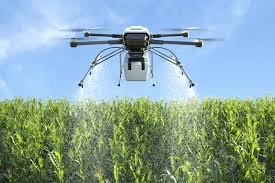
Short Overview
Artificial intelligence is changing agriculture faster than ever before. While AI farming tools promise efficiency and higher yields, critics warn that tech corporations are gaining unprecedented influence over what farmers grow and how global food systems operate. This blog explores the risks, opportunities, and future of algorithm-driven farming in simple, clear language.
AI farming tools are transforming modern agriculture, but experts warn that tech giants like Google, Microsoft, and Amazon are influencing what crops farmers grow. This shift toward algorithm-driven agriculture may increase monoculture farming, reduce biodiversity, and threaten global food security. Discover how digital agriculture, data-driven farming, and corporate control could reshape the future of food production — and why sustainable, local farming solutions matter now more than ever.

Table of Contents
- Introduction
- Understanding AI Farming Tools
- Tech Companies in Agriculture
- The Monoculture Problem
- Small Farmers at Risk
- Global Food System Vulnerabilities
- Investment and Policy Influence
- Farmer-Led Innovation
- A Sustainable Alternative
- Final Thoughts
Introduction: The Rise of AI in Agriculture
Artificial intelligence is no longer limited to chatbots or smart assistants. It is now deeply embedded in modern agriculture. From satellite monitoring to soil analysis, AI farming tools are helping farmers make data-driven decisions.
But behind this technological revolution, a bigger question is emerging:
Who controls the data — and who ultimately decides what the world eats?
Experts from food security think tanks are raising concerns that large tech corporations are influencing farming decisions on a global scale. Companies like Google, Microsoft, Amazon, IBM, and Alibaba are partnering with industrial agriculture firms to shape crop production patterns.
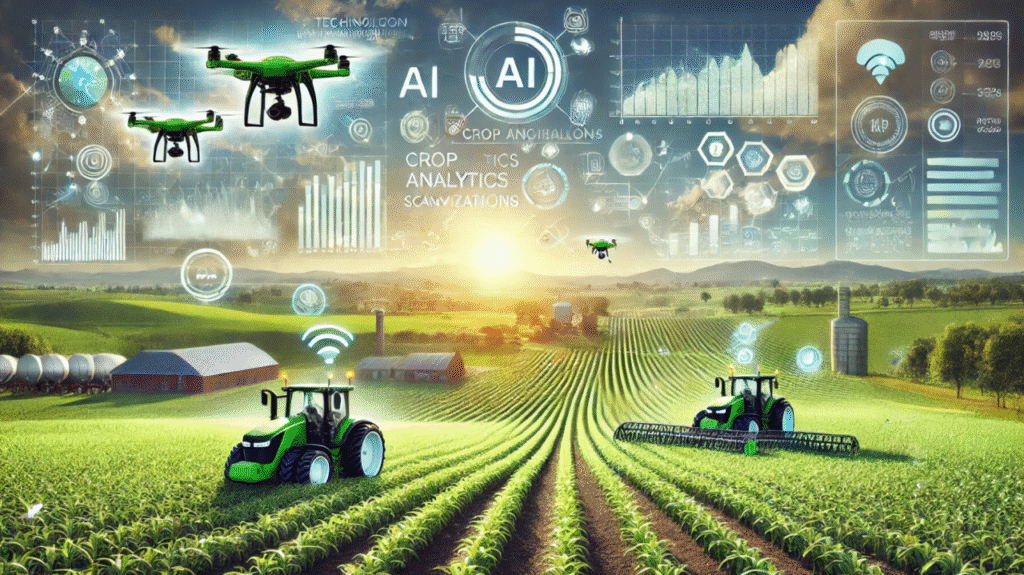
While innovation sounds promising, critics warn this could centralize control over the global food system.
How AI Farming Tools Work
AI farming tools collect massive amounts of agricultural data, including:
- Soil health conditions
- Weather patterns
- Crop disease detection
- Water availability
- Market demand trends
These systems use satellite imaging, drone sensors, predictive analytics, and machine learning models. Based on collected data, algorithms suggest:
- Which crops to plant
- When to harvest
- What fertilizers to use
- Which pesticides to apply
On the surface, this seems efficient. Farmers receive recommendations tailored to their land. Yields may increase. Costs may reduce.
But there is a hidden layer behind these suggestions.
Most AI systems are built around high-profit crops like corn, wheat, rice, soybeans, and potatoes. This focus can gradually push farmers toward a narrow range of globally traded commodities.
Why Experts Are Warning About Corporate Influence
Food security researchers argue that this system creates a “top-down” agricultural model. Instead of farmers deciding what works best for their local ecosystem, algorithms guide them toward standardized crop choices.
This raises three major concerns:
1. Reduced Biodiversity
If farmers worldwide focus on the same five crops, local varieties may disappear.
2. Dependency on Industrial Inputs
Recommended crops often require specific seeds, fertilizers, and machinery — usually sold by large corporations.
3. Data Ownership Issues
Farmers generate valuable agricultural data. But who owns it? The farmer — or the tech company?
Critics say that when algorithms prioritize profitability, local food traditions and crop diversity may suffer.
The Monoculture Problem
Monoculture farming — growing one crop repeatedly on the same land — increases vulnerability.
If a disease hits corn, and most farms grow corn, the consequences could be devastating.
History shows us examples like the Irish Potato Famine, where overreliance on a single crop led to catastrophe.
Today’s global food system is already fragile. Climate change, extreme weather, and geopolitical conflicts expose its weaknesses.
Expanding monoculture through AI recommendations may increase that fragility.
Impact on Small Farmers and Local Crops
Many farmers cultivate crops adapted to their environment for generations.
For example:
- Teff in Ethiopia
- Indigenous potatoes in Peru
- Traditional seed varieties in China
- Local grains in Tanzania
These crops are resilient and culturally significant. However, AI systems may not recognize their value if data is limited or profitability appears lower.
Small farmers risk becoming dependent on purchased seeds bundled with chemical inputs. Over time, this may erode agricultural independence.
When farmers lose control over seed selection, they also lose a part of their identity and food sovereignty.
Global Food Security in a Climate Crisis
Food security depends on diversity and adaptability.
A highly globalized system dependent on multinational supply chains is vulnerable to:
- Climate disasters
- Trade disruptions
- War and political instability
- Fuel price spikes
The war in Ukraine demonstrated how quickly wheat supply disruptions can impact global markets.
The more centralized agriculture becomes, the more exposed it is to shocks.
Local food systems, on the other hand, can adapt faster and reduce reliance on distant suppliers.
The Financial Push Behind Digital Agriculture
Digital agriculture is big business.
The global market for AI and digital farming tools was valued at around $30 billion recently and is projected to grow significantly by 2034.
Major investments are flowing from:
- International development banks
- Government programs
- Technology investors
This financial momentum makes AI farming tools attractive to policymakers.
Governments may promote these technologies as modern solutions to food production challenges.
However, rapid adoption without safeguards could deepen inequality between large agribusinesses and small farmers.
What Farmers Actually Want
Many farmers are not against innovation.
They want:
- Tools that reduce risk
- Fair market access
- Weather forecasting
- Affordable technology
What they often resist is losing decision-making power.
A bottom-up approach — where farmers help design digital tools — can produce better outcomes.
Innovation works best when grounded in local realities, not imposed from corporate headquarters.
Real Examples of Sustainable, Local Innovation
Across the world, farming communities are already innovating.
In Peru, families protect hundreds of native potato varieties.
In China, seed-saving networks preserve biodiversity.
In Tanzania, farmers use social media to share weather updates and market prices.
These models strengthen food resilience because they rely on community knowledge.
Technology can support these systems — but it should not replace them.
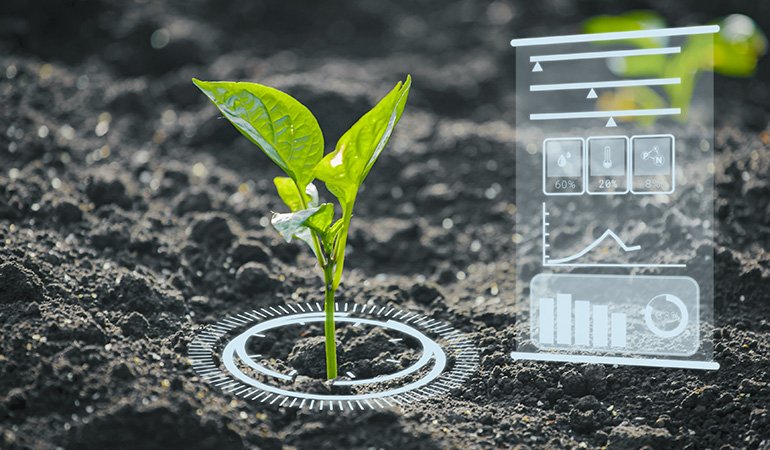
The Future of Food: Corporate Control or Community Power?
Artificial intelligence is not the enemy. The real issue is governance.
If digital agriculture strengthens local decision-making, improves sustainability, and supports biodiversity, it can be transformative.
But if it centralizes control and prioritizes profit over resilience, it may deepen vulnerabilities.
The future of food depends on balance.
Technology must empower farmers — not replace their wisdom.
Conclusion
AI farming tools are reshaping global agriculture at an unprecedented pace. The integration of data, satellite monitoring, and predictive analytics offers incredible opportunities to increase efficiency and improve yields. However, when a small group of powerful tech companies influence what crops are grown worldwide, serious concerns arise about biodiversity, farmer independence, and long-term food security.
A resilient food system cannot rely solely on algorithms designed around profit-driven crops. It must preserve local knowledge, protect seed diversity, and empower communities. True innovation is not about replacing farmers with technology — it is about supporting them with tools that respect their experience and ecosystems.
The decisions we make today about digital agriculture will determine whether AI becomes a tool for sustainability or a driver of centralized control. The world cannot afford to get this wrong. Food security is too important to leave entirely in the hands of algorithms.
Technology must serve humanity, not the other way around.


AI Farming Tools and the Global Food System: Are Tech Giants Controlling What We Eat?

New GDP Series Makes Meeting Fiscal Targets and $4 Trillion Economy Goal More Difficult

BMRCL Deploys Eighth Trainset on Namma Metro Yellow Line: What It Means for Bengaluru Commuters

Indian Airlines Halt West Asia Flights After Israel-US Attack on Iran Triggers Major Airspace Shutdown

India GDP Growth 7.6% in FY26: New GDP Series Upgrades Growth but Lowers Economy Size

India Missing Out on Big Agriculture Export Opportunity: Path to $100 Billion by 2030

ಮ್ಯೂಚುವಲ್ ಫಂಡ್ SIP ಮೂಲಕ 15 ವರ್ಷಗಳಲ್ಲಿ ₹10 ಕೋಟಿ ರೂಪಾಯಿ ಗಳಿಸುವುದು ಹೇಗೆ?

Aadhar Model Smart Card To Farmers: ರೈತರಿಗೆ ಆಧಾರ್ ಮಾದರಿ ಸ್ಮಾರ್ಟ್ ಕಾರ್ಡ್ ಯೋಜನೆ – ಸಂಪೂರ್ಣ ಮಾಹಿತಿ, ಅನುಕೂಲತೆಗಳು ಮತ್ತು ನೋಂದಣಿ ವಿವರಗಳು

ಕೇಂದ್ರ ಬಜೆಟ್ 2026 ಕೃಷಿಕರಿಗೆ ಏನು ಕೊಡುಗೆ? ಭಾರತ್ ವಿಸ್ತಾರ್ AI ಪರಿಕರದಿಂದ ರೈತರಿಗೇನು ಲಾಭ?

Farming: ಹಳ್ಳಿಗಳಿಗೆ ಹಿಂದಿರುಗಿ ಕೃಷಿಯತ್ತ ಒಲವು ತೋರುತ್ತಿರುವ ವೃತ್ತಿಪರರು – ನಿಜವಾದ ಕಾರಣಗಳು ಮತ್ತು ಭವಿಷ್ಯದ ಜೀವನಶೈಲಿ

What Are the Best Mushrooms to Grow for Profit?

Union Budget 2026–27 Agriculture Initiatives: Transforming Indian Farming for Global Markets

Budget 2026 Agriculture Policy: Push for High-Value Crops but Farmers Still Struggle

ಭಾರತದಲ್ಲಿ ಮಣ್ಣಿನ ಆರೋಗ್ಯ: ಸುಸ್ಥಿರ ಕೃಷಿ ಮತ್ತು ಆಹಾರ ಭದ್ರತೆಗೆ ಅಡಿಪಾಯ

2025ರ ವಾಣಿಜ್ಯ ಧಾನ್ಯ ಕೃಷಿಯ ಹೊಸ ಆವಿಷ್ಕಾರಗಳು: ಸ್ಮಾರ್ಟ್ ನೀರಾವರಿ, ಗೊಬ್ಬರ ಮತ್ತು ಪ್ರೆಸಿಷನ್ ಸ್ಪ್ರೇಯರ್ಗಳು
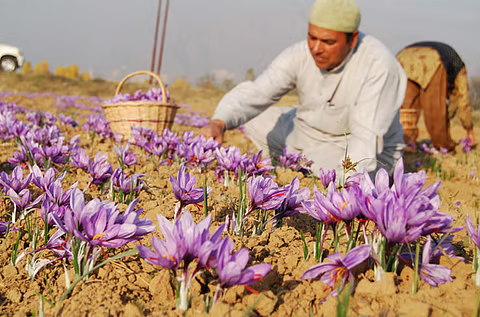
How to Start Kesari (Saffron) Farming in India?

ಕೇಸರಿ (Saffron) ಬೆಳೆಯಲು ಅತ್ಯುತ್ತಮ ಹವಾಮಾನ ಯಾವುದು?

ಕೇಸರಿ ಕೃಷಿಗೆ ಎಷ್ಟು ಹೂಡಿಕೆ ಅಗತ್ಯವಿದೆ?

ಕಬ್ಬು ಬೆಳೆಯಲು ಸೂಕ್ತ ಸಲಹೆಗಳು – ಹೆಚ್ಚಿನ ಇಳುವರಿ ಮತ್ತು ಲಾಭಕ್ಕಾಗಿ ಸಂಪೂರ್ಣ ಮಾರ್ಗದರ್ಶಿ
