


Latest News
Stock Market Crash 2026: Why Markets Fell Over 2% Amid Rising Crude Prices

Short Overview
The Indian stock market recently witnessed a sharp decline of over 2%, driven by rising crude oil prices, global uncertainties, and investor anxiety. This blog breaks down what caused the sudden crash, how it affects investors, and what you should do next — all explained in simple, easy-to-understand language.
The Indian stock market recently fell over 2% due to rising crude oil prices and global uncertainties. This detailed blog explains the reasons behind the market crash, its impact on different sectors, and what investors should do next. Learn how crude oil affects inflation, why global markets influence Indian stocks, and discover smart investment strategies to protect your portfolio. Whether you are a beginner or experienced investor, this guide helps you understand market volatility in simple language. Stay informed, avoid panic, and make better financial decisions with expert insights designed to boost your investment confidence and long-term growth.

Table of Contents
- Introduction
- What Happened in the Stock Market?
- Key Reasons Behind the Market Fall
- Impact of Rising Crude Oil Prices
- Global Factors Affecting Indian Markets
- Sector-Wise Impact
- How Investors Reacted
- Should You Be Worried?
- Expert Insights and Market Outlook
- Smart Strategies for Investors
- Long-Term vs Short-Term Perspective
- Conclusion
Introduction
The stock market can sometimes feel unpredictable, especially when sudden drops shake investor confidence. Recently, Indian stock markets fell by more than 2%, leaving many investors worried and confused. If you are someone who invests or plans to invest, understanding the reasons behind such movements is very important.
This blog will help you understand the situation in a simple and practical way without using complicated financial terms.
What Happened in the Stock Market?
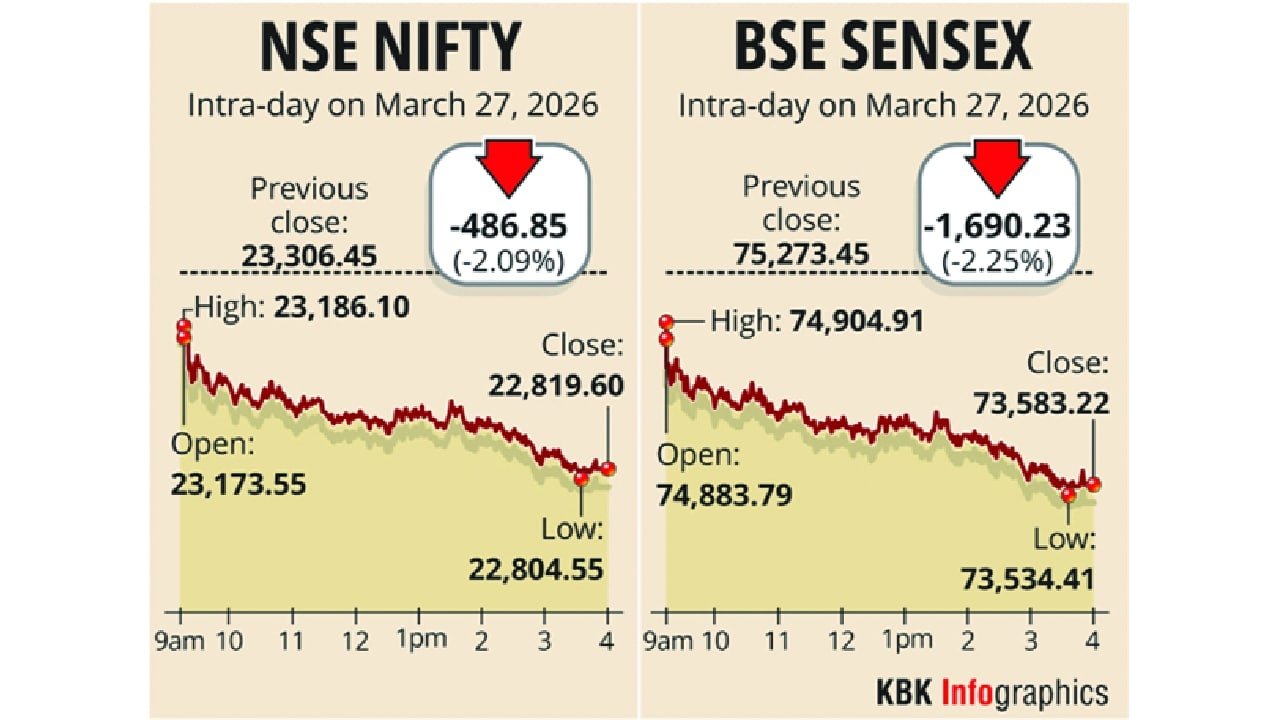
The Indian stock market experienced a sharp fall, with major indices like Sensex and Nifty dropping significantly. This was not a random event but a reaction to multiple economic and global factors coming together at once.
Investors started selling their shares rapidly, which increased pressure on the market and caused prices to fall further. This kind of situation is often called a “market correction” or a “sell-off.”
Key Reasons Behind the Market Fall
There is never just one reason behind a stock market crash. In this case, several factors played a role.
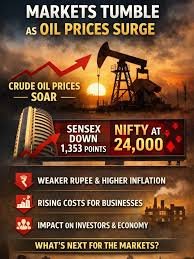
The most important reason was the sudden increase in crude oil prices. Since India imports a large amount of oil, rising prices directly impact the economy.
Another major factor was global uncertainty. Investors around the world are becoming cautious due to inflation concerns, geopolitical tensions, and economic slowdowns in major countries.
When uncertainty increases, investors prefer safer options like gold or fixed deposits instead of stocks.
Impact of Rising Crude Oil Prices
Crude oil is one of the most important commodities for any economy, especially for a country like India.
When crude oil prices rise, transportation costs increase. This leads to higher prices for goods and services, which eventually increases inflation.
Higher inflation reduces people’s spending power, which affects company profits. When profits are expected to fall, stock prices also go down.
In simple terms, expensive oil creates a chain reaction that negatively impacts the entire stock market.
Global Factors Affecting Indian Markets
The Indian stock market does not operate in isolation. It is deeply connected to global markets.
Foreign investors, also known as FIIs, tend to withdraw their investments during uncertain times. This leads to a drop in liquidity and puts additional pressure on the market.
Sector-Wise Impact
Not all sectors are affected equally during a market fall.
Oil-sensitive sectors like aviation, logistics, and manufacturing are hit the hardest because their costs increase significantly.
Banking and financial sectors also see pressure due to reduced lending and economic slowdown.
However, some sectors like IT and pharmaceuticals may remain relatively stable because they depend more on global demand.
How Investors Reacted
When markets fall sharply, panic often spreads among investors.
Many retail investors start selling their stocks to avoid further losses. This panic selling can make the situation worse and deepen the market fall.
On the other hand, experienced investors often see this as an opportunity to buy quality stocks at lower prices.
The difference lies in understanding the market and staying calm during volatility.
Should You Be Worried?
Market falls can feel scary, especially if you are new to investing. However, such corrections are a normal part of the market cycle.
Instead of worrying, it is better to focus on your long-term investment goals.
If your investments are based on strong companies and solid research, temporary market drops should not affect your strategy.
Expert Insights and Market Outlook
Market experts believe that while short-term volatility may continue, the long-term outlook of the Indian economy remains strong.
India’s growth story, driven by digital transformation, infrastructure development, and a growing middle class, still holds significant potential.
However, investors should remain cautious and avoid making emotional decisions.
Smart Strategies for Investors
In times like these, having a clear strategy is very important.
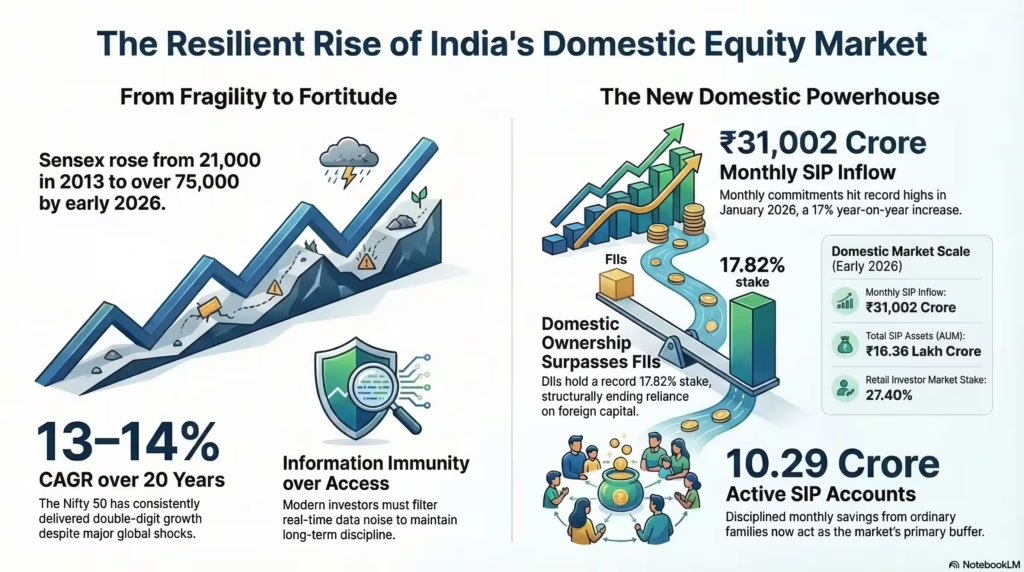
Instead of trying to time the market, focus on consistent investing through SIPs. This helps you average out your costs over time.
Diversification is another key strategy. Investing across different sectors reduces risk and protects your portfolio.
Also, keep some cash ready to take advantage of market dips.
Long-Term vs Short-Term Perspective
Short-term market movements are often driven by news, emotions, and global events.
However, long-term growth depends on fundamentals like economic development, corporate earnings, and innovation.
If you focus only on short-term fluctuations, you may miss out on long-term wealth creation.
Patience is one of the most important qualities of a successful investor.
Conclusion
The recent fall in the stock market may seem alarming, but it is not unusual. Rising crude oil prices and global uncertainties have created temporary pressure on the market.
Instead of reacting with fear, investors should take a step back and look at the bigger picture.
Market corrections often create opportunities for those who are prepared and informed. By staying calm, following a disciplined strategy, and focusing on long-term goals, you can navigate such situations with confidence.
Remember, the stock market rewards patience, not panic.


Stock Market Crash 2026: Why Markets Fell Over 2% Amid Rising Crude Prices

AI for Agriculture Innovation Initiative: Transforming Farming with Smart Technology

Digital Agriculture Mission India 2025: Complete Guide to Smart Farming Trends and Future Growth

Potato Farming Crisis in Uttar Pradesh: Causes, Challenges, and Solutions for Farmers

Fibre Optic Sensors in Agriculture: The Future of Smart Farming and Soil Monitoring

Iran Israel US War 2026: What the Conflict in West Asia Means for Oil, World Stability, and Daily Life

OUAT Farmers Fair 2026: Helping Women Farmers Start Their Own Businesses and Moving Smart Agriculture Forward in India

India’s 2026 strategy for importing fertiliser: how India is making global supply chains stronger

The Effects of Global War on Farming in India: Why Prices Are Going Up and What Farmers Can Do

Digital Transformation in Agriculture: How Smart Technology is Changing the Way We Farm Today

India is running low on LPG in 2026, so hotels are switching to firewood as the government focuses on cooking gas for homes.

Karnataka Budget 2026–27: Key Announcements, Infrastructure Plans, Welfare Schemes and Economic Impact
Potato Farming Crisis in Uttar Pradesh: Causes, Challenges, and Solutions for Farmers
Fibre Optic Sensors in Agriculture: The Future of Smart Farming and Soil Monitoring
The Effects of Global War on Farming in India: Why Prices Are Going Up and What Farmers Can Do

FAO World Programme of Census of Agriculture 2030: A Global Data Revolution for the Future of Farming

The Truth About AI Stock Trading: An AI-Powered Trading Agent Turns ₹11 Lakh Into ₹40 Lakh Overnight

AI Farming Tools and the Global Food System: Are Tech Giants Controlling What We Eat?

Sugar Shares Rally on Hopes of Higher Ethanol Blend Amid West Asia Crisis