


Latest News
Israel–Iran War LIVE: Russia Reportedly Providing Iran With Info to Strike U.S. Military as Regional Conflict Intensifies

Short Overview
The Israel–Iran war has entered its seventh day with rapidly escalating tensions across the Middle East. Israel has intensified airstrikes on Tehran and Lebanon, while Iran has launched retaliatory missile attacks targeting Israel and strategic locations in the Gulf region. Reports now suggest that Russia may be providing intelligence support to Iran to help identify U.S. military targets, adding a new global dimension to the conflict. At the same time, the United States has strengthened its military backing for Israel and warned of a possible major bombing campaign. As global leaders react and oil markets shift, the situation is becoming one of the most serious geopolitical crises in recent years.
The Israel–Iran war has entered a dangerous new phase as reports suggest Russia may be providing intelligence to Iran to target U.S. military assets in the Middle East. Israel continues airstrikes on Tehran and Lebanon while Iran launches retaliatory missile attacks across the region. U.S. President Donald Trump has demanded Iran’s unconditional surrender while approving new weapons support for Israel. Meanwhile, the conflict is affecting global oil supply, international diplomacy, and regional security. This live update explains the latest developments, geopolitical implications, U.S. and Russian involvement, and how the escalating Israel–Iran conflict could reshape the future of West Asia and global stability.

Table of Contents
- Introduction to the Israel–Iran War
- Seventh Day of the Conflict: Intensifying Attacks
- Israel Launches Major Airstrikes on Tehran
- Iran’s Retaliatory Missile Strikes Across the Region
- Russia’s Alleged Intelligence Support to Iran
- U.S. Military Response and Trump’s “Unconditional Surrender” Demand
- Israel’s Continued Bombing in Lebanon
- Iran Accused of Using Cluster Munitions
- Humanitarian Impact and Civilian Casualties
- India’s Response and Oil Supply Developments
- Global Political Reactions to the War
- Boots vs Bots: The Changing Nature of Modern Warfare
- How the Conflict Could Affect Global Oil Markets
- Potential Future Scenarios of the War
- Conclusion
Introduction to the Israel–Iran War
The conflict between Israel and Iran has dramatically intensified in recent days, transforming into a major regional war that threatens global stability. What began as escalating tensions between the two long-time rivals has quickly evolved into a broader military confrontation involving missile strikes, air raids, and growing international involvement.
Both countries have exchanged heavy attacks targeting strategic military infrastructure, while nearby countries are increasingly worried that the conflict could spread across the Middle East. The involvement of major global powers such as the United States and Russia has further complicated the situation.
The war is not only a military confrontation but also a geopolitical struggle that could reshape alliances, energy markets, and global diplomacy.
Seventh Day of the Conflict: Intensifying Attacks
By the seventh day of the conflict, the pace of military operations has increased significantly. Both Israel and Iran are launching multiple strikes each day, targeting military bases, infrastructure, and strategic locations.
Iran has fired several waves of missiles toward Israel and nearby Gulf countries. Meanwhile, Israeli fighter jets have conducted extensive bombing operations targeting Iranian facilities and military installations.
Explosions have been reported across multiple cities, and tensions remain extremely high as both sides continue to escalate their military actions.
Israel Launches Major Airstrikes on Tehran
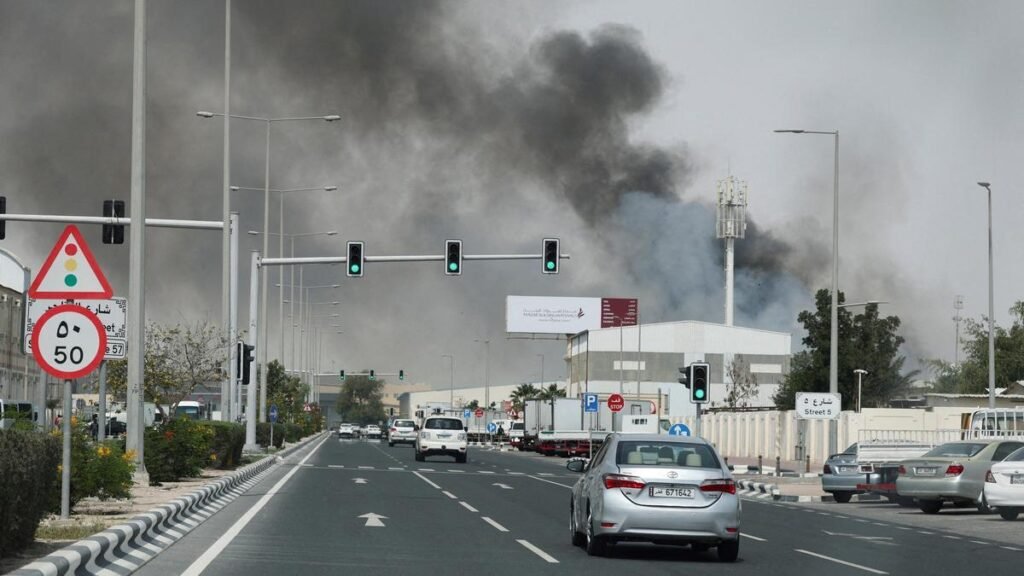
Israel recently carried out a broad wave of airstrikes on Tehran, the capital of Iran. Videos released by international agencies showed massive explosions and thick clouds of smoke rising from several parts of the city.
These attacks appear to be part of Israel’s strategy to weaken Iran’s military command infrastructure and disrupt missile operations. Israeli warplanes reportedly targeted key facilities believed to be connected to Iran’s military and strategic planning.
The strikes mark one of the most direct attacks on Tehran in recent years and signal that Israel is willing to escalate the conflict significantly if necessary.
Iran’s Retaliatory Missile Strikes Across the Region
Iran responded quickly to the Israeli attacks by launching retaliatory missile strikes. Iranian forces targeted locations inside Israel as well as strategic sites in nearby Gulf countries.
The Iranian government described these attacks as defensive measures aimed at deterring further Israeli military action. Iranian military leaders also warned that additional strikes could follow if Israel continues its bombing campaign.
These missile attacks demonstrate Iran’s ability to strike across long distances, which increases concerns among regional governments about the possibility of a wider conflict.
Russia’s Alleged Intelligence Support to Iran
One of the most significant developments in the conflict is the report that Russia may have provided intelligence to Iran. According to officials familiar with U.S. intelligence, Moscow may have shared information that could help Iran identify American military assets in the region.
This intelligence could include the locations of U.S. warships, aircraft, and other strategic resources operating in Middle Eastern waters and bases.
If confirmed, this development could dramatically escalate global tensions. Russia’s involvement would introduce another major world power into the conflict and potentially deepen the geopolitical divide between Western countries and their rivals.
U.S. Military Response and Trump’s “Unconditional Surrender” Demand
The United States has responded strongly to the growing conflict. U.S. President Donald Trump stated that the United States would only accept Iran’s “unconditional surrender” if negotiations were to take place.
According to the White House, this means that Iran must completely stop posing a military threat to the United States and its allies. Officials have also warned that the U.S. could launch a large-scale bombing campaign if tensions continue to escalate.
In addition, the U.S. government approved a major sale of military munitions to Israel valued at over $150 million. The decision was made through an emergency authorization, bypassing the usual congressional review process.
Israel’s Continued Bombing in Lebanon
While targeting Iran directly, Israel has also continued airstrikes in Lebanon. These attacks are primarily aimed at militant groups that Israel believes are connected to Iran.
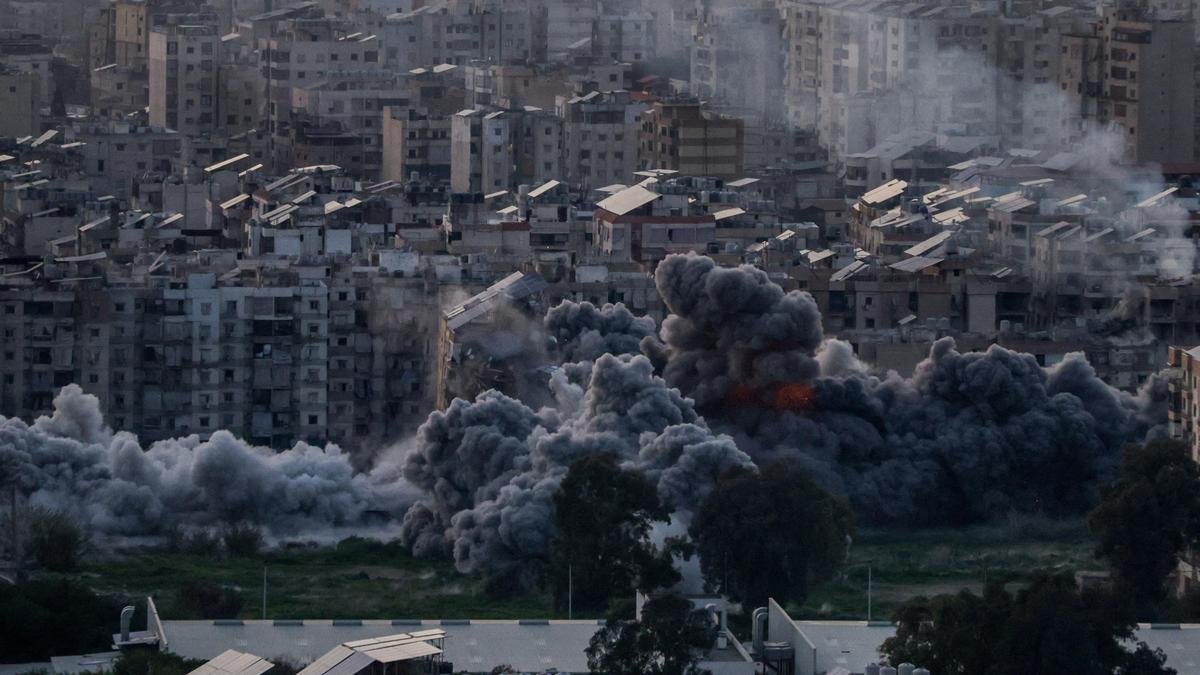
The Israeli military has carried out multiple bombing operations in Beirut and other locations believed to host military facilities and weapons storage areas.
These strikes suggest that Israel is attempting to weaken Iran’s regional influence and prevent additional threats from neighboring territories.
Iran Accused of Using Cluster Munitions
Israeli officials have accused Iran of using cluster munitions during the conflict. Cluster bombs explode in the air and release many smaller explosives over a large area.
These weapons are controversial because some of the smaller explosives fail to detonate immediately and can remain dangerous long after the conflict ends. This can lead to civilian casualties, especially among children.
Although more than 100 countries have signed an international agreement banning cluster munitions, both Iran and Israel are not part of that treaty.
Humanitarian Impact and Civilian Casualties
As the conflict intensifies, the humanitarian consequences are becoming increasingly severe. Civilians in several regions have been affected by missile strikes, air raids, and infrastructure damage.
One of the most tragic incidents reportedly occurred when a strike hit a girls’ elementary school in southern Iran, causing the deaths of many students and teachers.
Such incidents highlight the devastating human cost of modern warfare and raise serious concerns among international humanitarian organizations.
India’s Response and Oil Supply Developments
The conflict has also affected countries outside the Middle East, including India. Thousands of Indian passengers were stranded in the Gulf region due to flight disruptions caused by the conflict.
Indian airlines have successfully brought back nearly 15,000 passengers from the UAE, Saudi Arabia, and Oman since the start of the week.
At the same time, the United States has allowed India to purchase Russian oil that was already being transported by sea. This decision aims to stabilize global oil supplies during the ongoing conflict.
Global Political Reactions to the War
Political reactions around the world have been mixed. Some governments have expressed strong support for Israel, while others have criticized the military actions taken by the United States and its allies.
In India, Kerala Chief Minister Pinarayi Vijayan criticized the central government for what he described as submission to Western powers regarding the strikes on Iran.
These political debates reflect the complex diplomatic environment surrounding the conflict.
Boots vs Bots: The Changing Nature of Modern Warfare
The Israel–Iran war also highlights an important shift in modern warfare. Today’s conflicts are no longer fought only by soldiers on the battlefield. Technology, drones, cyber operations, and artificial intelligence now play an increasingly important role.
Many military analysts believe that future wars will rely heavily on autonomous systems, intelligence networks, and advanced weapon technology.
This shift has sparked debates about who truly participates in modern conflicts and who benefits from them.
How the Conflict Could Affect Global Oil Markets
The Middle East plays a critical role in global oil production. Any large-scale conflict in the region can disrupt supply chains and increase energy prices around the world.
Investors and governments are closely monitoring the Israel–Iran war because even a small disruption in oil shipments could have a major impact on global markets.
The involvement of Russia, the United States, and Gulf countries makes the situation even more complex for international energy markets.
Potential Future Scenarios of the War
Several possible scenarios could unfold as the conflict continues.
One possibility is a prolonged regional war involving multiple countries. Another scenario could involve diplomatic negotiations aimed at preventing further escalation.
There is also the risk that the conflict could expand if more global powers become directly involved.
The coming days will be crucial in determining which path the conflict takes.
Conclusion
The Israel–Iran war has quickly become one of the most serious geopolitical crises in recent years. With ongoing missile strikes, air raids, and growing international involvement, the conflict has the potential to reshape the political and security landscape of the Middle East.
Reports that Russia may be assisting Iran with intelligence targeting U.S. military assets add another layer of complexity to an already volatile situation. Meanwhile, the United States continues to support Israel and warns of further military action if necessary.
As the war continues to evolve, the world is watching closely. The outcome of this conflict could influence global diplomacy, energy markets, and regional stability for many years to come.


Israel–Iran War LIVE: Russia Reportedly Providing Iran With Info to Strike U.S. Military as Regional Conflict Intensifies

Sugar Shares Rally on Hopes of Higher Ethanol Blend Amid West Asia Crisis

AI Farming Tools and the Global Food System: Are Tech Giants Controlling What We Eat?

New GDP Series Makes Meeting Fiscal Targets and $4 Trillion Economy Goal More Difficult

BMRCL Deploys Eighth Trainset on Namma Metro Yellow Line: What It Means for Bengaluru Commuters

Indian Airlines Halt West Asia Flights After Israel-US Attack on Iran Triggers Major Airspace Shutdown

India GDP Growth 7.6% in FY26: New GDP Series Upgrades Growth but Lowers Economy Size

India Missing Out on Big Agriculture Export Opportunity: Path to $100 Billion by 2030

ಮ್ಯೂಚುವಲ್ ಫಂಡ್ SIP ಮೂಲಕ 15 ವರ್ಷಗಳಲ್ಲಿ ₹10 ಕೋಟಿ ರೂಪಾಯಿ ಗಳಿಸುವುದು ಹೇಗೆ?

Aadhar Model Smart Card To Farmers: ರೈತರಿಗೆ ಆಧಾರ್ ಮಾದರಿ ಸ್ಮಾರ್ಟ್ ಕಾರ್ಡ್ ಯೋಜನೆ – ಸಂಪೂರ್ಣ ಮಾಹಿತಿ, ಅನುಕೂಲತೆಗಳು ಮತ್ತು ನೋಂದಣಿ ವಿವರಗಳು

Union Budget 2026–27 Agriculture Initiatives: Transforming Indian Farming for Global Markets

What Are the Best Mushrooms to Grow for Profit?

ಭಾರತದಲ್ಲಿ ಮಣ್ಣಿನ ಆರೋಗ್ಯ: ಸುಸ್ಥಿರ ಕೃಷಿ ಮತ್ತು ಆಹಾರ ಭದ್ರತೆಗೆ ಅಡಿಪಾಯ

2025ರ ವಾಣಿಜ್ಯ ಧಾನ್ಯ ಕೃಷಿಯ ಹೊಸ ಆವಿಷ್ಕಾರಗಳು: ಸ್ಮಾರ್ಟ್ ನೀರಾವರಿ, ಗೊಬ್ಬರ ಮತ್ತು ಪ್ರೆಸಿಷನ್ ಸ್ಪ್ರೇಯರ್ಗಳು

ಕೇಸರಿ (Saffron) ಬೆಳೆಯಲು ಅತ್ಯುತ್ತಮ ಹವಾಮಾನ ಯಾವುದು?

ಕಬ್ಬು ಬೆಳೆಯಲು ಸೂಕ್ತ ಸಲಹೆಗಳು – ಹೆಚ್ಚಿನ ಇಳುವರಿ ಮತ್ತು ಲಾಭಕ್ಕಾಗಿ ಸಂಪೂರ್ಣ ಮಾರ್ಗದರ್ಶಿ

ಕೇಸರಿ ಕೃಷಿಗೆ ಎಷ್ಟು ಹೂಡಿಕೆ ಅಗತ್ಯವಿದೆ?

ಯೂನಿಯನ್ ಬಜೆಟ್ 2026 ಕೃಷಿ ಅನುದಾನ: ಭಾರತದ ಅಭಿವೃದ್ಧಿಯ ಬೆನ್ನೆಲುಬಾಗಿ ಕೃಷಿ

ಆರಂಭಿಕರು ಒಯ್ಸ್ಟರ್ ಮಶ್ರೂಮ್ ಕೃಷಿಯನ್ನು ಹೇಗೆ ಆರಂಭಿಸಬಹುದು?
