


Latest News
Indian Airlines Halt West Asia Flights After Israel-US Attack on Iran Triggers Major Airspace Shutdown


Short Overview
The recent Israel-US military strike on Iran has dramatically disrupted global aviation, especially for Indian airlines operating to and through West Asia. With multiple countries closing their airspace and safety risks rising rapidly, major Indian carriers have suspended flights, diverted aircraft, and issued travel advisories. The evolving geopolitical tension is now affecting international flight routes, passenger travel plans, and aviation safety protocols worldwide.
The Israel-US strike on Iran has triggered widespread airspace closures across West Asia, forcing Indian airlines to suspend flights and reroute international operations. Major carriers including Air India, IndiGo, Akasa Air, and Air India Express have halted services to Middle East destinations amid rising safety concerns. With Iran, Israel, Iraq, Qatar, UAE, Kuwait, Bahrain, and Saudi Arabia listed as high-risk zones, global aviation faces significant disruption. Hundreds of flights across India are likely cancelled or diverted as authorities prioritize passenger safety. Here’s a detailed breakdown of flight suspensions, government advisories, global airline responses, and what this escalating geopolitical conflict means for international travelers.

Table of Contents
- Israel-US Strike on Iran and Regional Escalation
- West Asia Airspace Closures Explained
- Indian Airlines Suspend Flights: Full Details
- International Aviation Disruptions
- DGCA and Ministry of Civil Aviation Advisory
- Impact on Global Flight Corridors
- Passenger Support Measures and Refund Policies
- Long-Term Aviation Consequences
- Final Thoughts
Israel-US Strike on Iran and Regional Escalation
The Israel-US strike on Iran has intensified tensions across West Asia, triggering one of the most serious aviation disruptions in recent years. Following coordinated strikes and retaliatory missile attacks targeting US military facilities in the region, several countries immediately moved to close or restrict their airspace. Civil aviation authorities globally began issuing high-risk advisories, and airlines swiftly responded to protect passengers and crew.
Airspace closures are not just political decisions; they are safety measures designed to prevent civilian aircraft from entering potentially dangerous zones where military activity is active. Commercial aircraft operating over conflict regions face significant risks, including misidentification or accidental targeting.
West Asia Airspace Closures Explained
Several countries either fully or partially shut their airspace after the escalation. These include Iran, Israel, Iraq, Kuwait, Bahrain, Qatar, the UAE, Lebanon, Saudi Arabia, Oman, and Jordan. These nations collectively form one of the busiest aviation corridors in the world, connecting Asia to Europe and North America.
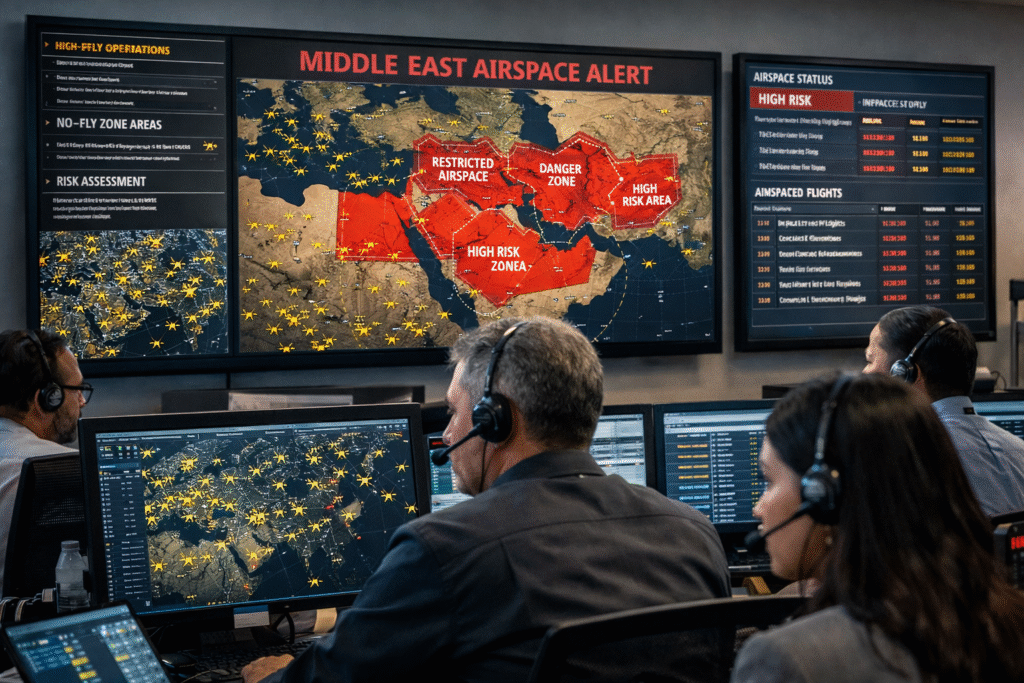
The Middle East acts as a major transit hub for global travel. Airlines rely heavily on this corridor for overflight routes and connecting hubs such as Doha and Dubai. When these airspaces close, it forces airlines to reroute aircraft over longer paths, increasing fuel consumption, flight duration, and operational costs.
Indian Airlines Suspend Flights to West Asia
India’s leading carriers responded quickly.
IndiGo announced suspension of flights to and from Middle East destinations and select international sectors until 1 March 2026.
Air India cancelled all flights to West Asia until 2359 hours on 1 March, emphasizing passenger and crew safety as the top priority.
Air India Express suspended westbound international flights citing safety concerns.
Akasa Air paused operations to West Asia until March 2.
SpiceJet warned that several flights may face delays or cancellations.
These suspensions have significantly affected passengers traveling to destinations such as Dubai, Doha, Riyadh, Sharjah, and Tel Aviv.
Flight Diversions and Operational Challenges
Multiple flights were forced to turn back mid-route. Air India’s Delhi-Tel Aviv flight reportedly diverted to Mumbai. Flights heading to Riyadh, Sharjah, Doha, and Dubai either returned to departure airports or rerouted.
Airlines must comply with NOTAMs (Notice to Airmen) and Aeronautical Information Publications issued by aviation authorities. When a high-risk advisory is issued, pilots and dispatch teams reassess flight paths in real time.
Longer alternate routes may require technical refueling stops, affecting crew duty limits and passenger schedules.
DGCA and Ministry of Civil Aviation Advisory
India’s aviation regulator, Directorate General of Civil Aviation, classified the airspace of eleven countries as high-risk zones. The Ministry of Civil Aviation placed airports on operational alert to handle emergency diversions and unscheduled landings.
Authorities directed airlines to ensure strict compliance with safety regulations and crew duty limitations. Airports were instructed to prepare for increased passenger assistance, ground handling requirements, and immigration support.
International Aviation Disruptions
The crisis is not limited to India. Major global airlines including Lufthansa, Air France, British Airways, Qatar Airways, and Emirates suspended operations from regional hubs.
Qatar and UAE are among the world’s largest aviation hubs. Disruption there causes a cascading global impact, affecting Europe-Asia and North America-Asia routes.
Economic and Global Aviation Impact
Extended airspace closures could significantly increase airline operating costs. Fuel burn rises when flights detour thousands of kilometers. Ticket prices may rise if disruptions continue.
Cargo operations are also affected, impacting global trade routes. West Asia is a strategic logistics gateway linking manufacturing centers in Asia with consumer markets in Europe and beyond.
Passenger Advisory: What Travelers Should Do
Passengers traveling to the Middle East should regularly check airline advisories and official announcements. Flexible rebooking policies and refunds are being offered by major carriers.
Travelers are advised to avoid unnecessary travel to affected regions until stability returns. Monitoring official aviation notices and embassy advisories is recommended.
What Happens If Airspace Closures Continue?
If restrictions extend beyond early March, Indian airlines flying to Europe and North America may face operational complexity. IndiGo operates routes to Europe, while Air India connects to Europe and North America. Avoiding West Asian airspace entirely would require longer northern or southern routes.

This may lead to reduced frequency of flights, higher ticket prices, and potential schedule reshuffling.
Future Outlook for Indian Aviation
Indian aviation has grown rapidly in recent years. However, geopolitical instability remains an external risk factor. Airlines are expected to strengthen contingency planning and route flexibility.
The industry will likely adapt with strategic rerouting and enhanced safety monitoring systems. However, stability in the region remains the key determinant for normalization.
Conclusion
The Israel-US strike on Iran has triggered one of the most significant aviation disruptions in recent times. Indian airlines have suspended flights to West Asia as a precautionary safety measure amid escalating conflict and widespread airspace closures. With global carriers rerouting operations and aviation authorities issuing high-risk advisories, passenger safety remains the top priority.
While the situation continues to evolve, airlines and regulators are actively coordinating to minimize disruption. For travelers, staying informed and flexible is essential. If tensions ease, operations may gradually resume, but prolonged instability could reshape international aviation routes and pricing structures for months to come.
The coming weeks will be crucial in determining how quickly global aviation recovers from this geopolitical shock.


Indian Airlines Halt West Asia Flights After Israel-US Attack on Iran Triggers Major Airspace Shutdown

India GDP Growth 7.6% in FY26: New GDP Series Upgrades Growth but Lowers Economy Size

India Missing Out on Big Agriculture Export Opportunity: Path to $100 Billion by 2030

ಮ್ಯೂಚುವಲ್ ಫಂಡ್ SIP ಮೂಲಕ 15 ವರ್ಷಗಳಲ್ಲಿ ₹10 ಕೋಟಿ ರೂಪಾಯಿ ಗಳಿಸುವುದು ಹೇಗೆ?

Aadhar Model Smart Card To Farmers: ರೈತರಿಗೆ ಆಧಾರ್ ಮಾದರಿ ಸ್ಮಾರ್ಟ್ ಕಾರ್ಡ್ ಯೋಜನೆ – ಸಂಪೂರ್ಣ ಮಾಹಿತಿ, ಅನುಕೂಲತೆಗಳು ಮತ್ತು ನೋಂದಣಿ ವಿವರಗಳು

ಕೇಂದ್ರ ಬಜೆಟ್ 2026 ಕೃಷಿಕರಿಗೆ ಏನು ಕೊಡುಗೆ? ಭಾರತ್ ವಿಸ್ತಾರ್ AI ಪರಿಕರದಿಂದ ರೈತರಿಗೇನು ಲಾಭ?

Farming: ಹಳ್ಳಿಗಳಿಗೆ ಹಿಂದಿರುಗಿ ಕೃಷಿಯತ್ತ ಒಲವು ತೋರುತ್ತಿರುವ ವೃತ್ತಿಪರರು – ನಿಜವಾದ ಕಾರಣಗಳು ಮತ್ತು ಭವಿಷ್ಯದ ಜೀವನಶೈಲಿ

What Is the Best Climate for Saffron Cultivation?

ಕಾವೇರಿ 2.0 ಆಸ್ತಿ ನೋಂದಣಿ: 10 ನಿಮಿಷದಲ್ಲಿ ಸಂಪೂರ್ಣ ಕಾಗದರಹಿತ ಆಸ್ತಿ ನೋಂದಣಿ – ಅರ್ಜಿ ಸಲ್ಲಿಕೆ, ಲಾಭಗಳು & ಸಂಪೂರ್ಣ ಮಾರ್ಗದರ್ಶಿ

ಭಾರತ್-ವಿಸ್ತಾರ್ ಎಐ ಸಾಧನ: ರೈತರ ಕೃಷಿ ಸಮಸ್ಯೆಗೆ ಬೆರಳ ತುದಿಯಲ್ಲಿ ಎಐ ಪರಿಹಾರ | ಸಂಪೂರ್ಣ ಮಾಹಿತಿ

What Is the Investment Required for Mushroom Farming?

What Are the Best Mushrooms to Grow for Profit?

Union Budget 2026–27 Agriculture Initiatives: Transforming Indian Farming for Global Markets

Budget 2026 Agriculture Policy: Push for High-Value Crops but Farmers Still Struggle

ಭಾರತದಲ್ಲಿ ಮಣ್ಣಿನ ಆರೋಗ್ಯ: ಸುಸ್ಥಿರ ಕೃಷಿ ಮತ್ತು ಆಹಾರ ಭದ್ರತೆಗೆ ಅಡಿಪಾಯ

2025ರ ವಾಣಿಜ್ಯ ಧಾನ್ಯ ಕೃಷಿಯ ಹೊಸ ಆವಿಷ್ಕಾರಗಳು: ಸ್ಮಾರ್ಟ್ ನೀರಾವರಿ, ಗೊಬ್ಬರ ಮತ್ತು ಪ್ರೆಸಿಷನ್ ಸ್ಪ್ರೇಯರ್ಗಳು

ಕೇಸರಿ ಕೃಷಿಗೆ ಎಷ್ಟು ಹೂಡಿಕೆ ಅಗತ್ಯವಿದೆ?
ಕೇಸರಿ (Saffron) ಬೆಳೆಯಲು ಅತ್ಯುತ್ತಮ ಹವಾಮಾನ ಯಾವುದು?

How to Start Kesari (Saffron) Farming in India?
