


Latest News
India GDP Growth 7.6% in FY26: New GDP Series Upgrades Growth but Lowers Economy Size

Short Overview
India’s GDP growth for FY26 has been revised upward to 7.6% under the newly updated GDP series with a base year of 2022-23. While this signals stronger real economic growth, the nominal size of the economy for the years 2023-26 has been revised downward. This revision may influence fiscal deficit ratios, debt calculations, and policy decisions. Here is a simple and clear explanation of what the new GDP data means for India’s economy and future growth.
India’s GDP growth for FY26 has been upgraded to 7.6% under the new GDP series with a revised 2022-23 base year. However, the nominal GDP size for 2023-26 has been revised downward, impacting key fiscal ratios like deficit and debt-to-GDP. Here’s what the new GDP data means for India’s economy, investors, policymakers and long-term growth outlook.

Table of Contents
- Introduction to India GDP Growth 7.6% in FY26
- What Is the New GDP Series and Why It Matters
- Why FY26 Growth Was Revised to 7.6%
- Why India’s Nominal GDP Has Been Lowered
- Impact on Fiscal Deficit and Debt-to-GDP Ratios
- Updated Base Year 2022-23 Explained
- What This Means for Investors and Businesses
- How It Affects India’s Economic Outlook
- Challenges and Opportunities Ahead
- Conclusion
Introduction to India GDP Growth 7.6% in FY26
India’s economic growth story continues to draw global attention. According to the second advance estimates released by the government on February 27, 2026, India’s GDP growth for FY26 is now projected at 7.6%. This is higher than the earlier estimate of 7.4% announced in January.
However, alongside this upgrade in growth, there is an important development. The nominal GDP, which reflects the actual size of the economy in current prices, has been revised downward for the period 2023 to 2026. While real growth looks stronger, the economy’s overall size appears slightly smaller than previously estimated.
This change comes under the newly updated GDP series introduced by the government with a revised base year of 2022-23.
What Is the New GDP Series and Why It Matters
The new GDP series was released by India’s statistics department under the leadership of Statistics Secretary Saurabh Garg and Chief Economic Advisor V. Anantha Nageswaran. The update includes an important shift in the base year from 2011-12 to 2022-23.
Changing the base year is a normal statistical exercise done every few years to reflect the current structure of the economy. Over time, economies evolve. New industries grow, digital services expand, and consumption patterns shift. If GDP calculations are based on old data, they may not fully capture the real picture.
By updating the base year to 2022-23, the government has included newer datasets, improved data coverage, and enhanced sector representation. This makes the GDP calculation more accurate and aligned with today’s economic realities.
Why FY26 Growth Was Revised to 7.6%
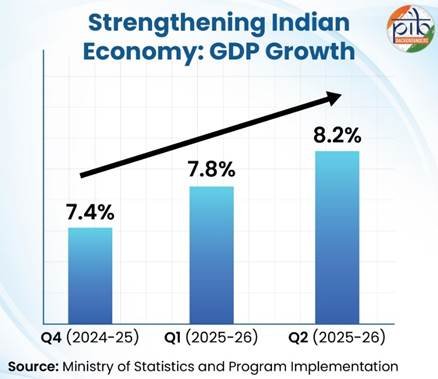
Under the new GDP series, India’s real GDP growth for FY26 has been revised upward to 7.6%, compared to the earlier estimate of 7.4%.
This upgrade reflects stronger performance in sectors such as manufacturing, services, infrastructure development, and private consumption. Investment activity and government capital expenditure have also supported growth momentum.
A higher growth rate strengthens India’s position as one of the fastest-growing major economies in the world. It also reinforces investor confidence and signals macroeconomic stability.
In simple terms, the economy is expanding faster than initially thought.
Why India’s Nominal GDP Has Been Lowered
While real GDP growth has improved, nominal GDP for the years 2023-26 has been revised downward.
Nominal GDP measures the economy’s size at current market prices without adjusting for inflation. It is used to calculate key fiscal indicators such as fiscal deficit, debt-to-GDP ratio, and tax-to-GDP ratio.
The downward revision does not mean the economy is shrinking. It simply means that earlier estimates overestimated the size of economic output in value terms. With improved data collection and updated methodology, the revised numbers present a more refined and realistic picture.
However, a lower nominal GDP automatically affects fiscal ratios.
Impact on Fiscal Deficit and Debt-to-GDP Ratios
When nominal GDP declines, fiscal ratios mathematically appear higher even if actual borrowing remains unchanged.
For example, if the fiscal deficit is ₹10 lakh crore, and GDP is ₹200 lakh crore, the deficit ratio is 5%. But if GDP is revised to ₹190 lakh crore, the same deficit becomes 5.26%.
This technical adjustment may influence:
Government deficit calculations
Debt-to-GDP ratio
Tax revenue ratios
State borrowing capacity
Although this does not immediately change government policy, it may affect fiscal planning and international comparisons.
Updated Base Year 2022-23 Explained
The shift from the 2011-12 base year to 2022-23 is significant because India’s economy has transformed dramatically in the past decade.
Digital payments have surged. Startups have expanded. Manufacturing policies have changed. Infrastructure spending has increased. Service exports have grown rapidly.
The new base year captures:
Digital economy contribution
Improved GST data integration
Better corporate filings
More accurate sector classification
Enhanced rural and informal sector measurement
This improves transparency and statistical reliability.
What This Means for Investors and Businesses
For investors, a 7.6% GDP growth projection signals strong economic momentum. It strengthens India’s attractiveness for foreign direct investment and portfolio flows.
For businesses, higher growth indicates expanding demand, rising consumption, and increased industrial activity. However, the lower nominal GDP revision suggests careful fiscal management ahead.
Stock markets may interpret the data positively due to stronger real growth, while bond markets may watch fiscal ratio implications closely.
How It Affects India’s Economic Outlook
India remains one of the fastest-growing major economies globally. Even with the nominal revision, the growth trajectory remains strong.
Higher real growth improves:
Employment prospects
Corporate earnings
Tax collection efficiency
Investment inflows
However, policymakers must ensure that fiscal discipline remains intact. A stronger growth rate provides room for reforms, infrastructure expansion, and social spending.
Challenges and Opportunities Ahead
While the revised GDP growth outlook is positive, certain challenges remain.
Global economic uncertainty, oil price volatility, geopolitical tensions, and inflation risks could impact momentum. Domestic consumption must remain strong to sustain growth above 7%.
At the same time, opportunities lie in manufacturing expansion, green energy transition, digital transformation, and export growth.
The new GDP series provides a stronger statistical foundation for planning these initiatives.
Conclusion
India’s GDP growth of 7.6% for FY26 under the new GDP series reflects a stronger economic expansion than previously estimated. The updated base year of 2022-23 improves data accuracy and better reflects the modern structure of the Indian economy.
However, the downward revision in nominal GDP for 2023-26 impacts fiscal ratios and government calculations. This adjustment is technical rather than alarming, but it requires careful fiscal management.
Overall, the message is clear. India’s economy is growing steadily and remains resilient, even as statistical refinements present a clearer picture of its true size. The upgraded growth forecast strengthens confidence, while the revised nominal figures promote transparency and accuracy in policymaking.
India’s growth journey continues, backed by reform, resilience, and renewed statistical precision.


India GDP Growth 7.6% in FY26: New GDP Series Upgrades Growth but Lowers Economy Size

India Missing Out on Big Agriculture Export Opportunity: Path to $100 Billion by 2030

ಮ್ಯೂಚುವಲ್ ಫಂಡ್ SIP ಮೂಲಕ 15 ವರ್ಷಗಳಲ್ಲಿ ₹10 ಕೋಟಿ ರೂಪಾಯಿ ಗಳಿಸುವುದು ಹೇಗೆ?

Aadhar Model Smart Card To Farmers: ರೈತರಿಗೆ ಆಧಾರ್ ಮಾದರಿ ಸ್ಮಾರ್ಟ್ ಕಾರ್ಡ್ ಯೋಜನೆ – ಸಂಪೂರ್ಣ ಮಾಹಿತಿ, ಅನುಕೂಲತೆಗಳು ಮತ್ತು ನೋಂದಣಿ ವಿವರಗಳು

ಕೇಂದ್ರ ಬಜೆಟ್ 2026 ಕೃಷಿಕರಿಗೆ ಏನು ಕೊಡುಗೆ? ಭಾರತ್ ವಿಸ್ತಾರ್ AI ಪರಿಕರದಿಂದ ರೈತರಿಗೇನು ಲಾಭ?

Farming: ಹಳ್ಳಿಗಳಿಗೆ ಹಿಂದಿರುಗಿ ಕೃಷಿಯತ್ತ ಒಲವು ತೋರುತ್ತಿರುವ ವೃತ್ತಿಪರರು – ನಿಜವಾದ ಕಾರಣಗಳು ಮತ್ತು ಭವಿಷ್ಯದ ಜೀವನಶೈಲಿ

What Is the Best Climate for Saffron Cultivation?

ಕಾವೇರಿ 2.0 ಆಸ್ತಿ ನೋಂದಣಿ: 10 ನಿಮಿಷದಲ್ಲಿ ಸಂಪೂರ್ಣ ಕಾಗದರಹಿತ ಆಸ್ತಿ ನೋಂದಣಿ – ಅರ್ಜಿ ಸಲ್ಲಿಕೆ, ಲಾಭಗಳು & ಸಂಪೂರ್ಣ ಮಾರ್ಗದರ್ಶಿ

ಭಾರತ್-ವಿಸ್ತಾರ್ ಎಐ ಸಾಧನ: ರೈತರ ಕೃಷಿ ಸಮಸ್ಯೆಗೆ ಬೆರಳ ತುದಿಯಲ್ಲಿ ಎಐ ಪರಿಹಾರ | ಸಂಪೂರ್ಣ ಮಾಹಿತಿ

Bengaluru in Trouble: ಐಟಿ ಬಿದ್ದರೆ ಬೆಂಗಳೂರು ಬೀಳುತ್ತೆ – ಸಂಕಷ್ಟದಲ್ಲಿ ನಮ್ಮ ಬೆಂಗಳೂರು

What Is the Investment Required for Mushroom Farming?

What Are the Best Mushrooms to Grow for Profit?

Union Budget 2026–27 Agriculture Initiatives: Transforming Indian Farming for Global Markets

Budget 2026 Agriculture Policy: Push for High-Value Crops but Farmers Still Struggle

ಭಾರತದಲ್ಲಿ ಮಣ್ಣಿನ ಆರೋಗ್ಯ: ಸುಸ್ಥಿರ ಕೃಷಿ ಮತ್ತು ಆಹಾರ ಭದ್ರತೆಗೆ ಅಡಿಪಾಯ

2025ರ ವಾಣಿಜ್ಯ ಧಾನ್ಯ ಕೃಷಿಯ ಹೊಸ ಆವಿಷ್ಕಾರಗಳು: ಸ್ಮಾರ್ಟ್ ನೀರಾವರಿ, ಗೊಬ್ಬರ ಮತ್ತು ಪ್ರೆಸಿಷನ್ ಸ್ಪ್ರೇಯರ್ಗಳು

Microalgae in Modern Agriculture: The Quiet Technology Re-Engineering Sustainable Farming
ಕೇಸರಿ (Saffron) ಬೆಳೆಯಲು ಅತ್ಯುತ್ತಮ ಹವಾಮಾನ ಯಾವುದು?

ಕೇಸರಿ ಕೃಷಿಗೆ ಎಷ್ಟು ಹೂಡಿಕೆ ಅಗತ್ಯವಿದೆ?
