


Latest News
BMRCL Deploys Eighth Trainset on Namma Metro Yellow Line: What It Means for Bengaluru Commuters

Short Overview
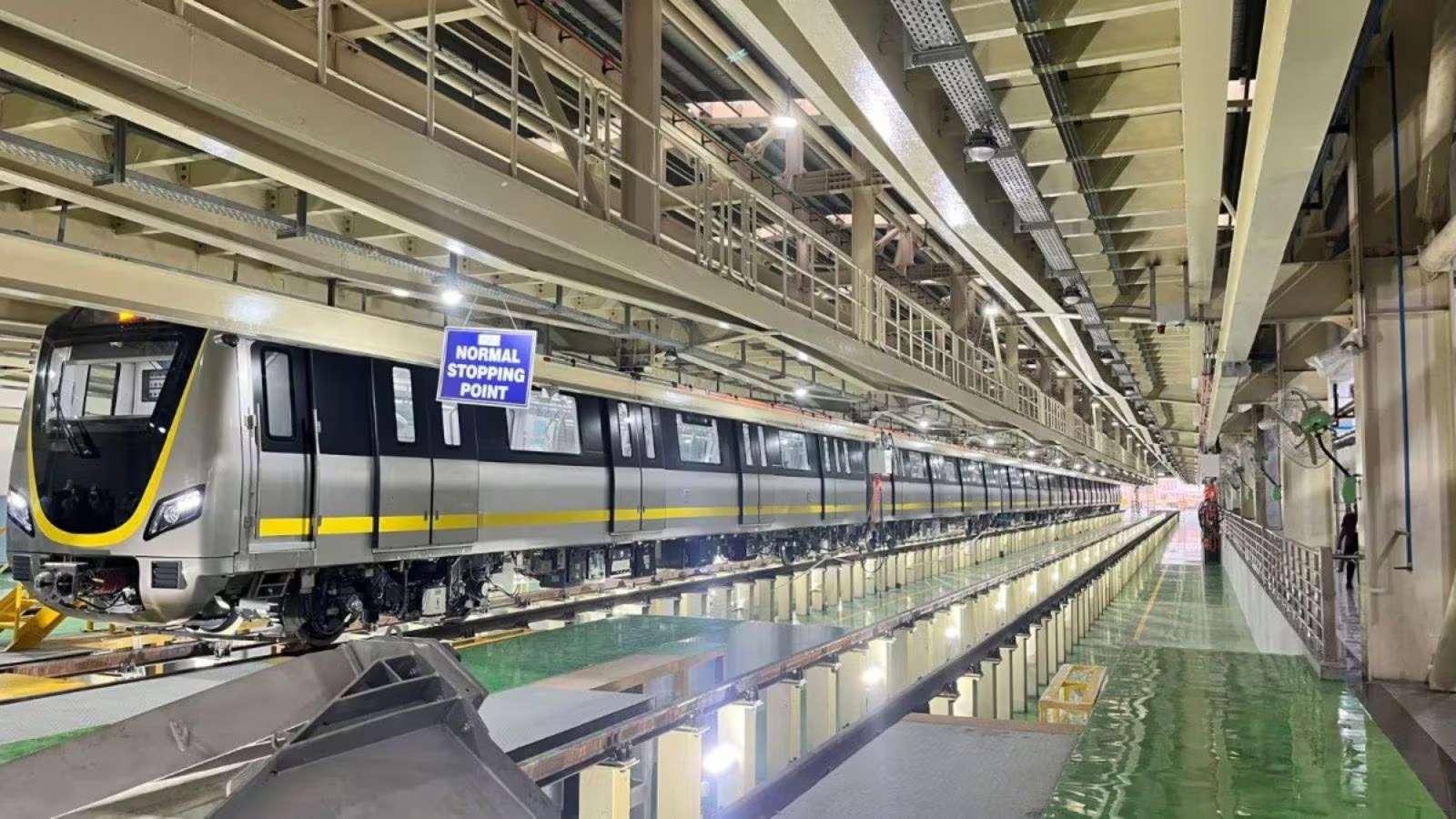
Bengaluru commuters using the Yellow Line of Namma Metro will now experience shorter waiting times as BMRCL has added an eighth trainset to the Bommasandra–RV Road corridor. The move reduces peak-hour frequency to 9 minutes and significantly improves non-peak travel intervals. This development comes after public pressure to prioritize commuter convenience over standby reserves.
BMRCL deploys its eighth trainset on the Namma Metro Yellow Line, reducing peak-hour frequency from 10 to 9 minutes and cutting non-peak waiting time to 14 minutes. Discover how this move benefits Bommasandra–RV Road commuters, updates on the Pink and Blue Lines, early metro services, and what it means for Bengaluru’s growing transit needs.

Table of Contents
- Introduction to the Yellow Line Update
- How the Eighth Trainset Improves Peak-Hour Frequency
- Relief for Non-Peak Hour Commuters
- Public Criticism and the Standby Controversy
- Pressure from Commuter Groups and Citizens
- Updates on the Blue Line Expansion
- Pink Line Driverless Trains: What to Expect
- Early Metro Services for Special Events
- Why Frequency Matters More Than Ever in Bengaluru
- The Future of Namma Metro Expansion
- Conclusion
Introduction to the Yellow Line Update
The Bangalore Metro Rail Corporation Limited has officially deployed its eighth trainset on the Yellow Line of Namma Metro, bringing noticeable improvements to daily commuters travelling between Bommasandra and RV Road. This development is more than just an operational adjustment; it reflects a response to rising commuter demand and growing public pressure.
As Bengaluru continues to expand rapidly, metro connectivity has become a lifeline for thousands of office-goers, students, and daily wage earners. Any improvement in train frequency directly impacts productivity, travel comfort, and overall commuting experience.
How the Eighth Trainset Improves Peak-Hour Frequency
With the induction of the eighth trainset, peak-hour frequency on the Yellow Line has been reduced from 10 minutes to 9 minutes. While one minute may appear minor on paper, during heavy rush hours between 8 am and 12 noon and 4 pm to 9 pm, this reduction significantly eases crowd congestion on platforms.
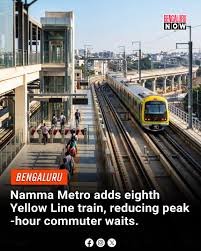
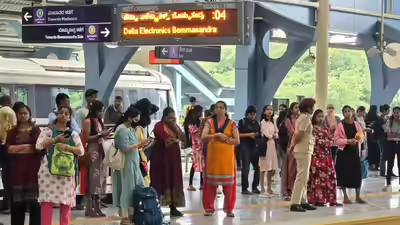
For commuters travelling from Bommasandra to RV Road, especially tech professionals working along the corridor, a nine-minute interval improves predictability. Shorter waiting times reduce platform crowding and allow smoother passenger flow inside coaches.
In a city like Bengaluru where traffic congestion is a daily challenge, improved metro frequency enhances the reliability of public transportation and encourages more residents to shift from private vehicles to metro services.
Relief for Non-Peak Hour Commuters
The more impactful change is visible during non-peak hours. Previously, trains operated at 18-minute intervals. With the new deployment, this has been reduced to 14 minutes.
For senior citizens, homemakers, students, and shift workers who travel during off-peak hours, this adjustment offers meaningful relief. Reduced waiting time ensures safer and more convenient travel, especially during afternoon and late-evening hours.
Such improvements highlight BMRCL’s intent to balance operational efficiency with commuter comfort, particularly at a time when Bengaluru’s metro ridership is steadily increasing.
Public Criticism and the Standby Controversy
Interestingly, the eighth trainset was not immediately introduced into service. It was initially held back as a standby emergency reserve. This decision triggered criticism from commuters and prominent public figures.
TV Mohandas Pai, former CFO of Infosys, publicly questioned the move and described it as unfair to commuters who were already facing long waiting times. He urged Deputy Chief Minister DK Shivakumar to intervene and prioritize operational deployment over emergency backup.
The public debate emphasized a growing expectation from citizens for better public infrastructure management. With no new trains expected next month, pressure mounted on BMRCL to enhance frequency rather than preserve reserve capacity.
Eventually, commuter demand prevailed, and the eighth trainset was deployed.
Pressure from Commuter Groups and Citizens
Commuter associations and social media users have consistently voiced concerns about overcrowding on the Yellow Line. As Bengaluru’s IT corridors expand, the Bommasandra–RV Road route has become a crucial connectivity spine.
Many netizens argued that operational readiness should not compromise daily convenience. The discussion reflects a broader shift where urban residents actively participate in governance conversations related to transportation and city planning.
The deployment of the additional trainset demonstrates responsiveness from metro authorities, reinforcing public trust in urban transport management.
Updates on the Blue Line Expansion
On Thursday, BMRCL Managing Director J Ravishankar inspected the upcoming Blue Line between Kasturinagar and Kodigehalli Cross. The inspection focused on accelerating viaduct construction to reduce disruption along the Outer Ring Road.
The Blue Line is expected to play a major role in easing traffic congestion across the eastern parts of Bengaluru. Speeding up construction ensures timely project completion and strengthens metro connectivity across multiple corridors.
As metro expansion continues, integrated connectivity between the Yellow, Blue, Pink, Purple, and Green lines will transform urban mobility in the city.
Pink Line Driverless Trains: A Major Technological Leap
A major milestone was achieved with the arrival of the third driverless trainset for the Pink Line at Kothanur depot.
The Pink Line will connect Kalena Agrahara to Nagawara, covering a distance of 21.25 km with 18 stations, including 12 underground stations. In its first phase, six fully automated driverless trains will operate on this corridor.
This technological advancement positions Bengaluru among modern global cities adopting automated metro systems. The Pink Line is expected to open by May this year, further strengthening the public transportation network.
Driverless operations enhance efficiency, reduce human error, and enable optimized train scheduling, making metro services more reliable and future-ready.
Early Metro Services for Special Events
In another commuter-friendly move, BMRCL announced early metro services starting at 5 am instead of 7 am on Sunday due to a Karnataka State Police event in the Central Business District.
Services will operate early from terminals including Whitefield and Challaghatta on the Purple Line, Madavara and Silk Institute on the Green Line, and Bommasandra and RV Road on the Yellow Line.
Such proactive planning demonstrates operational flexibility and responsiveness to city-wide events.
Why Frequency Matters More Than Ever in Bengaluru
Bengaluru’s rapid urban growth has placed enormous pressure on transportation infrastructure. Increased metro frequency directly impacts daily commute quality, economic productivity, and environmental sustainability.
When train intervals decrease, platform congestion reduces. Reduced congestion improves passenger safety and comfort. Better comfort encourages more people to choose public transport, lowering vehicular emissions.
The addition of the eighth trainset is not just an operational update; it is a strategic move toward strengthening sustainable urban mobility.
The Future of Namma Metro Expansion
With ongoing developments in the Yellow, Pink, and Blue lines, Namma Metro is steadily transforming into a comprehensive mass transit system.
As ridership continues to grow, further train additions and corridor expansions will be essential. Public expectations are rising, and authorities will need to maintain transparency, efficiency, and commuter-first policies.
The deployment of the eighth trainset may seem like a small operational tweak, but it symbolizes a larger commitment toward improving Bengaluru’s public transportation experience.
Conclusion
The deployment of the eighth trainset on the Yellow Line marks a positive step for Bengaluru’s metro commuters. Reduced peak-hour frequency from 10 to 9 minutes and non-peak intervals from 18 to 14 minutes provide tangible relief to thousands of daily passengers.
This move reflects BMRCL’s willingness to respond to public feedback and adapt to growing urban demands. As metro expansions continue across the city, consistent improvements in service frequency, infrastructure quality, and operational transparency will determine the long-term success of Namma Metro.
For Bengaluru residents relying on efficient and reliable public transport, this development offers hope and reassurance that the city’s metro network is evolving in the right direction.


BMRCL Deploys Eighth Trainset on Namma Metro Yellow Line: What It Means for Bengaluru Commuters

Indian Airlines Halt West Asia Flights After Israel-US Attack on Iran Triggers Major Airspace Shutdown

India GDP Growth 7.6% in FY26: New GDP Series Upgrades Growth but Lowers Economy Size

India Missing Out on Big Agriculture Export Opportunity: Path to $100 Billion by 2030

ಮ್ಯೂಚುವಲ್ ಫಂಡ್ SIP ಮೂಲಕ 15 ವರ್ಷಗಳಲ್ಲಿ ₹10 ಕೋಟಿ ರೂಪಾಯಿ ಗಳಿಸುವುದು ಹೇಗೆ?

Aadhar Model Smart Card To Farmers: ರೈತರಿಗೆ ಆಧಾರ್ ಮಾದರಿ ಸ್ಮಾರ್ಟ್ ಕಾರ್ಡ್ ಯೋಜನೆ – ಸಂಪೂರ್ಣ ಮಾಹಿತಿ, ಅನುಕೂಲತೆಗಳು ಮತ್ತು ನೋಂದಣಿ ವಿವರಗಳು

ಕೇಂದ್ರ ಬಜೆಟ್ 2026 ಕೃಷಿಕರಿಗೆ ಏನು ಕೊಡುಗೆ? ಭಾರತ್ ವಿಸ್ತಾರ್ AI ಪರಿಕರದಿಂದ ರೈತರಿಗೇನು ಲಾಭ?

Farming: ಹಳ್ಳಿಗಳಿಗೆ ಹಿಂದಿರುಗಿ ಕೃಷಿಯತ್ತ ಒಲವು ತೋರುತ್ತಿರುವ ವೃತ್ತಿಪರರು – ನಿಜವಾದ ಕಾರಣಗಳು ಮತ್ತು ಭವಿಷ್ಯದ ಜೀವನಶೈಲಿ

What Is the Best Climate for Saffron Cultivation?

ಕಾವೇರಿ 2.0 ಆಸ್ತಿ ನೋಂದಣಿ: 10 ನಿಮಿಷದಲ್ಲಿ ಸಂಪೂರ್ಣ ಕಾಗದರಹಿತ ಆಸ್ತಿ ನೋಂದಣಿ – ಅರ್ಜಿ ಸಲ್ಲಿಕೆ, ಲಾಭಗಳು & ಸಂಪೂರ್ಣ ಮಾರ್ಗದರ್ಶಿ

What Are the Best Mushrooms to Grow for Profit?

Union Budget 2026–27 Agriculture Initiatives: Transforming Indian Farming for Global Markets

Budget 2026 Agriculture Policy: Push for High-Value Crops but Farmers Still Struggle

ಭಾರತದಲ್ಲಿ ಮಣ್ಣಿನ ಆರೋಗ್ಯ: ಸುಸ್ಥಿರ ಕೃಷಿ ಮತ್ತು ಆಹಾರ ಭದ್ರತೆಗೆ ಅಡಿಪಾಯ

2025ರ ವಾಣಿಜ್ಯ ಧಾನ್ಯ ಕೃಷಿಯ ಹೊಸ ಆವಿಷ್ಕಾರಗಳು: ಸ್ಮಾರ್ಟ್ ನೀರಾವರಿ, ಗೊಬ್ಬರ ಮತ್ತು ಪ್ರೆಸಿಷನ್ ಸ್ಪ್ರೇಯರ್ಗಳು
How to Start Kesari (Saffron) Farming in India?
ಕೇಸರಿ (Saffron) ಬೆಳೆಯಲು ಅತ್ಯುತ್ತಮ ಹವಾಮಾನ ಯಾವುದು?

ಕೇಸರಿ ಕೃಷಿಗೆ ಎಷ್ಟು ಹೂಡಿಕೆ ಅಗತ್ಯವಿದೆ?

ಕಬ್ಬು ಬೆಳೆಯಲು ಸೂಕ್ತ ಸಲಹೆಗಳು – ಹೆಚ್ಚಿನ ಇಳುವರಿ ಮತ್ತು ಲಾಭಕ್ಕಾಗಿ ಸಂಪೂರ್ಣ ಮಾರ್ಗದರ್ಶಿ
